
You hear terms like artificial intelligence, machine learning, deep learning, and generative AI thrown around every day. Even seasoned professionals sometimes pause and wonder: are these really different things, or are they just fancy synonyms of technology? The truth is, they are not the same. Using them interchangeably can lead to costly mistakes in strategy, investment, and team communication.
In 2026, the tech landscape moves faster than ever. New models, frameworks, and buzzwords pop up weekly. Without a clear understanding of these terms, you risk making decisions based on confusion rather than clarity. That is why every AI professional needs a synonym compass. Think of it as your personal guide to navigating the noise. It helps you spot the real differences between closely related concepts so you can talk with confidence and act with precision.
This article is built for that purpose. We have curated 10 essential tech synonym pairs that cause the most confusion in the industry. Each pair is broken down with simple definitions, real-world examples, and practical tips. You will learn, for instance, the exact line between deep learning and machine learning. The helpful guide from Zendesk explains that deep learning is a subset of machine learning using neural networks to process complex patterns.

Knowing this distinction helps you choose the right approach for your project and avoid wasted effort.
As you read through the pairs, you will also find ways to deepen your knowledge. If you want to explore how these concepts connect to broader trends, check out the deep dive on technology synonyms for 2026 for even more detail. Staying informed is a daily habit. That is why I recommend signing up for The AI Newsletter Worth Reading to get clear daily updates straight to your inbox. It keeps you ahead of the curve without the information overload.
The journey starts now. Let us clear the fog around these terms and give you the clarity you need to succeed in 2026.
1. AI vs. Machine Learning vs. Deep Learning: The Foundation Stack
Imagine three nesting dolls. The biggest doll is artificial intelligence. Inside it sits machine learning. And deep inside machine learning lies deep learning.
That is the simplest way to picture these terms.
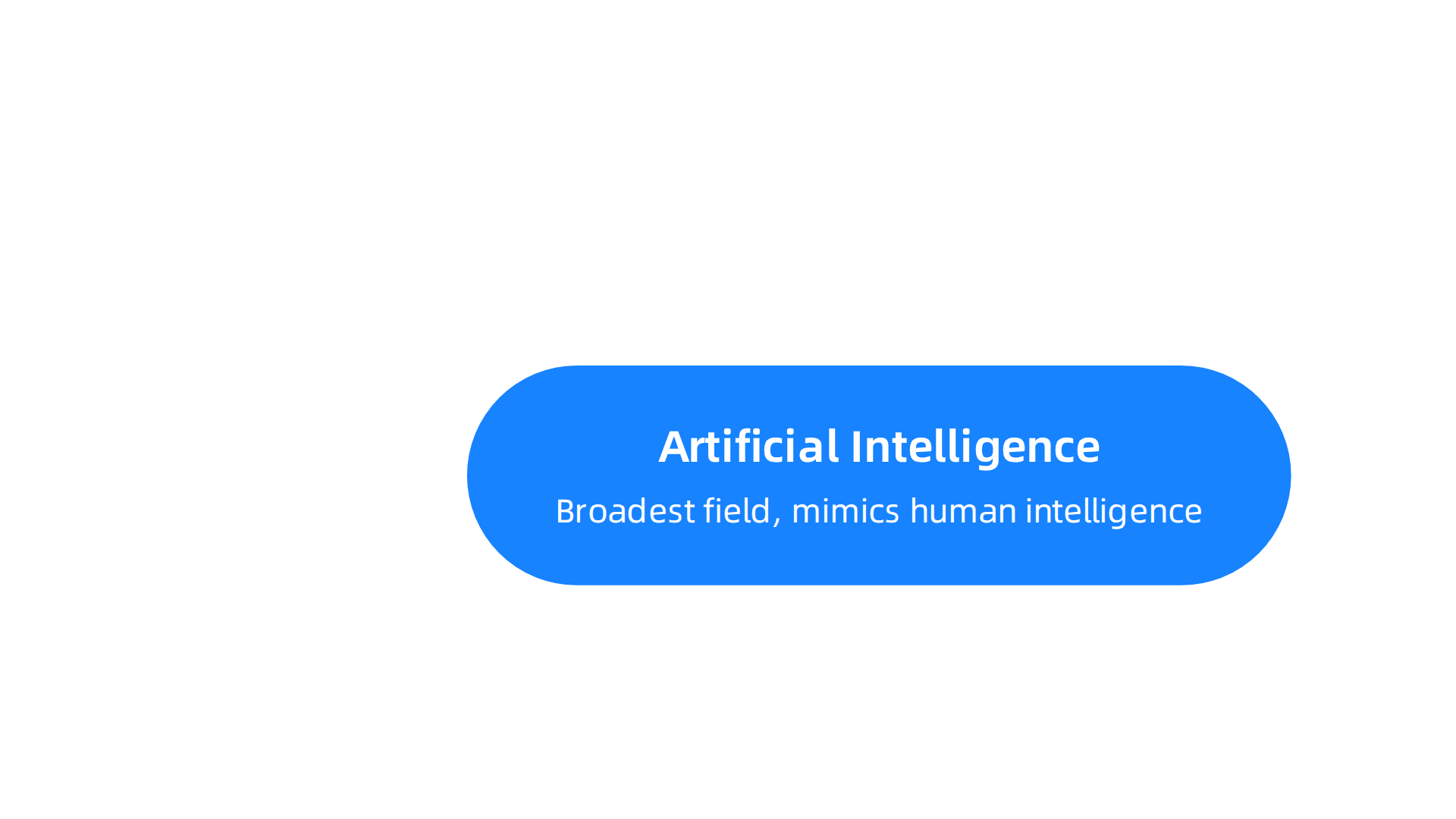
Artificial intelligence is the broadest field. It covers any system that mimics human intelligence. That includes simple rule-based programs and complex neural networks alike.
Machine learning is a subset of AI. It focuses on algorithms that learn patterns from data. Instead of following hard-coded rules, an ML model improves as it sees more examples. Spam filters are a classic example.
Deep learning is a subset of ML. It uses multi-layered neural networks to process messy data like images, audio, and text. Think of how your phone recognizes your face or how voice assistants understand you.
Here is the critical distinction. Many companies call a basic ML model "AI" to sound more advanced. That leads to overpromising and disappointed clients. Understanding the hierarchy helps you set realistic expectations and choose the right tool for each problem.
For a clear side-by-side breakdown, check out the Google Cloud’s guide to AI, ML, and deep learning. It lays out the differences in plain language.
If you want to build your own understanding from the ground up, our strategic guide on how to learn AI for success walks you through the practical steps. Knowing these terms is just the beginning. Using them correctly is what sets you apart.
2. AGI vs. Narrow AI: The Long-Term Goal vs. Today’s Reality
Now that you understand the hierarchy of AI, ML, and deep learning, let’s look at another critical distinction. It’s about the difference between narrow AI and AGI.
Narrow AI, also called weak AI, is what we have today. These systems excel at one specific task. Think of your email spam filter, a translation app, or a chatbot that answers customer questions. They do their job well but cannot handle anything outside their training. As the Visla guide to AI explains, most real AI today sits firmly in narrow AI, including the most impressive chatbots.
AGI, or artificial general intelligence, is different. It would match or exceed human intelligence across almost any task. An AGI could learn to cook, write code, and solve math problems using the same brain. It is still hypothetical. No one has built it yet.
Here is where the confusion starts. Many tech companies and tech blogs use the term "AGI" to describe advanced narrow AI. That creates hype. Investors and decision-makers might think we are closer to superhuman intelligence than we really are. That leads to bad bets and broken promises.
Learning these tech synonyms helps you cut through the noise. It lets you spot real progress versus marketing talk. If you want to keep your terminology straight, our guide on technology synonyms for clear AI communication breaks down more terms you will encounter.
For daily, no-hype AI updates that separate facts from fiction, subscribe to the AI newsletter worth reading. It delivers clear insights straight to your inbox.
3. LLM vs. Foundation Model: Hype vs. Substance
You see the terms "LLM" and "foundation model" all over tech blogs. Many people use them like they mean the same thing. They don’t. And confusing these tech synonyms can mess up product strategy and investment choices.
A Large Language Model (LLM) is a type of AI that works with text. It can write emails, answer questions, or summarize articles. It is a specialist. A foundation model is a broader architecture. It can handle text, images, audio, and video all in one system. Think of a foundation model as the base layer. An LLM is one specific tool built on top of that base. The Peerbits Foundation model vs. LLM guide explains that every LLM is a foundation model, but not every foundation model is an LLM.
The term "foundation model" was coined in 2021 by researchers at Stanford. They wanted a word that captured multimodal abilities beyond just language. So when you hear "GPT-4 is a foundation model," that is true. It handles text and images. But calling a text-only chatbot a "foundation model" is just hype. It is a narrow LLM dressed up with a fancy label.
Why does this matter? If you are building a product and bet on a model that only does text when you really need image and speech processing, you waste time and money.

Knowing the difference between these deep tech terms helps you avoid expensive mistakes.
For a deeper look at how to keep your AI vocabulary straight, check out our guide on technology synonyms for clear AI communication.
And if you want simple, accurate updates on AI terminology without the hype, subscribe to The Deep View Newsletter. It lands in your inbox daily with clear insights you can actually use.
4. Neural Network vs. Transformer: Architecture Explained
Now that we have sorted out what an LLM and a foundation model are, let us go one level deeper. The real magic happens in the architecture. This is where many tech synonyms get thrown around, and it pays to know what they actually mean.
A neural network is the general building block. It is a broad category of deep learning models that learn patterns from data. Think of it as the engine. A transformer is a specific type of neural network that was introduced in 2017. It uses something called an attention mechanism. That mechanism lets the model look at all parts of an input at once instead of processing it one step at a time. This one change made transformers incredibly good at understanding language.
Transformers quickly became the standard for natural language processing. Then researchers found they worked well for vision and audio too. Today most of the powerful deep tech you use, from chatbots to image generators, is built on transformer architecture. Foundation models, as explained by AWS, are based on complex neural networks including transformers, GANs, and variational encoders.
Why does this matter for you? When you read tech blogs claiming a model uses a "new neural network," ask whether it is a transformer or something different. That one question tells you how innovative the model really is. Being able to spot these synonyms of technology saves you from marketing hype and helps you pick the right tool for your job.
Want to keep your technology synonyms straight as new architectures emerge? Our guide on mastering tech terms for clear AI communication can help you stay sharp.
5. Supervised vs. Unsupervised vs. Reinforcement Learning: The Three Pillars
Another place where tech synonyms trip people up is the three main types of machine learning.
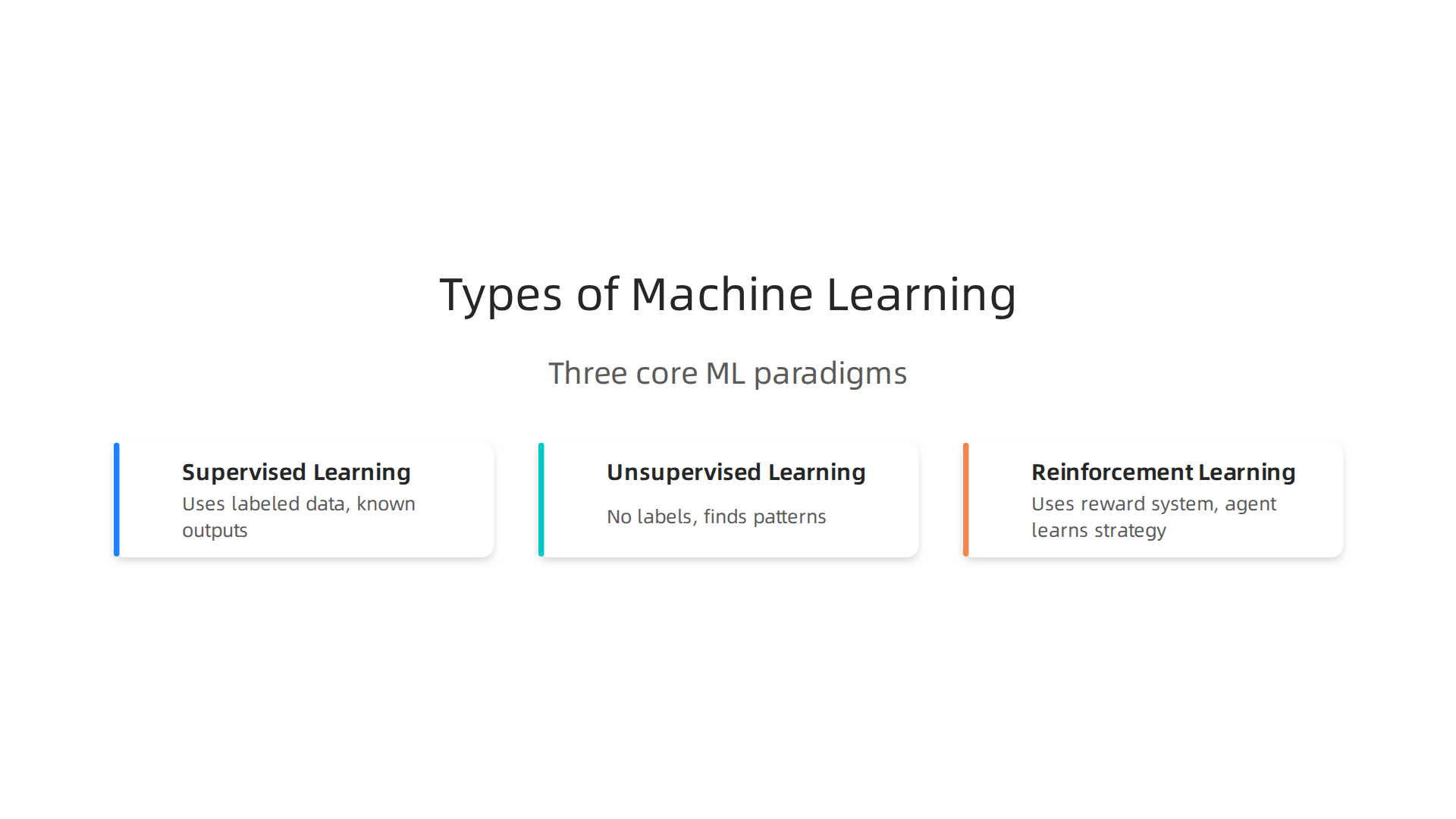
If you read tech blogs, you will see these terms constantly. But mixing them up can lead you down the wrong path.
Supervised learning uses labeled data. Think of it like a teacher giving you the answer key. The model learns from examples where the correct output is already known. This works great for tasks like spam detection or price prediction. A detailed overview of types of machine learning, including supervised and unsupervised, shows how each approach fits different data situations.

Unsupervised learning has no labels. The model must find patterns on its own. It groups similar items together or detects anomalies without anyone telling it what to look for. This is useful when you have a lot of data but no clear categories.
Reinforcement learning is different. It uses a reward system. An agent takes actions in an environment and gets positive or negative feedback. Over time, it learns the best strategy. This powers many deep tech applications, from game-playing AIs to robotics.
Each paradigm fits a different problem. Choose wrong, and you waste time and money. Understanding these synonyms of technology helps you pick the right tool every time. For more ways to keep your machine learning vocabulary straight, our guide on mastering technology synonyms for clear communication can help.
And if you want to stay up to date as new AI terms emerge daily, the newsletter below delivers clear insights straight to your inbox.
The AI Newsletter Worth Reading
6. NLP vs. NLU: Understanding Language vs. Processing It
If you read tech blogs, you will see the terms NLP and NLU used like they mean the same thing. They don’t. And confusing these tech synonyms can lead you to overestimate what a tool can actually do.
Natural Language Processing (NLP) is the big umbrella. It covers any task where a machine works with text or speech. Think spell check, auto-complete, translating sentences, or sorting customer reviews. NLP models handle the structure and syntax of language. A great overview of how NLP models are trained using supervised and unsupervised methods shows just how broad the field is.
Natural Language Understanding (NLU) is a smaller, deeper layer inside NLP. It focuses on comprehension and intent. An NLU system does not just read the words. It tries to understand what the user really means. For example, if you type "I’m cold," a basic NLP tool might just flag it as negative sentiment. An NLU tool would infer that you want the temperature turned up.
Here is where the synonyms of technology get tricky. Many vendors advertise "NLU capabilities" when their product only does basic NLP tasks. They handle the text but do not grasp the meaning. This is a classic case of deep tech marketing overreaching.
To avoid falling for this, always check what a tool actually delivers. Ask: does it just process words, or does it truly understand intent?

Knowing the difference saves you from choosing the wrong solution.
For more help keeping your AI vocabulary straight, check out our guide on technology synonyms for clear AI communication in 2026. It covers terms like this one and many more.
7. Computer Vision vs. Image Recognition: More Than Meets the Eye
Here is another pair of tech synonyms that people mix up all the time. You see "computer vision" and "image recognition" used like they are the same thing. They are not. And using them wrong can make you overestimate what a product actually does.
Computer vision is the big picture. It is the entire field that helps machines interpret and understand the visual world. Think of it as the brain that sees and makes sense of images, video, and even live camera feeds. A full Computer Vision Task Overview and Applications from Intel shows that computer vision includes tasks like object detection, scene understanding, and even activity recognition.
Image recognition is a smaller job inside that big field. It focuses on identifying what is in a picture. Does this photo contain a cat? Is that a stop sign? Image recognition answers those simple yes/no or category questions. But it does not figure out where things are in the image, what is happening, or what the context means.
Many tech blogs and marketing pages blur this line. A tool might claim "advanced computer vision capabilities" when it only runs basic image recognition. That is a classic case of deep tech hype. You pay for full visual understanding and get only a label maker.
To avoid being fooled, ask: does the tool just name objects in a photo, or can it understand a whole scene and act on it? The answer tells you if you are getting computer vision or just image recognition.
For more on how machines really see, check out our guide on leading computer vision companies in 2026. And if you want to stay sharp on all these synonyms of technology, get clear daily AI updates from The AI Newsletter Worth Reading.
8. Generative AI vs. Discriminative AI: Creation vs. Classification
Here is another set of tech synonyms that people confuse all the time: generative AI and discriminative AI.
They both use deep learning, but they do very different jobs.
Generative AI creates new data. Think of ChatGPT writing a poem, Midjourney making an image, or a music generator composing a tune. These models learn patterns from existing data and then produce brand new content that looks real.
Discriminative AI classifies or recognizes data. It draws boundaries between categories. For example, a spam filter decides if an email is spam or not. A fraud detection model flags a suspicious transaction. A medical image model tells if a scan shows a tumor. These models do not create anything. They sort, label, and decide.
Even though deep tech news is full of generative AI buzz right now, discriminative models still run most real world systems. In fact, many enterprise operations rely entirely on discriminative tasks like object recognition and categorization to automate inventory and improve safety, as seen in how computer vision redefines enterprise operations.
So why does this distinction matter for you? If you are investing in or building AI products, you need to know what problem you are solving. Are you trying to generate new content or classify existing data? That answer changes the model, the cost, and the expected outcome.
Many tech blogs lump these together under "AI" and make it sound like generative is always better. It is not. Discriminative models are the quiet workhorses behind thousands of business applications.
If you want to get better at spotting these synonyms of technology and making smarter AI decisions, check out our complete guide on technology synonyms for clear AI communication.
9. Edge AI vs. Cloud AI: Where Intelligence Lives
Another pair of tech synonyms people often mix up is edge AI and cloud AI. Both run artificial intelligence, but they do it in very different places.
Edge AI processes data right on the device. Think of a smart camera that spots a safety hazard instantly in a factory, or your phone unlocking your face without sending data anywhere. The AI lives on the hardware itself. This keeps things fast and private.
Cloud AI sends data to a remote server for processing. Services like ChatGPT or Google Photos rely on powerful data centers far away. You get huge computing power, but you need a solid internet connection and you accept some delay.
So which one should you choose? Look at Coursera’s comparison of edge and cloud AI.

It shows that edge AI wins on low latency, privacy, and offline work, while cloud AI wins on storage, processing power, and easy updates.
In 2026, tech blogs call it a contest, but smart systems use both. A hybrid approach is becoming the norm.

Your phone might run a small model locally for quick tasks and tap the cloud for complex analysis. This blend gets the best of both worlds.
Understanding these synonyms of technology helps you pick the right infrastructure for your project. To keep learning how AI is changing the way we build and invest, check out how to learn AI for success in 2026.
Staying sharp on deep tech terms like this is easier when you get daily updates. Subscribe to The AI Newsletter Worth Reading for clear, practical insights straight to your inbox.
10. Responsible AI vs. Ethical AI: Principles vs. Practice
Another pair of tech synonyms people often mix up is ethical AI and responsible AI.
They sound nearly the same, but understanding the difference matters more in 2026 than ever.
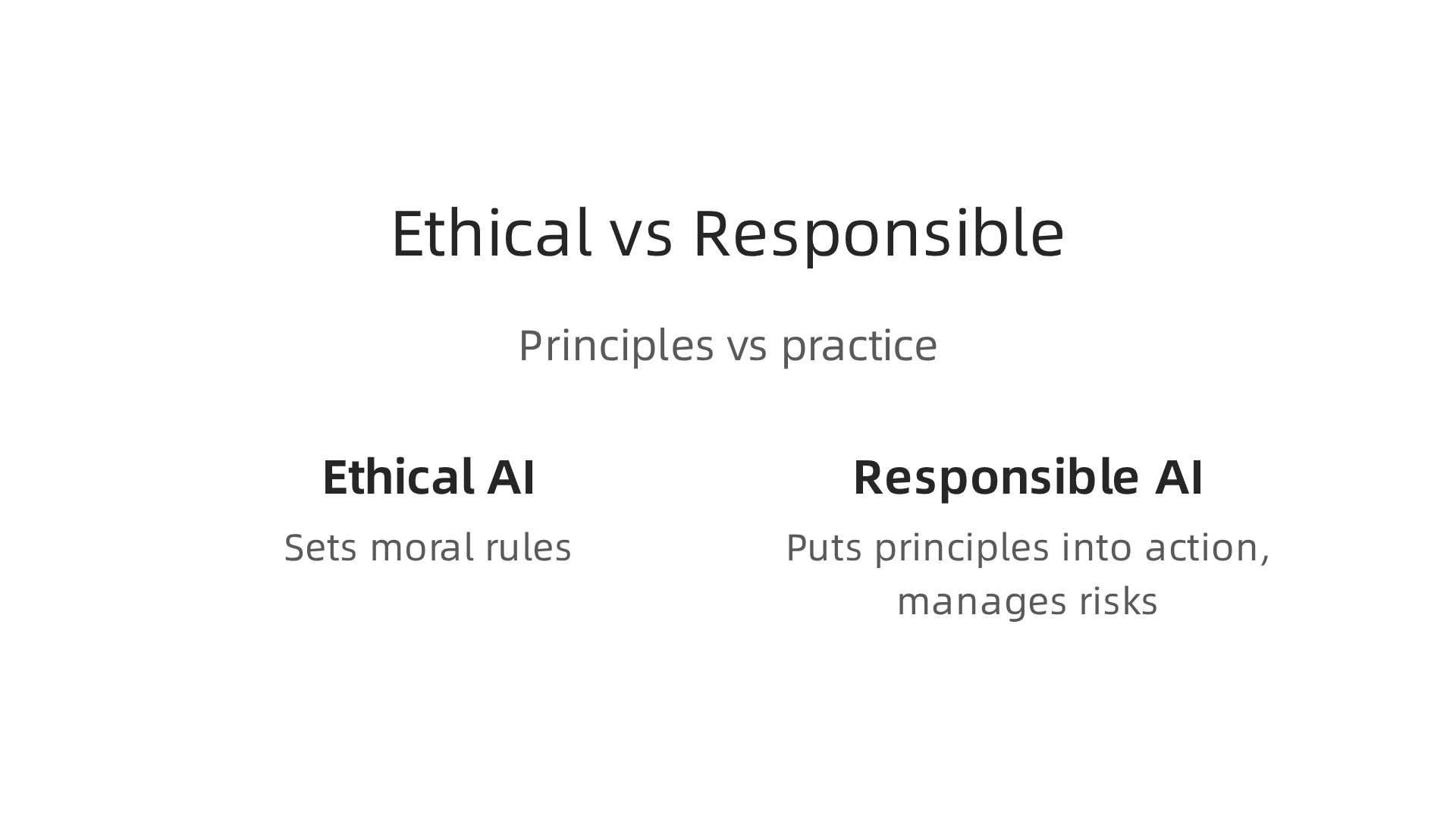
Ethical AI sets the moral rules. It asks big questions like: Should an AI system treat all users fairly? Should it respect privacy? These are the principles you decide upfront. They define what is right and wrong.
Responsible AI puts those principles into action. It is the practice of building, testing, and monitoring systems so they actually follow the ethics you chose. Think of it like this: Ethical AI says "we should be fair." Responsible AI makes sure the algorithm does not discriminate in real-world use.
Regulatory pressure is making this distinction urgent. The EU AI Act and similar laws around the world require companies to prove they are not just talking about ethics but actively managing risks. That is responsible AI in action.
For investors in deep tech and AI startups, a company’s responsible AI maturity is becoming a key signal. Firms that cannot show they have operationalized their ethics are seen as higher risk. That is why many tech blogs now track how seriously companies take this work.
If you want to see how one major AI lab puts safety into practice, read about Anthropic AI’s focus on safer models. It is a real-world example of responsible AI shaping product decisions.
Getting these synonyms of technology right helps you evaluate AI honestly. It also helps you make smarter choices when you build, buy, or invest.

Summary
This article clears up the most confusing AI-related synonyms you’ll see in 2026 by unpacking ten pairs of terms that are often used interchangeably. It explains the hierarchy of AI, machine learning, and deep learning, contrasts today’s narrow AI with hypothetical AGI, and shows when terms like LLM and foundation model actually differ. You’ll learn why architecture words such as neural network and transformer matter, how to choose among supervised, unsupervised, and reinforcement learning, and when NLP is more than just NLU. The guide also separates computer vision from simple image recognition, contrasts generative and discriminative models, and lays out edge versus cloud tradeoffs. Finally, it clarifies the difference between ethical principles and responsible, operationalized AI so you can evaluate vendors, pick the right tools, and avoid hype-driven mistakes.