

Why newsletter platforms matter now – and what this guide will solve
In 2026, the world of Artificial Intelligence (AI) is booming. There’s so much news, new tools, and fresh ideas every day that it can feel like a noisy mess. For important leaders and people who invest in AI companies, it’s super hard to find the real valuable information among all the chatter.

They need clear, hand-picked facts and insights, not just more noise. This is where special newsletters come in.
Newsletters are more important than ever for getting the right information. Experts say that by 2033, the market for newsletter platforms will grow a lot, from 2.8 billion dollars to 7.5 billion dollars, showing how much people need them Analytics Tools – Global Market Outlook for Email Newsletter Platforms for Publishers 2026-20. Actually, newsletters get more people involved than social media posts, and many readers even take action after reading them Newsletter Industry Statistics | 2026 Edition. It’s clear that these email marketing tools are a powerful way to share important news.
Many businesses are now using newsletters as a key part of their plan. In fact, 58% of marketers used them in 2025, which is a big jump from the year before Email Industry Data Report 2025–2026: Global Benchmarks Dataset. The average open rate for newsletters in 2026 is high, often over 41% The State of Newsletters 2026 | beehiiv Blog. This shows that if you know how to create an electronic newsletter, people are eager to read it.
Choosing the right newsletter platforms and newsletter programs is very important. This guide will help you understand how to pick the best tools. We will talk about everything from setting up your platform and making things happen automatically to making sure your emails get delivered. We’ll also cover how to create great content, grow your list of readers, and measure how well your newsletter is doing. This information is put together especially for busy decision-makers, so you can easily learn how to make your newsletter distribution smart and effective. If you want to cut through the noise, you might also want to read about AI trends 2026: Separating Signal from Noise.
Are you ready to make smart choices without getting lost in too much information? This guide will show you the path.
Get clear daily AI updates from The AI Newsletter Worth Reading.
When you’re trying to pick the best newsletter programs for your AI company, it’s like choosing the right tool for a special job.

You need to look at what each platform offers and how it fits your needs. This means thinking about how well your emails will get delivered, if you can send different messages to different groups, if things can run on their own, how you’ll check what’s working, and if it can connect with your AI systems.
Features to Look for in Newsletter Platforms
Here’s what to consider for effective newsletter distribution:
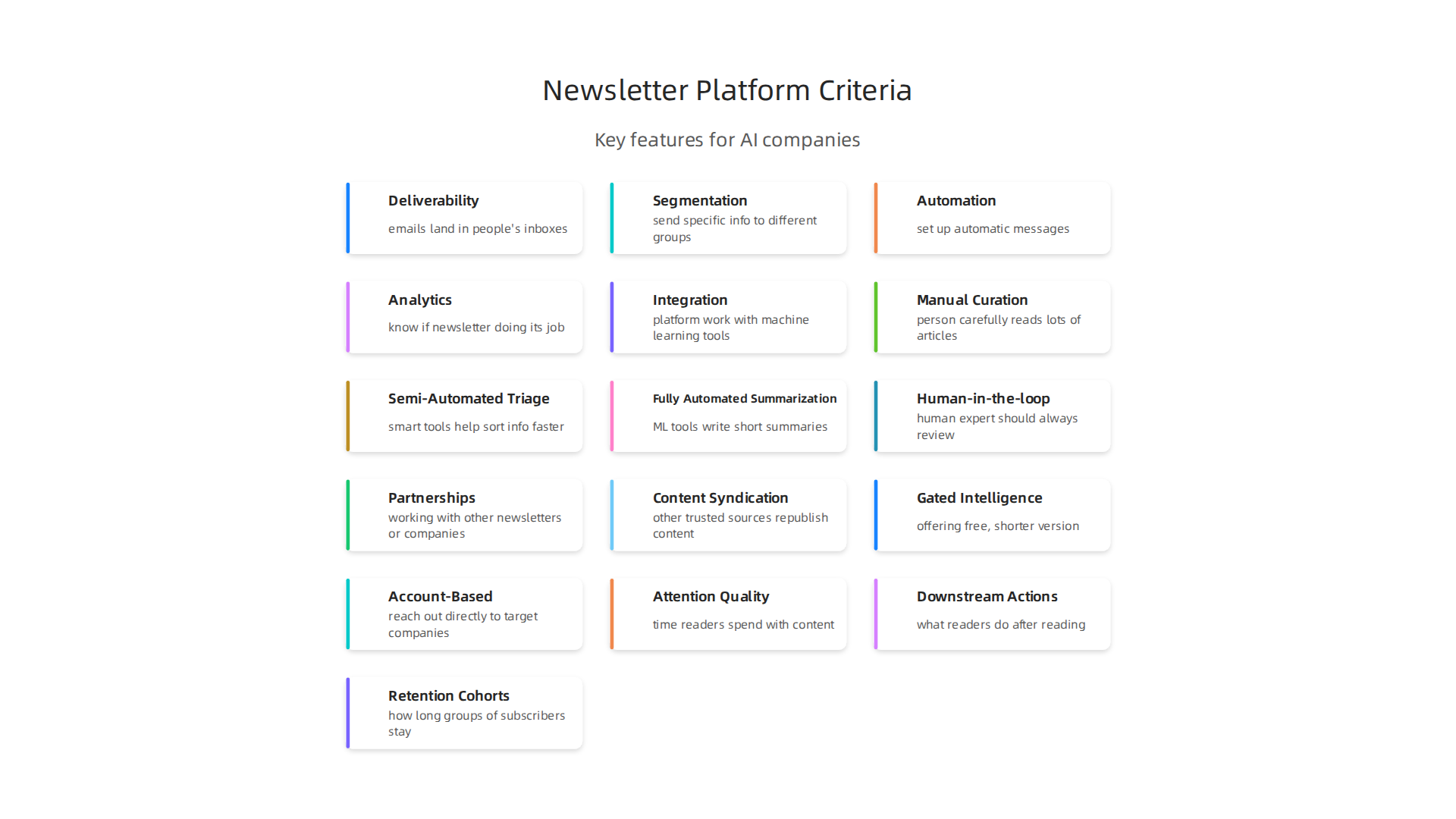
- Deliverability: This is super important. It means making sure your emails actually land in people’s inboxes, not in their spam folders. A good newsletter platform has strong tools to help your emails get seen. After all, what’s the point of learning how to create an electronic newsletter if no one gets it?
- Segmentation: AI leaders need to send very specific information to different kinds of readers. For example, investors might get news about funding rounds, while researchers get updates on new AI models. A top newsletter platform lets you divide your readers into small groups and send each group custom content. This makes your email marketing tools much more powerful.
- Automation: Imagine sending welcome emails, follow-ups, or birthday greetings automatically. Good newsletter programs let you set up these kinds of automatic messages. This saves a lot of time and makes sure your readers always feel connected. Some platforms, like ActiveCampaign, are known for their advanced automation tools 5 Best Newsletter Platforms for 2026.
- Analytics: You need to know if your newsletter is doing its job. Analytics tools show you who opened your email, what links they clicked, and more. This data helps you make your newsletter better over time.
- Integration with ML Pipelines: This is special for AI companies. Can your newsletter platform work with your machine learning tools? This means using AI to help create content, suggest topics, or even personalize emails for each reader. For example, you can use AI to automatically summarize content for your newsletter Automate Email Newsletter Content Curation with AI and SendGrid API or even personalize them Personalized Newsletters Using AI.
If you are thinking about integrating AI into your workflow, you might find our guide on how to create a PA newsletter for AI industry leaders helpful.
Cost vs. Control: Managed SaaS vs. Self-hosted Solutions
When picking newsletter platforms, you also need to think about how much control you want and how much you’re willing to spend. There are two main types:
- Managed SaaS Platforms: These are like renting an apartment. Companies like Beehiiv or Mailchimp host everything for you. You just sign up, pay a monthly fee, and start sending emails. They handle all the tech stuff, like servers and updates. These are often easier to use and are great for many businesses Best Newsletter Platforms: Build and Monetize Audiences. However, you have less control over the technical details and might pay more as your list of readers grows. Many leading newsletter platforms in 2026 are SaaS-based 15 Best Newsletter Platforms in 2026.
- Self-hosted Solutions: These are like owning your own house. You install the newsletter program on your own servers. This gives you full control over your data and how things work. Tools like Ghost or Listmonk are examples of open-source, self-hosted newsletter platforms Open Source Newsletter Platforms: Self-Hosted Options. While they can save money in the long run, especially if you have a huge list, they need more technical know-how to set up and maintain Should You Run Your Own Email System Instead of Renting One. For big AI intelligence feeds, this might offer the control some companies need.
Choosing between these options depends on your team’s technical skills, your budget, and how much freedom you need. For more insight, explore how to choose the right AI platforms for business growth in 2026.
After picking the right newsletter platforms, the next big step for AI companies is making sure the content you send out is truly helpful. There’s so much information about AI these days, it can be hard to find what’s important. This is why having a smart way to choose and share information is key for any electronic newsletter.

It’s all about cutting through the "noise" to find the real "signal" that your readers need.
Designing a Lean Curation Workflow to Cut Noise and Surface Signal
Making sure your newsletter shares only the best and most useful information requires a good plan. You want your readers to trust that your newsletter programs will always give them valuable insights. Actually, many people don’t read all the newsletters they get. About six out of ten newsletter readers say they don’t finish most of the newsletters in their inbox Email Newsletters as a Source of News – Pew Research Center. This shows how important it is to send high-quality content.
Here are some ways to find and prepare content for your AI company’s email marketing tools:
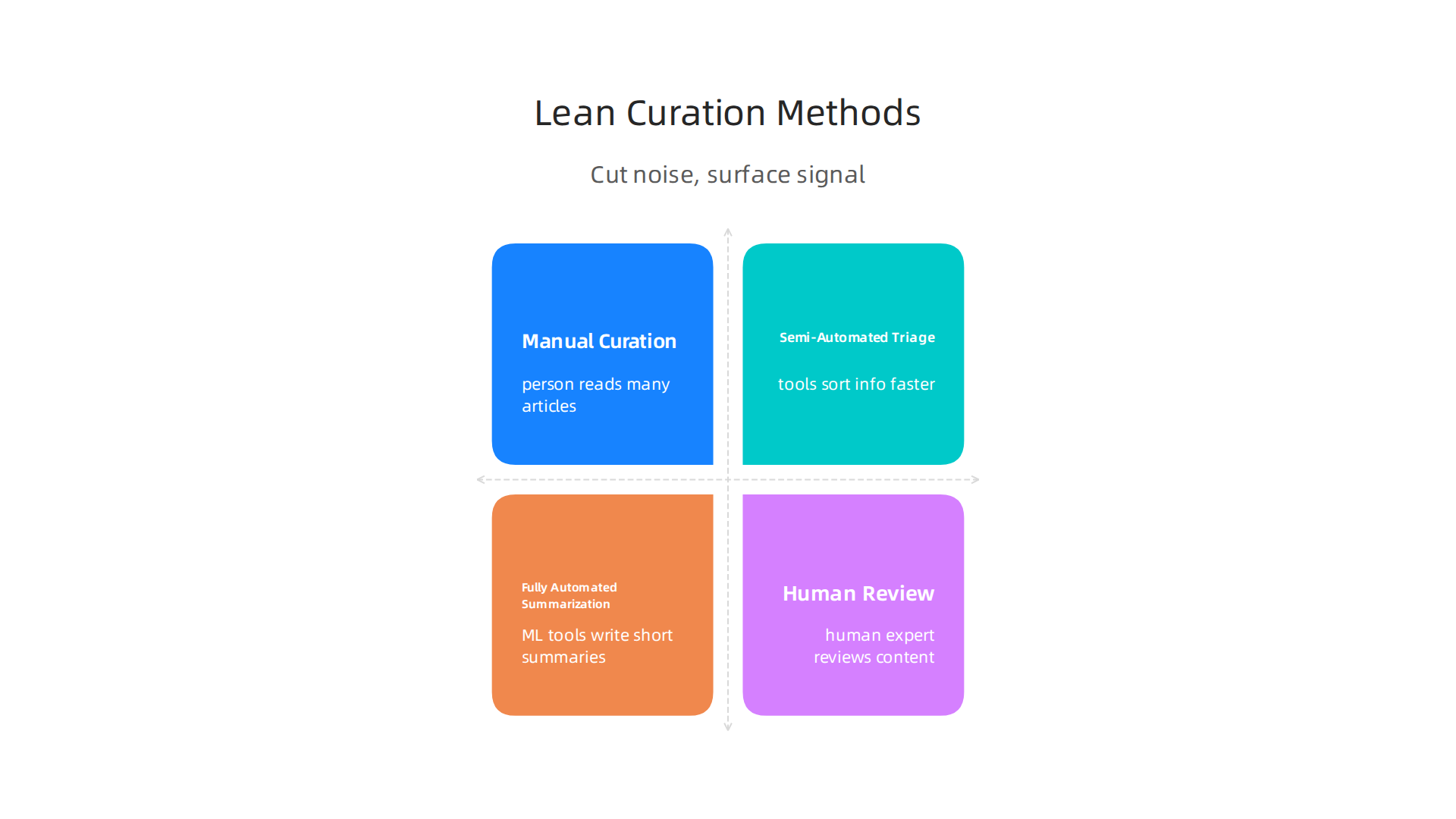
- Manual Curation: This is when a person carefully reads through lots of articles, research papers, and news stories. They pick out the most important bits that fit what your readers want to know. It takes more time, but it means a human expert is making sure every piece of information is top-notch. For very specific or sensitive topics, manual curation is often the best choice for your newsletter distribution strategy.
- Semi-Automated Triage: This method uses smart tools, often powered by AI, to help sort through information faster. These tools can flag interesting articles based on keywords or topics you set. Then, a person quickly reviews these flagged items, choosing which ones to include in the newsletter. This saves time compared to manual curation, but still keeps a human eye on quality.
- Fully Automated Summarization Using ML Tools: This is where AI takes the lead. Machine learning (ML) tools can read many articles and then write short summaries of them automatically. They can pick out the main ideas and present them in a clear way. This is very fast and can help when you have a huge amount of information to cover. Many machine intelligence professionals already rely on an AI summarizer in 2026 to handle large amounts of text.
No matter which method you use, a key part of designing a lean curation workflow is having human-in-the-loop checks. This means that even with automated systems, a human expert should always review the content before it goes out. This step is super important to make sure the information is correct, unbiased, and truly useful. It helps keep the quality high and builds trust with your high-value readers. For AI leaders, it’s crucial to cut through AI noise understand the elements of AI for strategic decisions and provide clear, reliable insights to their audience. This mix of smart tools and human judgment makes your newsletter platforms powerful and ensures your readers always get the best.
Automation, Segmentation, and Personalization with Machine Learning
After gathering great content for your newsletter, the next step is making sure it reaches the right people in the right way. This is where smart tools, powered by machine learning, come in. They can help your newsletter platforms work even better. Using automation, segmentation, and personalization helps your email marketing tools deliver content that truly connects with each reader.
Smart Ways to Send Newsletters
Automation means using technology to do tasks on its own. For newsletters, this can be sending emails at the best time, or even choosing which articles to share based on what’s new. It makes managing your newsletter programs much easier.
Segmentation is like putting your readers into different groups based on what they like or what they do. For example, some readers might be interested in AI for healthcare, while others care more about AI in finance. By dividing your audience, you can send each group content that is most important to them. This makes your newsletter distribution more effective because readers get fewer things they don’t care about.
Personalization takes segmentation a step further. It’s about making each email feel like it was made just for one person. This can be as simple as using their name in the greeting or as complex as recommending articles based on what they’ve clicked on before. Research shows that making emails personal, even just by a little, can really help advertisers and keep readers engaged, leading to higher open rates and engagement Personalization in Email Marketing: The Role of Non-Informative Advertising. This kind of customization has a clear positive impact on how well your email marketing works, from the subject line to the content itself The impact of customization on email marketing.
Staying Balanced with Personalization
While personalization is powerful, you need to use it wisely. If you make it too personal, it can sometimes feel strange or even "creepy" to readers Personal information in e-mail marketing can backfire, study indicates. Also, when you use AI to personalize, there’s a risk of creating "filter bubbles." This means readers might only see content that agrees with their past interests, missing out on new and important ideas. As AI leaders, it’s important to make sure your newsletter content is not only personalized but also broad enough to offer new insights.
To avoid these problems, it’s crucial to balance automation with human thinking. Always keep an editor’s eye on what the machine learning tools suggest. Make sure your segmentation strategies still allow for important, general news to reach everyone. And remember, when you collect and use personal data for your newsletter programs, you must follow rules like GDPR (General Data Protection Regulation) by getting clear permission from your readers GDPR Newsletter Rules: Consent, Rights, and Penalties. This helps protect their privacy.
By carefully planning how to create an electronic newsletter that uses these smart tools, you can make your newsletter platforms a trusted source of valuable information for everyone. This helps you to develop your AI news strategy for clearer insights and faster decisions, ensuring your audience stays well-informed without feeling overwhelmed.
For daily, in-depth insights into AI and broader technology trends, there’s a valuable resource available. The AI Newsletter Worth Reading provides clear daily AI updates directly to your inbox.
Even with the best content made just for your readers, it won’t help if it doesn’t get to their inbox. This is where the technical parts of sending emails come in. For businesses, making sure your messages land where they should is super important. It means thinking about how your newsletter platforms actually work.
Getting Your Emails Where They Need To Go
"Deliverability" is a fancy word for how likely your emails are to reach a person’s inbox, not their spam folder. It’s a big deal for newsletter distribution, especially for important business-to-business (B2B) messages. Here’s what helps:
- Sender Reputation: Think of this like your email’s report card. If you send good emails that people open and read, your sender reputation goes up. If you send emails that people mark as spam, it goes down. A good reputation helps email providers trust your
email marketing toolsand put your newsletters in the main inbox. - Authentication: This is like a digital ID for your emails. Systems like SPF, DKIM, and DMARC help prove that your email is truly from your company and not someone pretending to be you. This stops bad actors from sending fake emails using your name, making your
newsletter programssafer and more trusted. - List Hygiene: This means keeping your email list clean and up-to-date. Removing old, incorrect, or inactive email addresses helps your sender reputation. If you send to too many bad addresses, it looks like you’re not careful, and email providers might think your emails are spam. Keeping a clean list is key for high-value B2B lists, where every message counts. In the first half of 2026, many media publishers saw very low spam complaint rates, around 0.002%, showing how important it is to keep lists clean and trusted Newsletter Benchmark Report for Media H1 2026.
Following the Rules: Privacy and Data
When you create an electronic newsletter, especially for a big company, you also need to follow many rules. These rules are about protecting people’s privacy and their data.
- Global Opt-in: This means you must get clear permission from people before you send them emails. It’s not enough for them to just give you their email address. They need to say "yes" to getting your newsletters. This is especially true for different countries, which might have their own rules. Getting proper consent is a must for making sure your emails and newsletters follow the law How to Make your Emails and Newsletter Compliant.
- Data Residency: This rule is about where you store the information you collect about your readers. Some countries require that data from their citizens must stay within that country’s borders. This can affect which
newsletter platformsoremail marketing toolsyou choose, as they need to meet these storage rules. This makes sure that yournewsletter programsare not only effective but also legally sound across different regions.
Understanding these technical and legal sides is very important for enterprise-level newsletter platforms. It helps ensure your valuable AI insights reach the right people safely and reliably. If you’re looking to make your AI newsletter strategy stronger for the future, learn how to future proof your AI newsletter 2026 strategy for growth and monetization.
After making sure your newsletters actually reach the inbox, the next big step is to fill them with content that truly matters to your high-level readers. This is where your content strategy comes in. For busy AI investors, founders, and executives, every minute counts. They aren’t looking for basic news; they want smart, actionable insights delivered right to them.
Content Strategy: Summaries, Signals, Annotations, and Exclusive Intelligence
When you create an electronic newsletter for this audience, the type of content you share is key. Think about what helps them make important decisions. They value very specific formats that cut through the noise:
- Concise Model Releases: Quick summaries of new AI models, explaining what they do and why it matters, without lots of jargon.
- Funding Signals: Brief updates on funding rounds for AI companies, showing who is getting money and why. This helps spot growth trends.
- Comparative Analyses: Simple comparisons of different AI tools or technologies, highlighting their strengths and weaknesses in an easy-to-understand way.
- Actionable Insight Bullets: Short, clear takeaways that readers can use right away for their own strategies or investments. These might include future trends or key market shifts. According to an AI newsletter content guide from 2026, structuring content with a strong hook, a main item, and a curation block with short commentary is effective for engaging subscribers AI Newsletter Content Guide 2026: Write Issues Subscribers Open.
These types of content are not just raw facts. They are carefully put together to give a clear picture. For newsletter programs aimed at leaders, it’s about making raw research much more useful.
This is where annotations and brief synthesis become powerful. Instead of just sharing a link to a long report, you add your own short notes explaining the most important parts. You synthesize or combine information from many sources into a few key points. This transforms raw data into strategic intelligence. It shows your readers you’ve done the hard work for them, turning complex information into simple, clear messages that drive decisions. Many machine intelligence professionals now rely on tools like AI summarizers to quickly distill complex information into these kinds of insights for their newsletter distribution efforts, making their email marketing tools more effective in 2026 Why Machine Intelligence Professionals Rely On An AI Summarizer In 2026.
Choosing the right newsletter platforms also plays a role in how well you can present this curated intelligence. Some platforms are better at allowing detailed formatting and custom layouts that highlight key insights. Others, like Substack or Beehiiv, focus on a clean reading experience, which can be great for delivering highly concise updates Substack vs Beehiiv vs Ghost: 2026 newsletter platform – Kolonell. The goal is always to make it as easy as possible for your busy readers to get the most important information quickly. For more on developing a tailored approach, you can learn how to develop your AI news strategy for clearer insights and faster decisions.
After creating content that stands out, the next big challenge for your newsletter programs is to find new readers, keep the ones you have, and make your hard work pay off. This is all about scaling growth.
Scaling growth: acquisition channels, retention tactics, and monetization
To grow your email list, especially for a focused group like AI investors and leaders, you need smart ways to reach them. These are called acquisition channels.
Finding New Readers
For niche newsletter programs, high-return ways to get new subscribers include:
- Partnerships: Working with other newsletters or companies that share your audience. You can swap mentions or even run joint promotions. This might involve paid swaps where you pay other lists to recommend your content.
- Content Syndication: This means letting other trusted sources, like industry websites or blogs, republish parts of your content. They link back to your
electronic newsletter, bringing their readers to you. - Gated Intelligence: Offering a free, shorter version of your newsletter. To get the full, deeper insights, readers would need to sign up. This shows your value before asking for a commitment.
- Account-Based Approaches: For very specific, high-value readers, you might reach out directly to target companies or individuals. Cold outreach can be very effective, with some campaigns getting many new subscribers at a low cost per subscriber in 2026, according to one case study How Cold Outreach Delivered 41000 Newsletter Subscribers in ….
Choosing the right newsletter platforms can also help with subscriber acquisition by offering built-in tools for referrals and growth. To really learn how to reach leaders effectively, think about how to create a PA newsletter for AI industry leaders.
Keeping Your Readers Engaged
Once you have subscribers, keeping them is just as important as getting them. This is called retention. Good content, as discussed before, is the main key. But other tactics also help:
- Consistency: Send your
newsletter distributionon a regular schedule so readers know when to expect it. - Feedback Loops: Ask your readers what they like and what they want more of. Surveys can give you great ideas.
- Personalization: Use your
email marketing toolsto send slightly different content or messages based on what readers are interested in. - Strong Value Proposition: Always deliver on your promise of smart, actionable insights. Remember, it costs much more to get a new customer than to keep an old one. In fact, customer acquisition costs have gone up significantly, while retention costs have increased much less in 2026 Customer Retention Statistics 2026 | 80+ Facts & Data.
Making Your Newsletter Pay
Monetization is how your newsletter programs make money. It’s important to do this in a way that doesn’t break the trust you’ve built with your readers.
- Memberships and Tiered Access: Offer a free version to grow your list and a paid version with exclusive, deeper content. Many successful newsletter publishers use a mix of revenue streams, not just one, as a main monetization strategy in 2026 How to Monetize Your Newsletter in 2026: Complete Guide. This can also be done using different tiers, like a basic paid plan and a premium paid plan.
- Sponsorships with Clear Disclosure: Companies might pay to have their message in your newsletter. Always make it super clear to your readers when something is an ad or sponsored content. This helps keep trust high.
- Affiliate Links: If you talk about products or services, you can earn a small fee if readers click your special link and buy something. Again, be open about these links.
By carefully planning how you get new readers, keep them happy, and make money, your electronic newsletter can grow and succeed for a long time. Thinking about the long game will help you future-proof your AI newsletter 2026 strategy for growth and monetization.
Want clear, daily AI updates to help you make smart decisions?
Get clear daily AI updates from The Deep View Newsletter.
To really make sure your newsletter programs keep doing well over the long term, you need to measure what works, try new things, and keep learning. This is how editorial teams can keep their content sharp and useful, especially for busy AI investors and leaders.
Measurement, iteration, and continuous learning for editorial teams
It’s not enough to just send out your electronic newsletter and hope for the best. You need to know if your hard work is paying off. This means looking at the right numbers, called Key Performance Indicators (KPIs). For newsletters aimed at leaders and executives, some KPIs are more important than others.
Which Numbers Matter Most?
Forget just looking at how many people open your email. That’s a good start, but it doesn’t tell the whole story. For high-level audiences, you want to focus on:
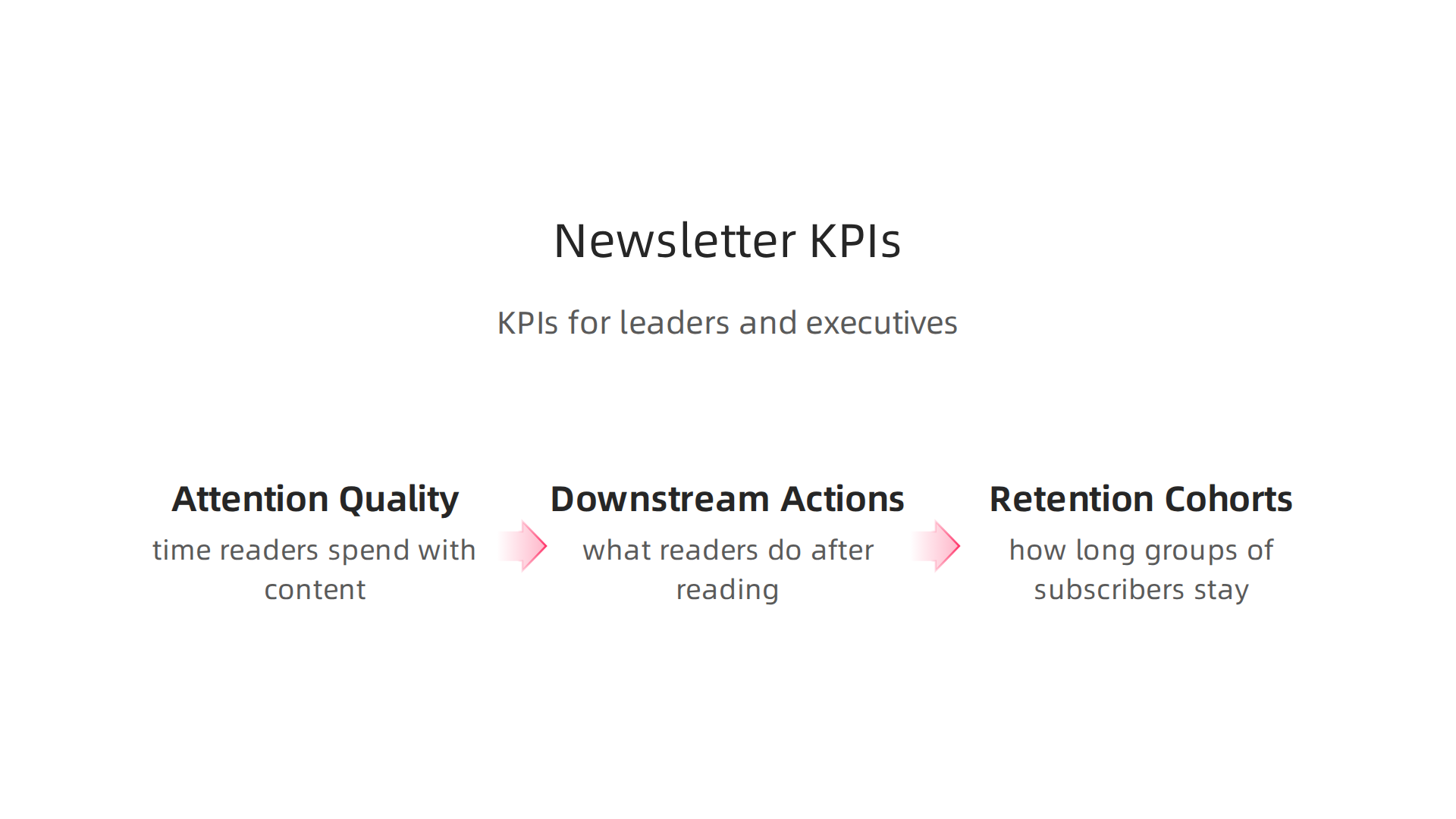
- Attention Quality: This means how much time readers spend with your content and what they actually click on. Are they just scanning, or are they really digging into the insights you provide? Your
email marketing toolscan often track this. Personalizing emails, even without adding new content about a product, can make a difference in how people pay attention, according to research from Stanford Graduate School of Business in 2026 Personalization in Email Marketing: The Role of Non-Informative …. - Downstream Actions: What do your readers do after they finish reading your newsletter? Do they visit your website, sign up for a webinar, or download a special report? These actions show that your content is truly moving them to do something valuable.
- Retention Cohorts: This looks at how long groups of subscribers stay with your
newsletter distribution. For example, how many people who joined in January are still reading in June? Tracking these groups helps you see if your content is keeping readers engaged over time. Experts suggest tracking retention at 90 days and looking at how product usage changes for newsletter readers versus non-readers Analyzing the Impact of Newsletters on User Retention.
By focusing on these deeper insights, you get a clearer picture of your newsletter’s real impact. You can also use these measurements to learn more about how to develop your AI news strategy.
Trying New Things and Learning from Readers
Running a successful newsletter is a bit like being a scientist. You make a guess, you test it, and you see what happens. This is called iteration and continuous learning.
- Low-Risk Experiments: You can try small changes to your
newsletter programsto see what works best. Maybe try different headlines for your emails, or send your newsletter on a different day. Somenewsletter platformshave tools that let you test these changes with a small group of readers first, so you can see what performs best before sending it to everyone. Customization in emails can greatly affect how well your email marketing works, from the subject line to the content itself The impact of customization on email marketing …. However, be careful not to get "too personal" as some studies show this can sometimes make readers feel uncomfortable or cause them to react negatively Getting too personal: Reactance to highly personalized email …. - Reader Feedback: The best way to know what your readers want is to ask them! Send out surveys or ask for replies to your emails. This feedback can give your editorial team great ideas for new topics, different formats, or even how to make your content easier to read. Making small tweaks based on this feedback helps you keep your newsletter valuable and relevant.
By always measuring, testing, and listening to your readers, your team can make sure your newsletter stays a top resource for AI leaders and investors. This continuous improvement is key for any strategic content effort, as you can see in the AI innovation guide to strategy, measurement and frameworks.
Summary
This guide explains why targeted newsletters are essential for busy AI investors, founders, and executives and shows how to build a high-value newsletter program that cuts through the noise. It walks through choosing platforms (SaaS vs self-hosted), the must-have features like deliverability, segmentation, automation and ML integrations, and practical workflows for curating and summarizing content. The article explains how to balance automation with human-in-the-loop checks, protect deliverability and privacy (SPF/DKIM/DMARC, consent, data residency), and design concise, actionable content formats leaders will read. It also covers subscriber acquisition, retention tactics and monetization options, plus measurement strategies and low-risk experiments to continuously improve. After reading, you’ll know what to look for in newsletter platforms, how to build a repeatable curation and delivery process, and how to scale and measure a newsletter that drives real decisions.