Why focused email marketing automation is a business imperative for AI leaders
In 2026, leaders in the world of artificial intelligence face a big challenge. The AI industry is always changing, and new information pops up every day. This means there’s a huge amount of news, research, and data to sift through. For busy AI leaders, finding the truly important insights is tough. They need to get valuable, timely information to their teams and other experts, but their time is very limited. How can they share what matters most without getting lost in the noise?

The answer lies in focused email marketing automation. This is more than just sending out a general email blast. Instead, it’s about using smart tools to deliver the right message to the right person exactly when they need it. Imagine having a helpful helper that works 24/7. This helper sends out custom information to everyone on your list, making sure it fits their interests, which makes emails much more effective than general messages alone according to research on Personalisation (In)effectiveness in email marketing.
Using email automation greatly reduces the amount of manual work. You won’t have to spend hours putting together and sending many emails by hand. The system handles these tasks for you. This frees up AI leaders and their teams to focus on important strategic work, rather than getting stuck in daily sending chores.
What’s more, effective email marketing automation allows for messages that feel very personal, even when you’re reaching many people. It means you can share data-driven insights that are important to each person. This makes sure that the information is useful and gets attention. By using mass email platforms in a smart way, businesses can send high-value insights quickly and efficiently. This is truly a must-have for any AI business that wants to stay ahead in 2026. To get clear daily AI updates, consider subscribing to The AI Newsletter Worth Reading.
Why email marketing automation matters for machine intelligence companies
Staying ahead in the quick-moving AI world means getting the right information to the right people at the right time. This is where a strong email marketing automation strategy truly shines for machine intelligence companies. Think of email as a trusted pathway. Unlike social media or news feeds that can be noisy, an email inbox feels more personal and direct. It’s a place where important messages usually get more attention.
For AI leaders and investors, this means email is perfect for sharing valuable things like:
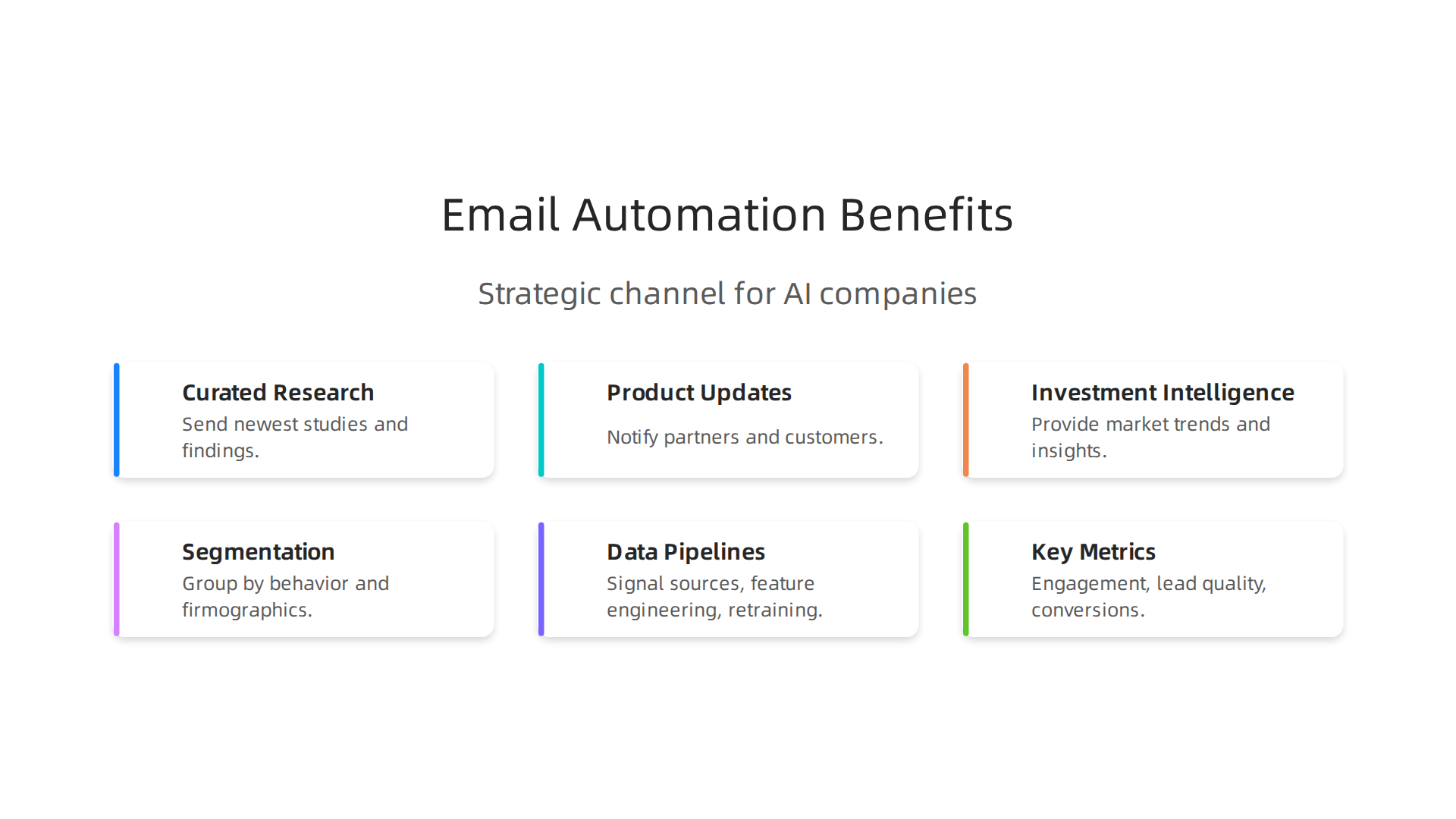
- Curated AI research: Sending out the newest studies or findings that really matter.
- Product updates: Letting important partners or customers know about new AI tools and features.
- Investment intelligence: Giving investors insights into market trends and new opportunities.
Actually, email marketing is still growing. Reports for 2026 show that more and more businesses are using email automation. They are making messages even more personal and designing them for mobile phones first. This highlights why email is a must-have tool for important business talks today, according to the State of Email Reports 2025-2026: Email Marketing Trends.
Automation brings smart scaling and personal touches
One of the best things about email marketing automation is that it helps you send many personalized messages without a lot of extra work. Imagine you have a large list of clients, partners, and team members. Each of them needs different kinds of AI news or updates. Trying to send individual emails to everyone would take forever. But with email automation, you can set up smart rules. These rules make sure each person gets emails tailored to what they care about most.
For example, a machine intelligence company can use automation to:
- Send special reports on AI trends 2026: the crucial insights for leaders and investors to investors.
- Share detailed updates about new product features with current customers.
- Provide market insights to executives making big decisions.
This helps high-level professionals, who are often very busy, get the useful information they need quickly. They don’t have to wade through a general email blast. Instead, they receive content that feels like it was made just for them.

This smart approach uses mass email platforms in a very powerful way. It saves time for both the sender and the receiver. It also makes sure that important insights are not missed. In 2026, automated emails represent only a small portion of all emails sent, yet they drive a significant share of total email income for many companies, boasting much higher open rates than regular campaigns, as shown in the Email Marketing Report 2026–2030. This shows just how effective these smart sending methods are.
Moving from just understanding why email marketing automation is important, the next step is building smart systems that really work. This means setting up your emails to go to the right people with the right message at the right time. It is all about making sure your messages are super valuable and engage busy professionals.
Smart ways to group your contacts: Segmentation
To make your email automation work well, you need to group your contacts. This is called segmentation. Instead of sending the same email to everyone, you divide your list into smaller groups based on what you know about them. This way, each group gets emails that truly matter to them.
Here are a few ways machine intelligence companies can segment their contacts:
- Behavioral Groups: This means grouping people based on what they do. For example, you might send different emails to someone who just downloaded a report on AI trends versus someone who visited your product page multiple times. This shows what they are interested in.
- Company Details (Firmographic Groups): You can group contacts by their company’s size, industry, or the person’s job role (like CEO, investor, or researcher). An investor will want different news than an AI engineer.
- Research Interest Groups: For AI, this is very important. You can group people by the specific AI topics they care about. Maybe some are keen on AI ethics, while others want to know about new AI models or robotics.
When you use these methods, your emails feel more personal. Research shows that making emails personal, even just by adding a name to the subject line, can make more people open them. This personalization makes emails more effective, as studies on Personalization in Email Marketing confirm. Actually, AI-enhanced personalization significantly boosts customer engagement, according to findings in Email Marketing Strategies for Enhancing Customer Engagement. This helps you avoid sending a general email blast that most people ignore.
When to send what: Triggers vs. scheduled campaigns
After you’ve grouped your contacts, you need to decide when to send them emails. There are two main ways to do this:
- Trigger-Based Flows: These are emails that send automatically when someone does something specific. For instance:
- When a new investor signs up, they get a "welcome" series of emails about your company’s vision.
- If someone downloads a whitepaper on a new AI technology, they automatically get more information related to that topic.
- If a user tries a new AI tool, they might get tips on how to use it better.
These flows are great for giving timely and relevant information right when a person is most interested. These kinds of email marketing automation workflows are very common and effective in 2026.
- Scheduled Campaigns: These are emails you plan to send at certain times. Think of them like regular updates.
- A weekly newsletter with the latest AI news.
- A monthly report on market trends for investors.
- Holiday greetings or special announcements.
These are important for keeping your whole audience informed regularly. To make these work best, you need a strong AI news strategy for clearer insights and faster decisions.
The goal of both types of workflows is to deliver high-value content that truly resonates. By using both triggers and scheduled campaigns with smart segmentation, your email marketing automation can become a powerful tool for connecting with your audience in the AI world.
For busy AI leaders and investors, getting clear, daily AI updates is vital. If you want to stay on top of the rapidly evolving machine intelligence landscape without sifting through noise, consider getting curated insights straight to your inbox.
The AI Newsletter Worth Reading
Moving from just understanding why email marketing automation is important, the next step is building smart systems that really work. This means setting up your emails to go to the right people with the right message at the right time. It is all about making sure your messages are super valuable and engage busy professionals.
Data & AI: using machine learning to improve automation outcomes
Now, let’s make things even smarter. Imagine your email system could guess what people might do next. That’s where data and AI, especially machine learning, come in handy. In 2026, using AI in your email marketing automation is not just a nice-to-have, it is a must-have for machine intelligence companies. It helps you send emails that truly hit the mark.
Predictive Models: Guessing What Comes Next
AI can use past information to build "predictive models." These models help you understand your contacts better. Two important types are:
- Churn Risk: This model tries to figure out which contacts might stop engaging with your emails or even leave your platform soon. If the model sees someone is at high risk of "churning" (leaving), you can send them a special email with a helpful resource or a special offer. This can encourage them to stay. Such models are often built using classification methods to predict the probability of an event like churn, engagement, or purchase based on past user actions and data, as explained in resources on Customer AI Propensity Scoring Model Details.
- Engagement Propensity: This model predicts how likely someone is to open an email, click a link, or respond to your content. If a contact has a high "engagement propensity" score, it means they are very likely to interact. You can then prioritize sending them important updates or new product announcements, knowing they will probably pay attention. Engagement scores are often based on how recently someone visited, how often they visit, and how much they interact, as noted in a Primer on Modeling.
These smart predictions let you adjust your email triggers. Instead of sending an email just because someone downloaded a whitepaper, you can add another layer: send it only if they downloaded the whitepaper and have a high engagement score, or if they downloaded it and have a high churn risk, needing a special nudge. This makes your email automation much more effective than a simple email blast.
Practical Data Pipelines: Feeding Your Smart System
For these predictive models to work, they need good data. Think of it like a smart factory: you need raw materials (data), machines to process them (feature engineering), and regular checks to make sure everything is running smoothly (model retraining).
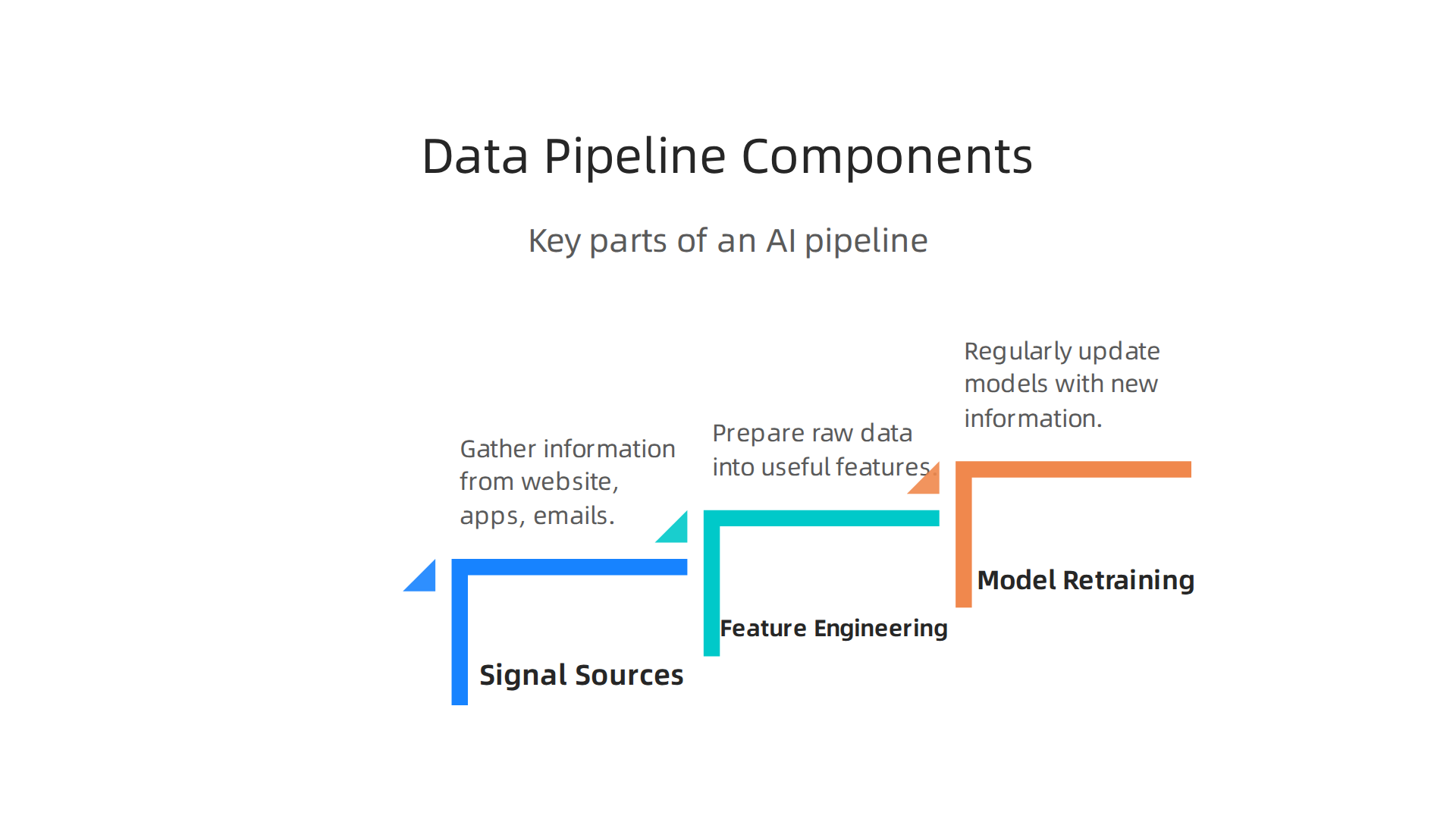
- Signal Sources: This is where you gather information. It could be data from your website (what pages people visit), how they interact with your apps, past email opens and clicks, and even information about their company or job role. Big datasets are often used, which can be found in places like Data on AI Models or Kaggle’s open datasets.
- Feature Engineering: This is like preparing your raw materials. You take the messy data and turn it into useful "features" or pieces of information that the AI model can understand. For example, instead of just "visited product page," you might create a feature like "number of times visited product page in last 7 days." This step is key for things like propensity score modeling for business marketing research.
- Model Retraining Cadence: AI models need to learn from new data constantly because customer behaviors and market trends change. So, you regularly "retrain" your models with the latest information. This makes sure your predictions stay accurate in 2026. This ongoing process helps prevent sending irrelevant messages on your mass email platforms.
By setting up these data pipelines, you make sure your email marketing automation is always learning and getting better. This way, you can deliver highly personalized content, just like when businesses use tools like an AI email writer to maximize productivity and security. This smart approach improves every aspect of how AI is transforming information technology communication.
Once your smart email systems are running with data and AI, the next big step is to make sure they are actually helping your business grow. This means carefully looking at how well your automated campaigns are doing and making them even better over time.
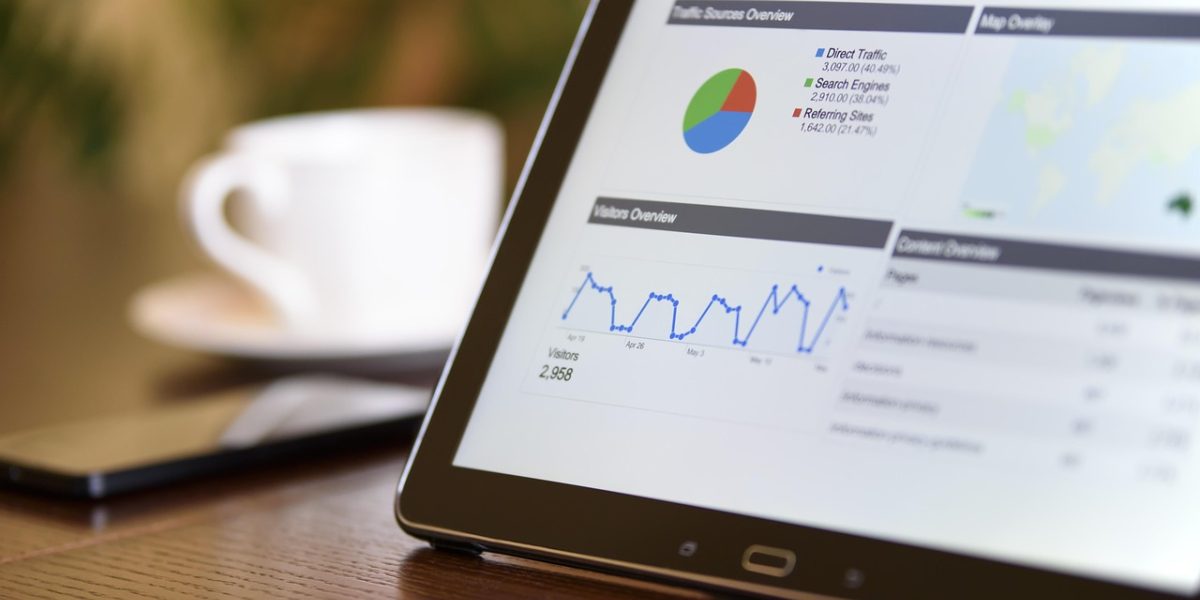
It is all about checking the results and learning from them.
Measurement, testing, and optimization for automated campaigns
To truly get the most out of your email marketing automation, you need a plan for checking its success. Just like a good coach reviews game tapes, you need to review your email performance.
Picking the Right Things to Measure
It is important to look at the right numbers to see if your automated emails are working. Here are some key things to track:
- Engagement: This tells you how much people interact with your emails.
- Open Rate: How many people open your emails. For automated emails, this can be quite high. In fact, automated emails have nearly double the open rates of regular, manual campaigns, reaching about 48.57% compared to 25.2% in 2026, and they drive a big part of total email revenue 2026, even though they are a small part of all emails sent Email Marketing Report 2026–2030: KPIs, Deliverability & …. For triggered emails specifically, the open rate can be around 45.6% Benchmark emailing 2026: statistics on emailing 2026 – Badsender.
- Click-Through Rate (CTR): How many people click on links inside your emails. This is a very good sign of interest. A healthy target for CTR is usually more than 3% in 2026 Email Marketing Benchmarks 2026: Open Rate, CTR & ….
- Lead Quality: Are your emails bringing in good potential customers?
- This is about seeing if the people who click through are actually the right fit for your products or services.
- Downstream Conversions: This is the most important part. Are people doing what you want them to do after opening and clicking your emails? This could be buying something, signing up for a trial, or downloading a resource. You want your email automation to lead to real business results.
When looking at these numbers, it is helpful to compare them to what is typical for your industry. Many reports share Email Automation Benchmarks 2026 — Research Report to help you see how you stack up.
Testing and Making Things Better
Even with AI helping, you still need to test things out. Think of it like a scientist running experiments to find the best way.
- A/B Testing Strategies: This is when you send two different versions of an email to small groups of people to see which one works better. For example, you might try a different subject line or a new picture in one version. The version that gets more opens or clicks is the winner!
- Holdout Groups: When you make big changes, especially ones driven by AI models, you should keep a "holdout group." This is a small group of your audience who still gets the old version of emails, while the rest get the new, AI-driven emails. Then you compare the results. For example, you might run a new email automation flow on 10% of new sign-ups and see how their trial-to-paid conversion compares to the other 90% who get the old emails Marketing Automation Workflows: 10+ Templates 2026. This helps you know for sure if the new way is actually better.
- Validating Model-Driven Changes: Since your AI models are always learning, you need to regularly check if their predictions are still accurate and if the changes they suggest are truly making your email automation more effective. This is about making sure the smart system is staying smart and not sending an email blast that misses the mark. You should set up ways to measure these changes from the start, looking at every step the AI takes and every action your users make Pilot Implementation with Real Metrics – Agility at Scale.
By always measuring, testing, and refining, you ensure your email marketing automation stays sharp, delivers value, and achieves your business goals in 2026. This ongoing process helps you optimize your mass email platforms for the best possible outcomes.
After you know your email marketing automation is working well, the next step is to pick the right tools to make it all happen. Think of it like choosing the best gear for a big project. Having the right setup helps your automated emails reach the right people at the right time, especially in 2026 with all the new smart technologies available.
Tools, integrations, and tech stack recommendations
How to Pick the Best Email Automation Platform
Choosing an email automation platform needs careful thought. It is not just about sending emails. You need a platform that works smartly with your other business tools. Here are the main things to look for:
- How it Handles Your Data: A good platform should easily take in all your customer information from different places. It should help you see each customer clearly and manage their choices about what emails they want to get. This also means making sure your platform follows important privacy rules, like letting people easily unsubscribe at any time GovDelivery Communications Cloud.
- How Well It Connects with Other Tools: Your email system needs to talk to your other business software, like your customer relationship management (CRM) tools, online stores, or project trackers. Many top platforms offer ways to connect to popular systems such as Salesforce, HubSpot CRM, and Shopify Marketing Automation Platform Comparison Guide 2026. Look for platforms like Klaviyo, HubSpot Breeze, and ActiveCampaign, which are known for having good connections and advanced AI agent capabilities in 2026 Email Marketing AI Agents: 2026 Automation Playbook.
- Smart Features (AI Support): In 2026, many top email marketing automation tools use AI to help. Some platforms even let AI tools like Claude and ChatGPT use your account data directly to make emails better 10 Best Email Automation Tools in 2026. These smart features can help you write better emails or decide when to send them. If you want to dive deeper into smart email tools, check out our guide on choosing the best AI email writer.
- Making Sure Emails Get Delivered: Even the best email is useless if it does not reach the inbox. Good email automation platforms have features to make sure your emails actually get delivered. This includes setting up special internet records like DKIM, SPF, and DMARC to show your emails are safe and real Ensuring Email Delivery for External Vendors – Service Desk.
How Your Tools Work Together
Getting all your systems to share information is key for powerful email automation. This is how you connect different parts of your business to your email efforts:
- Connecting Your Customer Data (CRM): This means linking your customer records from sales (CRM) to your email system. So, if a customer buys something, your email system knows to send them a thank-you email.
- Using Product Information: If you sell products, information about what people look at or buy on your website (called product telemetry) can tell your email system what to send next. For example, if someone views a product but does not buy it, your system can send a reminder email.
- Bringing in Website Data (Analytics): Data from how people use your website helps tailor emails. If someone spends a lot of time on a certain page, you can send them more information about that topic.
- Using Smart Model Ideas: Your AI models often create ideas or predictions. You can use special connections called webhooks to send these ideas into your email system right away. Webhooks help gather real-time data from many sources, including streaming and batch data Load Data to HTTP Webhook in Real-time ETL & CDC | Estuary. For example, if your AI predicts a customer is ready to buy, it can trigger a special offer email. Webhooks let different systems "talk" to each other instantly when certain things happen, making your email automation very responsive Webhook-Driven Email Automation in 5 Minutes.
Making sure these connections are strong and smooth helps prevent any email blast that feels out of place. It ensures every message is personal and helpful. To stay informed about the latest in AI and technology that powers these smart systems, consider getting daily insights.
Get clear daily AI updates from The Deep View Newsletter.
The AI Newsletter Worth Reading
This ongoing process of picking the right tools and making them work together is vital for successful email marketing automation in 2026.
Once you have the right tools and they are all talking to each other, the next big step for great email marketing automation is to make sure you are using them wisely and safely. This means thinking about rules, keeping customer information private, and making sure your emails actually land in the right inbox.
Governance, privacy, and deliverability best practices
For any email marketing automation setup in 2026, putting privacy first is a must. This is not just a good idea, it is often the law.

Privacy First: Respecting Your Customers
Building a privacy-first approach means thinking about it from the very start.
- Get Permission: Always make sure people have clearly agreed to get your emails. This is called consent. It means they know what they are signing up for. Also, they should be able to stop getting your emails whenever they want. Companies must follow rules like the FTC’s privacy act, which requires clear ways for people to opt out of communications How To Comply with the Privacy of Consumer Financial Information.
- Only Take What You Need: Try to collect as little personal information as possible. This is called data minimization. If your AI tools use this data to make emails more personal, be extra careful. Make sure you only use the data for what you said you would.
- Follow Local Rules: Different places have different privacy laws, like GDPR in Europe or CCPA in California. You need to make sure your email automation follows all the rules for where your customers live. Using AI for personalization means you also need to think about ethics and fairness in how you handle data. To learn more about these important topics, consider exploring AI Sentiment Analysis Ethics: Navigating Data Privacy and Bias.
Keeping Your Emails Out of the Spam Folder
Even with the best content, an email is useless if it goes to spam. This is where "deliverability hygiene" comes in for your email marketing automation.
- Prove You Are Real: You need to show that your emails are truly from you. This is done through special internet setups like DKIM, SPF, and DMARC. These are like digital signatures that tell other email systems your messages are safe and trustworthy Guide to Email Standards. In 2026, having these correctly set up is vital for making email trustworthy Making Email Trustworthy.
- Smart Sending: How often you send emails and what your emails look like can affect if they get delivered. Do not send too many emails, or send the same thing over and over. This can make your emails look like spam. If you are sending emails to many people at once using mass email platforms, keep your sending patterns steady.
- Watch Your Reputation: Email providers (like Gmail or Outlook) give you a "sender reputation." If too many people mark your emails as spam, your reputation goes down, and fewer of your emails will get delivered. Always aim for clear, simple subject lines and helpful content to keep your recipients happy and your sender reputation high Mass Email Deliverability Frequently Asked Questions.
By focusing on these privacy and deliverability best practices, your email automation can be both effective and responsible, reaching your technical audiences with confidence.
Summary
This article explains why focused email marketing automation is essential for AI leaders in 2026 and how to build systems that deliver high-value, timely insights to busy technical audiences. It covers the business case for email over noisy channels, practical segmentation methods (behavioral, firmographic, research interest), and when to use trigger-based flows versus scheduled campaigns. The piece shows how machine learning—through churn and engagement propensity models—and robust data pipelines make personalization scalable and more effective than generic email blasts. It also outlines measurement best practices like open rates, CTR, conversion tracking, A/B tests and holdout groups, and explains how to choose platforms and integrate CRMs, analytics, and webhooks. Finally, the article reviews governance essentials—consent, data minimization, DKIM/SPF/DMARC—and deliverability hygiene so your messages reach inboxes and drive real business outcomes.