
Introduction
Picking the right AI text generator in 2026 feels like finding a needle in a haystack. New tools pop up every week, and every one claims to be the best. Investors, founders, and analysts spend hours sifting through options, trying to figure out which tools actually deliver real value.
The numbers back up the chaos. The global AI text generator market is forecast to grow at a CAGR of 17.3%, reaching USD 2.0 billion by 2031 from USD 0.9 billion in 2026 according to Knowledge Sourcing.

Other reports put the 2026 market value around USD 850.92 million, with projections hitting USD 2.6 billion by 2032 at a 20.4% CAGR. That is a lot of money and a lot of tools fighting for your attention.
Here is the thing. Most articles just list popular names without giving you a real way to compare them. That doesn’t help when you are deciding where to spend your budget or which tool to integrate into your workflow.
This article is different. We cut through the noise to bring you a curated, transactional guide to the most essential AI writing tools of 2026. We focus on practical evaluation criteria, real benchmarks, and expert insights so you can make an informed purchase decision fast. Whether you need an ai chat for writing, want to test an ai text generator for your team, or are looking for a grammarly ai humanizer to polish your output, we have you covered.
Want to stay ahead of every new tool and trend? Join thousands of professionals who get clear daily AI updates from The Deep View Newsletter.
It is free and takes two minutes to read each morning. Subscribe now and never miss a breakthrough again.
1. Understanding AI Text Generators: Evolution and Core Capabilities
So what exactly is an AI text generator, and why should you care in 2026? Simply put, it’s a tool that uses artificial intelligence to create written content based on a prompt. But the tools you see today are nothing like the clunky early models from just a few years ago.
How far they have come. Early text generators could barely finish a sentence without losing the thread. Today’s systems are multimodal and agentic. That means they don’t just write. They understand images, read documents, browse the web, and even take actions for you. The market has exploded as a result. According to Research and Markets, the AI text generator market was valued at USD 850.92 million in 2026 and is expected to grow to USD 2.6 billion by 2032.
The core capabilities that matter. To pick the right tool for your work, you need to know what makes a modern AI text generator powerful:
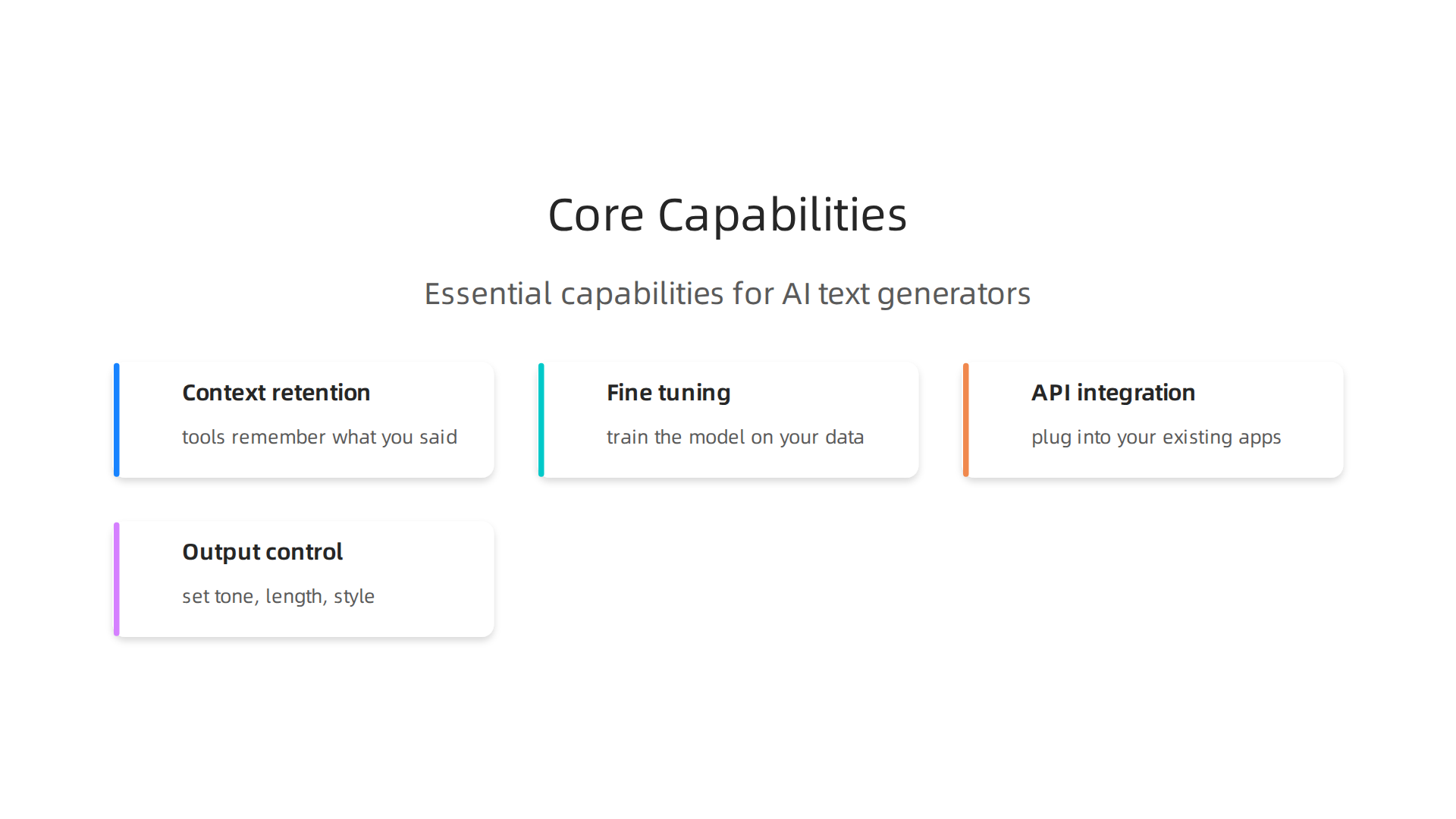
- Context retention. Good tools remember what you said earlier in a conversation. This lets you have real back and forth, like an ai chat for writing, instead of starting from scratch every time.
- Fine tuning. Many platforms let you train the model on your own data. This is huge for teams that need consistent brand voice or industry specific language.
- API integration. You can plug these generators into your existing apps, CRM, or publishing tools. No more copying and pasting.
- Output control. You can set the tone, length, style, and even ask for undetected ai output that reads naturally. Some tools, like a grammarly ai humanizer, help polish machine written text to sound like a human wrote it.
Understanding these fundamentals helps you match a text generator to your real needs.

Not every tool does everything well. That’s why we built this guide.
Want to stay on top of every new AI writing tool and trend? Subscribe Free to The Deep View Newsletter for simple daily updates that take just two minutes to read.
2. Top AI Text Generators for Long-Form Content and Research
Writing a 3,000-word report or research paper is nothing like tapping out a short email. You need an ai text generator that can hold a thread, cite sources, and keep its voice steady from start to finish. Not every tool is built for that.
The best options in 2026 combine strong contextual memory with citation support and editorial controls. For example, Netlify’s roundup of top content tools highlights Writesonic as a standout for long-form blog posts, landing pages, and product descriptions.

Meanwhile, Zapier’s comparison shows that tools like Jasper and Claude shine when you need consistent style over many pages.
What sets these apart? They remember what you wrote paragraphs ago, let you paste in research links, and offer templates for papers, whitepapers, or reports. Some even let you produce undetected ai writing that reads like your own voice. Others integrate with citation databases so you never drop a fact without a source.
Word limits matter too. Many free generators cap you at a few hundred words, but premium text generator tools let you output thousands of words in one go. The trick is finding the platform that matches your workflow, whether you need an ai chat for writing a thesis or a batch tool for a company whitepaper.
Want to know which AI writing tools are actually worth your time in 2026? Subscribe Free to The Deep View Newsletter for honest reviews delivered in two minutes a day.
3. Best Tools for Marketing Copy and Ad Creative
Writing ad copy that actually gets clicks is tough. You need the right hook, a clear benefit, and a tone that matches your brand. That is where an ai text generator built for marketing really shines. These tools are different from the long form ones we just covered. They focus on speed, brand voice, and testing.
According to a Dataforest comparison of AI copywriting tools, these platforms can cut content costs by 30 to 50 percent and speed up production by 80 percent. That is a huge advantage when you need multiple ad variations by lunchtime.
The best marketing text generator tools offer features like:
- Brand voice customization so every Facebook ad or Google headline sounds like you.
- A/B testing integration to quickly compare which version performs better.
- Multi channel output that adapts your copy for email, social, and search ads in one click.
Tools like Jasper and Copy.ai also include SEO optimization and audience targeting. You can paste in keywords and get copy that ranks. Some provide an ai chat for writing where you refine headlines conversationally. And if you want natural sounding ads that avoid detection, look for options with a grammarly ai humanizer built in.
Real world results matter. Many marketers report higher click through rates after switching to AI generated ad copy. For example, one ecommerce brand saw a 40 percent lift in CTR by testing AI written headlines against their own. The key is using an undetected ai approach that keeps your copy feeling human.
If you want to stay ahead of these trends and discover which tools actually work in 2026, Subscribe Free to The Deep View Newsletter. It delivers honest AI insights in two minutes a day.
4. AI Writing Assistants for Technical Documentation and Code
So you have your marketing copy covered. But what about the other kind of writing that your team needs every day? I mean technical documentation, code comments, API guides, and user manuals. That stuff is just as important. And guess what? An ai text generator can handle it too.
Technical documentation has its own set of rules. You need code snippets that actually compile. You need consistent style across hundreds of pages. And you need to follow security best practices. According to the G2 list of enterprise AI writing assistants, many tools now enforce style guides and support code generation right inside the editor.
Here is how these smart text generator tools help technical teams:
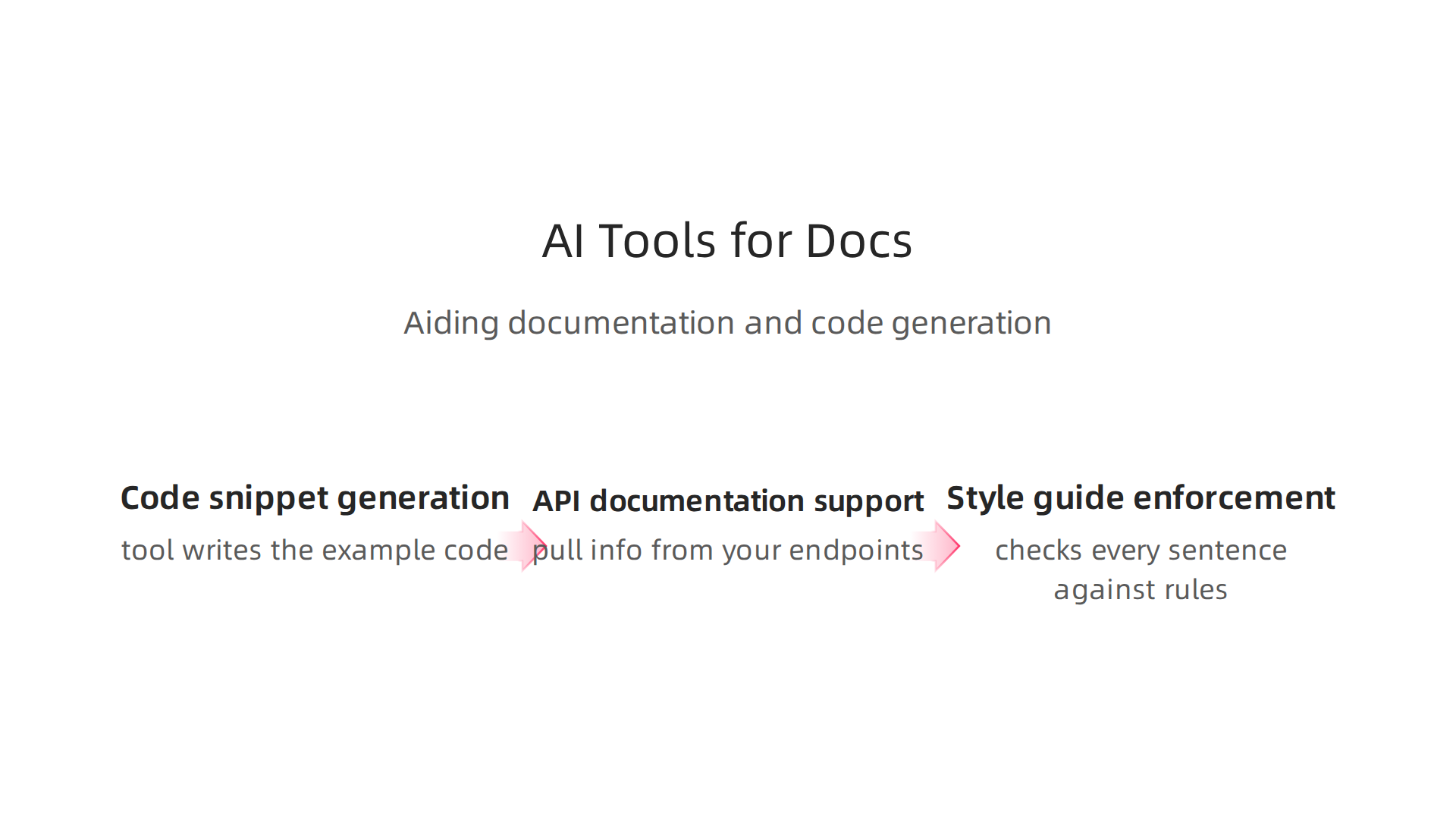
- Code snippet generation. You describe what you need, and the tool writes the example code.
- API documentation support. It can pull info from your endpoints and format it into clean docs.
- Style guide enforcement. The assistant checks every sentence against your team’s rules so that nothing slips past.
A 2026 report from the Info-Tech Research Group found that enterprise assistants with built-in security controls improve content quality and productivity. That matters because leaking internal code patterns or credentials could be a disaster. Teams like those using AI SAST tools add extra guardrails to catch issues before they ship.
Some tools even offer an ai chat for writing style interface. You can ask it to generate a README file, add inline comments, or rewrite a confusing paragraph. The best ones also include something like a grammarly ai humanizer to keep technical writing clear and natural.
If your team writes code or documentation, an ai text generator can save hours each week. Just make sure you pick one with strong security. And if you want to stay on top of which tools are actually reliable in 2026, Get Free Updates from The Deep View Newsletter. It gives you honest AI insights in two minutes a day.
5. Enterprise-Grade Text Generators with Customization and Security
So you have seen how an ai text generator can help with technical docs and code comments. But what happens when your organization needs more control? Enterprise teams need tools that can be customized, secured, and scaled.
That is where enterprise-grade text generator tools come in. They offer features that free tools simply cannot match.
Customization is key. Many enterprise platforms let you fine-tune the model on your own data. You can create custom templates that match your brand voice. You can set up workflow automation so that the ai chat for writing interface pulls the right information from your knowledge base. According to the Dust blog on AI for technical writing, teams use these tools to maintain consistency across hundreds of documentation pages.
Security is non-negotiable. In regulated industries like healthcare, finance, and defense, you cannot just paste sensitive data into any online tool. Enterprise ai text generator solutions offer:
- Data encryption at rest and in transit.
- Role-based access controls so only the right people can use certain features.
- On-premise deployment for complete control over your data.
- Audit logs to track every action.
A 2026 report from the Info-Tech Research Group highlights that enterprise assistants with built-in governance improve content quality and productivity while supporting responsible AI use. This matters because a leak of proprietary code or customer data could be devastating.
Some tools even include a grammarly ai humanizer type feature that keeps technical writing clear and natural. And when you add security guardrails like those found in top AI SAST tools for 2026, you can catch vulnerabilities before they ever reach production.
The bottom line is simple. Picking the right ai text generator for your enterprise is about more than just writing quality. It is about customization, compliance, and safety.
If you want to stay ahead of which enterprise AI tools are actually reliable in 2026, Get Free Updates from The Deep View Newsletter. It delivers honest AI insights in just two minutes a day.
6. Open-Source vs. Proprietary AI Writers: A Comparative Analysis
So you have seen how enterprise tools handle security and customization. But now you face a bigger question. Should you choose an open-source model or a proprietary ai text generator?
Both sides have strong fans. And the right choice depends on your goals.

Open-source models give you transparency and control. You can see how the model works. You can tweak it to fit your exact needs. And you avoid vendor lock-in. In 2026, models like DeepSeek-R1 and Qwen3 are leading the pack. According to the Clarifai guide on open-source reasoning models, these models offer strong performance at a fraction of the cost. But there is a catch. You need technical skills to set them up and run them. As NetApp Instaclustr explains, open-source LLMs can be freely modified and distributed, but that freedom comes with more hands-on work.
Proprietary tools like GPT-5.5 and Claude Opus 4.7 are different. They are polished and ready to use. You get customer support, regular updates, and a smooth experience. As Zapier notes in their 2026 LLM guide, proprietary models are among the most popular because they just work. But they cost more. And you have less control over your data.
Here is a quick comparison:
| Feature | Open-Source | Proprietary |
|---|---|---|
| Cost | Free to use, you pay for hosting | Subscription or per-use fees |
| Customization | Full control | Limited to vendor options |
| Ease of use | Needs technical expertise | Plug and play |
| Support | Community forums | Dedicated support teams |
| Data control | You own everything | Depends on the vendor |
For most individuals and small teams, a proprietary ai chat for writing tool makes more sense. The text generator works out of the box. But for organizations with unique needs or strict data rules, open-source is worth the effort.
Want to stay updated on which AI tools are actually worth your time in 2026? Subscribe Free to The Deep View Newsletter for simple daily AI insights.
7. How to Evaluate an AI Text Generator: Key Benchmarks and Metrics
So you have weighed open-source against proprietary tools. Now comes the real task: picking the right ai text generator. But how do you know which one actually performs well? You cannot rely on flashy marketing. You need real data.
The industry uses standard benchmarks to measure quality. ROUGE and BLEU scores check how close the output is to human-written text. Perplexity measures how well the model predicts words. A lower score is better. And human evaluation tests for coherence and relevance. These metrics give you a starting point. But they do not tell the whole story.
That is why you need to test with your own use cases. Run a few real prompts through each tool. Check the ai chat for writing speed. Does it take seconds or minutes? Look at accuracy. Does it understand your topic? Check output length. Can it generate the amount you need? A top-ranked model on the LLM Leaderboard 2026 might score high on benchmarks but still feel off for your specific needs.
Transparency matters too. Good providers share their benchmark scores openly. They also let third-party auditors test their models. As the Pluralsight AI models guide shows, ranking by benchmarks like Google Gemini 2.5 Pro or Claude 4.5 Sonnet helps you compare apples to apples.
Here is the simple truth: a great text generator for one person might be a poor fit for another. Run your own tests. Time the outputs. Read the results. And always look for honest reporting.
Still unsure which tool fits your workflow? Get clear daily AI updates to stay ahead. Subscribe Free for The Deep View Newsletter with simple AI insights.
8. Privacy, Security, and Compliance Considerations for AI Writing Tools
Benchmarks tell you how smart a tool is. But they do not tell you if it is safe. When you use an ai text generator for work, you need to think about privacy, security, and compliance first.

Data privacy rules like GDPR in Europe and CCPA in California apply to AI writing tools. If you work in healthcare, HIPAA rules also matter. Many text generator tools keep your prompts and outputs on their servers. That can be a problem if you type private customer data or internal business plans. As TrustArc explains, generative AI changes how we think about data privacy. Users now expect companies to protect the information they feed into AI models.
Security risks are real too. Attackers can use prompt injection to trick the model into leaking data. Model inversion is another risk where someone reverse-engineers the output to figure out your original input. You want a tool that guards against these threats.
For enterprises, compliance features are a must. Look for tools with clear data deletion policies so you can wipe your information on demand. Audit trails help you track who used the tool and what they generated. SOC 2 certifications show the provider follows strict security standards. The Flexera 2026 AI Pulse Report highlights that many companies worry about governance and risk when adopting AI. Using a platform like Protegrity for data-level protection can keep your sensitive info safe inside AI systems.
So before you commit to an ai chat for writing tool, check its privacy policy. Ask about data retention. Verify its security certifications. A powerful text generator is useless if it puts your business at risk.
Stay on top of AI safety updates without the noise. Subscribe Free to The Deep View Newsletter for simple daily AI insights.
9. Cost Analysis: Pricing Models and ROI of AI Text Generators
So what does an ai text generator actually cost you? The answer depends on how you plan to use it. Pricing in 2026 has settled into a few clear models.
Most tools offer subscription tiers. You pay a flat monthly fee for a set number of words or features. Some use usage-based billing, where you pay per word or per API call. Enterprise contracts give you custom pricing with extra security and support. According to Zylo’s analysis of AI pricing in 2026, AI costs are evolving with SaaS premiums and complex licensing. That means you can’t just look at the sticker price. You have to factor in what you get.
Now let’s talk about ROI. ROI is the real reason you buy a text generator. Calculate it like this: add up the time your team saves, the improvement in writing quality, and the reduced need to hire extra writers. Then subtract the tool’s cost. For many businesses, the numbers work out well. A single ai chat for writing tool can replace hours of drafting and editing each week.
But ROI varies by industry. A legal firm might see big savings from a tool that writes contracts. A marketing team might benefit from a tool that creates social posts fast. Case studies show that companies using an ai text generator often see a return within months. The key is to choose the right text generator for your specific work.
Before you buy, test a few options. Look for free trials. Check if the tool includes features like a grammarly ai humanizer to make output sound more natural. And if you need content that feels original, explore tools that offer undetected ai writing.
Want to stay smart about AI tools without spending hours researching? Subscribe Free to The Deep View Newsletter for clear daily AI insights delivered to your inbox.
10. Future Trends: Multimodal and Agentic Text Generation in 2026
So what comes next for the ai text generator you might use today? Two big trends are already shaping 2026: multimodal models and agentic systems.

These changes will make your text generator much smarter and more useful.
First, multimodal AI is becoming normal. Instead of just writing text, tools like GPT-5, Claude Opus 4.7, and Gemini 2.5 Pro can handle images, audio, video, and code all at once. As ByteByteGo explains, the era of text-only models is over. You can now give your ai chat for writing a picture and ask it to describe what it sees. Or you can upload a video and get a written summary. This means an ai text generator is no longer just about words. It understands the world in more ways.
Second, agentic systems are arriving fast. These are AI agents that don’t just respond to prompts. They plan, research, write, and publish content on their own. According to Qbotica’s 2026 trends, advanced agent workflows are automating entire content pipelines. Think of an agent that finds a trending topic, drafts a blog post, adds an image, checks for facts, and hits publish. You just approve or tweak it. That is a big jump from a simple text generator you prompt one sentence at a time.
These trends will shake up the tool categories we covered earlier. Tools that only write basic text will feel outdated. The best ai text generator in 2026 is one that sees, hears, and acts. And for those worried about content feeling robotic, tools with a grammarly ai humanizer will adjust tone across different formats automatically. Some will even write content that feels undetected ai, blending in with human work.
The future is already here. To keep up with these changes without getting lost in the noise, get clear daily updates. Subscribe Free to The Deep View Newsletter and stay ahead of every AI trend that matters.
Summary
This guide cuts through the crowded AI writing market to give you a practical playbook for picking the right AI text generator in 2026. It explains what modern generators can do — from context retention and fine-tuning to multimodal inputs and agentic workflows — and breaks tools into use cases like long-form research, marketing copy, technical docs, and enterprise deployments. You’ll learn how to compare open-source and proprietary options, which security and compliance features matter, and the benchmarks (ROUGE, BLEU, perplexity, human evaluation) to test for real performance. The article also covers pricing models and calculating ROI, plus future trends that will change how teams produce content. Read it and you’ll be able to shortlist tools, run focused trials, and choose a solution that fits your workflow, budget, and risk profile.