
Why a Strategic, AI-First Learning Plan Matters in 2026
It’s 2026, and artificial intelligence (AI) is changing everything super fast. For smart folks like investors, company leaders, and researchers, keeping up can feel like a big puzzle. There’s so much new information every day. This huge amount of news and rapid changes can make it hard to figure out what’s really important.

Just trying to learn things without a clear plan can waste a lot of time and effort.
Think about it: new AI tools and ideas pop up all the time. If you just jump from one shiny new thing to another, you might not learn what truly helps your work. This is why having a smart, AI-first learning plan is so important today. You need a way to cut through the noise and focus on what truly matters.
Our goal is to help you build a clear path. We want to show you how to choose the best AI learning path so you can understand AI deeply, stay current, and use what you learn to gain a real advantage. This means knowing how to learn AI in a way that helps you make better decisions and move forward in your field.
With a good plan, you won’t just learn about AI; you’ll learn smarter. You might even use an AI summary tool to quickly grasp complex ideas. This lets you turn your learning into a strong tool for success, helping you to stay ahead in this quickly changing world.
Do you want to cut through the noise and get clear daily AI updates? Check out The AI Newsletter Worth Reading.
A good learning plan helps you stay ahead, but actually, not everyone needs to learn the same things about AI. The best way for you to understand AI depends a lot on your job.
What you need to know if you’re a researcher is very different from what a company leader needs. This means your personal ai learning path needs to fit you.
Let’s look at how different jobs might tackle how to learn AI:
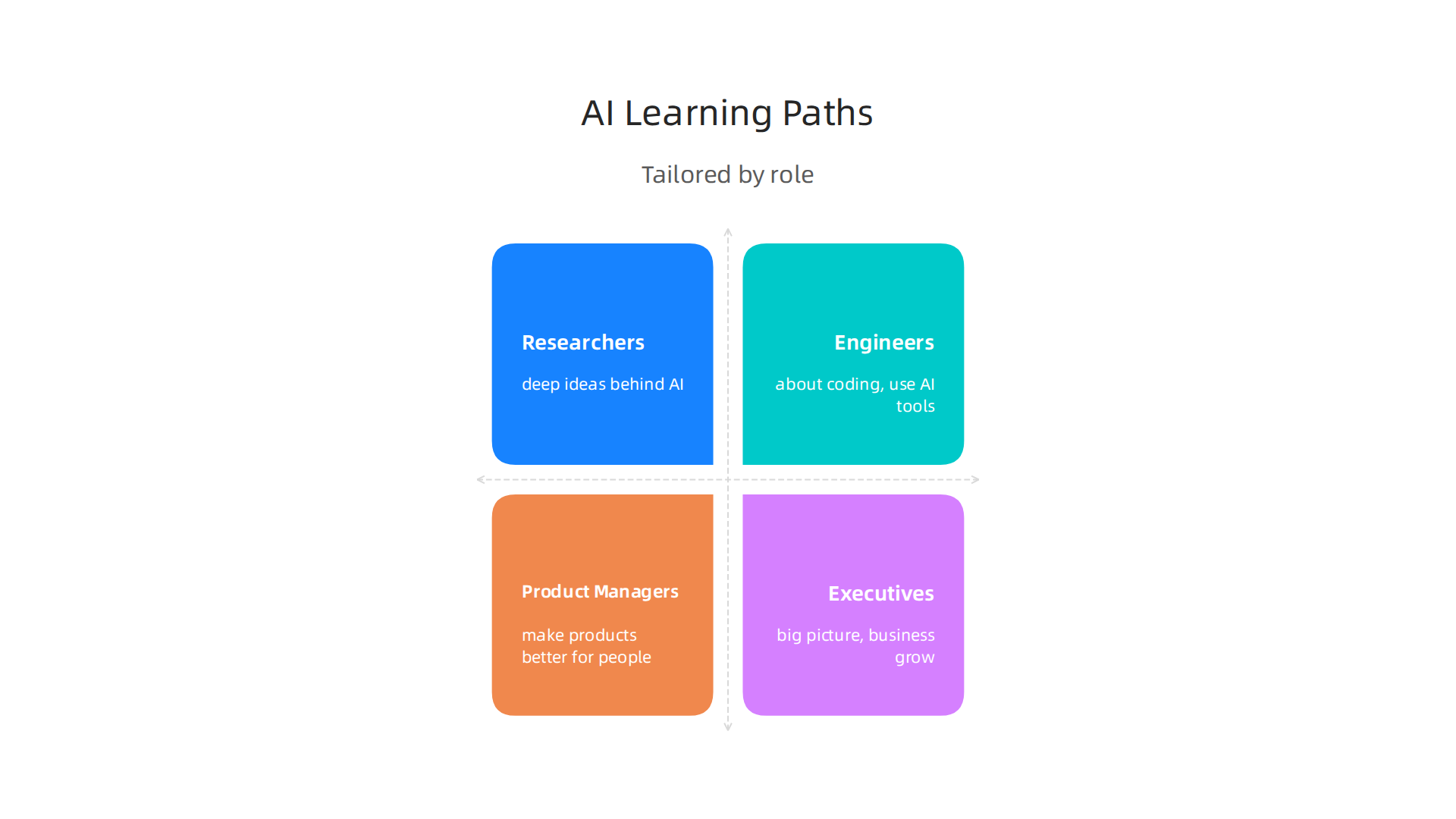
- For Researchers: You would focus on the deep ideas behind AI. This means a lot of math, understanding how algorithms work, and creating new ways for AI to think. You’d spend time with papers and complex theories.
- For Engineers: If you build things, your learning would be about coding. You’d learn how to use AI tools, make AI models work, and solve problems with computer programs. Hands-on projects are key here.
- For Product Managers: You need to know how AI can make products better for people. Your learning would be about understanding what users want, how AI features fit into a product, and how AI can solve real-world problems for customers.
- For Executives and Leaders: Your goal isn’t to code, but to understand the big picture. You need to know how AI can help your business grow, save money, and make smart choices. You’d focus on strategy, market trends, and how to lead your team through AI changes. It’s about knowing how to reshape your company for the AI age, as many businesses are doing in 2026 to invest in their workforce for the AI age and its new skill demands Invest in the workforce for the AI age.
To pick the right path, ask yourself three simple questions:
- How much time do I have? Do you have a few hours a week or can you spend full days learning?
- How deep do I want to go? Do you want to know just enough to talk about it, or do you want to become an expert?
- What do I want to achieve? Do you want to build a new AI product, write a research paper, or make better business decisions?
An ai-powered learning platform can often help tailor your studies based on these answers. By thinking about these things, you can create a learning plan that truly helps you. This strategic approach is the best way to figure out how to learn AI effectively in 2026.
After figuring out your personal needs, the next step in your AI journey is to design a clear plan. This plan should cover what you’ll learn, in what order, and how much time you’ll spend. It’s like building a house; you need strong foundations first.
Designing a Practical Curriculum: Core Topics, Sequencing, and Timeboxing
To truly understand how to learn AI, you need to break it down into key areas. These are the main building blocks that will help you grow your knowledge.
Core Learning Pillars for AI:
- Math and Statistics: Don’t worry, it’s not as scary as it sounds. This part is about understanding the basic numbers and probabilities that make AI work. It helps you see patterns in data and make sense of information. Think of it as learning the alphabet before you can read a book. Having a core set of skills in areas like biostatistics is often part of fundamental learning in many fields, showing how important these basics are Page – Case Western Reserve University.
- Machine Learning (ML) Fundamentals: This is where you learn how computers can learn from data without being told exactly what to do. You’ll explore different ways for AI to "think" and make predictions. There are many best practices in the ML community that help guide this learning Consensus-based Recommendations for Machine.
- Deep Learning: This is a more advanced part of machine learning, inspired by how the human brain works. It’s used for things like recognizing faces, understanding speech, and powering smart assistants. Companies like Anthropic AI are always pushing the boundaries of these types of models Anthropic AI is the OpenAI Challenger that Built Safer Models and a Trillion Dollar Business.
- Systems and MLOps: Once you build an AI model, you need to make sure it works well in the real world and keeps running smoothly. MLOps is about putting AI models into action and managing them. It’s like making sure your car not only runs but also gets regular check-ups. Good practices for setting up and managing experiments are important here A Python Toolkit for Reproducible Image-Based ML Experiments.
- Evaluation and Safety: It’s super important to check if your AI is doing what it’s supposed to and if it’s safe. This pillar teaches you how to test AI models and make sure they are fair and reliable. Being able to verify AI predictions is a growing need Open Evidence AI Makes AI Predictions Verifiable and Trustworthy.
- Domain-Specific Modules: This is where you focus on applying AI to a particular area you care about, like healthcare, finance, or even how AI is transforming information technology How AI is Transforming Information Technology.
Sequencing Your Learning and Setting Time Limits:
Once you know what to learn, you need to decide the order and how much time to spend.
- 3-Month Quick Start: If you only have a short time, focus on the basics. Start with simple math, then move to ML fundamentals. Try one small project to get hands-on experience. This helps you grasp the main ideas quickly.
- 6-Month Deeper Dive: With more time, you can go deeper into each core area. After the basics, spend more time on deep learning and how AI systems work. Take on two or three small projects to practice. You might even start looking at a specific area, like using an ai summary tool for research.
- 12-Month Expert Track: If you’re aiming to be an expert, plan to spend a full year. You’ll cover all pillars in detail, do many projects, and really dig into a chosen domain. This path might include looking at research papers and understanding advanced topics like how to make AI predictions verifiable. Remember to build in regular checkpoints to review what you’ve learned and adjust your plan as needed.
No matter your plan, hands-on practice is crucial. Build small projects, solve problems, and keep learning new things. The AI world changes fast, so staying updated is key.
For daily, in-depth insights into AI and broader technology trends, make sure you get clear daily AI updates from The AI Newsletter Worth Reading.
No matter your plan, hands-on practice is crucial. Build small projects, solve problems, and keep learning new things. The AI world changes fast, so staying updated is key. This "learning by doing" approach is truly the best way for how to learn AI.

It helps you turn textbook knowledge into real skills.
Learning by Doing: Project Types, Datasets, and Reproducible Workflows
To really get good at AI, you need to do more than just read about it. You need to build things. Think of projects as your playground. They show you how AI works in the real world. Let’s look at different kinds of projects you can take on.
Types of AI Projects to Boost Your Skills
When you’re starting your AI learning path, different projects help you learn different things:
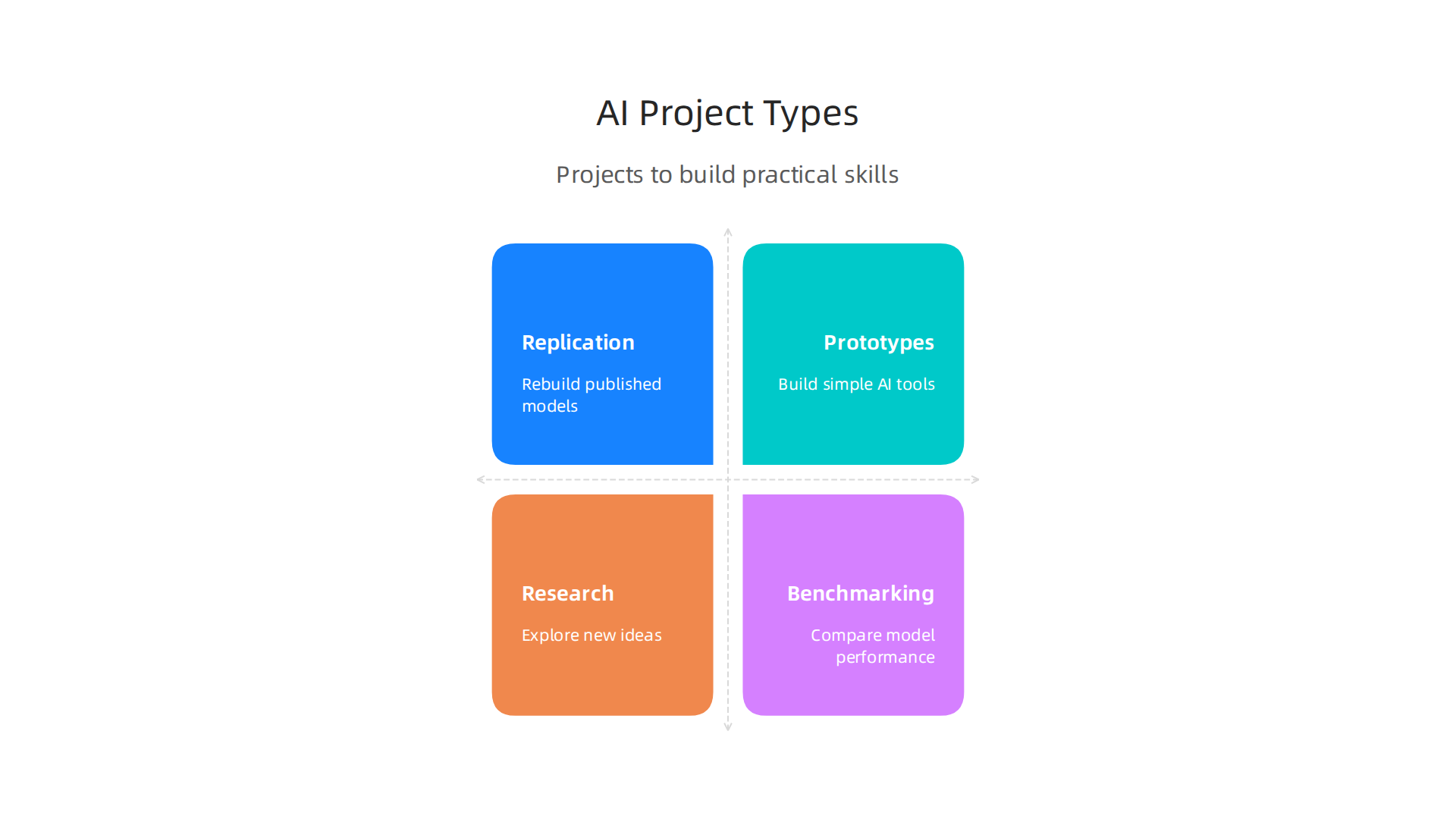
- Replication Studies: This means you try to build an AI model that someone else has already made. You follow their steps to see if you get the same results. This is a great way to understand how models are put together. It also highlights the challenges of getting the same results, as improving reproducibility in machine learning is a known issue Improving Reproducibility in Machine Learning: Overview, Barriers.
- Product-Focused Prototypes: Here, you build a simple version of an AI tool that solves a specific problem. For example, you might try to make a basic program that suggests movies based on what you’ve watched before. This helps you think about what users need.
- Research Experiments: These projects are about trying out new ideas. You might explore a new way to train an AI model or see if AI can help with a problem that hasn’t been solved yet. This kind of work helps you push boundaries.
- Benchmarking Projects: In these projects, you take different AI models and test them to see which one works best for a certain task. It’s like comparing different cars to see which one is fastest on a race track. This teaches you how to evaluate AI performance.
Picking the Right Datasets
Every AI project needs data. Good data is like good fuel for a car. So, choosing the right datasets is super important. Here are some things to think about:
- Relevance: Does the data match the problem you’re trying to solve? If you’re building a tool to recognize cats, you need pictures of cats.
- Quality: Is the data clean and accurate? Bad data can lead to bad AI results. Sometimes, this means fixing mistakes in the data before you use it.
- Size: Do you have enough data? Simple problems might need less data, but complex AI models often need a lot.
Managing Data and Making Your Work Reproducible
Once you pick your data, you need to manage it well. This means:
- Data Versioning: Data changes over time. New data comes in, and old data might get updated. Data versioning is like having a save history for your data. It lets you go back to older versions if something goes wrong. This is crucial for keeping track of your work, especially in complex projects.
- Reproducible Pipelines: This is about setting up your project so that anyone (including your future self) can run it and get the exact same results. This means keeping clear records of your code, your data, and the steps you took. It’s about building a solid AI-powered learning platform for yourself. Good practices for documenting AI studies are very helpful here Good practices for documenting AI-based studies on … – OSTI.GOV.
By focusing on these project types, choosing smart datasets, and making your work easy to follow, you’ll build real competence. This hands-on approach is key to understanding the full AI learning path and how to make AI work for you. For broader insights into making your AI strategy effective, consider reading about The AI Innovation Guide to Strategy, Measurement, and Frameworks.
To truly understand the full AI learning path and make AI work for you, knowing the right tools is just as important as knowing how to build projects. In 2026, the world of AI tools, frameworks, and computing power is always growing. Picking the best ones depends on what you want to achieve. Let’s look at the key pieces you’ll need to master.
AI Frameworks: Your Building Blocks
Think of AI frameworks as special toolkits. They give you pre-made parts to build your AI models faster and easier. Instead of starting from scratch, you use these tools to put your ideas into action. Two of the most common and powerful ones you’ll hear about are TensorFlow and PyTorch. Many professionals also rely on various Top AI Tools For Business In 2026 To Boost Productivity And Save Time.
Learning these frameworks is a big part of how to learn AI. They help you write the code that makes AI models learn from data. Choosing which one to start with often depends on what others are using in the projects you follow, or what industry standards suggest for best practices in machine learning, as detailed in reports like the REFORMS: Consensus-based Recommendations for Machine study.
Experiment Platforms: Keeping Your Work Organized
When you’re running many AI experiments, keeping track of everything can get messy. This is where experiment platforms come in handy. They help you save your work, compare different tries, and see what changes made your AI model better or worse. They act like a special dashboard for your projects, making sure you can always go back and see exactly how you got your results.
Using these platforms helps make your AI work easy to follow, which is important for big projects. For example, a Python Toolkit for Reproducible Image-Based ML Experiments helps teams ensure their AI studies can be repeated and checked. This is key for creating a strong AI-powered learning platform for your own growth.
Compute Choices: Where Your AI Runs
AI models need a lot of computing power. You have options for where this power comes from:
- Cloud Computing: Companies like Amazon Web Services (AWS), Google Cloud, and Microsoft Azure offer huge amounts of power over the internet.
This is great for big projects, as you only pay for what you use. It lets you scale up your work as needed without buying expensive computers yourself. Many businesses are investing heavily in these solutions, with corporations expecting to double their spending on AI in 2026.
- Edge Computing: Sometimes, AI needs to work very fast right where the action is, like in a smart camera or a robot. This is called edge computing. It’s for smaller tasks that need quick answers without sending data all the way to the cloud and back.
The choice between cloud and edge depends on the size of your project, how fast you need answers, and your budget.
How to Pick the Right Tools
Choosing the right tools is a big step on your AI learning path. Here’s what to think about:
- Cost: Some tools are free and open-source, while others can be quite expensive. Balance your budget with your needs.
- Ease of Use: How well do the tools work together? Can you easily move your project from one tool to another? This is called interoperability.
- Ready for Real-World Use: Can your project, built with these tools, actually be used in a real product? This is called production-readiness.
By thinking about these points, you’ll make smart choices that help you learn AI effectively and build impressive projects.
Staying informed about the latest AI advancements is crucial. Get clear daily AI updates from The Deep View Newsletter.
Once you know the right tools and how to build projects, the next big question on your AI learning path is: How do you show others you’re good at AI? In 2026, many things signal your skills, from school degrees to projects you’ve made. Understanding what truly counts can help you stand out to employers and investors.
Formal Degrees: The Classic Route
Getting a college degree in AI, computer science, or a related field is a strong way to show your skills. These programs usually take several years and can be costly. But they offer a deep, broad understanding of AI, from how it works to how to build complex systems. For roles that need a very strong background in research or theory, a university degree can be very helpful.
Online Certificates and Micro-Credentials
For those who want to learn faster or focus on specific skills, online certificates and micro-credentials are a great choice. These shorter courses teach you a particular AI skill, like working with a certain AI tool or building a special kind of AI model. They are often less expensive and take less time than a full degree. They show you have learned a specific part of how to learn AI without the long time commitment of a university program. Many top AI jobs in 2026 emphasize the need for new skills and training to keep up with the fast-changing world of AI, as discussed in "AI jobs in 2026: skills, training, and career opportunities."
Portfolio Evidence: What You’ve Actually Built
Actually, in 2026, what you have built is often more important than any paper credential.

Employers want to see real proof of your skills. This means having a strong portfolio filled with projects you’ve worked on. These projects show that you can take what you’ve learned and apply it to real-world problems. They demonstrate your ability to solve problems and create working AI solutions.
A recent "Hiring Trends Report 2026" study found that AI is making traditional resumes less important. Instead, employers are looking for more real ways to see what you can do. Also, the "Annual AI Index 2026" shows that mentions of AI skills in US job postings are up a lot, by 55% compared to last year. This means showing your skills through projects is key.
What Employers Look For Now
In 2026, the job market for AI roles is booming, with strong salaries. However, employer expectations have changed. The "Top Recruitment Trends and Statistics for 2026" report notes that only 37% of employers now see credentials as a reliable sign of talent. A lot of companies are using AI in their hiring process, with 62% expecting to use AI for most or all hiring steps this year. Companies using AI for hiring also report 21% better alignment between new hires and their roles, according to "Latest AI Recruiting Statistics." This means showing your practical ability through projects is very important for getting hired.
Choosing Your Best Path
When thinking about your path, weigh the costs, the time you have, and how strong the signal is for the type of job you want. For entry-level positions, a mix of online learning and a solid project portfolio can be enough. For more advanced roles, a degree combined with practical experience might be expected. The goal is to build a strong story of your skills that any employer or investor can easily understand and trust.
To truly show your skills and build that strong story, you need to keep learning. The world of AI changes incredibly fast. New ideas, tools, and models come out all the time. Knowing how to learn AI isn’t just about starting, it’s about staying updated. If you don’t keep up, your skills can quickly become old.
Staying Current: Efficient Research Tracking, Model Releases, and Community Signals
Keeping up with all the new AI information can feel like a lot. Experts themselves find it hard to track all the progress, as noted in The 2026 AI Index Report. But there are smart ways to do it without getting lost. This helps you keep your ai learning path fresh and exciting.
How to Track AI News:
- Follow Research Papers: Many new AI ideas start as research papers. You don’t have to read every single one. Instead, follow key websites that share "preprints" (papers before they are formally published) or trusted AI news sites.
- Watch for Model Releases: When big companies or labs release new AI models, pay attention. These releases often show what’s possible now. They come with "reproducibility notes," which tell you how the model was built and how well it worked. This is important if you want to use or build something similar.
- Use Smart Tools: An ai summary tool can help you quickly understand long research papers or articles. Some AI-powered learning platform options also help by giving you the most important updates. You can even find guides on The AI Research Toolkit: What Actually Works in 2026.
What Signals Real Progress (Not Just Hype):
Not every new AI announcement is a huge step forward. Here’s how to tell what really matters:
- Benchmarks: These are like standardized tests for AI models. If a new model does much better on a well-known benchmark, it’s a strong sign of progress.
- Leaderboards: Many AI challenges have public leaderboards. These show which models are performing best on specific tasks. A top spot on a respected leaderboard means something.
- Code Releases: When researchers or companies share the actual code for their new AI, it’s a very good sign. It means others can try it out, check their work, and build upon it. This openness shows confidence and helps the whole AI field move forward.
By using these methods, you can cut through the noise and focus on what truly drives AI forward. This ongoing learning is a key part of your journey in AI.
To make sure you get clear daily AI updates and stay ahead, remember to check out The AI Newsletter Worth Reading.
Staying updated on AI breakthroughs is important, but for leaders and investors, the real skill is turning that knowledge into smart choices. It’s about using what you learn about AI to make big plans for your business or investments.
How to Use Your AI Knowledge
Knowing about AI helps you see real opportunities and avoid risks.
- For Investing: If you’re an investor, understanding how AI models work and what they can do helps you spot good companies to put money into. You can tell the difference between hype and real progress. This helps you form strong investment ideas.
- For Product Plans: As an executive, your AI knowledge guides what products your company should build. You can figure out how AI can make your products better or create new ones. For example, knowing about new AI-powered learning platform tools could lead to better training programs for your team.
- For Partnerships: When looking for partners, your grasp of AI helps you pick the right teams or technologies. You can ask smart questions and understand if a partner’s AI solution truly fits your needs. This is part of how strategic AI adoption drives business growth in 2026.
Quick Check for AI Companies
When you meet with new AI startups or research teams, here’s a simple checklist to help you ask the right questions:
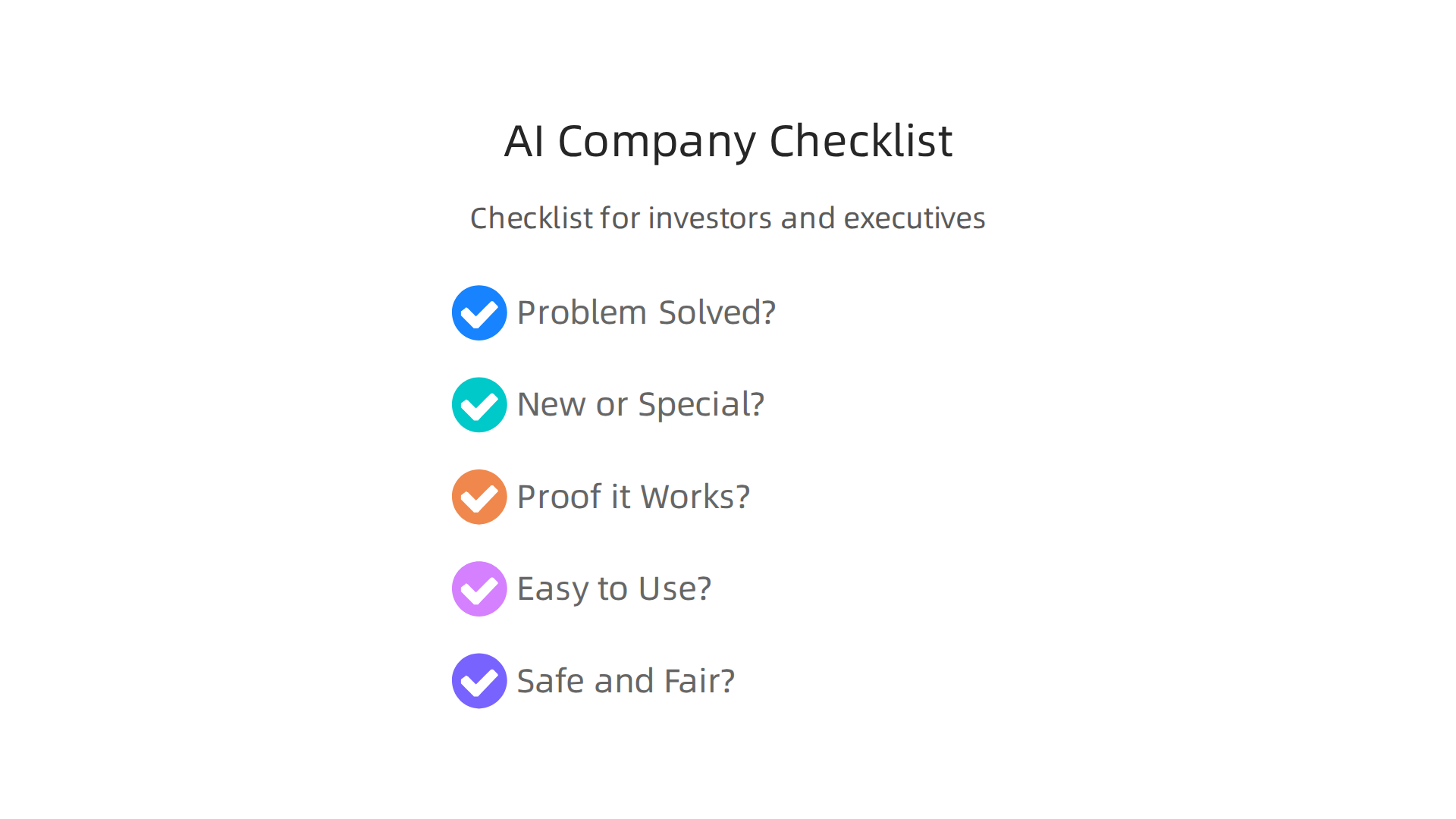
- What problem does their AI solve? Is it a real, important problem?
- How new or special is their AI? Is it just like others, or does it do something truly different?
- Can they show it works? Ask for proof, like test results or how well it works in the real world. You want to see strong evidence. In 2026, many companies expect to use AI for most hiring steps, so understanding this is key for talent decisions too, as noted in Top Recruitment Trends and Statistics for 2026.
- Is it easy to use? Even the best AI needs to be simple for people to get value from.
- How will they keep it safe and fair? Ask about their plans for AI ethics and security.
By asking these questions, you use your how to learn AI skills to make clear, confident decisions. It helps you quickly understand if an AI idea is worth your time and money. This careful review ensures you pick winners and stay ahead in the fast-changing world of AI.
Summary
This article explains why an AI-first, strategic learning plan is essential in 2026 and shows how to build one that fits your role, time, and goals. It walks through core learning pillars—math, ML fundamentals, deep learning, MLOps, evaluation/safety, and domain modules—and gives concrete sequencing options (3-, 6-, 12-month tracks) plus timeboxing advice. You’ll learn which projects accelerate real skills (replication, prototypes, benchmarks), how to choose and manage datasets, and how to make work reproducible with data versioning and pipelines. The guide covers tool choices—frameworks, experiment platforms, cloud versus edge compute—and how to signal competence via degrees, micro-credentials, and portfolios. Finally, it shows how to stay updated using papers, model releases, and summary tools and how to use your AI knowledge for product, investment, and partnership decisions.