

Why AI + Assistive Technologies Matter Now
Think about all the ways people move, see, hear, or learn. For many, simple daily tasks can be quite hard. Some people might not see well, others might have trouble moving their arms or legs, and some might find it hard to understand or remember things. These challenges create big gaps in how people can live their lives and take part in the world.
This is where assistive technologies come in. These are special tools and devices made to help people with disabilities or age-related issues. They help individuals do things like communicate, get around, learn, work, and live on their own. Things like smart wheelchairs, hearing aids, and special computer programs are all examples of these helpful tools.
Now, a new kind of helper has arrived: Artificial Intelligence (AI). AI is changing how these tools work. Imagine a "physical AI" that helps a robot arm understand how to pick up a cup without dropping it, or "Google Health AI" that can help people better manage their health with smart, personal insights. AI can make assistive technologies much smarter, more personal, and easier for everyone to use. It promises to fill those access gaps in ways we’ve never seen before.

The market for these helpful technologies is growing fast. In 2026, the global assistive technology market is expected to be worth around US$30.5 billion, and it’s set to grow even more in the coming years, reaching about US$49.0 billion by 2033 Assistive Technology Market Size & Growth Trends, 2033.
This shows just how important and needed these tools are.
This article is for people like investors, company founders, researchers, and those who work to make these products. We want to give you a clear, helpful guide. We’ll show you how to tell the difference between what’s truly new and useful in assistive AI and what’s just a lot of talk. We’ll explore how these advancements align with designing human-centered AI to truly improve lives.
To stay on top of the rapidly changing world of AI, you need a trusted source.
The AI Newsletter Worth Reading offers clear daily AI updates from The Deep View Newsletter.
To truly understand how AI is changing lives, let’s look at the kinds of assistive technologies available today, who is making them, and how they are being used. These tools are built to help people with a wide range of needs.
What Assistive Technologies Do
Assistive technologies can be grouped by the main problem they help with.
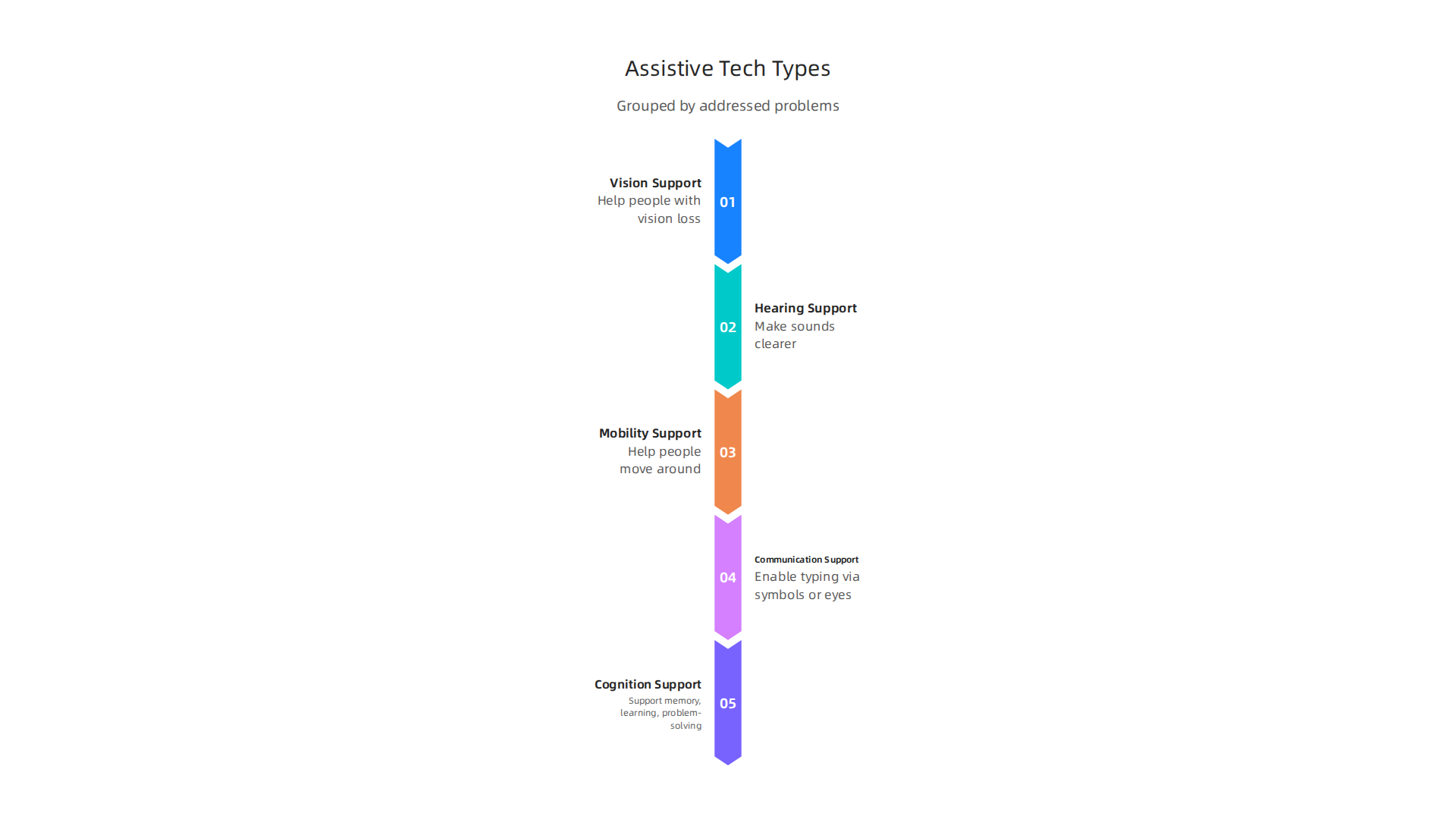
- Vision Support: These devices help people who can’t see well or at all. Examples include screen readers that speak out text, smart glasses that describe what’s around you, and braille displays for reading. The market for assistive technologies for the visually impaired is growing fast, reaching about $7.76 billion in 2026.
- Hearing Support: These are tools like hearing aids that make sounds louder or clearer, and devices that turn speech into text so people can read what others are saying.
- Mobility Support: This group includes things like smart wheelchairs that can be controlled with small movements, prosthetics that act like real limbs, and walking frames or robots that help people move around more easily.
- Communication Support: For those who find it hard to speak, these tools allow them to communicate using pictures, symbols, or even their eyes to type messages on a screen.
- Cognition Support: These technologies help people with memory, learning, or problem-solving. Think of smart reminders, special learning software, or tools that simplify complex tasks.
Many of these assistive technologies get their power from smart computer brains, known as a tech stack. This includes:
- ML Models: These are like smart rules that help devices learn and make good guesses, such as guessing what a person wants to do next.
- Sensors: These are the "eyes and ears" of the technology, gathering information from the world around them.
- Edge/Cloud Computing: This is where the smart thinking happens. Sometimes it’s done right on the device (edge), and sometimes it uses powerful computers far away (cloud) to process information. For example, a "physical AI" in a robot arm uses sensors and ML models to understand how to move objects safely. Similarly, "Google Health AI" often uses cloud computing to give users smart health insights.
In 2026, the global assistive technology market is valued at around US$26.66 billion, with mobility impairment and visual impairment devices being key product types Assistive Technology Market Size, YoY Growth Rate, 2026.
Who Makes and Supports These Technologies
The world of assistive technologies has many kinds of players working to bring new ideas to life:
- Startups: Small, new companies often come up with fresh, exciting ideas for assistive tools. They might focus on one very specific problem.
- Large Tech Labs: Big technology companies, like those working on Google Health AI, have special labs that research and build advanced AI tools that can be used in many areas, including assistive tech.
- Research Institutions: Universities and other research groups are always looking for new ways to use technology to help people. They often explore groundbreaking ideas that might become products later.
- Device Manufacturers: These are the companies that actually build the assistive devices you can buy, like hearing aids, wheelchairs, or special computer keyboards.
- Service Providers: These companies help people get and use assistive technology. They might offer training, support, or help you choose the right device.
For those keen to understand more about the wider technology landscape shaping these innovations, diving into a Top Tech 2026 Blueprint for AI Growth and Investment can offer valuable insights.
Artificial intelligence, or AI, is changing how assistive technologies work in many wonderful ways. It helps these tools become smarter and more personal, making a big difference in people’s daily lives. Let’s look at how AI makes this happen and what good comes from it.
AI for Better Sight and Movement
One big way AI helps is by improving how people with vision challenges navigate the world. Imagine smart glasses or phone apps that use AI to "see" for you. These tools use special computer vision to understand what’s in front of them, like reading signs, identifying objects, or even describing faces. For example, systems like ATBench are used to test how well AI can help people with visual impairments by breaking down tasks like recognizing objects and reading text ATBench: Benchmarking Vision-Language Models for Human-centered Assistive Technology. This helps people move around more freely and safely, giving them more independence.

For those with motor impairments, AI also offers amazing support. Think of smart wheelchairs that learn how you like to move, or robotic arms that can predict what you want to grab. This is where "physical AI" comes in. It helps devices understand your intentions and make smooth, helpful actions. Companies are even testing AI assistive systems in construction machines to improve safety and control. This kind of predictive assistance means fewer mistakes and greater control over your environment. It leads to a big increase in how quickly people can do tasks and reduces frustrating errors.
Smarter Communication and Thinking
AI also shines in helping people communicate and think better. For those who find it hard to speak, AI-powered speech models can turn typed words into natural-sounding speech or change spoken words into text. This is called Augmentative and Alternative Communication (AAC). These tools learn patterns and can even suggest words, making conversations much faster and easier. Such tools help cut down the time it takes to share thoughts, making communication less tiring and more effective.
When it comes to thinking and learning, AI helps with "cognition support." This might be an app that gives you smart reminders, breaks down big tasks into smaller steps, or helps you learn new things at your own pace. These apps can adapt to your needs, learning what works best for you. This helps reduce errors in daily tasks and boosts confidence. Even big names like Google Health AI are exploring ways to give personalized health insights, which can include memory aids and cognitive exercises. Making AI that truly helps people means thinking about how to build tools that fit human needs, a concept sometimes called designing human-centered AI.
The real value of AI in assistive technologies can be seen in clear ways. People gain more independence, spend less time on difficult tasks, and make fewer mistakes. These improvements don’t just help individuals; they can also create economic value by allowing more people to participate fully in work and community life. In fact, many enterprises are already seeing measurable results from their AI deployments in various sectors.
To stay on top of how AI is constantly changing and improving technologies like these, you’ll want the best information. Discover the clear daily AI updates that make a real difference.
The AI Newsletter Worth Reading
AI is truly a game-changer for many assistive technologies. But to make sure these tools help everyone fairly, it’s super important how they are made. This is called designing inclusive human–machine interfaces (HMI). It means making sure the tools are easy to use and helpful for people with different needs.
Making AI Tools for Everyone
When we talk about making AI for everyone, we think about a few key things:
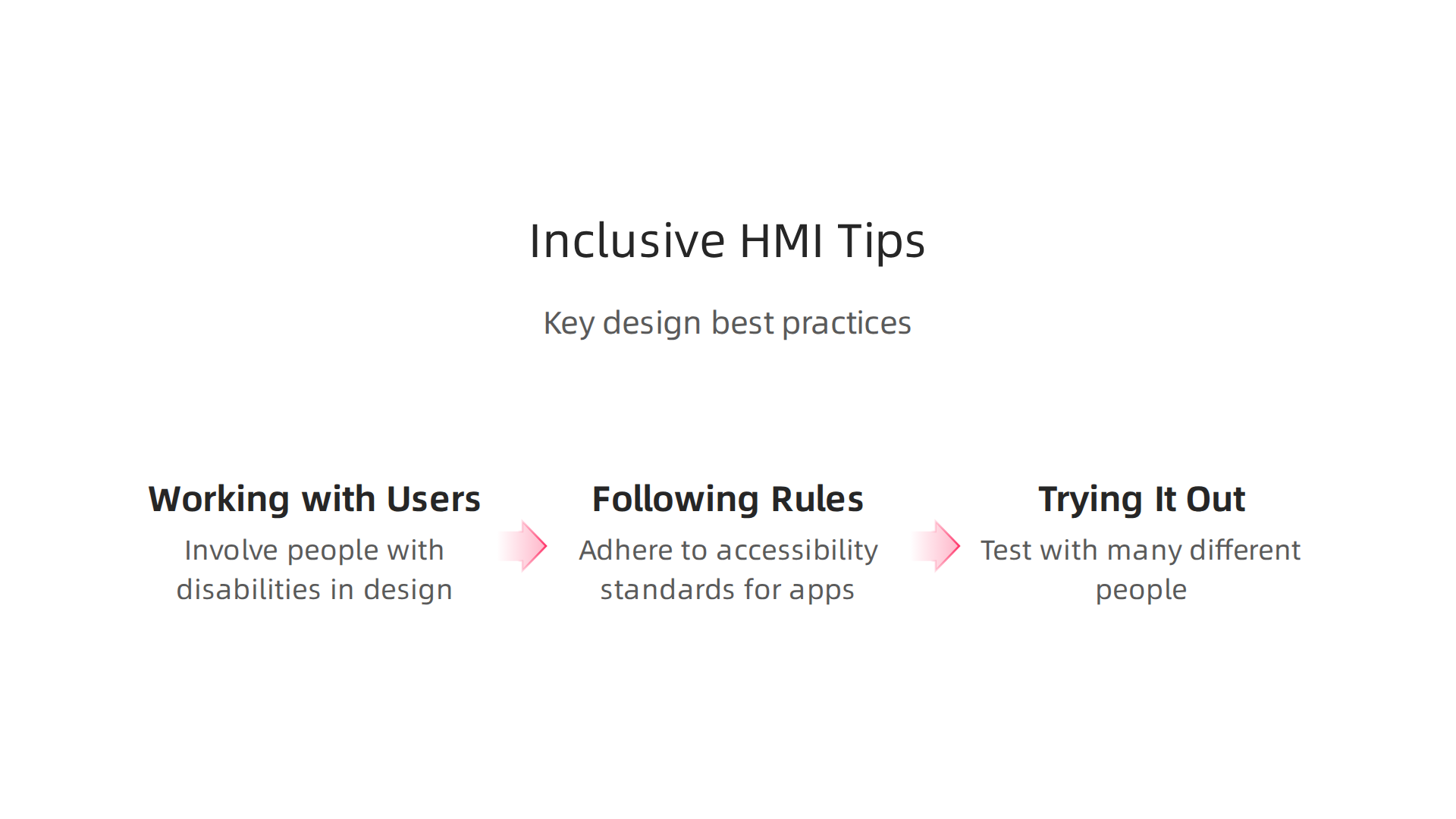
- Working with Users: The best way to build helpful AI is to ask the people who will actually use it. This is called "participatory design." It means involving people with disabilities in every step of making the tool. This helps make sure the tools really meet their needs. Studies show that when users are part of the design process, like neurodivergent people helping design their own assistive technologies, the tools work much better Designing assistive technologies for and with neurodivergent ….
- Following Rules for Easy Use: There are special rules and guidelines for making websites and apps easy for everyone to use, especially people with disabilities. These are called accessibility standards. By following these, we make sure AI-powered assistive technologies work well with screen readers, voice commands, and other tools. Learning about accessibility in HCI and inclusive design principles helps create better tools.
- Trying It Out with Real People: Before an AI tool is widely used, it needs to be tested by many different people in real-life situations. This helps find problems and make improvements. Testing helps ensure that the AI works well for different users and in different settings.
Things to Watch Out For
Even with the best intentions, building AI for assistive technologies can have some tricky parts:
- Unfair Data: AI learns from information we give it, called "training datasets." If this data is not varied enough, or if it has old ideas about certain groups of people, the AI can become unfair or "biased." For example, if an AI is only trained on images of certain skin tones, it might not recognize faces that are different. This kind of problem can make AI less helpful for some users. To make fair AI, it’s key to have humane technology principles for ethical AI governance.
- Tools That Break Easily: Sometimes, AI models work great in a lab but struggle when faced with new or unusual situations. This is called being "brittle." For example, an AI might be trained to understand speech in a quiet room but fail in a noisy environment. This means the tools need to be strong and adaptable for all kinds of real-world use.
- Hard to Start Using: If a new AI tool is too hard to learn or set up, people might give up on it. This is a "poor onboarding flow." Assistive technologies need to be easy to understand from the very first moment. Clear instructions and simple steps help people get started quickly and feel comfortable.
Making sure AI assistive technologies are designed with everyone in mind helps them truly improve lives. It means thinking about ethics and fairness right from the start. If you want to understand more about how ethical design plays a role, check out our guide on how to build ethical and transparent AI for humans.
Making sure AI assistive technologies are designed with everyone in mind helps them truly improve lives. It means thinking about ethics and fairness right from the start. If you want to understand more about how ethical design plays a role, check out our guide on how to build ethical and transparent AI for humans.
Policy, ethics, and regulatory considerations for assistive AI
After we talk about making AI tools fair, we also need to look at the bigger rules that guide them. These rules help make sure that assistive AI devices and software are safe, private, and available to all who need them.

Think of them as traffic laws for AI, making sure everything runs smoothly and safely.
Rules and Guidelines
Governments and special groups are working to create rules for AI, especially for tools that help people with their health. Here are some important areas:
- Safety Rules: Just like any medical device, assistive technologies powered by AI must be very safe. This means they need to be tested a lot to make sure they work as they should and don’t cause any harm. Rules help ensure that new AI tools, like those from Google Health AI, meet high safety standards.
- Data Privacy: AI tools often need to use personal information to work best. This could be about a person’s health, their habits, or where they are. Rules like GDPR in Europe or HIPAA in the United States make sure this information is kept private and safe. People need to know exactly what data is being collected and how it’s being used. If you’re interested in how to make AI ethical and centered around people, you can learn more about designing human centered AI guiding principles for 2026.
- Buying Rules: When schools, hospitals, or government groups buy assistive AI, there are rules about how they choose these products. These "procurement rules" help make sure they pick tools that are effective, fair, and good for the price. This way, the best assistive technologies get into the hands of the people who need them.
Important Ethical Questions
Beyond the official rules, there are also big questions about what is right and fair when using AI to help people. These are called ethical concerns.
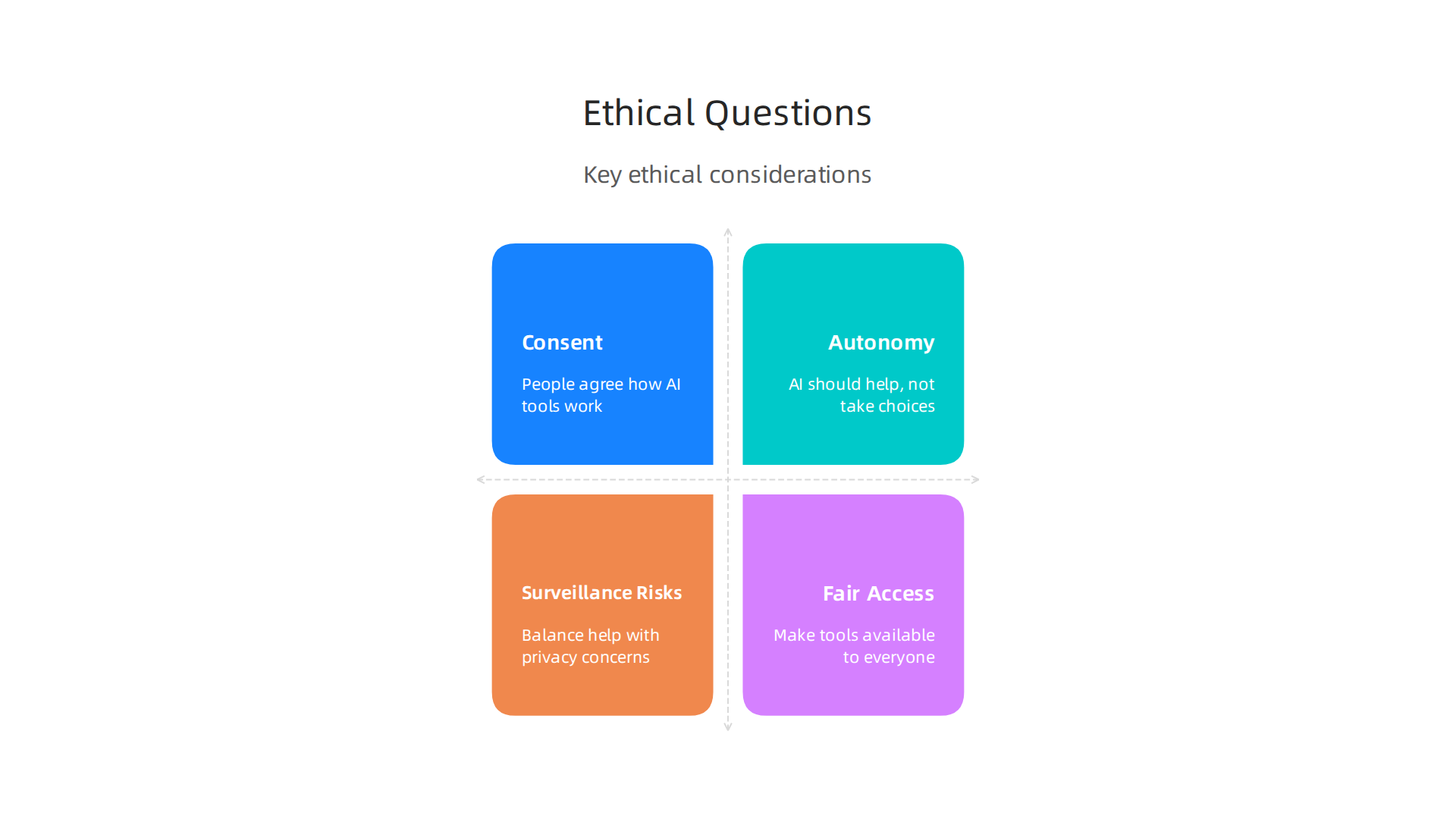
- Consent: It’s super important that people understand and agree to how their AI tools work. Imagine an AI that learns from your voice. You should know it’s learning and agree to it. People need to freely give their "consent" before AI starts using their data.
- Autonomy: Assistive AI should help people do things themselves, not take away their choices. For example, a "physical AI" device might help someone move, but it shouldn’t decide where they go or what they do. The goal is to make people more independent, not less.
- Surveillance Risks: Some AI tools watch what a person does to help them. But this can feel like being watched all the time. There’s a fine line between helping and "surveillance." We need to make sure these tools respect a person’s privacy and don’t make them feel constantly observed.
- Fair Access for Everyone: A big worry is that really helpful AI assistive technologies might only be available to a few people who can afford them. It’s an ethical challenge to make sure that these important tools are available to everyone who could benefit, no matter their income or where they live.
Understanding these policies and ethical ideas helps us build a future where AI truly helps everyone in a safe and fair way. It’s a continuous conversation as technology changes quickly. For those who want to stay on top of the rapidly evolving world of AI and technology, consider subscribing to The AI Newsletter Worth Reading for clear daily updates.
After we think about the rules and right ways to use AI, we also need to know how to tell if these helpful tools are actually doing a good job. This means we need ways to measure their success. It’s like checking a car to make sure it’s running well. For assistive AI, we use special tests and information to see how well it works and if it really helps people.
How We Measure Success
To truly know if assistive technologies are working, we look at different things. We use numbers for some checks and people’s feelings for others.
-
Doing the Job Right (Quantitative Metrics): These are ways to count how well an AI tool performs its tasks.
- Task Success: Does the AI tool finish the job it’s meant to do? If it’s a tool that helps someone read, does it read the words correctly?
- Error Rates: How often does the AI make a mistake? A good assistive tool needs to have very few errors, especially if it helps with important things.
- Processing Time: How quickly does the AI help? A tool that takes too long might not be very helpful in real life. You can learn more about how experts evaluate AI using different measures, including processing time, in a review on AI, IoT, and wearable systems for enhanced care.
-
How People Feel About It (Qualitative Metrics): It’s not just about numbers. How users feel is super important for assistive technologies.
- User Happiness: Do people enjoy using the tool? Does it make their life easier and less stressful? This is called user satisfaction.
- Accessibility-Specific Checks: Does the tool truly make things more accessible? For example, for someone who cannot see, does a vision-language AI make their daily tasks much simpler? Researchers are even exploring evaluation metrics beyond classical mAP to capture these real-world benefits for visually impaired individuals.
Special Data and Tests (Datasets and Benchmarks)
To check and improve assistive AI, scientists need a lot of information, called "datasets," and special tests, called "benchmarks."
- Datasets: These are collections of information that AI uses to learn. For example, a dataset might have thousands of pictures labeled with what they show, or recordings of people talking in different ways.
- Specific Datasets: There are datasets made just for assistive AI. For people who are blind or have low vision, there’s the first egocentric VideoQA dataset where people ask questions about what they see. Microsoft Research has also released the ORBIT dataset and benchmark to help improve these tools.

* **Missing Information:** Sometimes, we don't have enough data. This is true for rare health conditions or when we need to understand many types of information at once, like how someone moves, speaks, and uses a device all at the same time. Also, existing datasets for 3D human motion often lack diversity, especially for people who are blind, which is why new efforts like [BlindWays](https://papers.nips.cc/paper_files/paper/2024/file/1d4c4047f5d82699cf01b19c991ec56d-Paper-Datasets_and_Benchmarks_Track.pdf) are important.
- Benchmarks: These are special sets of challenges or tasks that let us compare different AI tools fairly. It’s like a standardized test for AI.
- Examples of Benchmarks: Researchers have created benchmarks like ATBench and @Bench to test how well AI vision-language models help people with visual needs. These benchmarks include tasks like understanding what’s in an image or recognizing text. There’s even EMGBench which tests how well AI can understand muscle signals for things like robotic limbs, even when faced with new situations. Another important benchmark, AccessEval, helps check for bias in large language models against people with disabilities.
- Testing in New Ways: Benchmarks help us see if an AI tool works well not just in the lab, but also in new, real-world situations. This is important for "physical AI" devices that work in daily life.
To make sure assistive AI truly helps people, we need to keep using these measures and tests. It helps us find out what works best and what still needs to get better. If you want to dive deeper into how different AI tools are assessed, consider reading our guide on how to evaluate AI tools in 2026 using the Covers AI Benchmark.
After we figure out how well assistive technologies work, the next big step is getting them into the hands of people who need them. This means thinking about how companies make money from these tools and how big organizations like hospitals or schools buy them. It’s all about moving from a great idea to a product that helps many people.

How Assistive AI Tools Become Businesses
Bringing assistive AI to market means choosing the right business plan. Different ways work for different types of tools. In 2026, we see a few main paths for these important technologies:
- Direct-to-Consumer Apps: Some assistive technologies are sold straight to individual users. Think of apps for smartphones or special smart devices that help with daily tasks. These are often bought with personal money or through easy online stores. This model works well for tools that are simple to use and don’t need a lot of special setup.
- Business-to-Business (B2B) Licensing: Many companies that make assistive AI tools don’t sell directly to users. Instead, they license their technology to bigger organizations. This could be to healthcare systems that integrate AI into patient care, or to educational institutions that use AI to help students with learning differences. This approach is good for advanced tools that need professional support or fit into existing systems. For example, some companies license parts of their AI to others, which is a common way to make sure more people can access these innovations. You can learn more about these different ways of bringing AI health tools to market by reading about commercialization pathways for AI-enabled health innovation.
- Device Integration and Physical AI: Some assistive technologies are built right into physical products, like smart wheelchairs, robotic helpers, or advanced hearing aids. These are often called "physical AI" because the AI is part of a tangible device that interacts with the real world. The business model here often involves selling the device itself, sometimes with a subscription for ongoing software updates or special features.
- Service Models: This is where the assistive AI is offered as a service. Instead of buying a product, users or organizations pay for access to the AI’s capabilities over time. This could be a monthly fee for a personalized AI agent that helps manage schedules or provides real-time assistance. This model is very flexible and can adapt as the AI, perhaps an agentic AI, learns and gets better.
Understanding how strategic AI adoption drives business growth in 2026 is key for any company in this space.
Buying Assistive AI: The Realities of Healthcare and Public Sector
Selling assistive technologies to big places like hospitals, government agencies, or schools is often tricky. This process is called "procurement," and it has its own rules.
- Long Approval Times: Big organizations often have very careful steps to follow before they can buy new technology. This means it can take a long time, sometimes years, for an assistive AI product to get approved and bought. They need to make sure the tools are safe, effective, and fit all their rules.
- Need for Strong Proof: Healthcare providers and public groups need to see clear evidence that an AI tool works well and will truly help people. This includes showing good test results and how the tool respects privacy. Getting AI tools into healthcare needs a careful plan to show their value to buyers. You can explore this more with insights on commercializing AI in healthcare from the enterprise buyer perspective.
- Special Requirements: For healthcare, any AI tool must meet strict medical standards. For schools, it needs to work with existing learning systems and keep student information private. Companies making assistive technologies need to design their products with these rules in mind from the very start. Thinking about designing human centered AI guiding principles for 2026 is crucial for this.
- Navigating for Startups: For smaller companies, getting into these big markets can feel like a huge challenge. They need to clearly show how their assistive technologies solve a big problem and offer a lot of value. Building strong relationships and understanding the buyer’s needs are super important. AI is changing how healthcare buys supplies and tools, making the process faster and smarter, which helps new technologies get adopted more smoothly.
Staying up to date with the fast-moving world of AI and how it impacts business is essential.
The Deep View Newsletter provides clear daily AI updates. The AI Newsletter Worth Reading can help you keep informed.
The rapid spread of assistive AI tools isn’t just about business models; it’s also about what these tools can do in the future. In 2026, we’re seeing exciting new ideas that will change how people and machines work together to help those who need it most.
Emerging Trends and the Future of Human–Machine Interaction in Assistive Contexts
The future of assistive technologies looks very bright, with new advancements making these tools more powerful and personal than ever before.
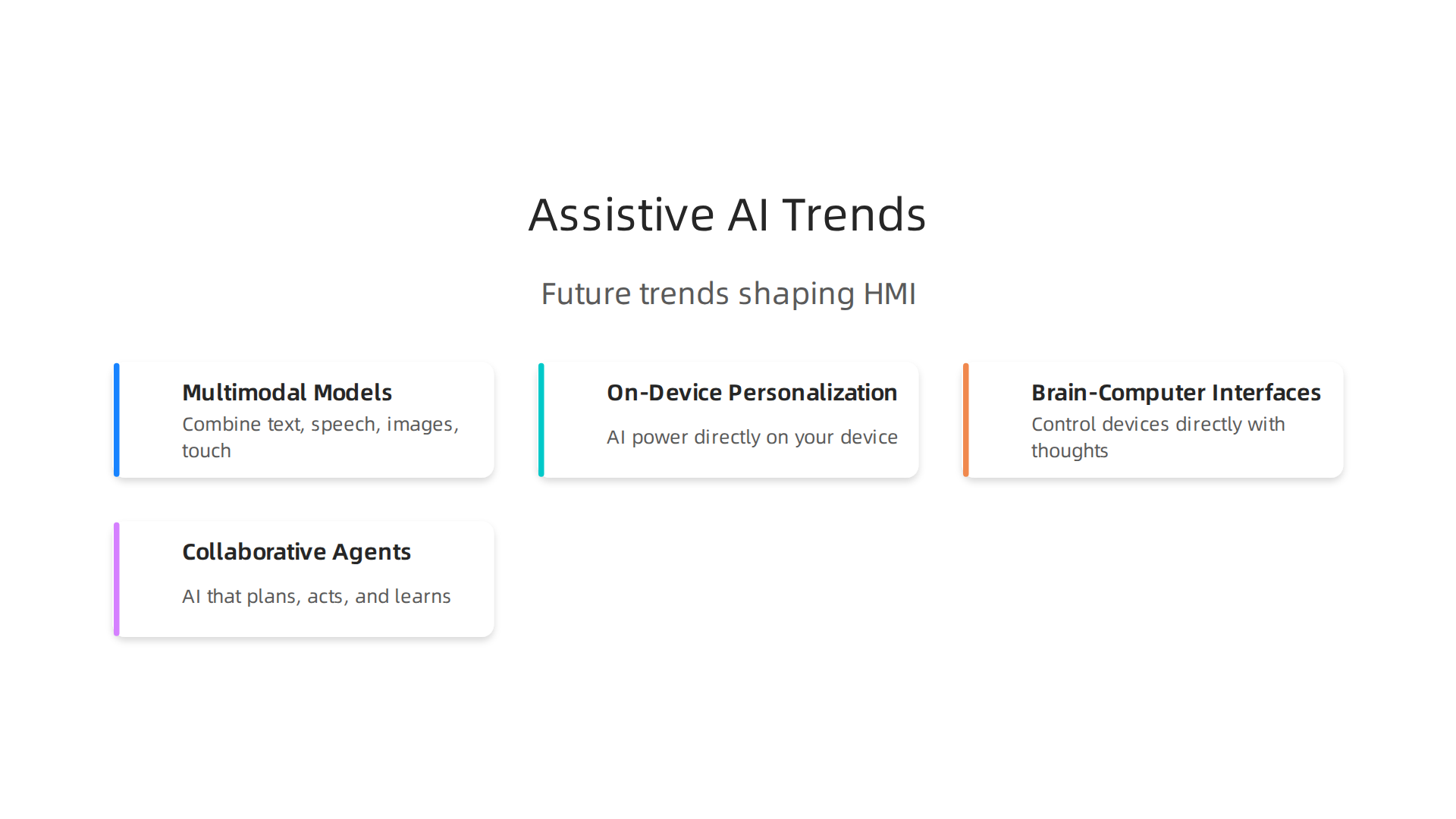
- Multimodal Models: Imagine an AI that can not only understand what you say but also see what you’re pointing at and feel your emotions from your voice. That’s what multimodal AI models are starting to do. They combine different types of information, like text, speech, images, and even touch, to understand the world in a more human-like way. This means assistive technologies can offer more natural and helpful support, like a smart assistant that understands a confused look or a whispered request, making interaction much smoother.
- On-Device Personalization: Today’s AI often relies on big computer centers far away. But newer assistive technologies are putting more AI power directly onto the device you use. This "on-device" AI can learn your unique habits, preferences, and needs without sending your personal information over the internet. This means faster responses, better privacy, and a truly custom experience that gets smarter the more you use it. Designing assistive tools that involve users from the start helps them meet real needs, improving trust and teamwork, as research shows on designing assistive technologies for and with neurodivergent individuals.
- Brain-Computer Interfaces (BCIs): This might sound like science fiction, but BCIs are becoming more real. These technologies let people control devices directly with their thoughts. For individuals with severe mobility challenges, BCIs could unlock new ways to communicate, move a robotic arm, or navigate a wheelchair, offering incredible independence.
- Collaborative Agents: We’re moving beyond simple chatbots to powerful "agentic AI" that can work with you to achieve goals. Unlike generative AI that just creates content, agentic AI can plan, act, and learn over time. These collaborative agents could help manage complex schedules, provide real-time guidance during tasks, or even interact with other smart systems on your behalf. They represent a new level of partnership between humans and machines. To understand more about these different smart systems, it helps to know about the types of artificial intelligence.
Integrating Assistive AI with Everyday Tech
Bringing advanced assistive technologies into the mainstream has both exciting chances and tough problems.
Opportunities:
- Wider Access: When assistive AI features become part of common devices like smartphones, smart homes, or even cars, more people can benefit without needing to buy special equipment. Imagine your phone’s voice assistant also helping someone with a learning disability organize their thoughts for school, or a smart home system adapting automatically for someone with impaired vision. Companies like Google Health AI are already exploring how AI can integrate into daily health and wellness.
- Seamless Experiences: The goal is to make these tools blend into daily life so well that they feel natural. This means devices communicating with each other and adapting to a person’s changing needs without constant setup. A good example is physical AI, where smart devices work together in your environment.
- Innovation: As more tech companies think about inclusive design, it pushes them to make better products for everyone. This focus on making technology usable for all, including people with disabilities, leads to stronger, more flexible solutions, as seen in reviews on the intersection of AI and inclusive design.
Challenges:
- Privacy and Security: Giving AI more access to personal data for personalization means we need stronger ways to protect that information. Ensuring that these systems are ethical and transparent is very important for building trust. Learning how to build ethical and transparent AI for humans is crucial.
- Complexity and Cost: Some of these advanced technologies can be complicated to develop and expensive to make. Finding ways to make them affordable and easy to use for everyone is a big hurdle.
- Standardization: For assistive AI to work well across different devices and platforms, there needs to be common rules for how they talk to each other. Without these standards, things can get messy. Research into inclusive and adaptive human–AI interaction design highlights the need for careful design.
As we look ahead, the blend of AI with assistive technologies promises a world where technology is truly designed for every person, helping to overcome challenges and unlock new possibilities.
Summary
This article explains why combining artificial intelligence with assistive technologies is becoming essential for independence, accessibility, and commercial opportunity. It outlines the main categories of assistive tech—vision, hearing, mobility, communication, and cognition—and shows how AI (from edge models to cloud systems) makes devices smarter, more personalized, and easier to use. The piece covers who builds these tools (startups, labs, researchers, manufacturers, service providers), how to design them inclusively with participatory testing, and the policy, safety, and privacy rules that matter. It explains common pitfalls like biased data, brittle models, and poor onboarding, and describes the metrics, datasets, and benchmarks used to measure real-world benefit. The article also maps practical commercialization paths and procurement realities for healthcare and public buyers. Finally, it highlights emerging trends—multimodal models, on‑device personalization, BCIs, and agentic assistants—and why ethical, user-centered design is critical for broad adoption.