Introduction: Why Anthropic Matters in the AI Landscape
You have probably heard of OpenAI. But in 2026, another name keeps coming up in every serious conversation about the future of artificial intelligence: Anthropic AI.
Anthropic has quickly become one of the most important AI research labs and product companies in the world.

In fact, it is now the main challenger to OpenAI’s dominance. How did a company started just a few years ago get here?
It starts with the people behind it. In 2021, Dario Amodei and his sister Daniela Amodei left OpenAI along with five colleagues to found Anthropic. Dario, who holds a physics degree from Stanford and a PhD in biophysics from Princeton, serves as CEO. Daniela is the President. Their goal was bold: build powerful AI systems that are also safe and easy to steer.
What really makes Anthropic stand out is its focus on safety. The company pioneered something called Constitutional AI, a method that trains models to follow a set of principles rather than just human feedback. This approach has made their Claude models both capable and trustworthy. In a space where safety often feels like an afterthought, Anthropic built it into the foundation.
This article gives you a full look at Anthropic AI. We will cover the company’s history, its main products, how it got funded, and where it sits in the AI market today. If you want to understand the emerging technologies that are shaping the information age, Anthropic is a story you need to know.
For more context on how AI companies like Anthropic are changing business operations, check out our guide on top AI tools for business in 2026 to boost productivity and save time.
And if you want to stay ahead of every move Anthropic and other AI labs make, you need The AI Newsletter Worth Reading. It delivers clear daily updates straight to your inbox so you never miss a breakthrough. Subscribe to The Deep View Newsletter today.
Company Overview and Founding Story
As we touched on in the introduction, Anthropic AI was born from a specific moment in 2021. A group of key employees left OpenAI to start something new. The reason they left tells you everything about what makes Anthropic different.
The founding team was led by siblings Dario Amodei and Daniela Amodei [1]. Along with five colleagues, they walked away from OpenAI over serious disagreements about the company’s safety approach and direction [2]. In the fast moving information age of the early 2020s, this split was a huge signal. It showed that some of the smartest people in AI believed the industry needed to slow down and build safer emerging technologies.
Dario Amodei is the CEO. He holds a degree in Physics from Stanford and a PhD in Biophysics from Princeton [3]. Before founding Anthropic, he was a top researcher at OpenAI. His sister Daniela is the President. She leads the company’s strategy and daily operations.
Their mission is simple but ambitious. They want to build AI systems that are steerable, interpretable, and safe
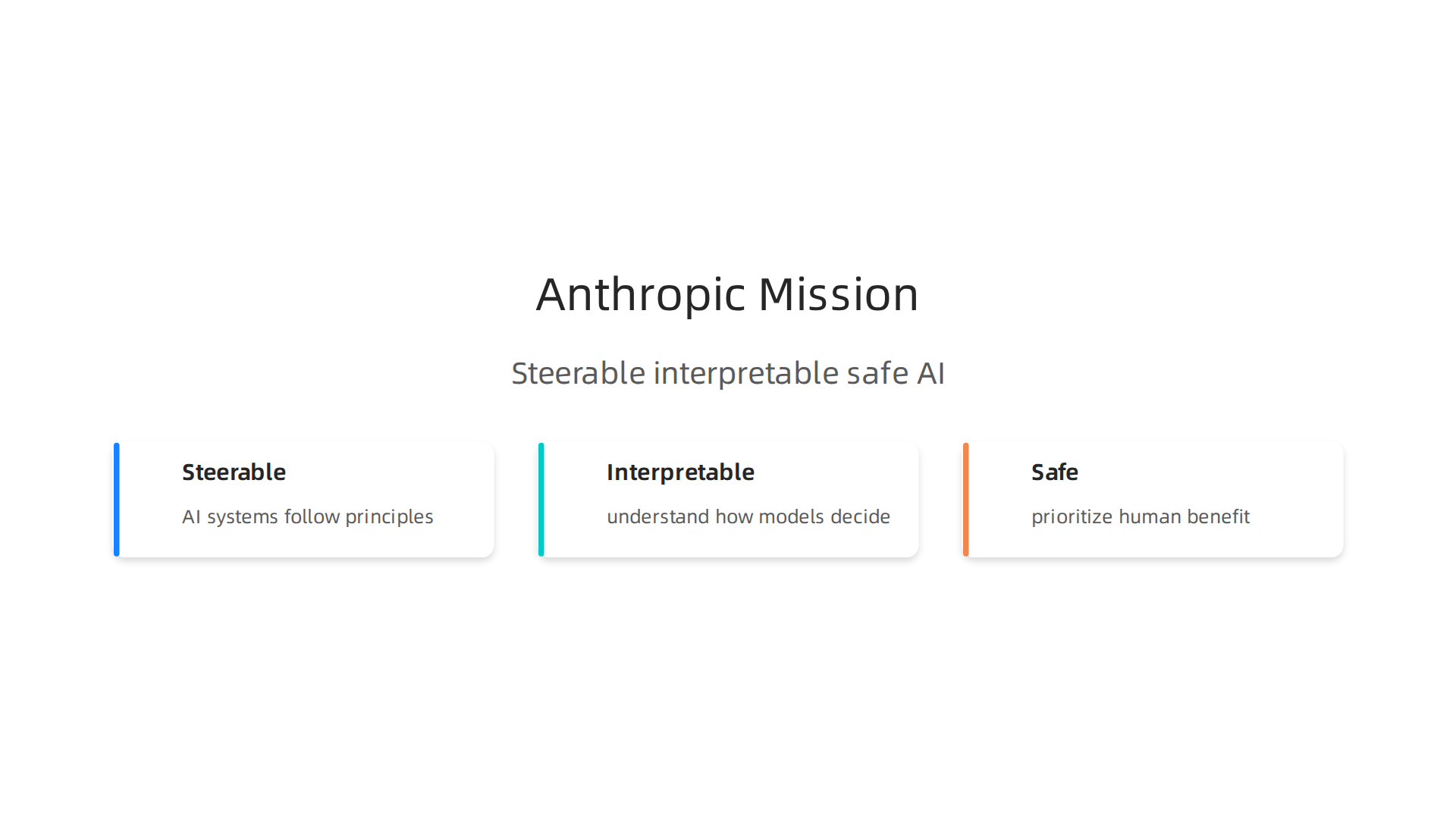
[4]. Anthropic is structured as a public benefit corporation. This legal setup lets them prioritize safety and human benefit alongside profit.
This founding philosophy directly led to their biggest breakthrough: Constitutional AI. Instead of just relying on human feedback, this method trains models to follow a clear set of rules. The result is an AI that is more predictable and trustworthy from the ground up.
This safety first approach makes Anthropic AI a strong choice for businesses that want reliable tools. To see how these models fit into broader business operations, check out our guide on how AI is transforming information technology.
Anthropic moves fast. AI future predictions can change overnight. If you want to keep up with every new Claude release and industry shift, you need a trusted daily source. Subscribe to The Deep View Newsletter and get clear updates straight to your inbox.
Now that you know the story behind Anthropic, let us look at the actual Claude models available in 2026.
Founding Team and Vision
The people behind Anthropic explain why the company exists and how it thinks differently.
Dario Amodei was VP of Research at OpenAI before founding Anthropic. That role gave him a front row seat to the biggest challenges in AI safety. At Anthropic, he serves as CEO and leads the research teams. His technical background in physics and biophysics shapes how he approaches alignment.
His sister Daniela Amodei is the President. She manages strategy, policy, and daily operations. Her focus on practical governance means the company actually builds safety into every product instead of just promising it.
From day one, their vision emphasized interpretability and alignment research. This means they work to understand exactly how models make decisions instead of treating them like black boxes. They actively share their findings through their Transparency Hub, which shows how serious they are about openness.
This founding philosophy stands out in the fast moving information age. While many AI companies rush to release new features, Anthropic races to release safer models. The Claude Opus 4.6 announcement shows how they pair cutting edge performance with strong safety improvements.
Want to stay ahead of every Anthropic model launch and safety breakthrough? Subscribe to The Deep View Newsletter for daily updates you can trust.
Key Products: The Claude Model Family
So what did that founding vision actually create? Anthropic’s flagship product is Claude, a family of large language models that comes in three main tiers: Haiku, Sonnet, and Opus.
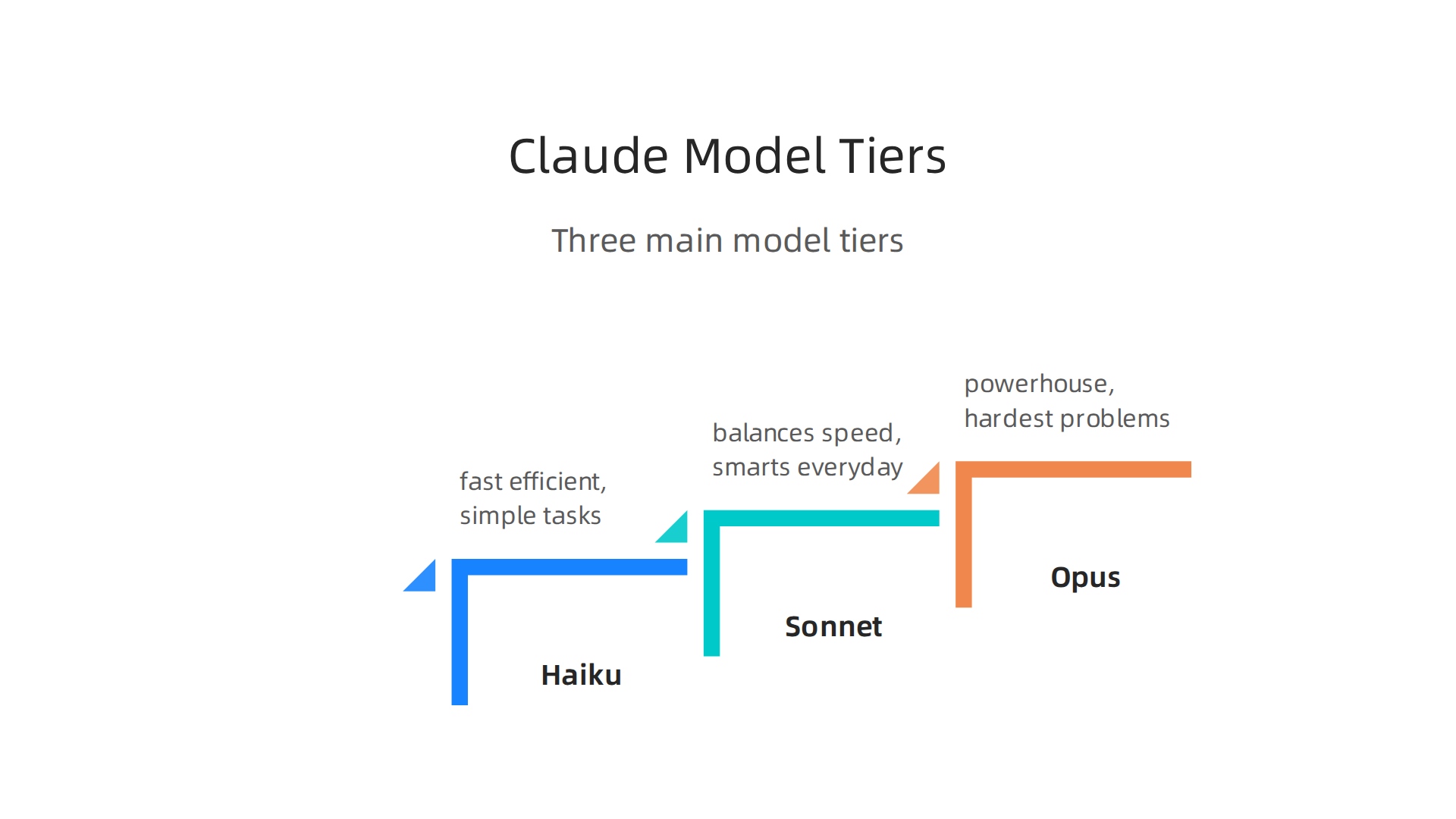
Think of them like car models. Haiku is the fast and efficient option for simple tasks. Sonnet balances speed with smarts for everyday work. And Opus is the powerhouse built for the hardest problems.
As of 2026, the lineup has evolved significantly. The current flagship is Claude 4.7 Opus, released in April 2026, which Anthropic describes as their most intelligent model yet. But the model family has been climbing steadily. Claude Opus 4.6 from February 2026 already set records, scoring an incredible 80.8% on the SWE-Bench Verified benchmark. That’s the highest score any AI has ever achieved on that test, as reported by Tech Insider.
Here’s what makes these models stand out in the crowded information age:
Long context windows. Early Claude versions handled up to 200,000 tokens at once. That means you could feed it a whole novel and ask questions about it. Newer releases have pushed that even further. The Claude Opus 4.6 announcement showed strong results on needle-in-a-haystack tests at 1 million tokens, which checks how well a model can find one fact buried in a massive pile of text.
Safety from the ground up. Unlike other models that add safety rules as an afterthought, Claude is trained with safety baked into its core. The Models overview from Anthropic’s API docs explains how constitutional AI methods guide every response. This matters a lot for businesses that can’t afford risky outputs.
Real enterprise value. Companies use Claude for content moderation, document analysis, and customer service. The benchmark data from MorphLLM shows Opus 4.6 and Sonnet 4.6 dominating coding benchmarks like SWE-bench Pro and Terminal-Bench. This is not academic stuff. It means Claude can actually help your developers ship better code faster.
For a full comparison across all 22 Claude models, the team at Gradually AI maintains an updated list. And if you want to understand how Claude stacks up against GPT and Gemini in 2026, the AI Model Benchmarks comparison from Teams AI breaks down each model’s strengths.
The Claude family keeps getting better. Each new version shows what happens when you pair cutting edge performance with a real commitment to safety. And that combination is exactly what the world needs as emerging technologies reshape how we work and live.
Want to stay on top of every new Claude release and benchmark update? The Deep View Newsletter delivers clear daily insights so you never miss a breakthrough.
Claude’s Core Capabilities
What really sets Claude apart in the world of anthropic ai? It comes down to three core strengths that make the model genuinely useful for real people.
First, Claude is exceptionally good at nuance. When you ask it a tricky question, it doesn’t just spit out a generic answer. It understands context and tone. This matters a lot for tasks like customer service or content moderation where a blunt reply could cause problems. According to a detailed overview from MoogleLabs, Anthropic AI combines high performance with ethical safety, and this shows in how carefully Claude handles ambiguous requests.
Second, Claude has very low refusal rates for legitimate tasks but will firmly say no to harmful ones. This balance is tough to get right. Most models either refuse too much (blocking useful queries) or too little (allowing dangerous ones). Claude’s training makes it reliable. The key is Constitutional AI, an approach Anthropic pioneered. Instead of adding safety rules after training, they bake principles right into the model. In January 2026, Anthropic released an updated constitution that shifts from rigid rules to reason-based alignment, as reported by InfoQ. This lets Claude reason through ethical dilemmas rather than just following a script.
Third, Claude follows complex instructions with high accuracy. Whether you need it to write code, summarize a legal document, or format a report, it sticks to your requirements. Its long context windows, which we covered earlier, allow it to process entire books or lengthy contracts without losing track.
These capabilities are especially valuable in the information age, where professionals are drowning in data and need a trusted assistant. For anyone curious about ai future predictions, Claude’s approach points toward a future where AI helps without causing harm.
If you want to keep learning about how emerging technologies like Claude are reshaping work, The Deep View Newsletter delivers clear daily insights that cut through the noise.
Technical Architecture and Safety Research
Now that you know what Claude can do, let’s peek under the hood. How does Anthropic actually build and train these models? And how do they keep them safe? The answers matter because they shape the future of anthropic ai and the entire field of emerging technologies.
First, the technical side. Claude runs on a Transformer-based architecture. That is the same foundation as many large language models, but Anthropic has made their own tweaks. They focus on smarter attention mechanisms that help the model focus on the right parts of your input. They also invest in better scaling laws and fine-tuning methods. This is why Claude can handle huge contexts and complex instructions so well. The model is built to learn patterns and follow rules without needing constant human fixes.
But here is the part that makes Anthropic stand out: their safety research. They do not just add safety rules after training. They build safety into the model from the start. The biggest innovation is Constitutional AI, which was introduced in 2022. Instead of needing humans to label every harmful output, the model learns from a set of written principles called a constitution. In January 2026, Anthropic released an updated constitution that shifts from rigid rule-following to reason-based alignment. This is a big step forward because it lets the model think through ethical problems instead of just memorizing do not say this lists.
Anthropic also works on interpretability tools. These help researchers see inside the model and understand why it makes certain choices. They run red-teaming exercises where experts try to break the model on purpose. All this research is published openly on their site and in academic papers. By sharing their findings, they help the whole AI community get safer.
If you want to understand how these safety methods fit into broader ai future predictions and the information age, check out this article on how artificial intelligence is changing our world.
For daily updates on anthropic ai and other emerging technologies, the The Deep View Newsletter delivers clear insights straight to your inbox.
Safety Philosophy: Constitutional AI
You might wonder how a company builds trust into a system as powerful as anthropic ai. The answer is Constitutional AI, and it works differently than most people expect.
Most AI safety methods rely on human feedback. People look at model outputs and say "this is wrong" or "that is fine." But humans are slow. They get tired. They bring their own biases. This approach does not scale well.
Constitutional AI fixes that problem by giving the model a written set of principles instead of just human labels.
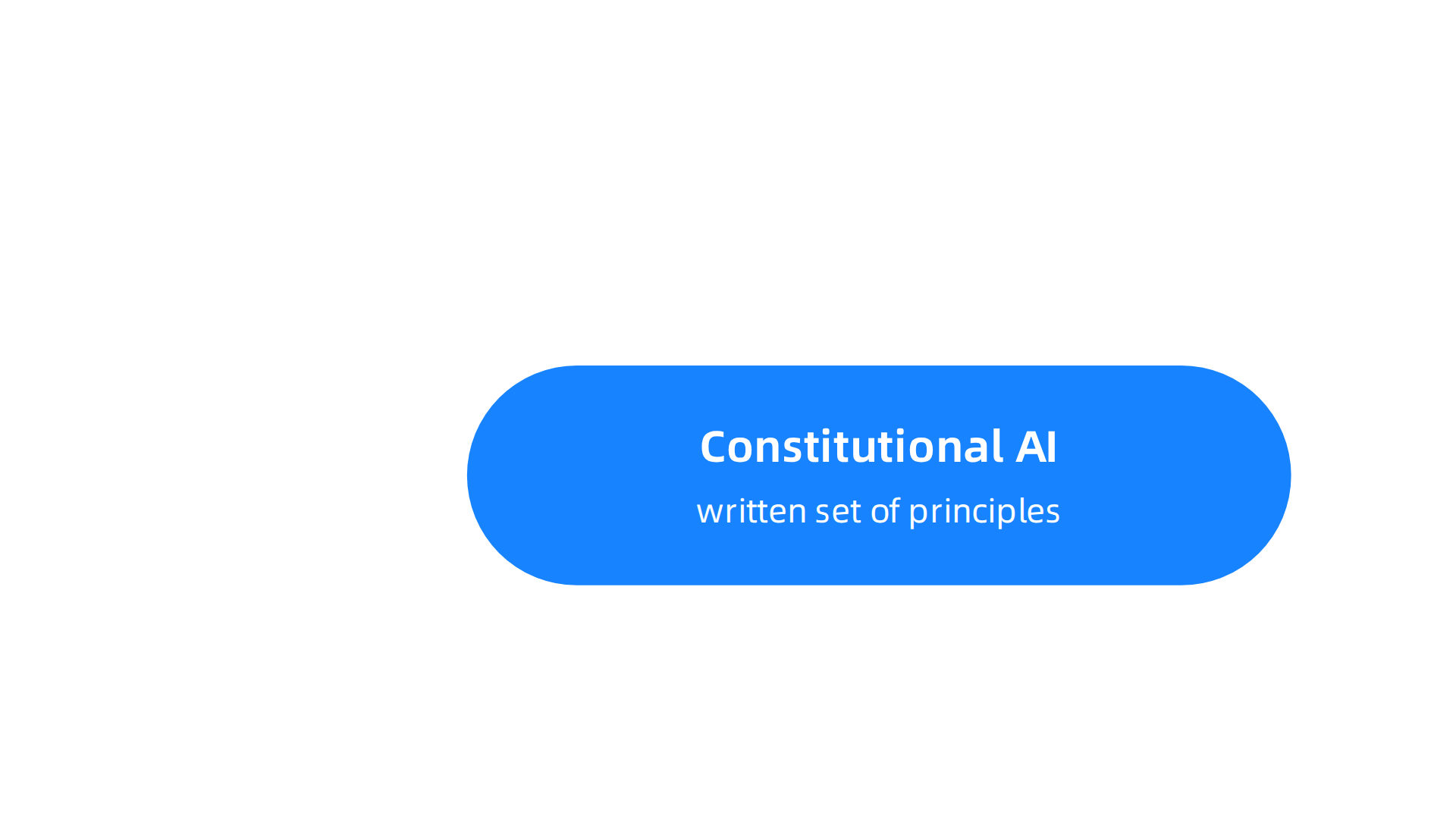
Think of it like a rulebook. Claude learns to judge its own responses against these principles. It corrects itself without needing a person to check every single output. This makes the model more consistent and less dependent on human trainers.
Anthropic first introduced this method in 2022. By early 2026, they updated their constitution to focus on reason-based alignment. Instead of saying "never say X," the model now thinks through ethical problems step by step. This shift matters because it makes Claude more flexible. It can handle gray areas without just shutting down.
Why does this matter for you? Because Constitutional AI makes Claude safer to use in everyday situations. The model can handle tough questions without falling back on simple "I cannot answer that" responses. It actually tries to understand what you need and work through problems with you.
Anthropic has also published their constitution publicly. Anyone can read it, study it, and offer feedback. This openness helps the whole AI community learn and improve. It is a big step toward making emerging technologies more transparent and trustworthy.
The company has raised significant funding to support this safety research. A recent round valued Anthropic at over $380 billion, showing that investors take these safety methods seriously.
For more on how responsible AI development fits into the information age, check out this guide on how AI is transforming information technology.
Business Model and Funding
You now know how Constitutional AI shapes Claude’s behavior. But building a frontier AI model takes more than just smart ideas. It takes a massive amount of money. So where does Anthropic get the funds to keep pushing the boundaries of anthropic ai?
The answer is a mix of investor confidence and strong business sales. Anthropic started its journey with a $124 million Series A round back in 2021. Since then, the company has raised billions more. By early 2026, total funding passed well over $7 billion. A massive $13 billion Series F round in late 2025 valued the company at $183 billion. And just a few months later, in May 2026, a $65 billion raise pushed its valuation close to $1 trillion. Big names like Google, Spark Capital, and ICONIQ all see huge potential in anthropic ai.

So how does Anthropic actually make money? It uses a simple but effective model. First, it charges businesses for API access. You pay per token, meaning you pay for what you use. Second, it offers enterprise subscriptions for teams that need more control. Third, it has a consumer plan called Claude Pro.
With all this capital, Anthropic is investing heavily in the future. A big part of the budget goes to compute infrastructure. The company is even building custom chips. This move helps it rely less on third-party hardware and keeps costs down. This kind of investment gives us a clear picture of ai future predictions, showing that companies believe demand for smart assistants will only keep growing.
Understanding the business side of AI helps you make smarter choices about which tools to trust. This is a key part of navigating the information age. You can read more about how these shifts affect work in our guide on top AI tools for business in 2026.
The emerging technologies landscape moves fast. A company’s funding news today can change the product lineup tomorrow. Staying informed is a full-time job. That is why many professionals rely on a trusted daily briefing. Get clear daily AI updates from The Deep View Newsletter. It breaks down the biggest stories so you do not have to hunt for them yourself.
Competitive Landscape and Market Position
All that funding and growth we just covered puts Anthropic in the middle of a very intense race.
You probably know the big names already. OpenAI (the company behind ChatGPT and GPT-5), Google DeepMind (with Gemini), and Meta (with its open source Llama models) are all fighting for the same users. So how does anthropic ai stand out in this crowded field?
The answer comes down to a few key differences. First, Anthropic made safety its identity from day one. While others added safety features later, Anthropic built Constitutional AI into the core of its model. This safety-first branding resonates with enterprise customers who worry about things like compliance and data control. Second, Claude offers one of the longest context windows on the market. That makes it a favorite for tasks like analyzing entire legal documents or long codebases. Third, the company focuses on building trust with businesses, not just consumers.
And the numbers back this up. A recent report from the Brookings Institution showed that in certain categories, Anthropic actually commanded a 40% market share, followed by OpenAI at 27% and Google at 21%. That is a big deal for a company that most people had not heard of just a few years ago. In May 2026, Anthropic was ranked No. 1 on the CNBC Disruptor 50 list, officially overtaking OpenAI as the top disruptor in the space.
But let us be honest. OpenAI still leads in brand recognition. When most people hear "AI chatbot," they still think of ChatGPT. That is a gap Anthropic is working hard to close.
For businesses, the choice often comes down to safety versus popularity. If you value control, long memory, and ethical design, anthropic ai looks very attractive. It fits right into the emerging technologies landscape where trust matters more than hype.
Navigating these options is part of living in the information age. If you are still deciding which AI assistant fits your workflow, our guide on how to choose the best AI chatbot for writing in 2026 can help you compare features side by side.
The competitive landscape changes almost weekly. New model releases, price changes, and feature updates happen constantly. Staying up to date on ai future predictions and market moves is hard to do alone. That is why many professionals subscribe to a trusted daily briefing. Get clear daily AI updates from The Deep View Newsletter. It covers the biggest competitive shifts so you always know who is leading and why.
Summary
This article explains who Anthropic is, why it has quickly become a leading AI lab, and what makes its Claude models different. It traces the company’s founding by Dario and Daniela Amodei, outlines Anthropic’s safety-first mission and the development of Constitutional AI, and describes the Claude family (Haiku, Sonnet, Opus) and their standout features like long context windows and low-risk behavior. You’ll also get a technical look at architecture and interpretability work, an overview of funding and commercial offerings, and a clear sense of how Anthropic fits into the broader competitive landscape. Read this to understand why businesses choose Claude, how Anthropic builds safety into models from the ground up, and what to consider when evaluating these systems for real-world projects.