
Are you feeling the whiplash? Computer science moves fast, and in 2026 it moves faster than ever. New AI models drop weekly. Research papers pile up. Job titles change overnight. If you are a professional in this field, you know the struggle: too much information, too little time.

That is where curated computer science news comes in. You do not need more noise. You need the signal.
Here is the reality: AI is not just another topic in CS. It is fundamentally changing how research happens, how students learn, and how careers unfold. A recent report from BCG estimates that AI will reshape more jobs than it replaces, with 50% to 55% of US jobs affected in the next two to three years. The same report points out that skills like writing code will be deprioritized, while systems thinking and AI tool proficiency will grow.
That shift means every computer science professional must stay current. But how do you filter the flood of updates, studies, and expert takes? That is exactly what this article aims to solve. We have brought together the latest data and expert perspectives on AI’s impact on computer science, so you can get a clear picture without spending hours hunting down sources.
From the classroom to the boardroom, AI is rewriting the rules. To stay ahead, you need a reliable way to track these changes. For clear daily AI updates, subscribe to The Deep View Newsletter.

It delivers the essential stories straight to your inbox, saving you time and keeping you informed.
We also cover related topics across our site. For a broader look at AI’s role in the tech world, read our piece on how AI is transforming information technology.
The Transformation of Computer Science Research
Let’s look at how this shift is playing out in one of the most important areas: computer science research itself.
Not long ago, if you wanted to test a new algorithm or prove a theorem, you spent weeks writing code, running manual checks, and double-checking every line. That world is changing fast. AI is now woven into the daily work of researchers across algorithms, cryptography, and software engineering.
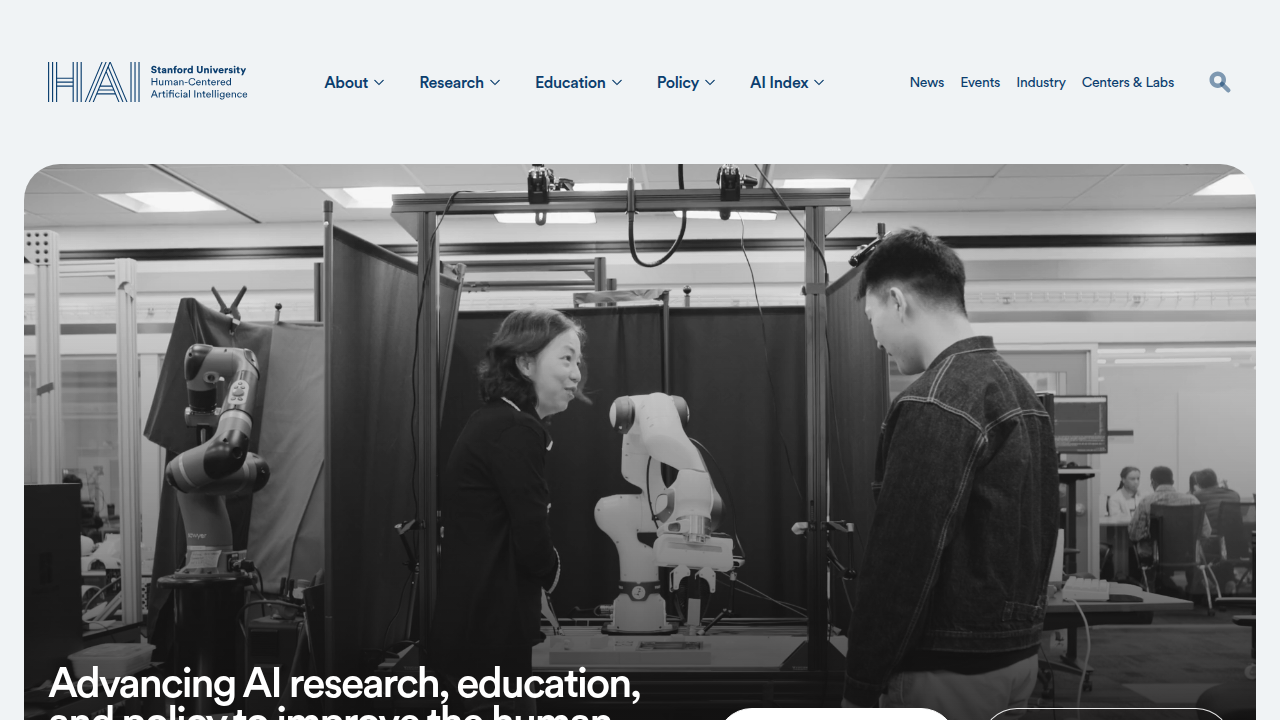
The numbers tell the story clearly. On the SWE-bench Verified coding benchmark, which measures how well AI systems can fix real-world software bugs, performance jumped from 60% to nearly 100% in just one year. That finding comes from the 2026 AI Index Report from Stanford HAI.
Think about what that means. Tasks that used to take human programmers hours or days can now be handled by an AI model in minutes.
Large language models are not just writing code. They are also helping with theorem proving, a core part of computer science research.
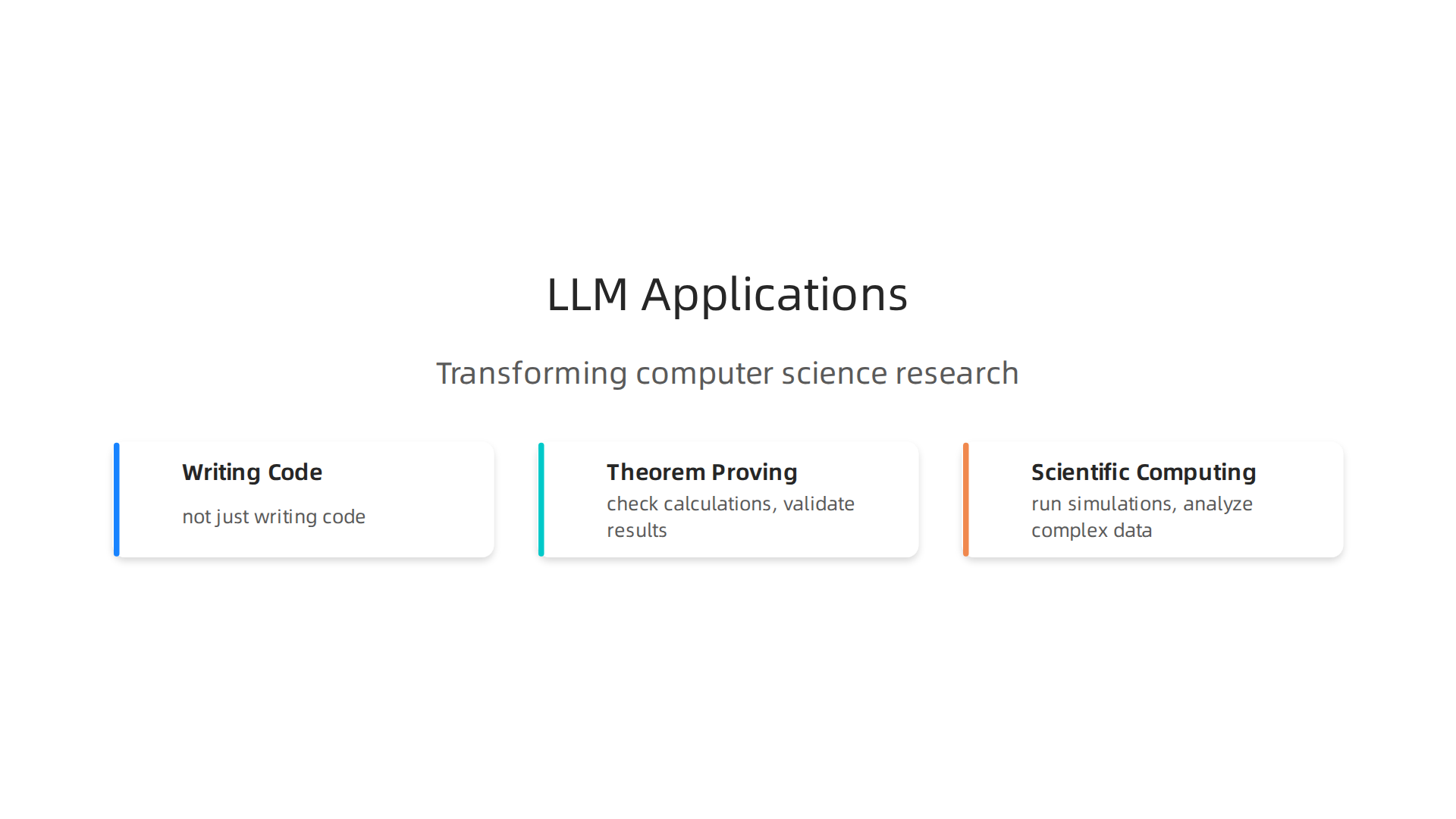
These AI tools can check calculations, suggest new proof strategies, and even validate existing results. In scientific computing, researchers use LLMs to run simulations and analyze complex data sets faster than ever before. At OpenAI, they describe these tools as "high-throughput partners for thought, computation, and structured reasoning," helping researchers shorten the cycle from hypothesis to test.
But this transformation brings up big questions. How do you trust a proof or a piece of code generated by an AI? Can you reproduce the results? These are open research questions that the field is actively working to solve. Formal verification, where you mathematically prove that a program does what it claims, is becoming more important than ever. For a deeper look at how AI predictions can be made verifiable, check out how open evidence AI makes predictions verifiable and trustworthy.
Here is the thing: the pace of change means the old ways of staying informed no longer work. Reading scattered blog posts or skimming academic papers whenever you have time is not enough. Computer science news in 2026 requires a more focused approach. You need sources that track not just the breakthroughs, but also the challenges like reproducibility. That is what makes curated updates so valuable.
The future standard for research will involve a partnership between human curiosity and machine speed. The question is not whether to use AI it is how to use AI responsibly and effectively. Every researcher and professional in the field needs to understand both the power and the limits of these tools.
Curriculum Changes in Computer Science Education
The same forces reshaping research are also transforming how computer science is taught. If you are a student or an educator, you have probably noticed that the classroom looks very different now than it did just a few years ago. That is not an accident. University programs across the country are redesigning their curricula to prepare students for a world where AI is everywhere.
Many CS programs now require courses in machine learning, deep learning, and AI ethics. This is a big shift. Not long ago, these topics were advanced electives that only a handful of students took. Now they are considered core knowledge. For example, the University of Illinois Chicago College of Engineering announced that it will launch new AI courses and specialization tracks this fall.
Their goal is to make sure every computer science student understands not just how to use AI, but also how to build and evaluate it responsibly. You can read more about these efforts in the announcement about UIC Engineering launches AI curriculum initiatives.
At the same time, AI powered tutoring tools and coding assistants are being integrated directly into coursework. Students now use tools that help them debug code, suggest improvements, and explain concepts in real time. This changes the role of the teacher from a lecturer to a guide.

Some educators worry that students might rely too much on these tools and skip the hard work of learning fundamental concepts. Others see it as an opportunity to focus on higher level thinking.
That brings us to the debate: how much traditional theory should we still teach versus how much applied AI? It is not an easy question. Some argue that students still need a deep understanding of algorithms, data structures, and low level programming. Without that foundation, they cannot truly understand why an AI model works or fails. Others say the future standard for computer science is knowing how to use AI effectively, not memorizing every detail of a sorting algorithm.
Most programs are trying to find a balance. They keep core theory courses but add new modules on AI ethics, fairness, and real world deployment. If you are trying to navigate these changes yourself, you might find it helpful to read a strategic guide how to learn AI for success in 2026. It covers what skills actually matter right now.
The truth is, the curriculum will keep evolving. The best thing you can do is stay curious and stay informed. One easy way to keep up is to get clear daily AI updates from The Deep View Newsletter. It cuts through the noise and shows you what is actually changing in the world of computer science and AI.
The New Landscape of Computer Science Careers
That same fast pace of change is reshaping what careers in computer science actually look like. If you are thinking about your next job or just starting your career, you probably wonder what roles even exist anymore.

The answer might surprise you.
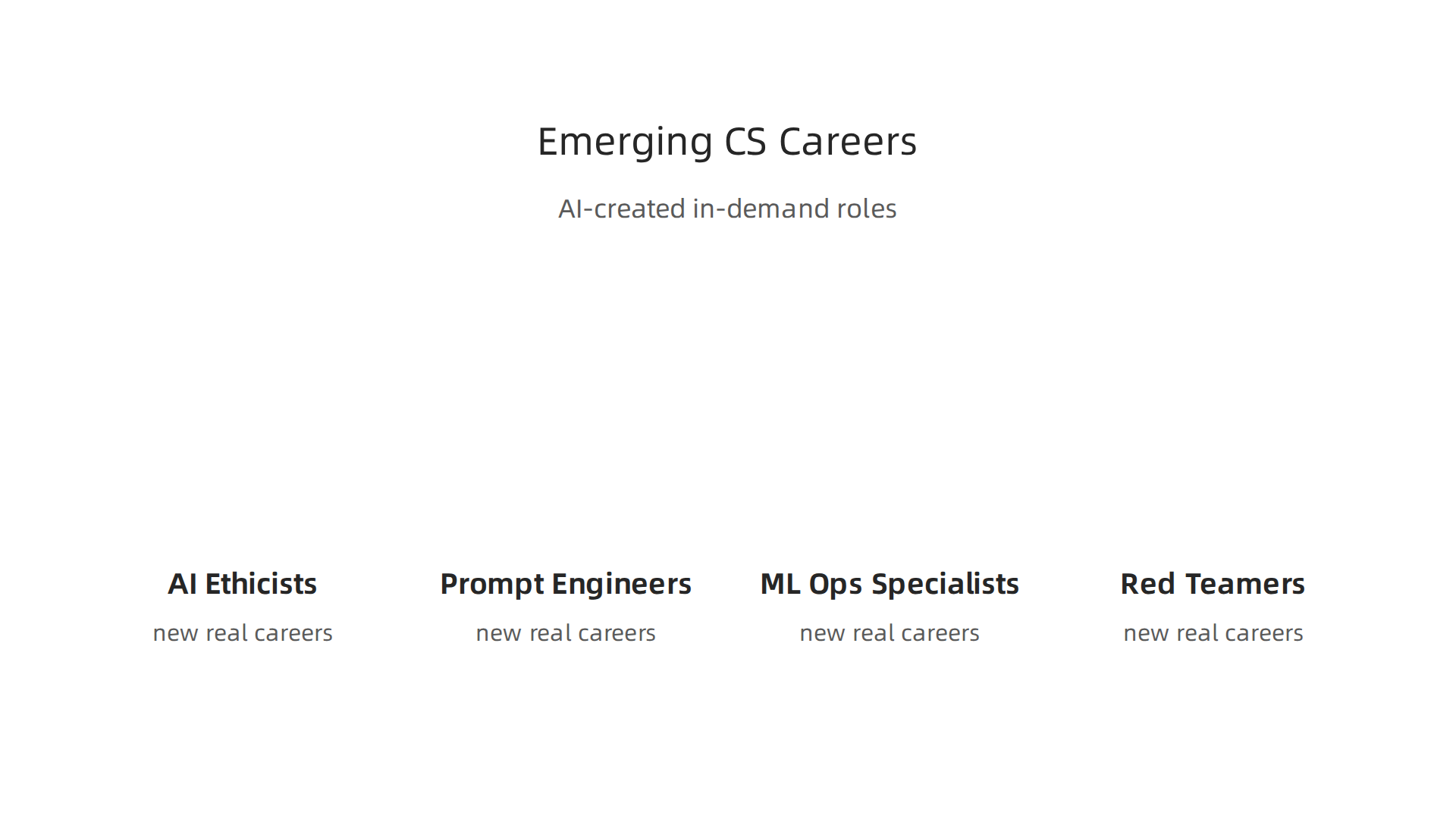
Brand new job titles are popping up everywhere. AI ethicists, prompt engineers, ML ops specialists, and red teamers are now real careers with real salaries.
These roles barely existed a few years ago. Now companies are actively hiring for them. According to the latest analysis, the traditional career ladder is compressing, and AI-exposed junior roles now require advanced skills like leadership and strategic thinking much earlier than before. A recent report from BCG estimates that over the next two to three years, 50% to 55% of jobs in the United States will be reshaped by AI.

That is not about losing jobs. It is about jobs changing. You can read the full breakdown in the article on how AI Will Reshape More Jobs Than It Replaces.
At the same time, traditional software engineering roles are not going away. But the bar has moved. Companies still need developers who can build and maintain systems. But they increasingly expect those developers to know how to use AI tools effectively. Writing code from scratch is becoming less important. Understanding how to work alongside AI and apply higher level thinking matters more now. This is where the debate about computer technology skills gets real. Do you need to know every algorithm by heart? Probably not. But you do need to be comfortable using AI to speed up your work and solve problems faster.
Meanwhile, venture capital firms are pouring billions into AI native startups. That money creates new career paths that did not exist five years ago. If you have skills in machine learning, data engineering, or AI governance, you are in high demand. The job market is splitting into two tracks: one for people who can work with AI and one for people who cannot. The gap is widening fast.
Keeping up with computer science news is essential if you want to understand where the jobs are headed. One practical way to stay ahead is to explore the best AI tools for business in 2026 that can boost your productivity and save you time. The tools you learn now will shape the work you do tomorrow.
The big question is not whether AI will take your job. It is whether you will adapt fast enough to take advantage of the new opportunities AI creates. The future standard for any computer science career is the ability to use AI as a partner, not a threat. Those who embrace that shift will find themselves in a stronger position than ever before.
Ethical and Regulatory Challenges
But alongside these career opportunities come serious ethical and regulatory challenges that every professional in computer technology needs to understand.

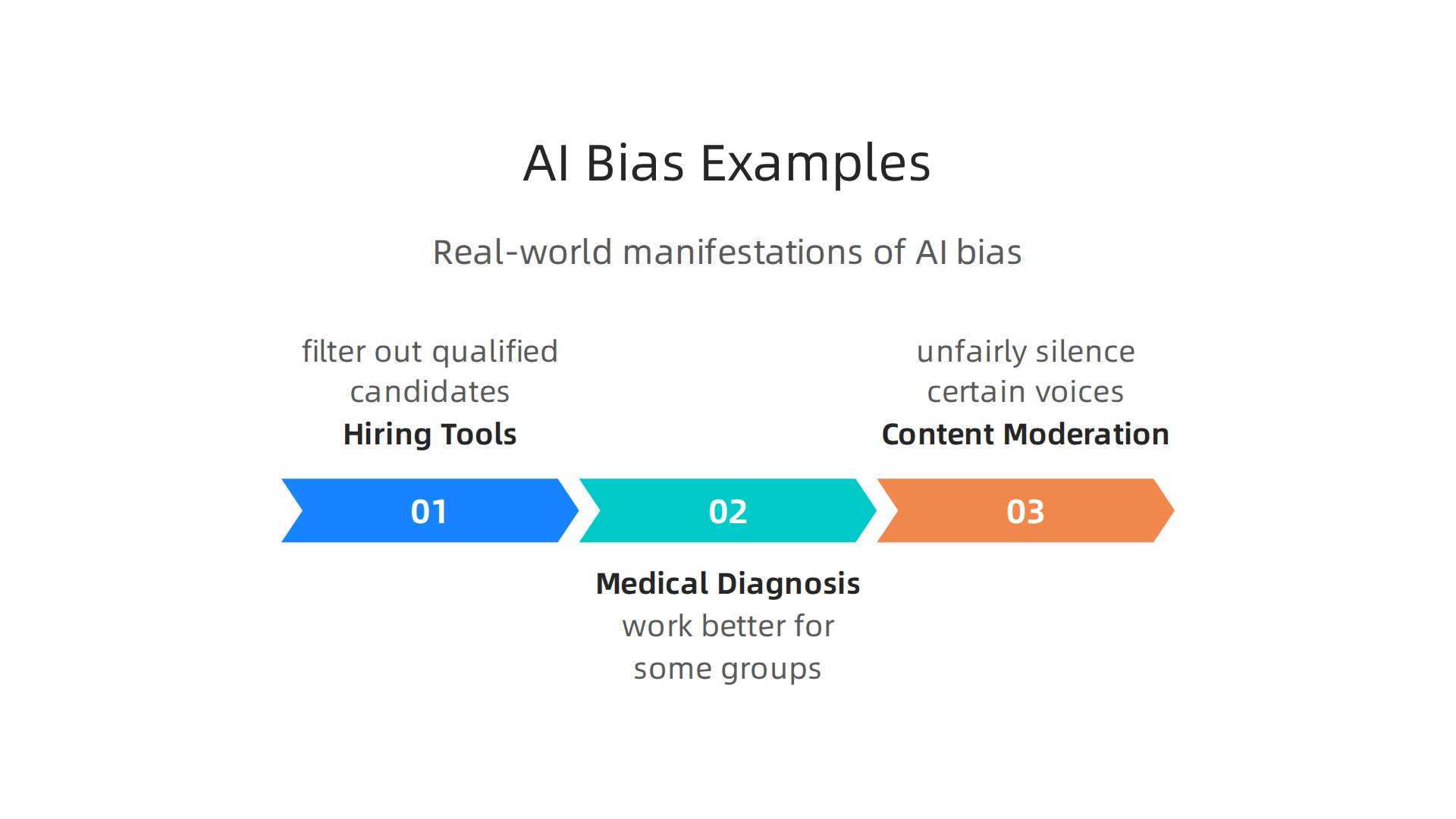
Bias in AI models is not a theoretical problem anymore. It shows up in hiring tools that filter out qualified candidates, in medical diagnosis systems that work better for some groups than others, and in content moderation algorithms that unfairly silence certain voices.
The lack of transparency makes it worse. Many AI systems are black boxes. Even the engineers who build them cannot always explain exactly why a model made a specific decision.
That is a big problem when lives and livelihoods depend on those decisions. Companies and governments are starting to demand accountability. The European Union’s AI Act is one example of new regulations forcing organizations to embed ethics directly into their workflows. If you work in computer science, you now need to understand rules around fairness, privacy, and liability. This is not optional anymore. It is becoming a job requirement.
The good news is that universities are responding. The University of Illinois Chicago recently announced a new AI literacy course that explores how AI systems work and their broader social and ethical implications. This kind of curriculum shift shows that the future standard for education is blending technical skills with ethical thinking. You can read more about these changes in the coverage of the UIC Engineering AI curriculum initiatives.
What does this mean for you? If you are building AI products or using them at work, you need to ask hard questions. Where did the training data come from? Is the model biased? Can you explain its decisions? These questions are not just for ethicists. They are for everyone who touches AI.
The field also needs more collaboration between computer science and social sciences. Understanding human behavior, cultural context, and social impact is just as important as writing efficient code. Interdisciplinary teams produce better, fairer AI.
One practical step is to keep learning about AI transparency tools. For example, platforms like Open Evidence AI help make AI predictions verifiable and trustworthy, which is exactly the kind of technology the industry needs right now.
Staying informed on these fast-moving issues can feel overwhelming. That is why many professionals rely on a trusted daily digest. If you want clear, concise updates on AI ethics, regulations, and breakthroughs, consider subscribing to The AI Newsletter Worth Reading. It curates the most important news so you do not have to wade through the noise yourself.
Emerging Tools and Technologies
Staying up to date with computer science news means keeping an eye on the tools that are actually changing how you work. In 2026, the biggest shift is happening in the tools developers use every day. AI coding assistants have gone from being a nice extra to a must-have part of the workflow. Whether you are a beginner or a seasoned engineer, using AI to write, review, and debug code is now the future standard.
Let’s start with coding assistants. Tools like GitHub Copilot, Cursor, and Claude Code are now deeply integrated into IDEs like VS Code and JetBrains. They do not just autocomplete lines anymore. They can understand entire functions, suggest multi-file changes, and even refactor large codebases. A 2026 comparison of coding assistants shows that Cursor leads the pack with a polished AI native experience, while Copilot remains the safest bet for day to day coding. The choice depends on your workflow. But the key point is clear: using AI is no longer optional if you want to stay productive.
Beyond coding, MLOps and AI platform tools are becoming the new standard for deploying and monitoring machine learning models. These platforms automate the messy parts of model management: version control, testing, scaling, and monitoring for drift. In the past, you had to build these systems yourself. Now, tools like MLflow, Kubeflow, and cloud native services handle the heavy lifting. This lets data scientists focus on building better models instead of worrying about infrastructure. It also makes teams more reliable because models in production are constantly tracked and retrained as needed.
Open source frameworks continue to evolve too. PyTorch, TensorFlow, and JAX are all adding new capabilities for working with large language models and generative AI. The competition between these frameworks actually benefits everyone, because it drives faster innovation and better performance. If you are learning AI in 2026, you cannot go wrong starting with PyTorch. It has become the most popular choice for research and production alike.
All these tools are part of a bigger picture: computer technology is becoming smarter, faster, and more accessible. But with so many options, it can be hard to know where to invest your time. That is why it helps to check out curated lists of the top AI tools for business in 2026. They break down what works best for different tasks, so you can skip the trial and error.
The important thing is to stay curious. Experiment with a new coding assistant. Try deploying a model with an MLOps platform. Play with JAX for a side project. The tools are ready for you. Now it is up to you to use them well.
Future Directions in Computer Science
So where is all this heading? The next few years of computer science news will be shaped by three big shifts that are already starting today.
Understanding them now will help you stay ahead of the curve.
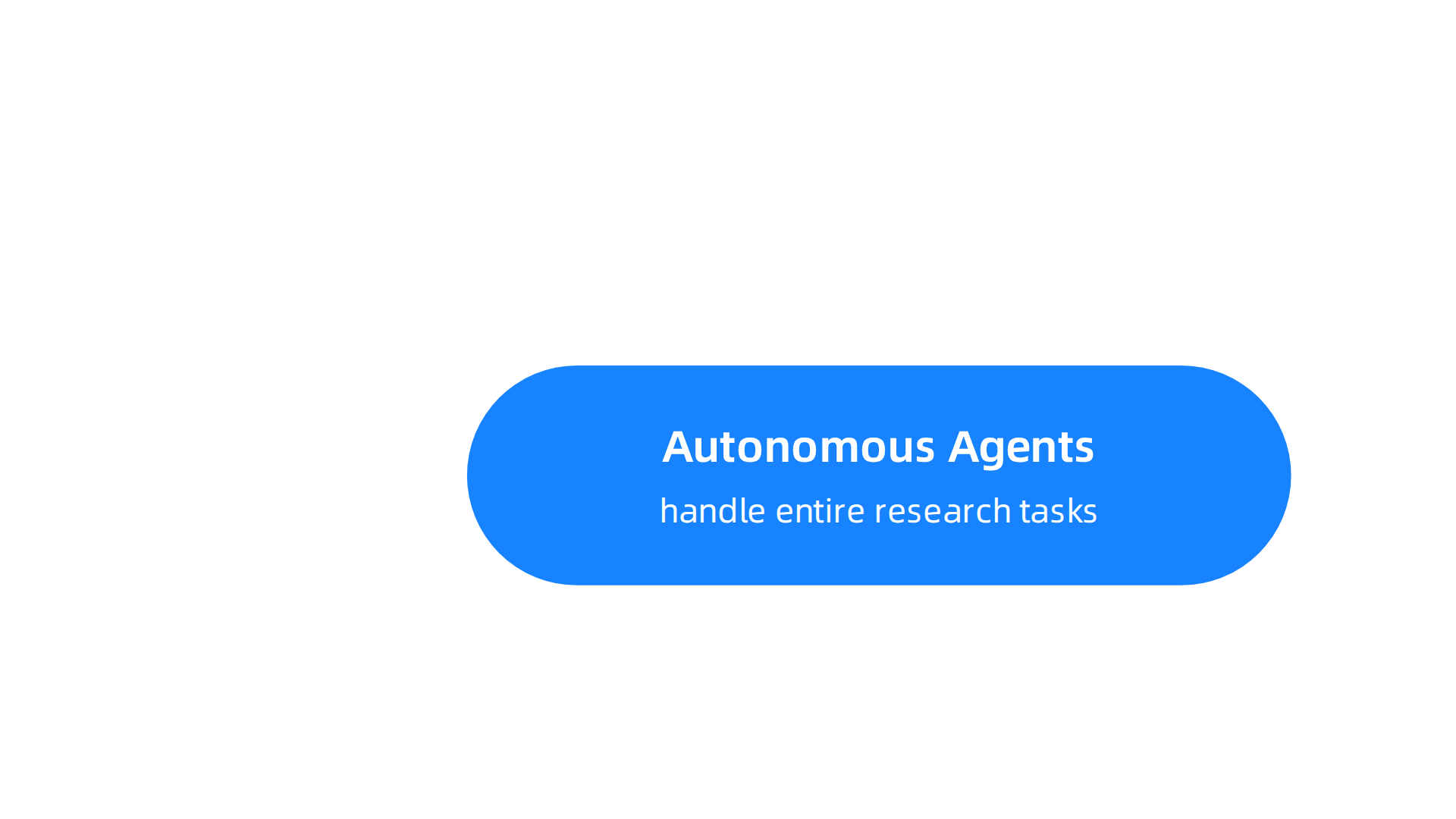
First up are autonomous AI agents. Right now, most AI tools still need you to give them step-by-step instructions. But that is changing fast. In the near future, AI agents will be able to handle entire research tasks from start to finish. They will generate hypotheses, run experiments, analyze results, and write reports without constant human input. According to the experts at Microsoft, we are already seeing AI agents becoming digital colleagues that take on specific tasks at human direction. Within five years, these agents could manage end-to-end research projects in fields like medicine, climate science, and materials design. That does not replace you. It frees you up to focus on the big picture.
The second big shift is the convergence of quantum computing and AI. For years, quantum computers have been promising breakthroughs that never quite arrived. That is changing in 2026. New hybrid approaches combine quantum processors with classical AI systems to solve problems that were once impossible. Think of modeling complex molecules for drug discovery or optimizing global supply chains in real time. These are the kinds of challenges that traditional computer technology cannot crack. But when you combine quantum’s raw power with AI’s pattern matching, the possibilities open up. The University of California highlights that AI is already speeding up scientific discovery in ways we could not imagine just a few years ago. Quantum computing will take that even further.
The third shift is about you. The role of the computer scientist is changing. You are no longer just a person who writes code. You are becoming an AI orchestrator and an ethicist. You need to decide which tasks to give to machines, how to oversee their work, and whether the results are fair and safe. As OpenAI’s 2026 report on AI as a scientific collaborator points out, AI tools are now used daily for literature synthesis, code debugging, data analysis, and experiment planning. That means your job is to guide and verify, not to do everything yourself. This shift requires new skills: prompt engineering, model evaluation, and ethical reasoning.
It is an exciting time to be in the field. To keep up with all these changes, you need a steady source of computer science news that cuts through the noise. The Deep View Newsletter delivers daily AI updates that help you understand what matters and what does not. It is the kind of resource that turns information overload into clear, actionable insights. If you want to stay ahead of the curve, subscribing is a smart move.
The future of computer science is not just about faster chips or bigger models. It is about how humans and AI work together to solve real problems. And that future is already here.
Summary
This article explains how rapid advances in AI are transforming computer science across research, education, careers, tools, and ethics, and why professionals must move from information overload to curated signal. It surveys concrete shifts—like LLMs accelerating coding and theorem proving, universities integrating AI and ethics into curricula, new job titles (prompt engineers, MLops, red teamers), and stronger regulatory demands—and cites data showing large-scale workforce impact. The piece also reviews the practical toolset changing daily work (coding assistants, MLOps platforms, PyTorch) and flags future directions such as autonomous AI agents and quantum-AI hybrids. Readers will learn what skills to prioritize, how to evaluate AI outputs (reproducibility and formal verification), and where to find reliable daily updates to stay current. The article emphasizes responsible use of AI and offers steps to adapt: adopt the right tools, deepen systems thinking, and follow curated news sources to turn noise into actionable insight.