
Why Strategic AI Adoption is the Cornerstone of Business Growth in 2026
Have you ever felt overwhelmed by the sheer number of new AI tools launching every single week? You are not alone. The World Bank now highlights AI as a major driver of global economic change. And the numbers back it up. The Stanford HAI 2026 AI Index confirms that global corporate investment in AI more than doubled in 2025. This rapid growth creates a real challenge for business leaders. How do you sort through the hype to find the business AI tools that actually deliver results for your team?
Moving too fast without a plan can hurt your bottom line. The White House recently warned that not every AI investment turns a profit. A McKinsey report from early 2026 shows that business use of AI jumped sharply in 2024. That means your competitors are already experimenting. The difference between success and wasted money comes down to having a clear strategy.

You need a simple framework to evaluate, choose, and use AI apps effectively.
This guide delivers that framework. We will walk you through the exact steps to find the right tools for your business. You will learn how to conduct an AI comparison that makes sense for your specific goals. We will cover the best categories of business AI tools, from generative text to upscale AI image generators. We will also look at how to measure ROI and stay ahead of future trends. Whether you need SAP AI tools for your enterprise or simple solutions for a small team, this guide has you covered.
If you want to see how other professionals are solving these problems today, check out our curated list of the top AI tools for business in 2026. Staying informed is the first step to staying competitive. That is why thousands of busy professionals rely on The Deep View Newsletter. It delivers clear, daily AI updates straight to your inbox. It helps you cut through the noise and focus on what matters.
Navigating the 2026 AI Tool Ecosystem
So what does the AI tool landscape actually look like in 2026? It is huge and growing fast. The enterprise AI market alone is valued at $40.45 billion this year, and experts expect it to hit $164.58 billion by 2030. Global spending on AI systems is forecast to surpass $300 billion in 2026. And these numbers include all sorts of tools designed for different jobs.
The ecosystem now covers six major categories you need to know about:
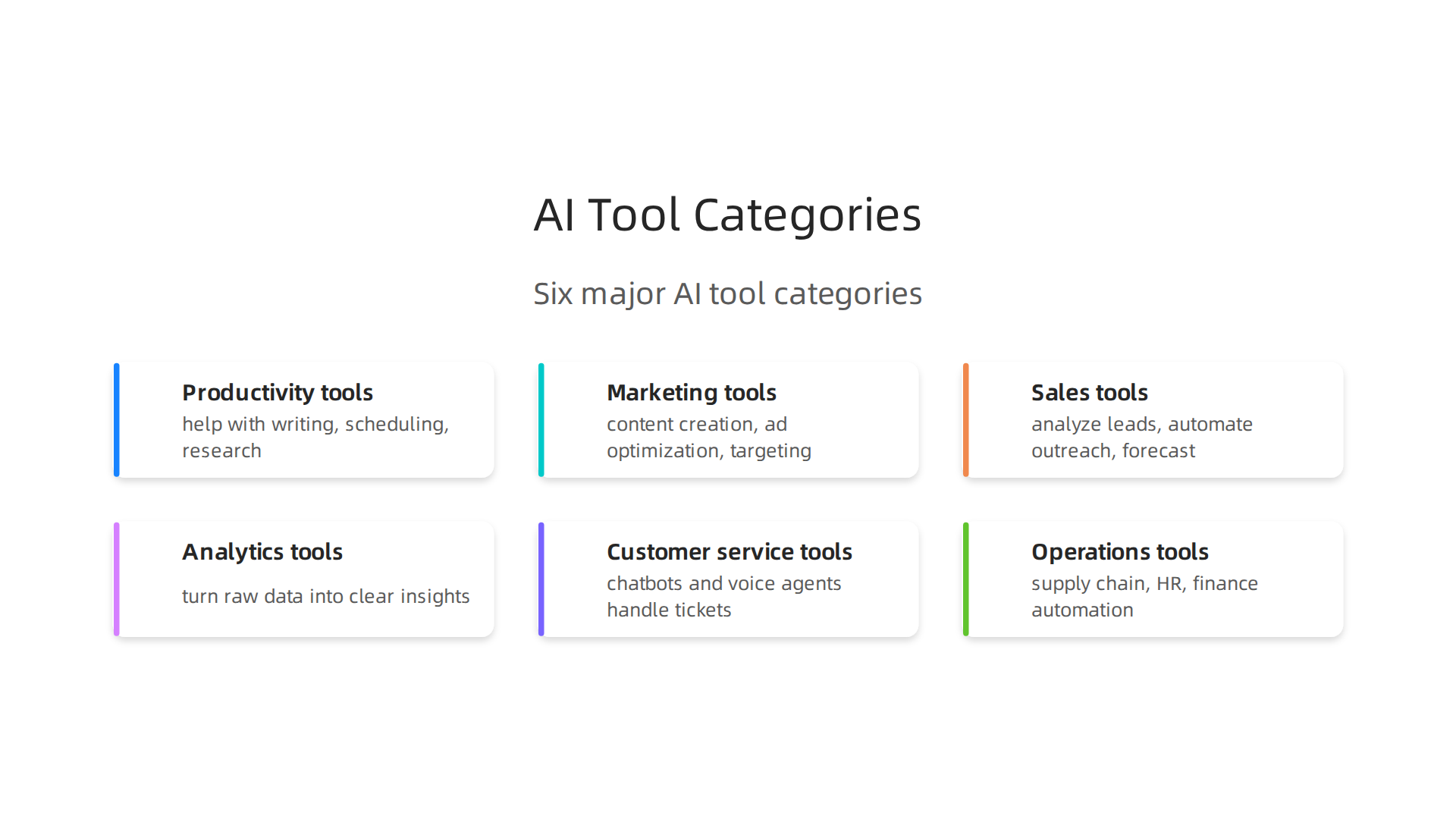
- Productivity tools that help with writing, scheduling, and research. The AI productivity tools market is expected to grow at 14.5% CAGR through 2033.
- Marketing tools for content creation, ad optimization, and audience targeting.
- Sales tools that analyze leads, automate outreach, and forecast deals.
- Analytics tools that turn raw data into clear insights and predictions.
- Customer service tools like chatbots and voice agents that handle support tickets.
- Operations tools for supply chain, HR, and finance automation.
But here is the big shift: these tools are no longer standalone add-ons. The latest trends show that AI is going from being an extra feature to being built directly into the platforms you already use. For example, Gartner predicts that 40% of enterprise applications will embed task-specific AI agents by the end of this year. That means business AI tools are becoming integrated platforms, not separate apps you toggle on and off.
Worker access to AI is also soaring. A Deloitte report shows that worker access to AI rose by 50% in 2025, and the number of companies with at least 40% of their AI projects in production is expected to double soon. This tells you that adoption is moving from experimentation to real deployment.
For a complete breakdown of the best tools in each category, check out our curated list of the top AI tools for business in 2026. It will help you compare options side by side.
Navigating this crowded space can feel overwhelming. But you do not have to do it alone. Get clear daily updates delivered to your inbox with The Deep View Newsletter. It cuts through the noise so you can focus on the tools that actually matter for your business.
How to Evaluate Business AI Tools: A Strategic Framework
Picking the wrong business AI tool can cost you time, money, and trust. The truth is, studies show that only about 25% of AI initiatives deliver the expected return on investment. That is a staggering failure rate. Why? Because many teams jump in without a clear evaluation plan. Here is a simple but powerful framework to help you compare business AI tools and avoid costly mistakes.
Start with seven key criteria. Score each tool on a scale of 1 to 10 for every category.
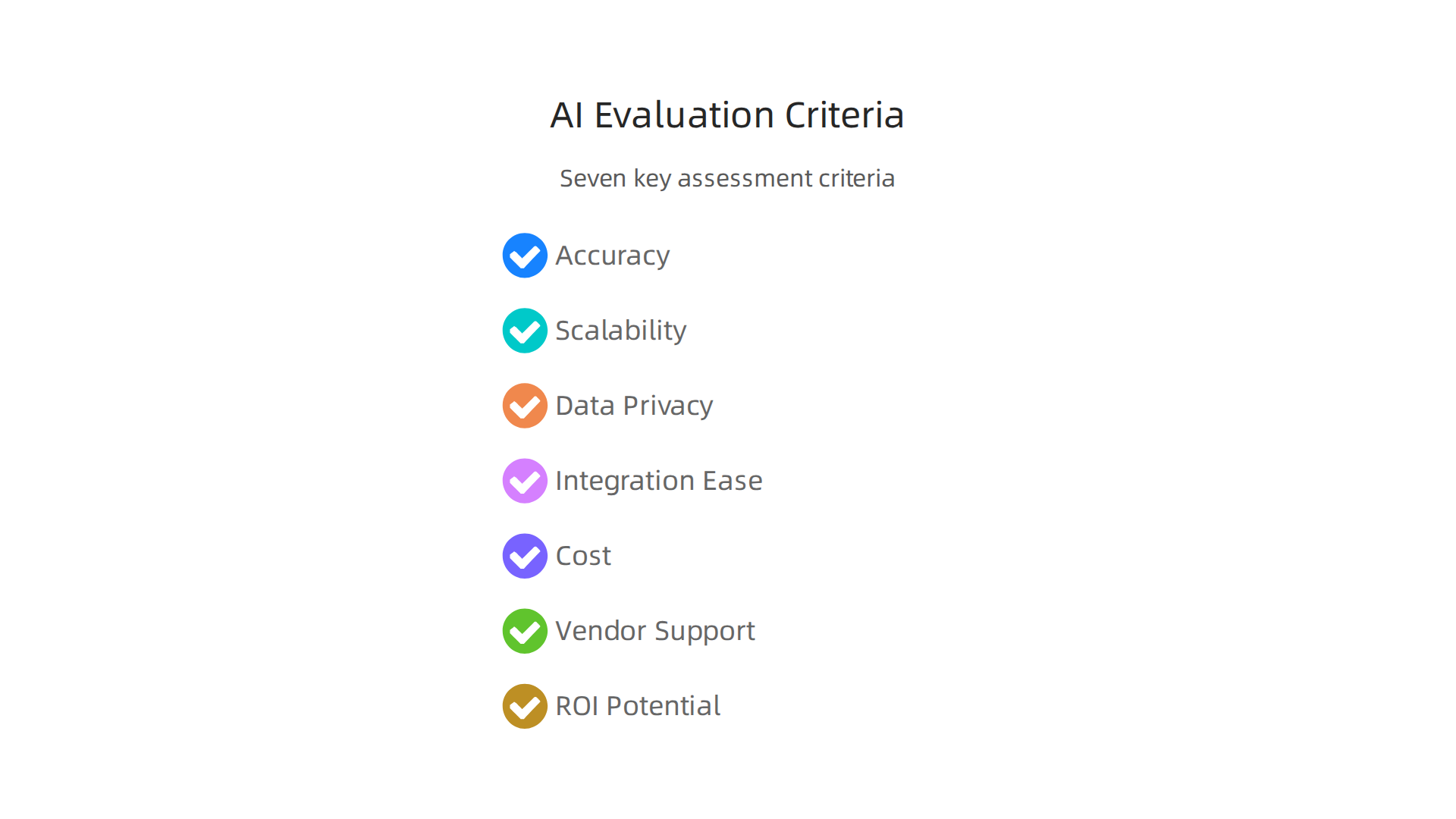
Then multiply each score by a weight that matches your business priorities (for example, if data privacy matters most, give it a weight of 5, while integration ease might be a 3). Add up the final numbers to see which tool comes out on top.
| Criterion | Why It Matters |
|---|---|
| Accuracy | Does the tool give correct, reliable outputs? Test with real data. |
| Scalability | Can it handle growing users, data volume, or complexity without slowing down? |
| Data Privacy | How does the vendor handle your data? Look for compliance with regulations and clear data deletion policies. |
| Integration Ease | Can it plug into your existing stack? Tools that require heavy custom work often stall adoption. |
| Cost | Understand upfront pricing and hidden fees. Compare total cost of ownership over time. |
| Vendor Support | Is there responsive help, documentation, and a clear roadmap for updates? |
| ROI Potential | Measure the expected gains in productivity, revenue, or cost savings. Use a structured framework like the one described in this CFO guide to enterprise AI ROI to move beyond guesswork. |
To make this concrete, think of a medium-sized marketing firm that picked an AI writing tool because it was cheap and flashy. They ignored scalability. Six months later, the tool crashed during a high-traffic campaign, and they lost leads. On the flip side, a supply chain company that carefully evaluated integration ease and vendor support chose a system that connected smoothly with their SAP AI tools and saved them 30% in operational costs within a year. The difference was the evaluation process, not the tool itself.
This framework works for any category of business AI tools, whether you are comparing ai apps for customer service or upscale ai for image enhancement. The key is to use a transparent scoring system so your whole team agrees on the decision.

For a deeper dive into comparing specific options, check out our guide on how to choose the best AI chatbot for writing in 2026.
Remember, evaluation is not a one-time event. Markets change, vendors update their products, and your needs shift. Set a regular cadence to reassess your tools against these criteria. By doing this, you move from guessing to strategic selection.
Still want help staying on top of the ever changing AI tool landscape? Get clear, daily insights delivered straight to your inbox with the The Deep View Newsletter. It cuts through the noise so you can focus on the tools that actually drive results.
Top Business AI Tools for 2026 Growth
Now that you have a solid evaluation framework, it is time to look at the tools that are leading the pack in 2026. The market is exploding. Global spending on AI systems is set to top $300 billion this year, and the enterprise AI market alone is growing at a 42% compound annual rate. With that many options, you need a focused list. The tools below are chosen because they address the biggest pain points your team probably faces every day: generating leads, cutting manual work, and getting real insights from your data.
Marketing: Content and Campaign Automation
Marketing teams waste hours on repetitive tasks. The best business ai tools in this space automate content creation, A/B testing, and audience segmentation. Think of platforms that use ai apps to write social posts, draft emails, and personalize web content at scale. If your team deals in visual content, tools that use upscale ai to enhance images or generate designs can save days of editing time. These tools directly solve the pain point of slow campaign execution.
Sales: Predictive Lead Scoring and Outreach
Sales teams need to know who to call and when. AI tools here analyze past deal data to score leads by likelihood to convert. They can also automate follow-up emails and schedule meetings without a human touching a keyboard. The result? More time spent closing and less time spent prospecting. This is where your evaluation criteria like accuracy and integration ease really matter, because bad lead scores cost you revenue.
Operations: Workflow and Supply Chain Automation
Operations is where you see huge ROI from careful ai comparison. Look for tools that integrate with existing systems like SAP AI tools for inventory management, demand forecasting, and logistics optimization. A smart ops tool can predict stockouts before they happen and automatically reorder supplies. That directly links to the scalability and cost criteria from our framework.
Analytics: From Dashboards to Actionable Recommendations
It is not enough to have a dashboard full of charts. The top analytics tools now use natural language to let you ask questions and get answers instantly. They surface trends you might miss and recommend next steps. For a deeper look at how these tools fit into a broader productivity strategy, check out our full guide on top AI tools for business in 2026 to boost productivity and save time.
Remember, no single tool is perfect for every company. Use the scoring framework from the previous section to weigh each option against your specific needs. The market is moving fast, and staying informed is half the battle. Get clear, daily insights delivered straight to your inbox with The Deep View Newsletter. It cuts through the noise so you can focus on the tools that actually drive growth.
Integrating AI Tools into Your Business Workflow
You picked the right tools from our list. Now comes the real work: getting them into your daily operations. Integration is where many teams stumble. But with a clear plan, you can avoid the common pitfalls and see real results fast.
Step-by-Step Integration Process
-
Assess Your Current Workflow. Map out the tasks your team does manually. Identify bottlenecks and repetitive work. This step helps you match the right tool to the right problem. Read our guide on how to choose the best AI chatbot for writing to see how a simple evaluation fits into a larger strategy.
-
Run a Pilot. Pick one small, low-risk process. Test the tool with a small group. Run both the manual and automated workflows side by side. Compare outputs. This approach, called parallel testing, is a best practice recommended by workflow automation experts.
-
Roll Out Gradually. Once the pilot proves value, expand to more teams. Communicate the change early. Offer training. A thoughtful rollout reduces resistance and increases buy-in.
-
Scale Across the Organization. Connect the tool to your existing systems, including any SAP AI tools you already use. Integrate with your CRM, ERP, or data warehouse. This is where AI process automation tools really shine, handling complex workflows without breaking your current processes.
-
Monitor and Optimize. Track key metrics like time saved, error rates, and user adoption. Adjust settings or swap tools if needed. The best teams revisit their stack every quarter.
Common Integration Challenges
- Change Management. People fear the unknown. Involve your team early. Show them how the tool makes their day easier, not harder.
- Data Silos. If your data lives in separate systems, the tool can’t work well. Clean and connect your data before you start.
- Tool Compatibility. Not every AI app plays nicely with your stack. When you run an AI comparison, check for API availability, security standards, and vendor support.
Best Practices for Seamless Adoption
Start small. Celebrate early wins. Use those wins to build momentum. Create a feedback loop so users can report issues and suggest improvements. And always keep learning. The AI landscape moves fast, and today’s perfect integration might need tweaking tomorrow.
Stay on top of these changes with The Deep View Newsletter for daily, clear AI updates. It cuts through the noise so you can focus on what actually works.
Measuring the ROI of Your AI Investments
You integrated the tools. Your team is using them. But are they actually paying off? Here is the hard truth: according to an IBM CEO study, only about 25% of AI initiatives deliver the expected return on investment. Many companies spend big on business ai tools without a clear way to measure what they get back. That has to change.
Key Metrics That Matter
Forget vanity numbers. Focus on four core areas:
- Cost savings. How much did your expenses drop? Look at reduced labor hours, fewer software licenses, and lower error-related costs.
- Revenue uplift. Did your sales grow? Track conversion rates, average order value, and new customer acquisition after the AI tool went live.
- Productivity gains. Measure time saved per task. A solid AI ROI framework from Larridin shows that CFOs now demand real productivity numbers, not just soft claims.
- Customer satisfaction improvements. Net Promoter Score (NPS), response times, and repeat purchase rates all tell you if your AI apps are helping or hurting the experience.
As the experts at Sinequa point out, enterprise AI ROI in 2026 has shifted from simple productivity wins to actual P&L impact. You need to prove the tool affects your bottom line.
How to Attribute Results to AI
It is tempting to give AI credit for everything. Don’t. Use a clean comparison:
- Run a control group that does not use the tool.
- Compare outputs side by side.
- Account for other variables like seasonality or market changes.
Then reassess regularly. The best practice, according to this CFO framework, is continuous ROI assessment. Recalibrate your metrics as the tool evolves and new use cases pop up. What worked last quarter may not work next quarter.
For a deeper look at building a measurement system, check out our AI innovation guide to strategy, measurement, and frameworks.
Benchmarks by Tool Category
Here is what real companies are seeing in 2026, based on data from Unframe AI and the 2026 AI ROI Reference Data:
| Tool Category | Typical Productivity Gain | Time to Positive ROI |
|---|---|---|
| Customer support chatbots | 30 to 50% faster response | 3 to 6 months |
| Content generation AI | 40 to 60% more output per writer | 2 to 4 months |
| Data analysis assistants | 50 to 70% less manual reporting | 4 to 8 months |
| Sales enablement tools | 20 to 30% increase in qualified leads | 6 to 12 months |
Use these benchmarks as a starting point. Your actual results will depend on how well you matched the tool to your process. If you need help comparing options, our AI comparison guide for business tools covers the top picks.
Keep Measuring, Keep Improving
AI tools change fast. A tool that gave you great ROI six months ago might now be outdated. Stay on top of new developments. The Deep View Newsletter delivers daily, clear AI updates so you always know what is working and what is not. Subscribe and make sure your next investment pays off.
Emerging Trends in AI for Business: What to Watch in 2026
You have your business ai tools running and you are tracking their ROI. But the AI world does not sit still. In 2026, new trends are reshaping how companies use ai apps and rethink their workflows. Staying ahead means knowing what is coming next.

1. Agentic AI Takes the Wheel
Agentic AI is the biggest shift this year. We are moving from tools that wait for commands to AI agents that plan, decide, and act on their own. According to Gartner, by 2026, around 40% of enterprise applications will embed task-specific AI agents, up from almost zero just a couple years ago. That change comes from CloudKeeper’s analysis of agentic AI trends. Deloitte’s State of AI report confirms that agentic AI is expected to have its highest impact in customer support, supply chain management, and R&D.
Think of an agent that does not just answer a question but automates an entire order fulfillment process or handles a refund from start to finish. This is where upscale ai really starts delivering on its promise. If your current tools are not agent-ready, they may soon feel outdated.
2. Generative AI Moves from Experiment to Core
It is no longer about "trying out" generative AI. The Deloitte US report on the state of AI notes that worker access to AI jumped 50% in 2025, and companies are rushing to get at least 40% of their AI projects into full production. Generative AI is becoming built into every major software platform, from sap ai tools to customer relationship systems.
The 2026 Generative AI Trends piece by Vassardigital explains that generative AI is shifting from being an "add-on" to a core, built-in feature. It is becoming the glue that connects different business functions, not a bulldozer that replaces everything. For example, a marketing team no longer uses a separate AI tool for content and another for analytics. They use one platform where both tasks live.
3. Industry-Specific AI Tools Gain Ground
Generic business ai tools are giving way to specialized solutions for healthcare, finance, and retail. The enterprise AI market was valued at $40.45 billion in 2026 and is projected to grow to $164.58 billion by 2030 at a 42% CAGR, according to Research and Markets. Much of that growth comes from domain-specific models trained on industry data.
A hospital uses AI that understands medical records and insurance codes. A bank uses AI that knows compliance rules. A retailer uses AI that predicts inventory needs. These purpose-built ai apps tend to deliver faster ROI because they fit the workflow without heavy customization. If you are evaluating new tools, an ai comparison should include how well a tool adapts to your specific industry.
How to Keep Up
These trends mean that the tools you chose last year might not be the best next year. To make smart decisions, you need a steady stream of clear, reliable information. That is why The Deep View Newsletter exists. It delivers daily, bite-sized updates on everything from agentic AI to industry-specific tools so you always know what is emerging and what is fading.
For a deeper look at which tools are leading in 2026, check out our AI tools for business comparison guide. It covers the best picks across categories and helps you match trends to your actual needs.
Summary
This article explains why strategic AI adoption is the cornerstone of business growth in 2026 and gives a practical framework to choose, deploy, and measure AI tools. It walks through the six major tool categories—productivity, marketing, sales, analytics, customer service, and operations—and shows how modern platforms are shifting from add-ons to integrated, agent-ready capabilities. You get a seven-criterion scoring system (accuracy, scalability, privacy, integration, cost, vendor support, ROI potential) with a simple weighted scoring approach to compare vendors objectively. The guide also provides a step-by-step integration playbook: assess workflows, run pilots, roll out gradually, scale, and monitor. It summarizes key ROI metrics and realistic benchmarks for common tool types and warns about common pitfalls that cause failed projects. Finally, it highlights 2026 trends like agentic AI and industry-specific models so you can future-proof your selection and measurement approach.