

Why ‘Tech for Social Good’ Matters Now
In 2026, technology shapes our world more than ever before. From how we talk to each other to how businesses grow, smart tools are everywhere. But with great power comes great responsibility. This is why "tech for social good" is so important right now. It means using technology on purpose to create good changes in the world, helping people and communities thrive.
Think about it this way: technology can solve big problems like improving health, making education better, or helping the environment. But it can also create new challenges if we are not careful. So, it’s not just about making new gadgets; it’s about making sure these new tools help everyone. The World Economic Forum explains that responsible tech aims to do no harm and looks at how products and services might cause negative effects to fix them early on Tech for good: What it means and how we can deliver on it.
Many important people, like investors, company founders, and smart researchers, need clear guidance. They want to make sure the artificial intelligence (AI) and future tech they build or put money into actually leads to good, measurable results for society. This isn’t just a nice idea; it’s becoming a key part of how successful and ethical businesses work. There’s a real urgency to guide technology in the right direction.
This article is here to help you. We will share easy-to-understand ideas, real-life examples (like an AI case study), ways to measure success, and steps you can take. These ideas are made for people who make big decisions about machine intelligence. Our goal is to give you the tools to direct technology toward truly helping the world. For more on smart planning, you might also be interested in The AI Innovation Guide to Strategy, Measurement, and Frameworks.
Staying up to date with the fast-changing world of AI and technology can be hard. If you’re a leader, investor, or researcher looking for quick, important updates, then you’ll want to check out The AI Newsletter Worth Reading for clear daily insights.
The Current Landscape: Definitions, Actors, and Ecosystem Needs
To truly direct technology toward helping the world, we first need to understand the playing field. This means knowing what "tech for social good" really means, who the main players are, and what big problems they face together.
First, let’s make sure we all mean the same thing by "tech for social good." Simply put, it’s about using technology to bring about good social benefits on purpose. This includes all kinds of innovation, from simple apps to complex artificial intelligence systems, aimed at solving real-world problems. For example, it might involve building tools to help people in need or to protect our planet. A report on the human-centered economy defines it as the use of technology to make a clear, positive difference in society BASSAJAMBA REPORT – GovDelivery. When we talk about AI specifically, it means building and using AI to fix problems that hurt people or the natural world, or to help make society better and more green 9 Good Practices: The Proper Use of AI for Social Good.
Who Makes Up the Tech for Social Good World?
Many different kinds of groups and people work in this space. Think of it like a big team with many players, all trying to score a goal for good.
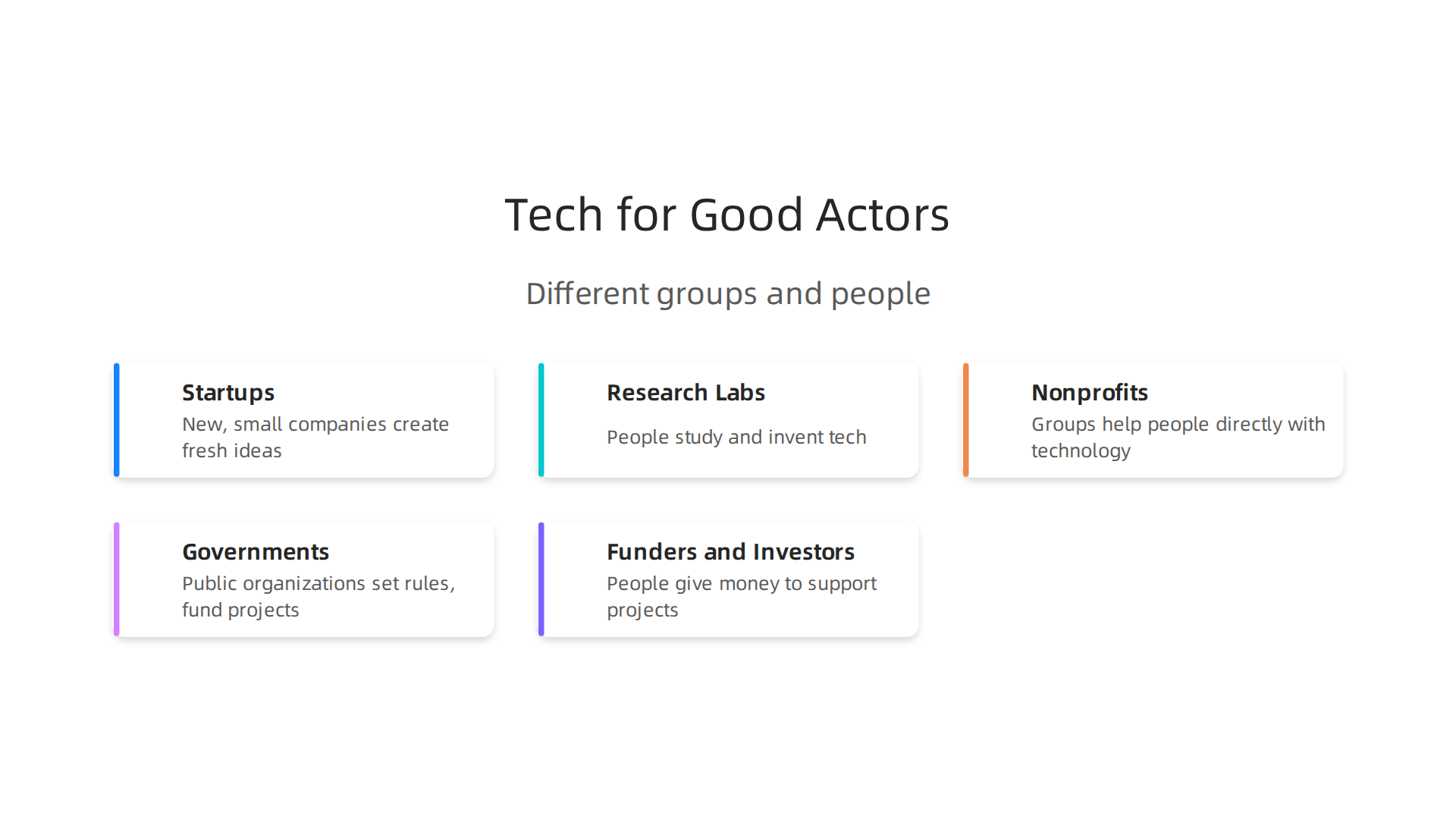
These players include:
- Startups: New, small companies that create fresh ideas and tools.
- Research Labs: Places where smart people study and invent new future tech, like advanced AI.
- Nonprofits: Groups that work for a cause, often helping people directly with technology.
- Governments: Public organizations that can set rules, fund projects, and bring people together.
- Funders and Investors: People or groups who give money to support these projects, hoping for good results.
All these groups working together form what we call an "ecosystem." This ecosystem is a network where everyone connects and relies on each other to make things happen. Understanding these connections is key to success, as explored in guides on Civic Tech and Data Ecosystem Mapping.
What Challenges Does This Ecosystem Face?
Even with so many people trying to do good, there are still big challenges that make it hard for "tech for social good" to grow and have a greater impact.
- Fragmented Information: Imagine everyone has a piece of a puzzle, but no one has the full picture. Information about what works, what doesn’t, and who is doing what is often spread out. This makes it tough for groups to learn from each other or team up effectively.
- Lack of Clear Ways to Measure Success: It’s often hard to tell if a tech for social good project is truly making a difference. How do we know if an AI case study really improved lives? We need better, agreed-upon ways to measure if these tools are helping people and if they are safe. Without good ways to check, it’s hard to know which projects to support more or how to make them better. Experts even talk about Rethinking AI Evaluation for the Social Sector to make sure we focus on real changes in people’s lives. For more on making sure AI systems are fair and understood, you can learn about how to build ethical and transparent AI for humans.
- Coordination Problems: With so many different groups involved, it can be hard for everyone to work together smoothly. This means good ideas might not spread as quickly, and some projects might not grow big enough to help many people. Getting everyone on the same page is a big task.
To truly make a difference with future tech and AI, leaders need to understand these parts of the landscape.

They must find ways to connect the dots, measure success properly, and encourage better teamwork.
Even with these challenges, tech for social good is already showing big promise. Machine intelligence, like advanced AI and machine learning, is being used in powerful ways to make a real difference around the world in 2026. These applications, often called AI case studies, show us the many benefits of artificial intelligence.
Let’s look at some key areas where this future tech is making a measurable positive impact:
Better Healthcare for Everyone
Imagine a world where good medical care is easier to get. That’s what AI is helping with. It can help doctors find diseases earlier, like in X-rays or scans, which saves lives. It can also help deliver healthcare to people who live far from cities or in places where there aren’t many doctors. AI tools can analyze lots of patient information to suggest the best treatments. This is a big step towards improving healthcare access for many. Reports show that AI is improving lives and protecting the planet in many ways, including in healthcare AI for social good: Improving lives and protecting the planet.
Fighting Climate Change and Building Resilience
Climate change is a huge problem. But machine intelligence is becoming a powerful tool to help. AI can watch changes in our weather and oceans, helping us understand climate patterns better. It can also predict natural disasters like floods or wildfires, giving people more time to get safe. On top of that, AI can help manage resources like water and energy more wisely, making our communities more resilient to climate problems.
Fairer Education for All Students
Everyone deserves a good education. AI can help make learning fair for every student. It can create special learning plans for each person, making sure they get help where they need it most. This means students can learn at their own speed and in ways that work best for them. This kind of tech can also bring quality education to places where schools are hard to reach. However, a 2026 review on The Evidence Base on AI in K-12 notes that we still need more proof of AI’s direct effects on student well-being.
Keeping Communities Safe
AI is also helping to keep us safer. In public safety, machine intelligence can help first responders, like police and firefighters, get to emergencies faster. It can also help predict where help might be needed next, allowing resources to be put in the right places. This helps make communities safer and respond better when bad things happen.
Aiming for Big Changes, Not Just Small Ones
When we think about tech for social good, it’s important to know the difference between making small improvements and causing big changes. A small improvement might be an app that makes a task a little bit easier. But a big change, or a "systems-level transformation," means using tech to completely change how a whole system works for the better. For example, instead of just making a hospital run a bit smoother, AI could change how an entire country delivers healthcare.
Leaders in 2026 need to look for projects that can bring about these large, lasting changes. They should ask if an AI case study can do more than just fix a small problem; can it truly reshape things for the better? This focus on bigger impact is key to truly using the 10 benefits of artificial intelligence for good. To stay ahead of these developments and learn how machine intelligence impacts our world, consider subscribing to The AI Newsletter Worth Reading.
To truly make these big changes with tech for social good, we need to think carefully about how we design and manage these projects. It is not just about making powerful tools. It is about making sure these tools are fair, safe, and truly help people. This is where designing responsible, scalable projects comes in.
Important Rules for Future Tech
First, we need some important rules or principles for any future tech project. These help guide us to make good choices:
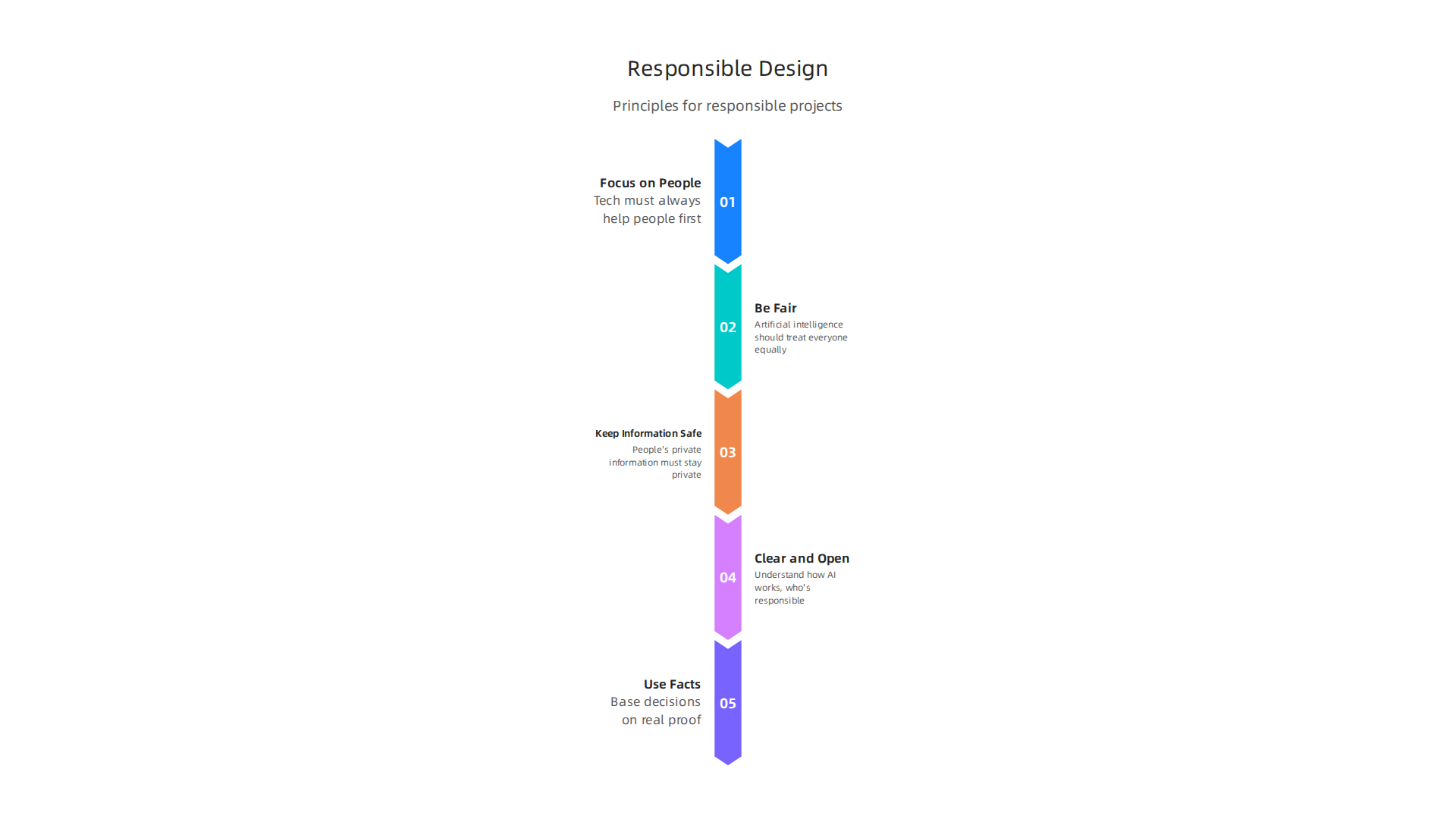
- Focus on People: The tech must always help people first. It needs to respect human rights and public values Recentering Public Values in AI Governance. We should listen to everyone who might be touched by the tech.
- Be Fair: Artificial intelligence should treat everyone equally. We must design it so it does not have hidden unfairness, also known as bias.
- Keep Information Safe: People’s private information must stay private and secure.
- Be Clear and Open: We need to understand how AI works and who is responsible for it. This helps everyone trust the new tech.
- Use Facts: Base decisions on real proof and good information, not just guesses.
Building Strong Ways to Manage Projects
Next, we need good ways to manage these projects, which we call governance structures. This means having clear rules and ways to check if the tech is doing what it should. Many places in 2026 are setting up guides for this. For example, India released important AI Governance in India: A Case Study By – NeGD in 2025. These guides act like a roadmap to make sure AI is used safely and helps society. Good governance also means different groups working together, often called "cross-sector collaboration," to make sure projects reach their goals.
Tackling Common Challenges
But it is not always easy. There are some common problems to solve when working with tech for social good:
- Getting the Right Information: AI needs a lot of data, but getting the right kind of data and keeping it private can be tricky.
- Stopping AI Bias: Sometimes, AI can learn unfair patterns from the data it uses. It is vital to work hard on uncovering AI bias origins and making sure the tech is fair for everyone.
- Talking to Everyone Involved: It is super important to talk to all the people who will be affected by the tech. This is called "stakeholder engagement." It helps make sure that even quiet voices are heard and that the tech truly helps everyone in a fair way A Governance Framework for Humanitarians using AI.
By following these ideas for designing human-centered AI and setting up clear rules, we can make sure every AI case study truly delivers the 10 benefits of artificial intelligence for all. This helps turn future tech into something genuinely good for the world.
Now that we have good ideas for designing and running projects, how do we know if they are actually working? How do we measure if a piece of future tech is truly creating positive change in the world? This is where measuring impact comes in. It helps us see if the tech for social good is doing what we hoped.
Measuring Impact: Metrics, Data Sources, and Evaluation Frameworks
To really understand if our efforts are making a difference, we need clear ways to measure what happens. This is called an "evaluation framework."
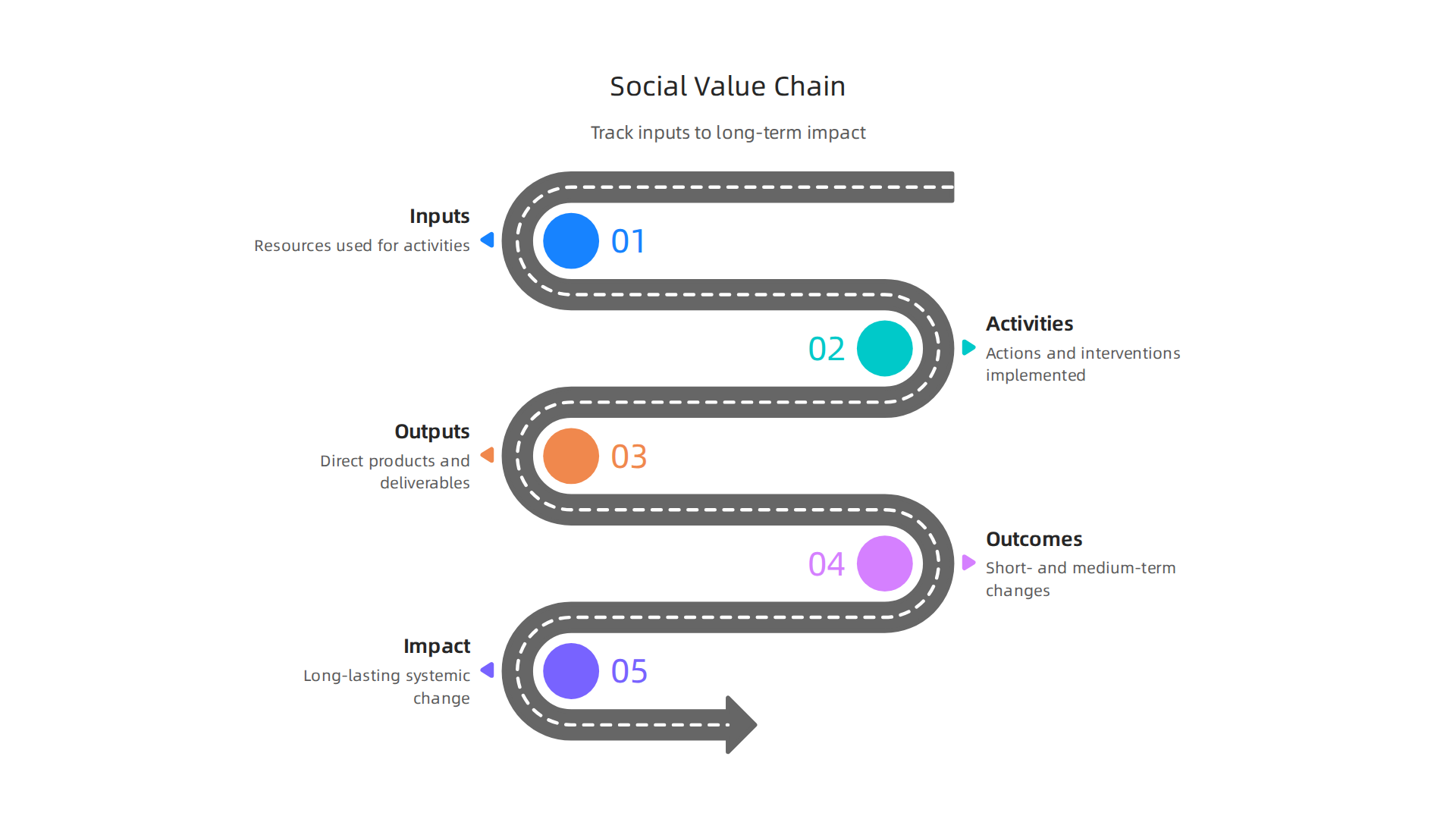
It links what we put into a project and what comes out of it to the bigger changes we see in society. Think of it like a story:
- Inputs: What resources are we using? (Like money, people, or computer power.)
- Activities: What are we actually doing? (Building an app, training people.)
- Outputs: What things do we produce? (The app itself, a number of trained users.)
- Outcomes: What changes happen because of our outputs? (People feel healthier, they learn new skills.)
- Impact: What are the big, long-lasting changes in the world? (A healthier community, better job chances for many.)
This framework helps us track progress from small steps to big changes, often called a "social value chain" Social Value Chain and measurement framework.
Seeing Changes Over Time
We look at changes over different time periods:
- Short-term indicators: These are immediate results. For example, how many people downloaded a new health app, or how many messages were sent through a communication tool.
- Medium-term indicators: These show changes that happen a bit later. For instance, if people start using the health app more often, or if communication between groups improves.
- Long-term indicators: These are the biggest, lasting impacts. Does the community’s overall health improve? Are people more connected and less lonely thanks to the communication tool? These show the true 10 benefits of artificial intelligence when applied ethically.
Organizations like the OECD offer guides to help projects measure, manage, and maximize their impact Measure, Manage and Maximise Your Impact.
Metrics and Data Sources for Tech for Social Good
To help everyone measure things in a similar way, we can use a table of recommended metrics. This helps us compare different ai case study projects and see what works best.
| Goal (What we want to achieve) | Example Metrics (What we count) | Data Sources (Where we get the numbers) |
|---|---|---|
| Increased access to information | Number of users, website visits | App analytics, user surveys, platform data |
| Improved learning outcomes | Test scores, skill completion rates | Educational platforms, surveys, teacher reports |
| Better health management | Symptom tracking, appointment attendance | Health app data, medical records, patient feedback |
| Stronger community connections | Number of interactions, group participation | Social media analytics, community surveys |
| Reduced environmental impact | Energy savings, waste reduction | Sensor data, utility bills, impact assessments |
Using such a framework helps ensure that every piece of future tech is not just innovative but also truly helpful and makes a real, measurable difference. Staying updated on the latest in AI is key to understanding these impacts.
Get clear daily AI updates from The AI Newsletter Worth Reading.
Funding, Partnerships, and Business Models for Sustainability
After figuring out how to measure the good our projects do, the next big step is making sure they can keep going. This means finding the right money and working with the right people or groups. Projects focused on tech for social good need smart ways to get funding and build strong teams that last.
There are many ways these projects can get the support they need:
- Grants and Hybrid Funding: Many projects start with grants, which are like gifts of money that don’t need to be paid back. But to grow, they often mix grants with other types of money. For example, a project might get a grant to build a new tool, then sell a small part of its service to make more money. This mix helps them be more stable.
- Impact Investing: This is when people or companies put money into projects that not only want to help the world but also aim to make some money back. It’s like investing in a business, but with a clear goal of doing good first. These investors understand that doing good can also lead to good financial returns in the long run.
- Public-Private Partnerships: This means governments or public groups work together with private companies. Governments might offer money, rules, or access to public data. Companies bring their know-how and new ideas. This teamwork helps speed up how new technologies are used for social good How public-private partnerships can ensure AI for good. They help each other achieve bigger goals than they could alone. Co-financing models, where many different groups put in money, are becoming more popular, mixing money from charities, public funds, and private investors to help new ideas grow and spread AI for the SDGs: Leveraging AI and Social Investor Engagement.
Picking the Right Partners
Strong partnerships are key to making a project last. It’s important to find groups that share the same goals and can bring different skills to the table. This could mean teaming up with:
- Non-profit organizations: They often know a lot about the people who need help and how best to reach them.
- Technology companies: They can provide the advanced future tech and know-how to build the tools.
- Local community groups: They can help test ideas and make sure the solutions really work for the people they are meant to help.
Good partnerships make sure that a project is not just a great idea but also has the support it needs to grow and make a lasting impact. When investors and founders look at these projects, they think about both how much good the project will do for people and how well it might make money. It’s a balance of social return and financial return. Choosing wisely helps a tech for social good effort succeed. To truly make a difference, it takes smart planning, like learning to design a global AI strategy for enterprise growth in 2026, ensuring that innovation is both impactful and sustainable.
Tools, Platforms, and an Implementation Roadmap for Teams
Once a "tech for social good" project has funding and partners, the next big step is putting it all into action. This means choosing the right tools and following a clear plan. With the right technology and steps, teams can make sure their efforts truly help people and last a long time.
To make an impact reliably, projects need specific kinds of tools and platforms. These help manage data, make sure AI is fair, track progress, and help teams work together.
Key Tools for Making a Difference
- Data Pipelines: Imagine data as water flowing through pipes. Data pipelines make sure this "water" (information) moves smoothly and safely from where it’s collected to where it’s used. This is super important for any tech for social good project that uses a lot of information.
- Model Governance: When we use AI, it’s like teaching a computer to make decisions. "Model governance" means we have rules to make sure these AI decisions are fair, safe, and easy to understand. It helps prevent problems like uncovering AI bias and ensures the AI is used for good. Tools for data governance can help manage these rules, covering things like data quality and privacy, and there are many strong options available in 2026, such as Collibra and Alation, which are good for larger companies, or Atlan for modern data setups, according to experts The 18 Best Data Governance Tools and Software for 2026. These platforms help set rules for how data is used and make sure everyone follows them The 8 best data governance software platforms for 2026.
- Measurement and Evaluation (M&E) Dashboards: How do we know if a project is really working? M&E dashboards are like a control panel that shows all the important numbers and facts. They help teams see their progress and prove the good they are doing. In 2026, there are many top M&E software options, including Power BI, Tableau, and Qlik Sense, that help track how well programs are meeting their goals Top 10 Best Monitoring And Evaluation Software of 2026.
- Collaboration Platforms: Teams working on social good projects often have members in different places. Collaboration platforms are online tools that help everyone share ideas, work on documents together, and communicate easily. This is vital for projects that need many hands and minds working as one.
A Simple Roadmap for Teams
Even with limited resources, teams can responsibly try out new future tech for social good. Here’s a step-by-step plan:
- Pilot Small: Start with a small test, also known as a pilot project. Pick one small problem and use a simple version of your tech solution. This helps you learn what works without spending too much money or time. Think of it like a mini ai case study.
- Evaluate and Learn: After the pilot, look closely at the results. Did it help people? What went well? What didn’t? Use your M&E dashboards to gather facts. Talk to the people you aimed to help. This feedback is golden for making your project better.
- Scale Responsibly: If your small test worked well, you can start to grow your project. But do it slowly and carefully. This means planning how to reach more people while keeping the quality high and being mindful of how the ai assistive technologies are actually helping. Remember, a bigger project needs more planning for data, governance, and teamwork.
By using the right tools and following these steps, teams can ensure their "tech for social good" efforts grow in a smart and helpful way.
Are you an investor, founder, or executive looking for reliable, in-depth insights into the world of AI and machine intelligence? Stay ahead of the curve with The AI Newsletter Worth Reading.
Summary
This article explains why