
The world of AI moves incredibly fast. It feels like new ideas and information come out every single minute. If you are an AI investor, a founder of an AI company, or even a deep researcher, you know how hard it is to keep up with everything. There’s so much to learn, and not enough time in the day to read it all. This flood of information can make it hard to make smart choices or find new opportunities.

This is where the best study AI tools come in handy. These smart helpers are changing how people learn and get work done. Actually, many people already use AI for studying. For example, in 2026, about 62% of students in the U.S. were using AI for their schoolwork, showing how useful these tools are becoming in learning environments AI in Education Statistics 2026.
These best study AI tools help you sort through mountains of data, make good notes AI, and understand tricky topics quickly. They are perfect whether you are an investor looking for the next big AI company, a founder building new AI products, an analyst needing to put together a detailed AI report, or an operator looking to improve how things run. Even AI tools for small businesses can make a big difference in how teams learn and grow, helping everyone stay ahead.
In this article, we will show you how to pick the right AI study tools for your needs. We’ll give you clear ways to choose them, explain different kinds of tools, and offer tips on how to use them well in your daily work. You will get trusted advice and a plan to help you make smart choices, so you can learn more efficiently and keep up with the fast-changing world of machine intelligence. To help you evaluate these tools, learn how to evaluate AI tools in 2026.
For even more daily insights into the world of AI, make sure to check out The AI Newsletter Worth Reading.
How AI-Powered Study Tools Work: Key Technologies & Capabilities
Now, let’s look at how these smart helpers actually work. The best study AI tools use some very clever technology behind the scenes to help you learn and understand more easily. It’s like having a super-smart assistant that knows how to read, remember, and explain things.
The Brains Behind the Tools: Core AI Technologies
These tools are built on a few main kinds of AI. Think of them as the different parts of the AI’s "brain":
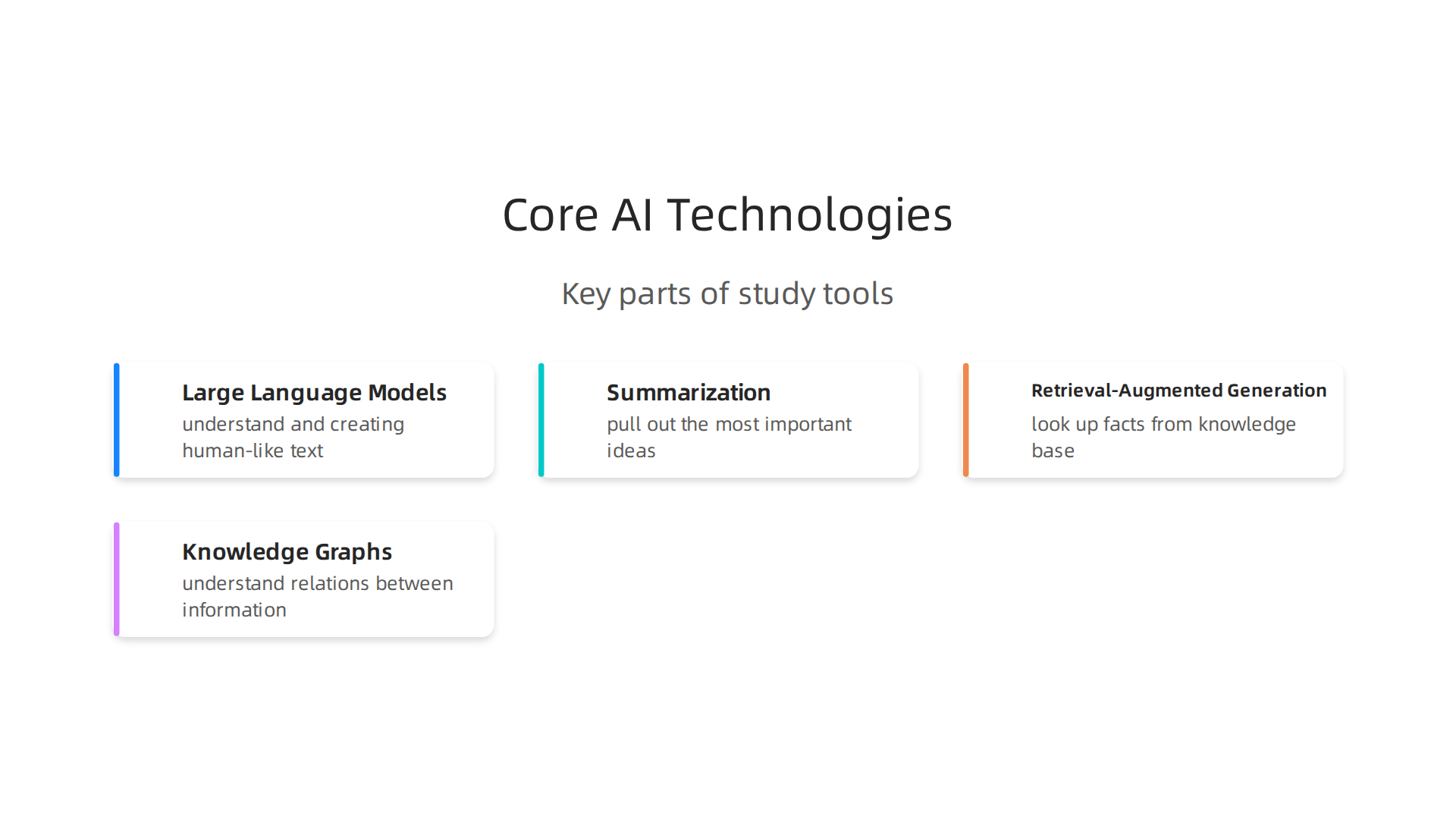
- Large Language Models (LLMs): These are like the main engine. LLMs are very good at understanding and creating human-like text. They can read huge amounts of information and figure out what it all means. This power lets them answer your questions and write summaries.
- Summarization: This is a direct use of LLMs. The tools can quickly read long articles, reports, or books and pull out the most important ideas. This helps you get key information fast, creating quick notes AI that save you a lot of time.
- Retrieval-Augmented Generation (RAG): This is a clever way to make LLMs even better and more truthful. Sometimes, LLMs can make things up, which we call "hallucination." RAG helps by letting the AI look up facts from a special knowledge base or your own study materials before it gives you an answer. This means the answers are more correct and based on real information Graph Retrieval-Augmented Generation: A Survey. It links the AI’s broad knowledge with your specific study materials.
- Knowledge Graphs: Imagine a super organized map of all your study topics, where every idea is connected to others. That’s a knowledge graph. These graphs help the AI understand how different pieces of information relate to each other. This makes it easier for the AI to find specific answers and show you the bigger picture Knowledge Base vs Knowledge Graph for LLM Systems (2026 Guide).
How You Use These Smart Tools
When you use the best study AI tools, here’s a common path you might take:
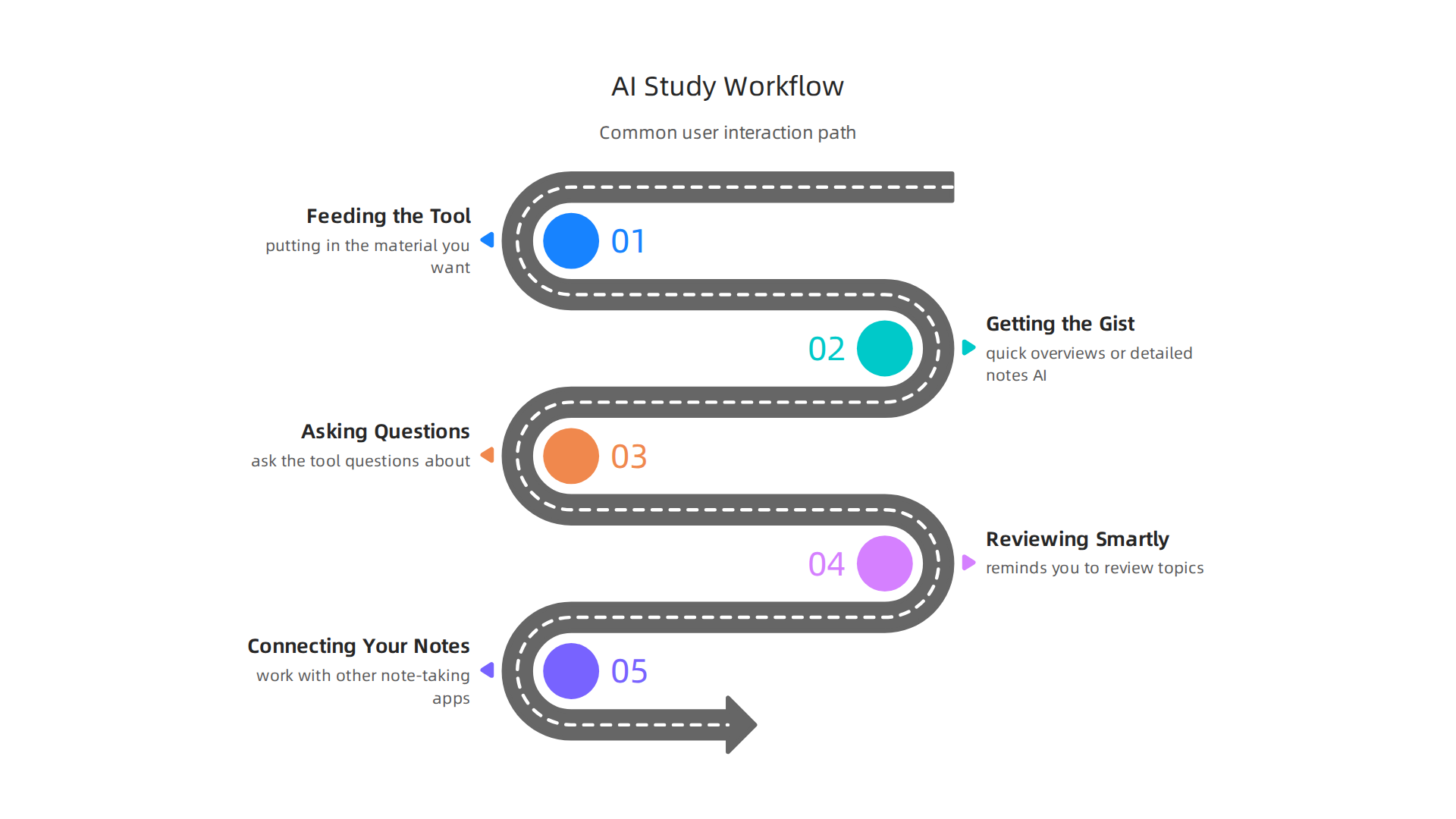
- Feeding the Tool: You start by putting in the material you want to learn. This could be a research paper, a long AI report, a web page, or even your own class notes.
- Getting the Gist: The tool uses its summarization power to give you quick overviews or detailed notes AI. This helps you grasp the main points without reading every single word.
- Asking Questions: You can then ask the tool questions about the material, just like you would a teacher. The AI uses LLMs and RAG to give you clear, correct answers based on the text you provided.
- Reviewing Smartly: Some tools even help you remember things better over time, using a method called spaced repetition. This means the tool reminds you to review topics just as you’re about to forget them, making learning stick.
- Connecting Your Notes: Many of these tools can also work with other note-taking apps you already use, making your learning process smooth and integrated.
These tools are not just for big companies. Even AI tools for small businesses can use these features to help employees learn new skills faster and keep up with industry changes.
Things to Consider When Using AI Study Tools
While AI study tools are super helpful, it’s good to know a few trade-offs:
- Speed vs. Deep Dive: AI can give you answers quickly, but sometimes a human touch is needed for truly deep understanding or complex thinking. It’s a great starting point, not always the final word.
- Risk of Wrong Answers: Even with RAG, AI can sometimes get things wrong. Always double-check important facts, especially if you’re using the information for critical decisions or an important AI report.
- Where the Work Happens: Some tools do their thinking on your computer or phone (on-device), while others use powerful computers in the "cloud" (cloud processing). Cloud-based tools are often more powerful but need an internet connection. Knowing this can help you pick the right tool for your specific needs.
Picking the right best study AI tools means knowing what kinds of helpers are out there and what they do best. In 2026, the world of AI tools for learning is big and growing, with many options to fit different needs. Let’s look at the main types and when they can really make a difference.
Top Categories of ‘Best Study AI Tools’ (and When to Use Each)
Not all AI tools are made for the same job. Just like you’d use a hammer for nails and a saw for wood, you’ll pick different AI tools for different study tasks.

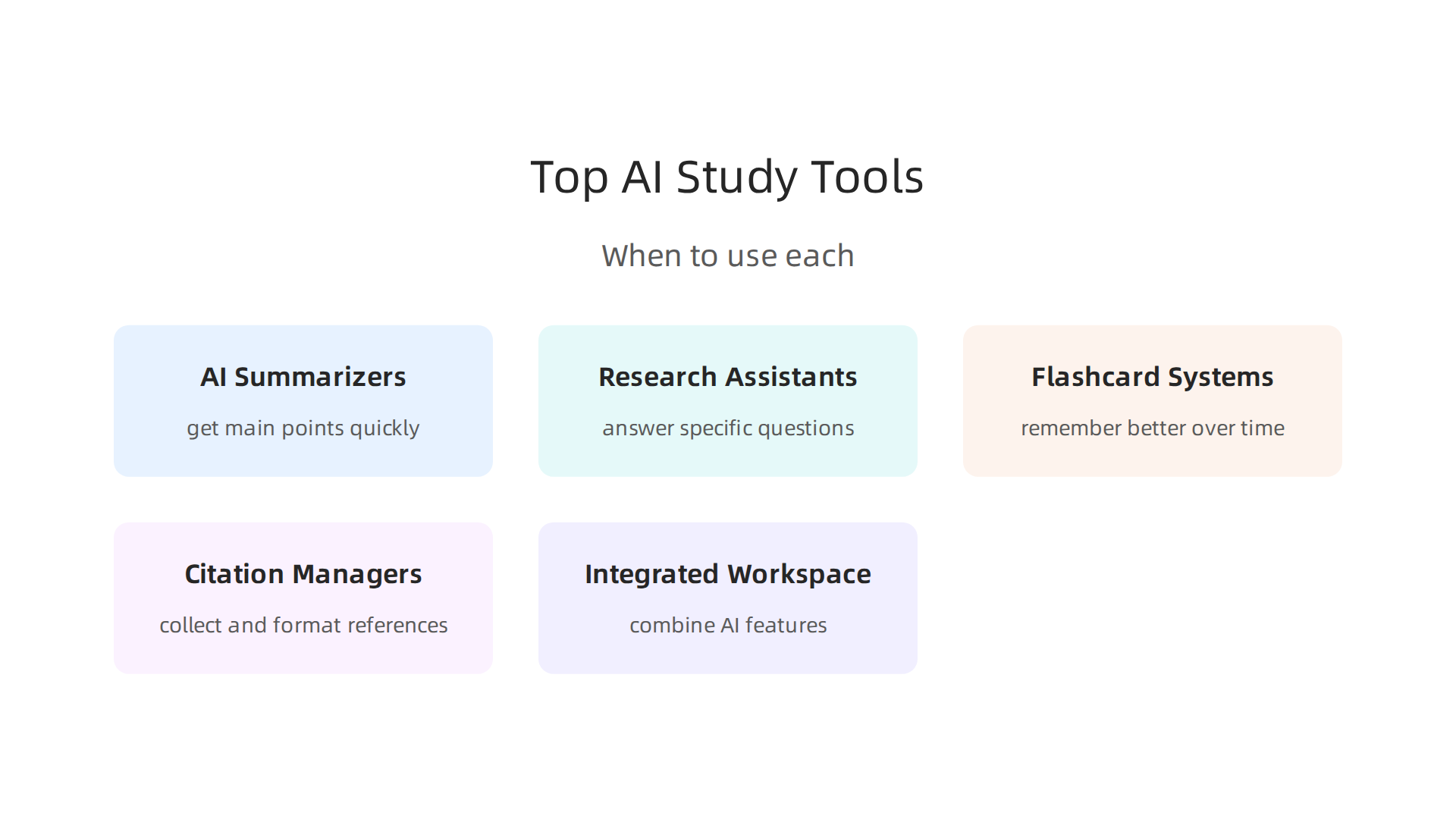
Here are the top kinds of best study AI tools you’ll find today:
1. AI Summarizers and Note Creators
These tools are great for quickly getting the main points from long texts. They use AI to read articles, papers, or even full books and give you short, easy-to-understand summaries. They can also turn long text into neat notes AI.
- How they help: If you’re a student or a busy professional, these tools save you a lot of time. Instead of reading every word of a long AI report, you get the key ideas in minutes. For machine intelligence professionals, an AI summarizer can be a major time-saver.
- Best for:
- Students: To quickly review chapters or articles before class.
- Researchers/Analysts: To get the gist of many different research papers or market reports without deep-diving into all of them right away.
- Founders/Executives: To quickly understand long business documents or industry updates.
2. AI Research Assistants (RAG-based)
These are like super-smart librarians. They don’t just summarize; they can answer specific questions by looking through your study materials and finding facts. They use the Retrieval-Augmented Generation (RAG) technology we talked about earlier to give you answers that are backed by real information.
- How they help: When you need reliable answers from your own documents, these tools are amazing. They reduce the risk of the AI making things up, which is super important for accurate work.
- Best for:
- Researchers: To find specific data points or theories across a large set of literature.
- Analysts: To get verified information for an AI report or market study from internal databases.
- Investors: To quickly pull specific facts from company filings or prospectuses.
3. Flashcard and Spaced-Repetition Systems with AI
These tools help you remember things better over time. They use AI to figure out when you’re about to forget something and then remind you to review it. It’s like having a smart tutor who knows exactly what you need to study next.
- How they help: They make sure your learning sticks, helping you build a strong foundation of knowledge.
- Best for:
- Students: For exam prep and long-term memory retention in any subject.
- Professionals: Learning new skills or languages, making sure new information is not quickly forgotten.
4. Citation Managers with AI
When you’re writing papers or reports, keeping track of your sources can be tough. AI-powered citation managers help you collect, organize, and format your references correctly. Some can even suggest new papers based on what you’re already reading.
- How they help: They save huge amounts of time and prevent errors in your bibliographies, making sure your work is seen as professional and trustworthy.
- Best for:
- Researchers/Students: For academic writing, theses, and dissertations.
- Analysts: For compiling sources in detailed AI reports.
5. Integrated Workspace Assistants
These are all-in-one tools that combine many AI features into one place. They might offer summarization, research help, and note-taking features, all working together. They often connect with other apps you use every day, making them excellent AI tools for small businesses to keep everyone organized and informed.
- How they help: They create a smooth workflow, so you don’t have to jump between many different apps. This is especially good for teams or anyone handling lots of information. Studies in 2026 show that students widely use AI for homework, with 62% of US students reporting use as of December 2025 AI in Education Statistics 2026: 62% of Students Use AI for ….
- Best for:
- Founders/Executives: For managing projects, team learning, and staying on top of company-wide knowledge.
- Anyone: Who wants a single, powerful tool for many different learning and productivity tasks.
Understanding these different types of best study AI tools helps you pick the right ones for your learning journey in 2026. While a detailed comparison table would show you more about how they stack up in terms of accuracy, how well they cite sources, and how easy they are to use for big companies, knowing these categories is a great start.
To keep up with all the new AI tools and insights, make sure you’re getting the latest information.
The AI Newsletter Worth Reading
To pick the best study AI tools for your team in 2026, you need a good plan. It’s not just about what a tool can do, but how well it fits your specific needs. Just like buying a car, you look at more than just its color; you check how safe it is, how much gas it uses, and if it fits your family. The same goes for AI tools.
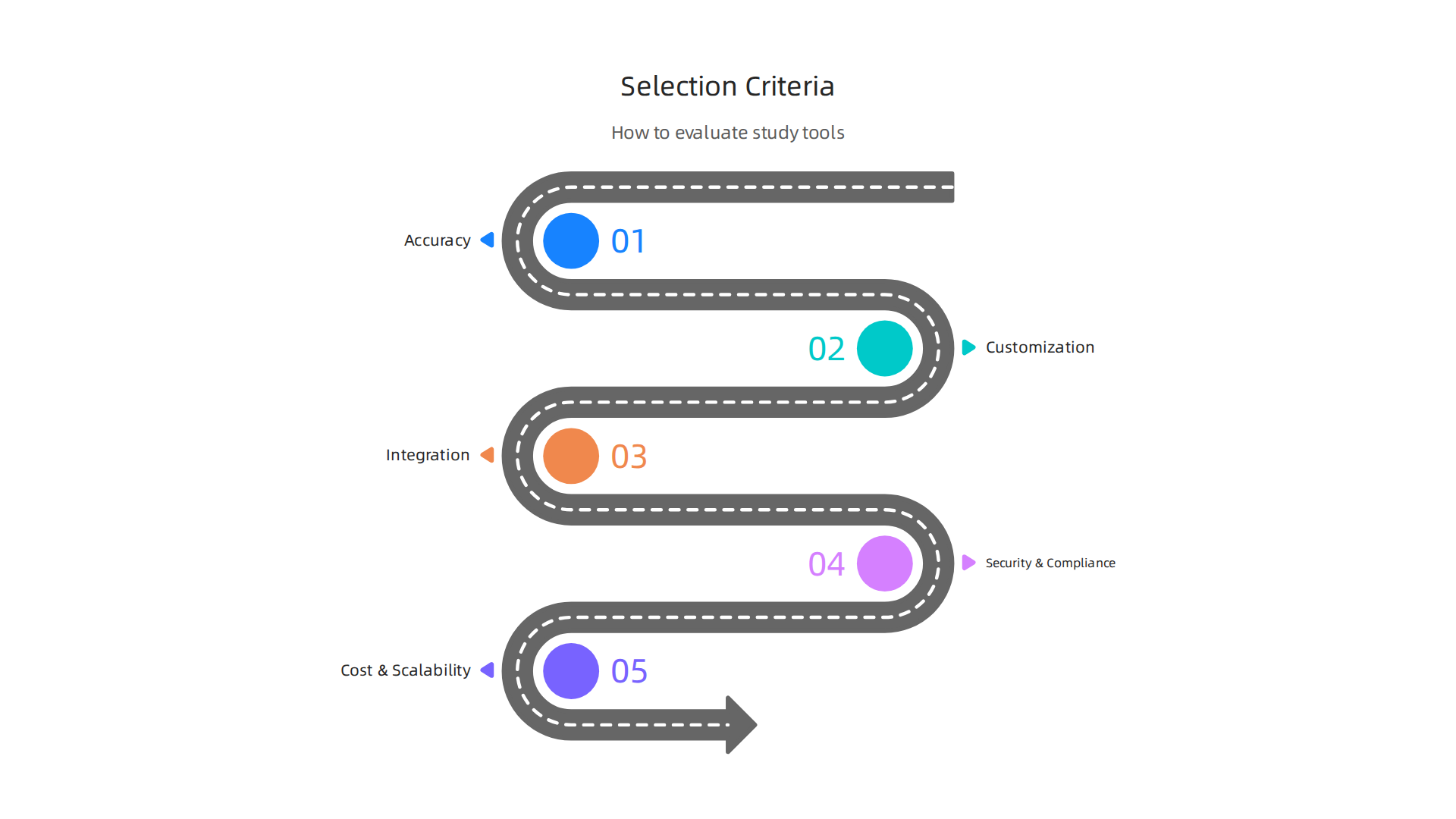
Here are the important things to look at when choosing AI study helpers:
Criteria: How to Choose the Best Study AI Tools for Your Team
When you’re trying to find the best study AI tools, you should think about certain things before you decide. These are like a checklist to make sure you pick the right ones for your business or group.
1. How Accurate Are the Answers and Citations?
This is super important. You want to make sure the AI tool gives you correct information and can show where it got that information. If you’re creating an AI report, you need to be sure the facts are right and properly sourced. Tools should be tested for how accurate they are and how often they might "make things up" (called hallucination) How to Evaluate Enterprise AI Platforms: The Complete Buyer’s Guide.
2. Can You Make It Your Own? (Customization)
Can the tool be changed to fit how your team works? Maybe you need it to understand certain words your company uses, or to create notes AI in a special format. A good AI tool should let you adjust it a bit to meet your unique needs.
3. Does It Work Well With Other Tools? (Integration)
Most businesses use many different software programs every day. An AI tool should be able to connect with the programs you already use. This makes things easier and faster, so you don’t have to move information around by hand. Good integration means the AI tool fits right into your daily work Enterprise AI Tools Guide. Checking how well an AI tool connects to your current systems is a key part of evaluating it AI tool selection for enterprises: ROI-focused decision criteria.
4. Is It Safe and Does It Follow Rules? (Security and Compliance)
When you use an AI tool, you might put important information into it. You need to know that your data is safe and private. Also, does the tool follow all the privacy laws and rules that your business needs to obey? This is especially true for AI tools for small businesses that handle sensitive client information. Factors like data residency, encryption, and access controls are important for keeping your information safe Enterprise AI platform evaluation: technical criteria for IT teams.
5. How Much Does It Cost and Can It Grow With You? (Cost and Scalability)
Look beyond just the monthly price. Think about the "total cost of ownership," which includes how much time it takes to learn the tool, connect it to other systems, and keep it running AI Tool Evaluation Framework. Also, consider if the tool can handle more users or more work if your team grows. You don’t want to pick a tool now only to find it can’t keep up later.
Weighting These Criteria for Different Goals
Not everyone cares about the same things equally.
- For Investors: They might care most about how accurate an AI report is and how well the tool protects important financial data.
- For Researchers: Accuracy and citation fidelity are super important, so they can trust the information for their studies.
- For Founders/Executives: They might focus more on how well the tool integrates with their existing systems and its total cost, especially if they are looking for choose the right AI platforms for business growth in 2026.
It’s helpful to consider these different needs to make the best choice. For a deeper dive into evaluating tools, you can learn about frameworks that help you test them, like understanding how to evaluate AI tools in 2026 using the COVERS AI benchmark.
A Quick Checklist for Executives
To make a smart choice about the best study AI tools, executives can use this simple checklist:
- Clear Need: Does this tool solve a real problem for our team?
- Proven Accuracy: Can the tool show that its information is correct?
- Fits Our Tech: Will it work smoothly with our current software?
- Data Is Safe: Are our important files and information protected?
- Budget Friendly: Does the total cost make sense for our company?
- Grows with Us: Can the tool handle more work as our team gets bigger?
By asking these questions, you can make sure you pick best study AI tools that truly help your team learn and work better in 2026.
Choosing the best study AI tools is just the first step. The real magic happens when these tools fit smoothly into your daily work. Think of it like adding a new, helpful team member. They shouldn’t make things more complicated; they should make work easier and faster. This part of the article talks about how to embed AI study tools into your team’s routines so everyone can be more productive.
Integrations & Productivity Workflows: Embedding AI Study Tools into Daily Routines
For your best study AI tools to truly help, they need to connect with the programs your team already uses. This is called integration. When AI tools work well with your existing systems, they make tasks flow better, saving time and effort. Many experts agree that how well an AI tool connects with other systems is a very important part of deciding if it’s right for your business AI Tool Selection for Enterprises: ROI-Focused Decision Criteria.
How AI Tools Connect with Your Daily Work
- Note-Taking Apps: Imagine an AI tool that can automatically sort your meeting notes or turn long articles into short summaries right inside your favorite note app. This can make creating useful notes AI much simpler.
- Code Repositories: For teams that write computer code, AI can help by checking code for mistakes or suggesting ways to improve it. It can link directly to where your code is stored, making sure everything is up-to-date.
- Slack or Email: AI can give you quick updates in your chat apps or email inbox. For example, it can share a summary of important news or highlight key points from a long document. This helps everyone stay informed without extra work.
- Research Databases: When doing research, AI can scan huge amounts of information, find what’s important, and help you create an AI report quickly. It can connect directly to the databases your team uses for studies and papers.
These connections mean less jumping between different programs and more time spent on actual work. This is especially helpful for AI tools for small businesses where every minute counts.
Automation That Saves Time
Once your AI tools are connected, you can set them up to do tasks automatically. This can really boost how much work your team gets done.
- Daily Briefings: AI can put together a short summary of the most important news or project updates each morning. It’s like having a personal assistant get you ready for the day.
- Topic Trackers: If your team follows certain topics, AI can watch for new information and alert you. This means you won’t miss important developments in your field.
- Automated Literature Scans: For researchers or anyone needing to stay updated on studies, AI can regularly check new publications and summarize them. This saves hours of reading. These kinds of automation help leaders stay informed and make smart choices. You can explore how top AI tools for business in 2026 are enhancing productivity across various sectors.
Rules for Using AI (Governance)
When using AI, it’s important to have clear rules. This is called governance, and it helps make sure the AI tools are used safely and correctly. Knowing how to evaluate AI software tools for your business includes looking at how well they fit into your existing governance plans How to Evaluate AI Software Tools for Enterprise Use | Virtuall Blog.
- Approval Flows: For important documents or decisions, you might need someone to check and approve what the AI creates. This adds a human check to ensure quality.
- Review Checkpoints: Have regular times to review how the AI is working and if it’s still meeting your team’s needs. This helps you catch any problems early.
- Avoiding Information Silos: Make sure that information created by AI is shared across the team, not kept hidden in one place. Good sharing practices prevent "information silos" where some people have important data and others don’t. This helps everyone work together better.
By setting up good integrations, using automation smartly, and having clear rules, your team can get the most out of the best study AI tools available in 2026. This means more effective learning, better reports, and a happier, more productive team.
Stay ahead with the latest AI trends and insights.
The AI Newsletter Worth Reading
When you use best study AI tools, it’s super important to think about how they handle your team’s information. This means looking at data privacy, security, and following the rules.

Just like you wouldn’t leave important papers out in the open, you need to make sure your digital information is safe. In 2026, new rules and risks mean we need to be extra careful with AI.
Understanding the Risks to Your Data
Using AI tools means some new ways your data could be at risk:
- Your Private Information (PII): This includes names, addresses, or anything that can identify a person. If AI tools handle this, it needs to be protected well. Losing this kind of data can cause big problems for people and businesses alike. Companies must focus on things like data minimization to protect personal information when using AI tools Best Privacy-by-Design Tools for AI SaaS Startups.
- Company Secrets (Proprietary Data): Your team might use best study AI tools with important business plans or ideas. You don’t want these secrets accidentally getting out or being used by the AI to help other companies. This is a big concern for many businesses in 2026.
- What the AI Learns (Model Telemetry and Retention): Some AI tools keep track of how you use them or even store the questions you ask. You need to know if the AI is keeping your data, how long it keeps it, and if it uses your data to get smarter. It’s best to look for tools that promise not to train their public models on your private data AI Privacy & Security Guide 2026: Risks, Tools & Best Practices.
How Businesses Can Keep Data Safe
Businesses, especially AI tools for small businesses, can take steps to protect their data when using AI:
- Where the AI Lives (Deployment Options): Some AI tools can be set up right on your company’s own computers (on-premise), giving you more control over the data. Others live in the cloud, and you need to trust the company providing the AI to keep things secure.
- Keeping Data Separate (Data Isolation): Good AI tools make sure your company’s data is kept completely separate from other customers’ data. This is very important. For enterprise use, AI data privacy requires different strategies than traditional software services Data Privacy for AI Tools: What Changes vs Traditional SaaS.
- Training Rules (Model Fine-Tuning Policies): If you let the AI learn from your data to improve its work for you, make sure there are clear rules. This often means the AI should not use your specific data to improve its main model that everyone else uses.
- Smart Contracts (Contractual Safeguards): When you sign up for an AI service, read the contract carefully. Make sure it says the AI company won’t use your data to train its models without your permission. You should explicitly forbid vendors from using your data to train their models that others can access AI Contract Negotiation: Enterprise Terms — AI Advisory Practice. This is a key part of learning How to Evaluate an AI Development Company in 2026.
A Quick Check for Compliance
For legal and security teams, here’s a short list of things to check when looking at best study AI tools:
- Ask about data handling: Where is data stored? How is it encrypted? How long is it kept? Vendors should typically offer zero data retention policies for prompts The 2026 AI Procurement Checklist for B2B SaaS.
- Know the rules: Are you meeting privacy laws like GDPR or new AI-specific regulations in 2026? Data protection assessments are becoming mandatory for AI systems that affect consumers Data Privacy Compliance in 2026: What AI and SaaS Companies ….
- Audit trails: Can you see who accessed what data and when?
- Security basics: Does the vendor have security certifications like SOC 2 Type II or ISO 27001?
- Transparency: Does the AI disclose that it is AI, especially if it creates content like an AI report or notes AI? New rules in 2026 require transparency for synthetic content and chatbots GDPR for US SaaS in 2026: What Actually Changed – Ironum.
By paying close attention to these points, you can make sure your best study AI tools are not only helpful but also safe and compliant with privacy rules in 2026. This protects your data, your business, and your peace of mind.
After making sure your best study AI tools are safe and private, the next big step is to find out if they actually work well. It’s like buying a new lamp; you want to make sure it not only looks good but also gives off enough light. For AI tools, this means measuring their real impact on your work or studies.
Measuring Effectiveness: Metrics & Experiments to Validate Tools
To truly know if an AI tool is helping, you need to look at clear numbers and run smart tests. This helps you see if the tool is making things better, faster, or easier.
What Numbers to Watch (Key Metrics)
When you use best study AI tools, keep an eye on these measurable goals:
- How Accurate is the AI? For tools that help with writing an AI report or doing research, check if the information is correct and if the tool cites its sources well. You want a high accuracy and citation rate.
- How Fast Do You Learn or Get Answers? This is called "time-to-insight." If a tool helps you understand hard topics quicker, that’s a good sign.
- Are You Learning More? For study tools, this means looking at things like better test scores or if you remember information for longer. These are your "learning gains" or "retention."
- How Much Do People Use It? If students or team members keep using the tool, it means they find it helpful. This is "user engagement."
- How Quickly Do Tasks Get Done? If an AI report or notes AI tool helps you finish tasks much faster than before, that shows good "task completion speed."
Simple Ways to Test AI Tools
You can set up small experiments to see the real effects of AI tools for small businesses or for studying:
- Compare Two Groups (A/B Testing): Give one group the new AI tool and let another group do things the old way. Then, compare their results using the numbers above. For example, see if the group with the AI tool finishes an assignment faster.
- Look Before and After (Pre/Post Adoption Studies): Measure how well people performed or how long tasks took before they started using the AI tool. Then, measure again after they’ve used it for a while. This shows if the tool caused an improvement.
- Test with Different People: Sometimes, a tool works better for certain types of users. Try testing it with different groups, like new students versus advanced learners, or different departments in a company.
A Simple Plan for Testing New Tools
When you want to try out new best study AI tools, here is a simple plan for leaders to follow:
- Make a Smart Guess (Hypothesis): Start by saying what you think will happen. For example: "If our team uses the new notes AI tool, they will save 15% more time in meetings each week."
- Pick Your Measurement (Metric Plan): Decide how you will check if your guess is right. For the example above, you might say: "We will measure this by tracking the average time spent writing meeting summaries for one month before the tool and one month after."
By using these clear steps, you can confidently choose and use AI tools that truly help you or your business grow. If you’re looking for more details on how to select the right AI partners, consider learning about how to evaluate an AI development company in 2026. This way, you’re not just hoping for the best, you’re proving the best.
After you know an AI tool truly helps, the next step is to bring it into your team’s daily work. This isn’t just about turning it on. It needs a smart plan to make sure everyone uses it well and safely. It’s about moving from a small test to making a big impact.

Implementation Roadmap: Pilots, Scaling, and Governance for Teams
Bringing new AI tools into a company or a team requires careful steps. Think of it like building a house: you start with a small blueprint, test a few parts, then build the whole thing, making sure it stays strong for years.
A Step-by-Step Plan for Rolling Out AI Tools
A good roadmap helps you bring in AI tools in phases. This makes sure you learn along the way and fix problems before they get big.
- Discovery and Small Tests (Pilots): First, find out where AI could help the most. Look for simple tasks that take up a lot of time. Then, pick one or two AI tools, like a new notes AI program or an AI report generator, and try them with a small group of users. This "pilot" helps you see real results without changing everything at once. This phase also sets up the basic rules for how data will be handled and what risks to watch out for, as shown in many AI implementation roadmap templates AI Implementation Roadmap Template. A common timeline for pilots might be 90 days to establish foundations and deploy to a pilot group, capturing early wins A 90-Day Roadmap for Enterprise AI Deployment.
- Evaluate and Learn: After the pilot, look closely at the numbers. Did the tool save time? Did it make tasks easier? This connects back to what we talked about in the last section on measuring effectiveness. If the tool didn’t meet your goals, it’s okay to stop using it. Not all pilots succeed, and sometimes a lack of clear goals or poor integration causes them to fail Why AI pilots stall before they scale.
- Integrate and Train: If the pilot worked, the next step is to connect the AI tool smoothly with other tools your team already uses. Also, make sure everyone gets good training on how to use it. This might include training on new best study AI tools for team learning or research tasks.
- Scale Up and Set Rules (Governance): Now you can slowly bring the AI tool to more people. At the same time, you need clear rules about how everyone should use the AI. This is called "governance." It covers things like privacy, fairness, and who is in charge of checking the AI’s work. Without good governance, scaling AI can run into problems Benchmarking Enterprise AI Scale.
Who Needs to Be Involved and What to Watch Out For
To make sure AI tools for small businesses or large teams work well, many people need to help.
- Teams: IT people, legal experts, privacy officers, and the business teams who will actually use the AI all need to be part of the conversation.
- Timeline: A full rollout plan can range from a quick 90-day strategy for executive teams to an 18-month plan depending on how complex the AI is and how big your company is 90-Day AI Rollout Plan for Executive Teams, AI Roadmap Template: 18-Month Implementation Plan.
- Things to Avoid:
- No clear person in charge.
- Not fitting the AI tool well with existing work processes.
- No clear way to measure if the AI is doing its job right.
- Not having rules for how to use and oversee the AI From Pilot to Production: Scaling Enterprise AI (2026).
A Checklist for Leaders
For leaders looking to approve new AI projects, here is a simple checklist:
- Clear Goal: Do we know exactly what problem this AI will solve?
- Success Measures: How will we know if the pilot works? (e.g., "save 15% time on X task").
- Team Buy-in: Do the people who will use it want it and know how it will help?
- Responsible Owner: Is there one person who will make sure the AI is used correctly and fairly?
- Budget & Time: Do we have enough money and time set aside for the pilot and for training?
- Rules for Use: Have we thought about safety, privacy, and fairness rules for the AI? These are important approval points for an AI Implementation Roadmap Template.
By following these steps, teams can thoughtfully bring in AI tools that really make a difference. This approach ensures that you’re not just trying out new tech, but truly improving how your team works. To keep up with all the changes in the AI world, you can get daily updates on important trends.
Get clear daily AI updates from The Deep View Newsletter.
The AI Newsletter Worth Reading
Learning more about how strategic AI adoption drives business growth in 2026 can help you lead your team through this exciting journey.
Summary
This article explains how modern AI study tools work, why they matter, and how to pick and embed them into teams and workflows. It defines the core technologies (LLMs, summarization, RAG, knowledge graphs), describes the main tool categories (summarizers, RAG research assistants, spaced-repetition systems, citation managers, integrated workspaces), and shows when each is most useful. The piece gives a practical evaluation checklist—accuracy, customization, integration, security, cost and scalability—and shows how to test tools with pilots, A/B tests and simple metrics like time-to-insight, retention and engagement. It also covers integrations and automations that save time, plus data-privacy and contractual safeguards you must check before deployment. Finally, it offers a step-by-step rollout roadmap from pilot to scale with governance rules to keep your program safe and effective. After reading, you’ll know which tool types match your needs, how to validate impact, and how to run a responsible rollout.