
Why AI email writers matter now — the productivity promise and real risks
In 2026, many busy leaders in the world of AI are always looking for ways to do more with less time. That’s where an AI email writer comes in handy. Simply put, an AI email writer is a smart computer program that helps you write emails. It uses artificial intelligence to create drafts, suggest sentences, or even write whole messages for you.
Why does this matter right now? Well, companies are using AI more than ever. By the start of 2026, many businesses are using AI in some way, with a lot of them putting AI to work in email marketing. In fact, reports show that 87% of businesses that use AI also use it for email tasks [^1]. This shows that AI for email writing is not just a fancy idea; it’s a real tool that many teams are already using.
The main benefits of using an email writer AI are clear:
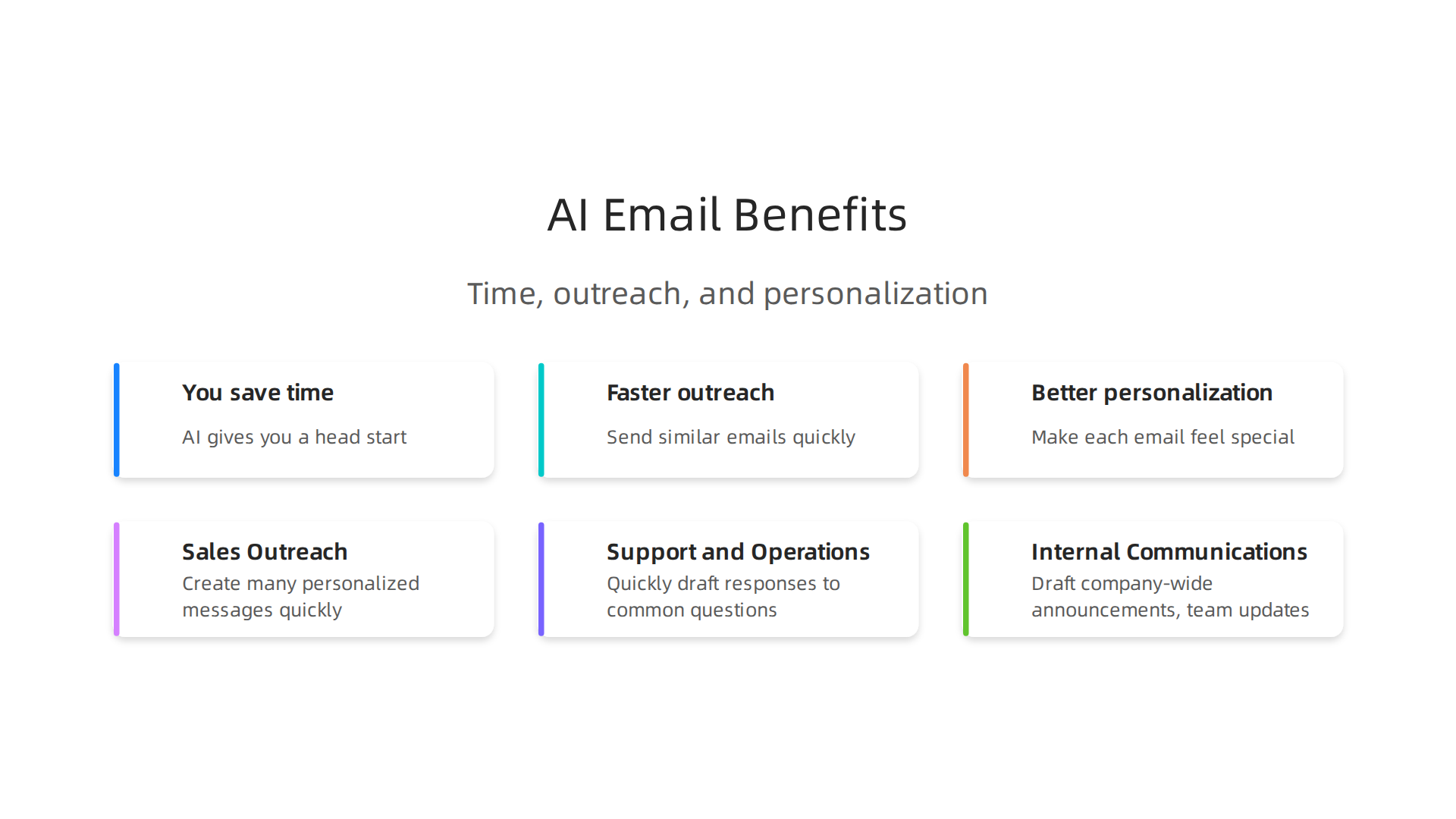
- You save time: Instead of spending a long time thinking about what to write, the AI gives you a head start. This means you can send out important messages much faster.
- Faster outreach: If you need to send similar emails to many people, an AI can help you do this quickly, which boosts your productivity.
- Better personalization: Many AI tools can help you make each email feel special for the person getting it, even when sending many emails.
But it’s not all easy sailing. There are some important things to think about:
- Accuracy: The AI might sometimes make mistakes or not understand what you truly mean. You always need to check its work carefully.

- Brand voice consistency: Your company has a special way of talking. An AI might not always get your unique brand voice right, making your emails sound a bit off.
- Compliance risks: Depending on what your business does, there are rules about how you communicate with people. Using an AI email writer could sometimes lead to problems if you’re not careful about privacy or legal rules.
Even with these risks, more people are turning to AI tools for writing. About 77% of workers use AI writing tools now and then, and 31% use them daily for serious work [^2]. It is important to know how to use these tools well. If you want to dive deeper into how AI is changing things, consider exploring how to master how AI learns for strategic business advantage.
To stay on top of all the fast changes in AI, it helps to have clear, daily updates.
Get clear daily AI updates from The Deep View Newsletter.
[^1]: 85+ Email Creation & AI Statistics for 2026 – Knak
[^2]: AI Writing Tools Adoption Statistics 2026 | Stealth Agents
How AI email writer models work (quick technical primer)
So, how does an AI email writer actually create those messages? It all starts with something called a "large language model" or LLM. Think of an LLM as a very big, very smart brain that has read almost all the text on the internet. It has learned how words and sentences fit together. When you ask it to write an email, it doesn’t really "think" like you or me. Instead, it uses all that it has learned to guess what words should come next to make a helpful message.
You give the email writer AI a "prompt." A prompt is simply your instruction. It can be something like, "Write a friendly email asking about a meeting next week," or "Draft a quick note to confirm a booking." The AI then uses this prompt to generate text. The more clear and detailed your prompt, the better the AI can understand what you want and give you a good start.
These tools also use special building blocks to make your emails just right:
- Templates: Many AI email writers come with pre-made email structures or ideas for different situations. This means you don’t have to start from scratch.
- Personalization: You can often tell the AI to use specific names, company details, or other information. This helps the tool make each email feel special for the person getting it.
- Tone controls: Want your email to sound happy, serious, or urgent? You can often tell the AI for email writing what tone to use. This helps the AI pick words that match how you want to sound.
Sometimes, though, an AI might make things up. This is what people call "hallucination." It happens because the AI is so good at predicting the next word that it might sometimes predict something that sounds right but isn’t actually true or correct. It’s like it’s trying too hard to fill in a blank and gets it wrong. This is why it’s so important to always check what an AI email writer gives you, especially when you need facts or specific details to be perfect. Learning how these models work can help you better understand the types of artificial intelligence in general.
Research has also shown that AI-written emails can sometimes feel different from human-written ones, often having fewer emotional words Emails by LLMs: A Comparison of Language. This is another reason to review and edit the output from any ai email writer free or paid tool to ensure it truly sounds like you. It’s about getting the basic message down quickly and then adding your human touch.
Now that we know how AI email writers work and why checking their output is key, let’s look at the many ways these tools help people daily.
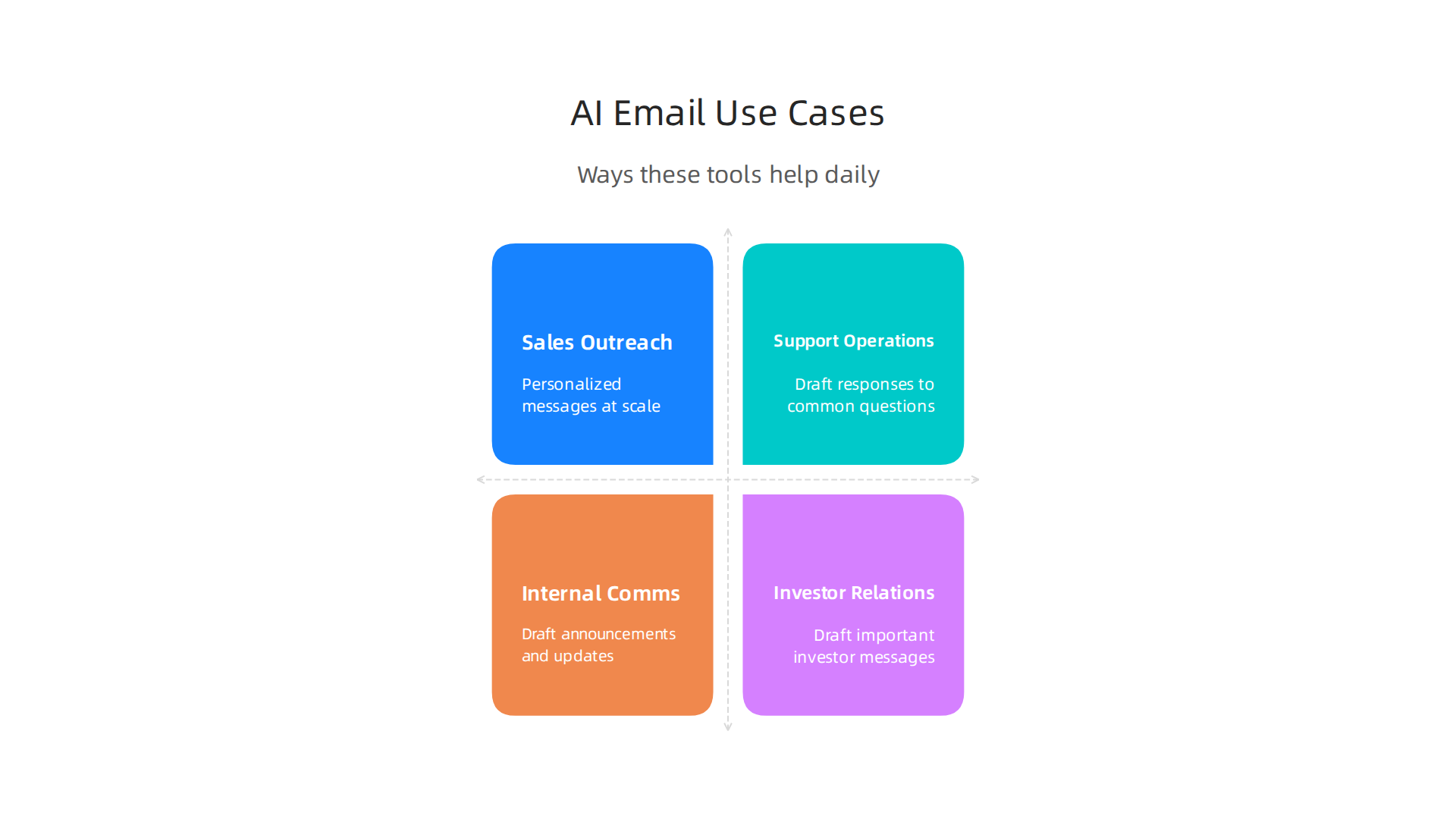
They are used in all sorts of jobs, from talking to customers to updating investors.
Sales Outreach
One of the biggest helpers of an AI email writer is in sales. Imagine you need to send hundreds of emails to potential customers. Making each one sound special can take a very long time. An email writer AI can create many personalized messages quickly. It can help you write catchy subject lines and opening sentences that grab attention. Actually, using AI for personalization can make more people reply to your emails, with some seeing a jump of up to 30% in response rates AI Sales Email Generators: A 2026 How-To Guide. This saves sales teams a lot of time, letting them focus more on talking to customers rather than just writing emails.

Support and Operations
For customer support and daily tasks (operations), an AI for email writing is super helpful. When customers send in questions, support teams need to answer fast. An AI can quickly draft responses to common questions or help sort emails by how important they are. This means customers get answers much quicker. Experts predict that by 2026, AI tools will help with almost a third of all incoming business emails AI Email Management Stats 2026: Win Back. This helps businesses work smoother and keep customers happy.
Internal Communications
Inside a company, getting messages out quickly and clearly is important too. An AI email writer free or paid tool can help leaders draft company-wide announcements, team updates, or important memos. It ensures everyone gets the right message without taking up too much time from busy managers. It is a big reason why many workers, about 77% of them in 2026, now use AI writing tools sometimes AI Writing Tools Adoption Statistics 2026. This makes sure everyone is on the same page.
Investor Relations and Executive Communications
For top leaders and those who talk with investors, every word counts. Emails need to be precise, polite, and have the right tone. An AI email writer can help draft these important messages, saving time while making sure the tone stays just right. This allows executives to focus on big decisions, knowing their communications are handled well. Learning how to use these tools strategically can really drive business growth and better decisions, which is key for leaders looking to understand how strategic AI adoption drives business growth in 2026.
Using an AI email writer can make work easier in many parts of a company. But choosing the right one is very important. It’s not just about finding any email writer AI; it’s about finding one that fits your company’s needs perfectly. Product and purchasing teams need a clear way to check different tools.
Key Things to Look For
When you are looking for an AI for email writing, think about these main points:
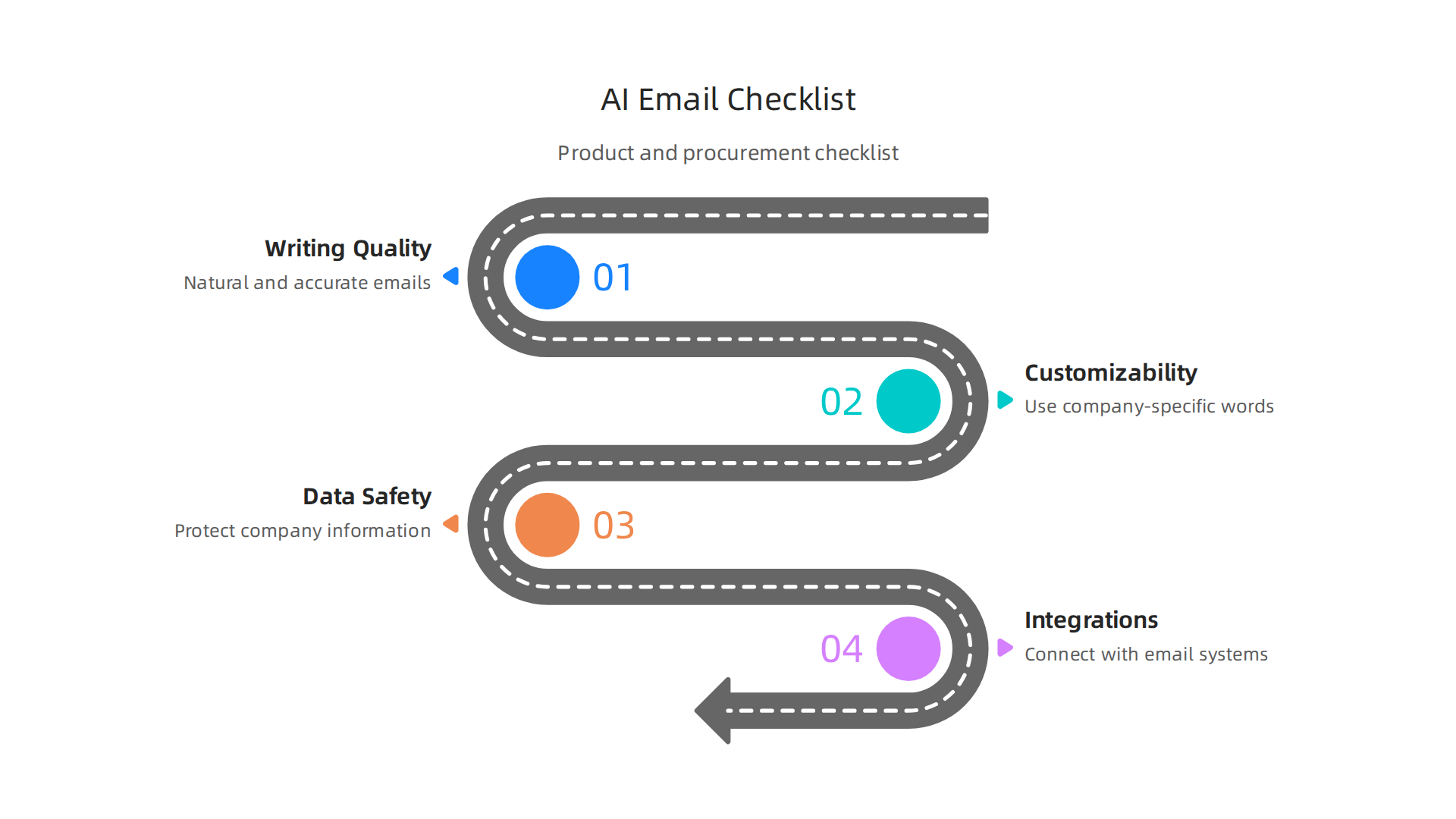
- Quality of Writing: Does the AI write emails that sound natural and correct? Does it make mistakes? The messages should feel like a real person wrote them, not a robot.
- How Much You Can Change It: Can you teach the ai email writer to use your company’s special words and tone? You want it to sound like your company.
- Keeping Data Safe: How does the tool protect your company’s information? This is super important. You need to know that your private emails and customer data are secure.
- Works with Other Tools: Will the new AI tool easily connect with the email programs and other systems your company already uses? This makes everything run smoothly.
Checklist for Buying and Trying Out Tools
When your team sends out a Request for Proposal (RFP) or tries out different tools, here are things to include in your checklist. An RFP is like a wish list asking different companies to show how their product meets your needs. Many companies use templates for this, like those found for AI Vendor RFP Template or Enterprise AI Vendor RFP Template 2026.
- Ask about past work: Has the email writer AI helped other companies like yours?
- See it in action: Ask for a live demo where you can see the tool write emails for your type of tasks.
- Test it yourself: Let your team try the tool for a short time. This is called a pilot project. See how easy it is to use and how good the emails are. You can use frameworks to evaluate AI tools in 2026.
- Understand security rules: Make sure the vendor explains exactly how they keep your data safe.
- Check the price: Does the cost make sense for what you get? Look for any hidden fees.
Red Flags and Claims to Double-Check
Be careful of these things when talking to sellers:
- Too good to be true claims: If a vendor says their ai email writer free or paid version can do everything perfectly without any human help, be cautious. No AI is perfect. You can find many questions to ask in an Agentic AI RFP Template: 30 Vendor Questions for 2026 to help dig deeper.
- No clear examples: If they don’t want to show you how their AI writes emails for your kind of business, that’s a warning sign.
- Vague security answers: If they can’t clearly explain how they protect your data, it’s a big problem. Data safety is key.
- Lack of support: What happens if the tool breaks or you have questions? Make sure they offer good customer support.
Choosing the right AI email writer means doing your homework. It means asking the right questions and testing things out. This way, you can pick a tool that really helps your team without causing problems.
To stay smart about all the new AI tools and how to pick the best ones, you need the right information.
The AI Newsletter Worth Reading provides clear daily AI updates from The Deep View Newsletter. Get clear daily AI updates from The Deep View Newsletter.
Once you’ve looked at different AI email writer tools and found one you like, the next big step is making it work with your company’s other programs. This is called integration. It’s important to make sure the new email writer AI tool fits right into how your team already works, so it can truly help and not cause problems.
How AI Email Writers Connect with Other Tools
A good ai email writer should talk to the other software your company uses every day. Here are some common ways they connect:
- CRM (Customer Relationship Management) Platforms: These tools keep track of all your customer information. An AI email writer can connect to your CRM to get customer names, past purchases, or what they are interested in. This helps the AI write very personal emails, like follow-ups after a sale or special offers. When looking for a CRM, many companies use an RFP guide and template for CRM to choose the best fit.
- Helpdesk Systems: If your company uses a helpdesk to manage customer questions, the AI can help. It can draft quick answers to common questions, saving your support team time.
- Calendar Tools: Some AI email writers can look at your calendar to help suggest the best times to send emails or even draft meeting invites.
- Analytics Platforms: These tools track how well your emails are doing. By connecting your AI email writer to analytics, you can see which AI-generated emails get the most opens or replies. This helps you make the AI better over time.
Having these connections helps your company adopt AI strategically, leading to how strategic AI adoption drives business growth in 2026.
How AI Emails Get Sent Out
There are different ways to use an AI for email writing depending on how much control you want:
- Draft, Review, Then Send: This is often the safest way. The AI creates a draft email, but a human still reads it over, makes any changes, and then sends it. This makes sure the message is perfect and sounds like a real person wrote it. It also helps catch any mistakes the AI might make.
- Fully Automated Workflows: For very simple or routine tasks, like sending out automatic welcome emails, the AI can sometimes send emails without human review. But be careful with this. It’s best for messages that are always the same or have very little chance of going wrong.
Rules for Using AI-Written Content
To make sure your ai email writer is used correctly and safely, you need some rules:
- Approval Gates: Decide who needs to approve an email written by AI before it goes out. This is like a check-up to make sure the message is right and follows your company’s rules. This is especially important for important emails or those going to many customers.
- Audits: Keep a record of the emails the AI writes and sends. This helps you track what was said, when, and to whom. If there’s ever a question, you can look back at the audit trail. When evaluating vendors, ask about audit trails and explainability, as outlined in templates like the Agentic AI RFP Template: 30 Vendor Questions for 2026.
- Versioning: This means keeping track of different versions of an AI-generated email. If you change a template, you’ll know which version was used and when. This helps keep your communication clear and consistent.
By thinking about how an AI email writer will connect with your existing tools and how your team will use it, you can make sure it works well for your business. It’s about careful planning and setting clear rules.
By thinking about how an AI email writer will connect with your existing tools and how your team will use it, you can make sure it works well for your business. It’s about careful planning and setting clear rules. Next, it’s very important to think about data privacy, how to follow rules, and security. These are big concerns when using any AI tool in 2026.
Data privacy, compliance, and security considerations
When you use an AI email writer, it often handles sensitive information. This means you need to be very careful about how your customer’s private data is kept safe.

Different AI email writer tools have different ways of dealing with this.
Handling Private Information (PII)
PII stands for Personally Identifiable Information. This includes things like names, addresses, and email contacts. Your email writer AI might use this data to write personal emails. You need to know:
- How vendors handle PII: Some companies keep your data on their servers in specific places (data residency). Others might log everything the AI does. Always ask how a vendor protects this data. Also, watch out for incorrect information created by AI, as this can still count as personal data and needs to be handled correctly, as shared by the Australian Information Commissioner’s office in their privacy guidance for organisations and government agencies.
- Data residency: Where is your data stored? For some businesses, laws require data to stay within certain countries.
- Logging practices: What information does the AI tool record about the emails it writes or the data it uses?
Following the Rules (Regulatory Compliance)
Many industries have strict rules about how you communicate with customers, especially through email. An AI for email writing must help you follow these rules.
- Email content and consent: Make sure the emails generated by AI follow rules about getting permission to send messages. This includes clear ways for people to opt out of emails.
- Industry-specific rules: If you’re in healthcare, finance, or other regulated fields, there are specific laws like HIPAA or FINRA that affect email communication. Your AI email writer needs to comply with these. For example, specific laws require businesses to save email communications in a secure, searchable way for years, as noted in a guide to email compliance software. There are multi-industry guides available to help you understand automated email compliance. Also, watch out for "AI hallucinations" where the AI invents facts, as this can cause problems with compliance, especially with rules like GDPR, requiring a human-in-the-loop and clear policies. To avoid this, some companies use automated red flag detection before human review, as discussed in email compliance in the age of AI.
Keeping Things Safe (Technical Controls)
Good security measures are key for any AI tool.
- Secure storage options: Look for AI tools that offer on-premise solutions or secure enclaves. This means your data is kept on your own servers or in highly protected areas, giving you more control.
- Encryption: All data, both when it’s stored and when it’s moving, should be scrambled (encrypted) so only authorized people can read it.
- Model access controls: Who can access the AI model that creates your emails? Make sure only approved staff can use it and adjust its settings. Vetting training data and monitoring model outputs are also important security considerations for data in generative AI.
Understanding these points helps you choose an AI email writer that is not just smart, but also safe and responsible. It’s part of building ethical and transparent AI for humans.
When you pick an AI email writer, it’s not enough for it to be safe and follow the rules. You also need to know if it’s doing a good job. This means checking the quality of the emails it writes.
Evaluating output quality: metrics, testing, and preventing hallucinations
After making sure your AI email writer is secure and follows privacy rules, the next step is to check the actual quality of the emails it creates. It’s important to make sure the AI helps, not hurts, your communication.
Measuring How Well Your AI Email Writer Works
There are two main ways to measure how well your email writer AI is working:
- Numbers (Quantitative Metrics): These are things you can count. For example, how many people open your emails (open rates), or how many people reply (response rates). An AI can also save you a lot of time. Some studies show that using AI can greatly improve how quickly you get responses and how many people reply to your emails.
- Feel and Fit (Qualitative Metrics): These are about how good the emails feel. Do they sound like your brand? Is the tone right? Are they accurate? Emails should match your company’s style and clearly get your message across.
How to Test Your AI Email Writer
You can test your AI in a few ways:
- A/B Tests: This means sending two different versions of an email to small groups of people. One might be written by the AI, and the other by a person. You then see which one works better, like which email gets more opens or replies.
- User Reviews: Have your team read the emails the AI writes. They can tell you if the emails sound right, if they are clear, and if they fit your brand. This feedback helps make the AI for email writing even better.
To really understand if an AI tool is right for you, it helps to know how to properly evaluate it. You can learn more about how to evaluate AI tools in 2026.
Stopping AI from Making Things Up (Preventing Hallucinations)
Sometimes, an AI might "hallucinate." This means it invents facts or makes up information that isn’t true. This can be a big problem, especially in business emails.
Here are ways to stop this:
- Give the AI Good Information: Make sure your ai email writer only uses trusted information. You can set it up so it pulls facts from your own reliable company documents. If it doesn’t find facts there, it should not just guess.
- Use Checks and Balances: You can add steps where the AI’s output is checked automatically for problems. Also, a real person should always review emails written by AI, especially those with important facts or numbers. Think of every AI-drafted email as a first draft that needs a human eye. This helps to prevent AI hallucinations in email and avoid mistakes that could harm your business.
Understanding these steps helps you get the best out of your AI tools, making sure they are helpful and trustworthy.
To stay updated on all these smart AI ideas and more, make sure you get The AI Newsletter Worth Reading.
To truly make smart choices about AI tools, you also need to think about how much they cost and what you get back from them. After checking if an AI email writer works well, the next big step is to understand its price and value.
Pricing, ROI, and the vendor landscape: negotiating trials and pilots
When you’re looking for an AI email writer, knowing the price is just the start. You need to know if it’s worth the money for your business.
How AI Email Writers Are Priced
In 2026, AI tools, including an email writer AI, use different ways to set prices. Here are some common ones you might see:
- Per-Seat Pricing: You pay a set amount for each person on your team who uses the software. This is a common way for many business tools to charge and helps you know your monthly costs easily.
- Usage-Based Pricing: With this model, you pay for how much you actually use the AI. This could mean paying based on the number of emails it writes, the words it generates, or the tasks it completes. For example, some AI pricing models might charge per token or API call, which means your cost goes up or down with what you use Subscription Pricing Breaks AI Budgets and What to Do Instead.
- Outcome-Based Pricing: This type of pricing means you pay for the actual results the AI helps you get. For an AI for email writing, this could be paying for each email that gets a reply or leads to a new customer. This way, the cost is directly tied to the value you receive, and it’s becoming quite popular in 2026 The 6 AI Pricing Models, Ranked by Real 3-Year Cost (2026) – KORIX.
- Hybrid Pricing: Many companies mix these models. You might pay a basic fee every month, and then an extra charge if you use more than a certain amount of the AI’s power.
- Tiered Subscription: This gives you different levels of service at different prices. The more expensive levels usually offer more features or let you use the tool more often. You can find examples of these in analyses like AI SDR Pricing: Cost Models and ROI Calculator 2026.
Calculating Your Return on Investment (ROI)
ROI stands for Return on Investment. It tells you how much money you get back compared to the money you spent. For an AI email writer, you can figure out your ROI by looking at a few things:
- Time Saved: How much time does the AI save your team each day or week? When your team spends less time writing emails, they have more time for other important jobs. AI tools can cut the time it takes to write emails by 40% AI Email Use Cases: Real Team Results | Aeralis.
- Better Results: Does the AI help you get more people to open your emails, reply, or even make a purchase? Higher reply rates often mean more business. Some AI tools have even led to two to three times higher reply rates AI Sales Automation Guide 2026 | Involve Digital. You can use special tools to help you calculate this value, such as an AI Agent ROI Calculator: Enterprise Business Case Template.
- Reduced Costs: Does using the AI replace any other tools or services that you were paying for, saving you money?
To make truly smart decisions, it helps to understand the Smart AI Capabilities Evaluation And Strategic Business Impact that these powerful tools can offer.
Designing Quick Tests (Pilots)
Before you fully commit to a new AI email writer, it’s a good idea to run a pilot program. This is like a short trial period. It helps you quickly see if the tool brings real value to your work without you having to buy it for a long time. A good pilot program should last about 30 to 60 days. This gives you enough time to see if the AI works well in your specific company setup Evaluating agentic AI solutions for the enterprise – WRITER.
During this test, you should measure important things like:
- How quickly emails are written.
- The number of replies you get.
- The total time your team saves.
The World of AI Email Writer Vendors
The market for AI tools is growing very quickly in 2026. Many different companies now offer features for writing emails with AI. Some are tools just for writing emails, while others are part of bigger email marketing platforms. When you are looking at different options, it’s a good idea to check out resources like a Corporate Buyers’ Guide to Enterprise AI Platforms to compare various companies. Learning how to pick the right tools and how to compare them will help you Choose The Right AI Platforms For Business Growth In 2026.
Summary
This article explains what AI email writers are, why they matter in 2026, and how teams can adopt them safely and effectively. It covers how these tools work (LLMs and prompts), common business use cases like sales outreach, support responses, internal announcements and executive communications, and the productivity gains they can deliver. The guide walks through buying and evaluation criteria—writing quality, data security, integrations—and offers a practical RFP and pilot checklist. It highlights key risks such as hallucinations, brand-voice drift, and regulatory compliance, and recommends human-in-the-loop controls, audit trails, and technical safeguards. You’ll also find advice on vendor pricing models, measuring ROI, testing via A/B and pilots, and the governance needed to scale AI email writers responsibly across an organization.