

It feels like every day brings a new wave of news about AI, doesn’t it? For people who make big decisions in the world of artificial intelligence, like investors, company founders, researchers, and those running businesses, this constant flow of information can be too much. It’s often called "information overload," and it makes it really hard to find what truly matters. In fact, studies show that dealing with too much information can make it harder to think clearly and make good choices, a problem known as cognitive load Dealing with information overload: a comprehensive review.
In 2026, those in machine intelligence companies need more than just information; they need clear, trustworthy signals. They need to know about important product updates, how different companies are performing (portfolio analysis), and new partnerships that could change the game. That’s why a focused PA newsletter is so important.
A PA newsletter stands for Product, Portfolio, and Partner Analysis. It’s a special kind of digital newsletter designed to cut through all the noise. Instead of getting lost in countless articles and updates, you get only the most important insights. This kind of newsletter takes complicated newsletter topics and breaks them down, giving you just the high-value information you need quickly. It saves busy professionals time and helps them make smarter moves.
This specialized newsletter offers quick, useful insights, acting as a trusted guide. It helps investors see new opportunities, founders understand their market better, researchers stay updated on breakthroughs, and operators make strategic choices. It’s all about helping you cut through AI noise to make the best decisions for your business or investments.
Looking for the essential daily insights in AI and technology?
The AI Newsletter Worth Reading
To really make the best decisions, it helps to know exactly who you’re trying to help with your PA newsletter. This special kind of digital newsletter isn’t for everyone. It’s built for specific groups of people in the AI world who need very clear and useful information.
Let’s look at who these people are and what they expect:
Investors
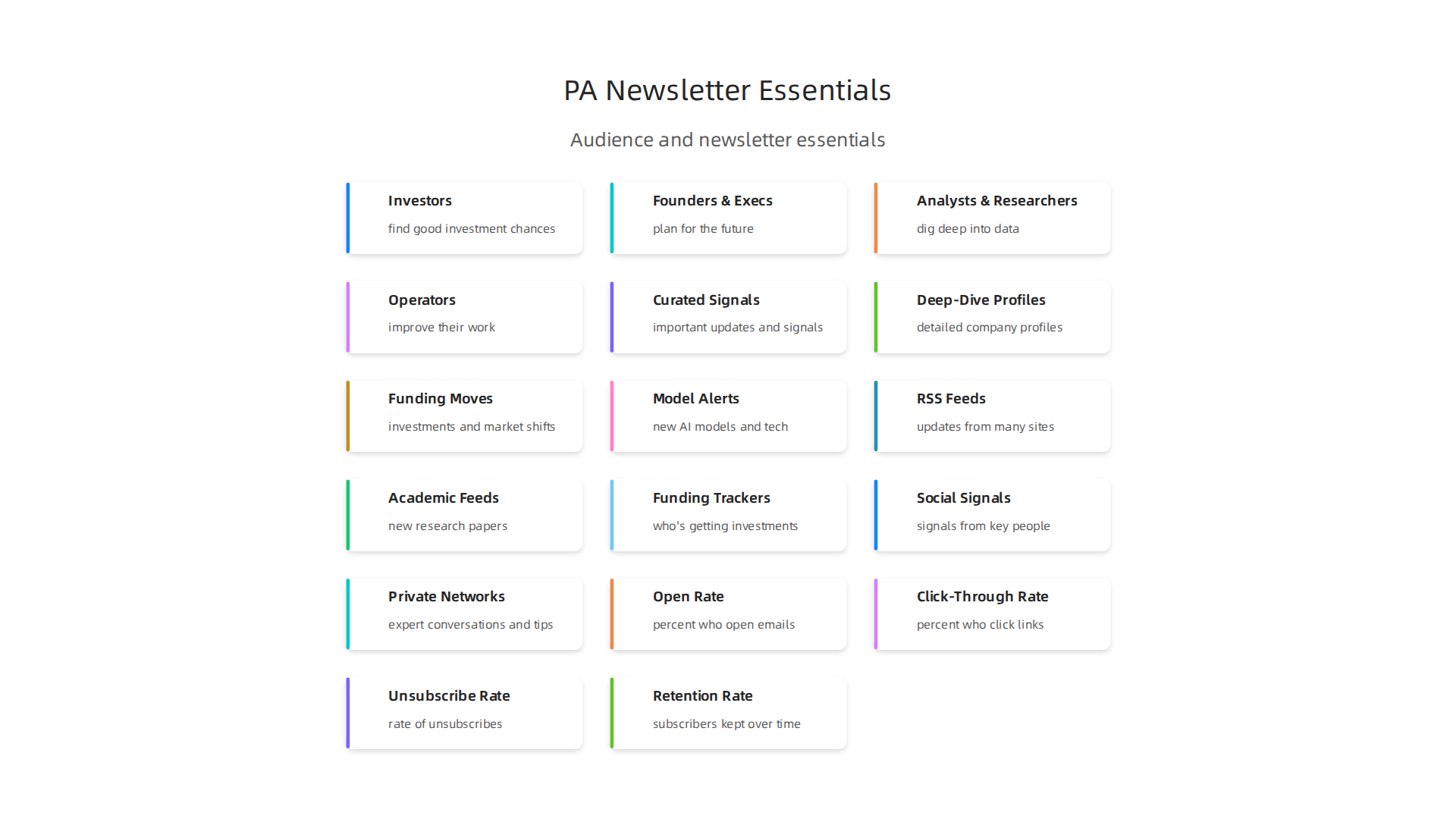
Investors are always searching for the next big thing. They need to know which AI companies are growing fast and which ones are making smart moves. Their main goal is to find good investment chances. A PA newsletter helps them by sharing insights on new products, how different companies are doing (portfolio analysis), and important partnerships that could make a company’s stock go up or down. They want quick summaries that tell them where to put their money.
Founders and Executives
If you’re starting an AI company or running one, you need to stay ahead. Founders and executives want to understand the market, what competitors are doing, and what new technologies are coming out. They use the PA newsletter to help them plan for the future, decide what products to build, and find partners. They need a clear view of the landscape so they can make big choices for their business.
Analysts and Researchers
Analysts and researchers are like detectives for the AI world. They dig deep into data and trends. They need detailed information to write reports, predict what will happen next, and understand new breakthroughs. A PA newsletter gives them the core facts and figures, helping them focus their deeper studies. They need trustworthy sources to back up their work and understand complex newsletter topics.
Operators
Operators are the people who make things run every day inside AI companies. They need to know about the latest tools, how to improve their work, and what’s changing in the industry. The PA newsletter helps them keep their skills sharp and make smart choices about how their teams operate.
What Makes a PA Newsletter Special?
Many places share AI news, but a good PA newsletter stands out by offering something different. It’s not just about giving you more information; it’s about giving you the right information.
Here’s how it provides unique value:
- Focused Insights: Instead of general news, it gives you deep dives into product launches, company performance, and new collaborations. It’s like having a guide who knows exactly what matters in the AI space.
- Time-Saving Summaries: Busy professionals don’t have hours to read everything. This newsletter breaks down complex information into easy-to-understand summaries. It helps reduce mental burden, allowing you to focus on important tasks, as studies show that clear information can lessen the amount of thinking needed How to Reduce Cognitive Overload in Lawyers.
- Actionable Intelligence: It doesn’t just share facts; it helps you see what those facts mean for your decisions. This means you get useful advice you can act on, whether it’s about investing, launching a product, or finding a new partner.
- Curation by Experts: A great PA newsletter is put together by people who truly understand the AI industry. They know how to separate the important signals from all the daily noise. This helps you understand the bigger picture of AI trends 2026: Separating signal from noise.
- Audience Segmentation: To deliver this focused value, creators of a digital newsletter often divide their audience into smaller groups based on their job roles, company types, or what they are interested in. This way, each person gets content that is most useful to them B2B Email Segmentation in 2026.
This is a key part of how do you create a newsletter that truly serves its readers.
By knowing exactly who it’s for and what special help it offers, a PA newsletter becomes a must-have tool for anyone serious about making smart choices in the fast-changing world of AI.

Now that we know exactly who we are talking to, the next step in creating a powerful PA newsletter is to decide what kind of information we will share and how often. This means setting up "content pillars" and making a plan called an "editorial calendar." These tools help make sure your digital newsletter is always full of useful, high-quality content that truly helps your readers.
2. Define Content Pillars and an Editorial Calendar That Scales
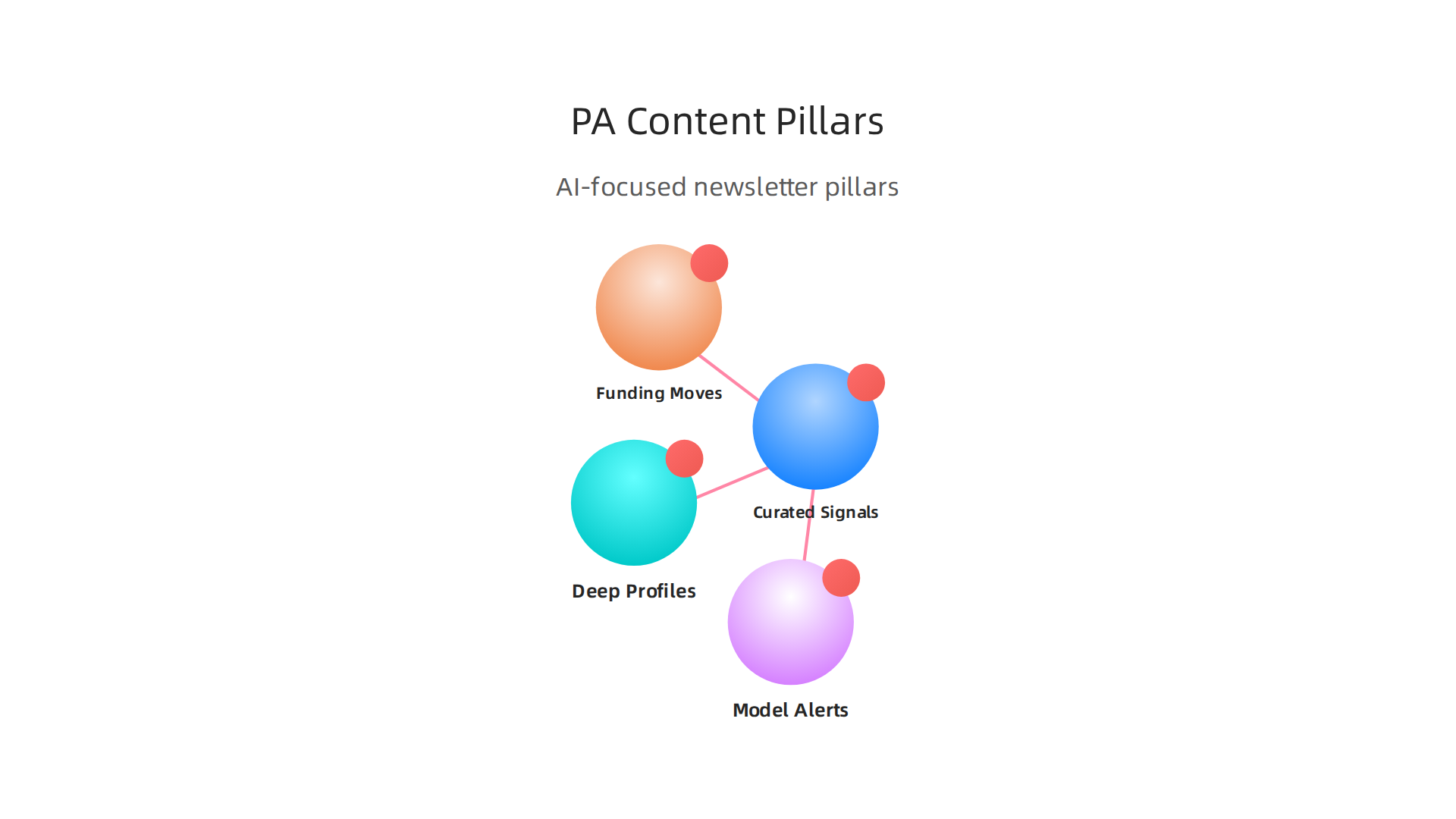
Content pillars are like the main sections or themes of your newsletter. They ensure you cover all the important newsletter topics that your audience cares about. For an AI-focused PA newsletter, here are some strong content pillars and how they meet your readers’ needs:
-
Curated Signals and Trends: This pillar offers quick, important updates on what’s new and what’s changing in AI. It’s like having an expert filter out the noise for you.
- For Investors: They get early hints about market shifts and new opportunities.
- For Founders and Executives: They stay current on overall market direction and new tech.
- For Analysts and Researchers: They receive key data points to help their own studies.
- For Operators: They learn about tools and changes that might affect their daily work.
- This helps readers quickly grasp important AI trends, which is key for strategic decisions. For more, learn about AI trends 2026: The crucial insights for leaders and investors.
-
Deep-Dive Company Profiles: This pillar focuses on one or two AI companies, looking closely at their products, strategies, and what makes them special.
- For Investors: They find detailed information for potential investments.
- For Founders and Executives: They can compare their strategies with others and spot potential partners.
- For Analysts and Researchers: They get in-depth case studies for their reports.
- When you dive deep into specific firms, you help professionals truly evaluate AI companies in 2026.
-
Funding and Market Moves: This pillar covers who’s getting money, big mergers, and how the market is changing for AI companies.
- For Investors: This is vital for tracking where money is flowing and finding investment chances.
- For Founders and Executives: They understand the competitive landscape and funding environment.
- For Analysts and Researchers: They gain data for market analysis and predictions.
-
Model and Technology Alerts: This pillar focuses on new AI models, important tech updates, and breakthroughs.
- For Founders and Executives: They learn about new tools to use or build upon.
- For Analysts and Researchers: They stay informed about the latest scientific and technical advancements.
- For Operators: They discover new technologies that can improve their operations.
To make sure your digital newsletter always delivers value, you need an editorial calendar. This is simply a schedule that outlines when each type of content will be published.

It ensures you have a steady flow of information and helps avoid missing key topics. A good calendar helps you decide how often to send your PA newsletter and what goes into each edition.
Think of it like this: grouping content into clear categories and breaking down large topics makes it easier for your readers to learn and absorb new information. This is called reducing "cognitive load," and research shows that organizing content well can significantly improve learning and understanding, much like how AI in education can optimize learning for students Challenging Cognitive Load Theory: The Role of Educational …. Simplifying complex information is a top strategy to lessen the mental burden on busy professionals Less Is More: Reducing Cognitive Load to Improve Learning.
When you plan your content using these pillars and a calendar, it makes creating the newsletter much smoother and helps keep the quality high. This is how you create a newsletter that truly serves its audience and becomes a trusted source. For more tips on this, explore how to future-proof your AI newsletter 2026 strategy for growth and monetization.
Ready to receive clear, daily insights into the world of AI?
The AI Newsletter Worth Reading
To keep delivering on the promise of your planned content, your PA newsletter needs a strong way to find, check, and sort information. This is called a "workflow." It means having clear steps to make sure your digital newsletter always has high-quality, trustworthy content.
3. Sourcing, verification & curation workflows for high-signal content
Building a great PA newsletter is like being a detective for information. You need to find the best clues, check if they are real, and then share them in a clear way. This helps your readers cut through all the noise online and get only the most important insights.
How to find the best content for your newsletter
Finding the right content starts with having a good "sourcing stack." This is simply a set of tools and methods to discover important AI news and updates. Here are some smart ways to find content for your digital newsletter:
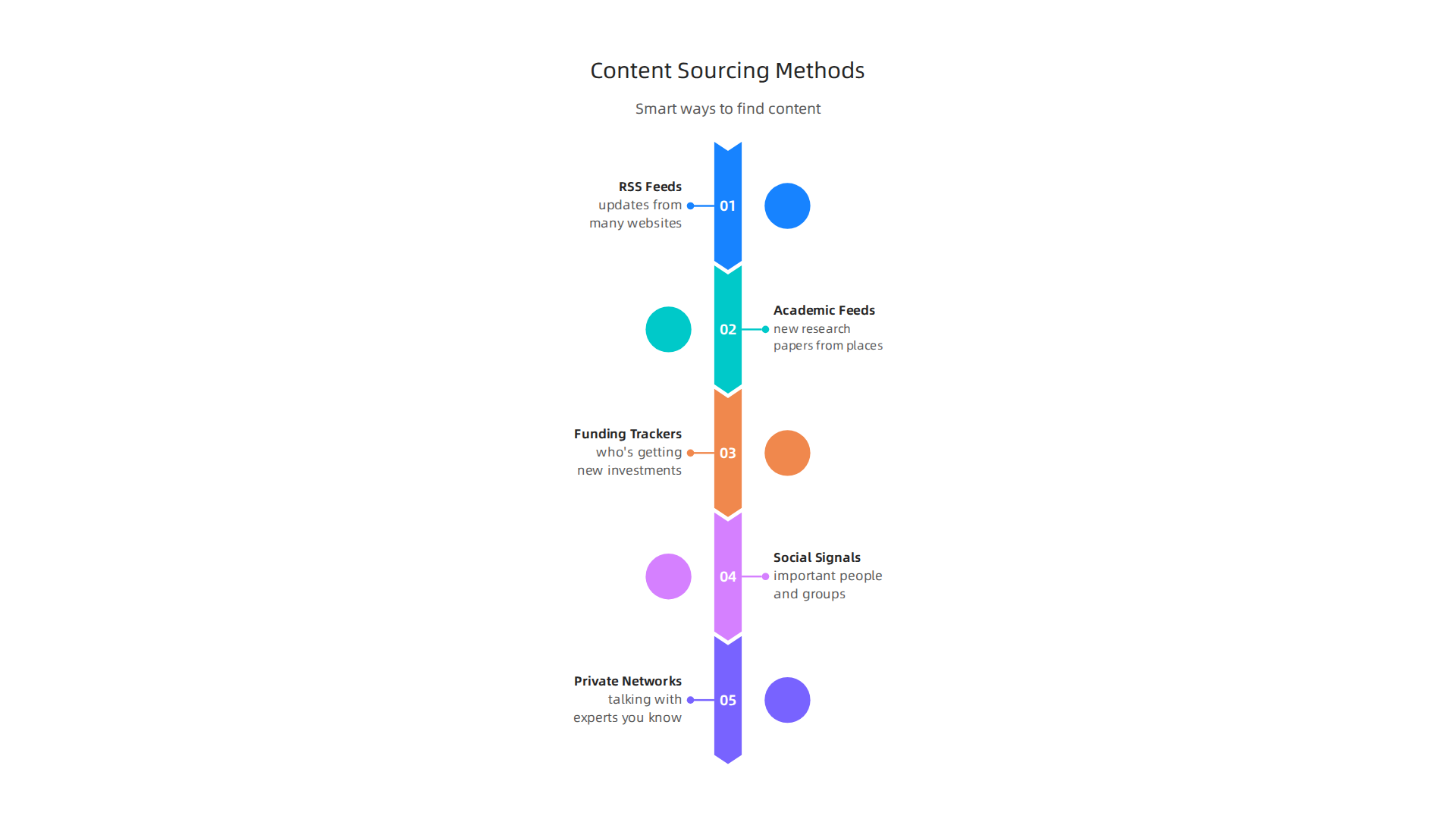
- RSS Feeds: These are like special news channels that bring updates from many websites right to you. You can set them up for key AI blogs, research papers, and news sites. Tools like FeedOtter help manage these feeds for your curated newsletter emails, making content selection easier for editorial teams Curated Newsletter Platform for Publishers and ….
- Academic Feeds: For deep insights, look at new research papers from places like arXiv. These often show what’s coming next in AI technology.
- Funding Trackers: Keep an eye on websites that report which AI companies are getting new investments. This tells you who’s growing fast and what areas investors are excited about.
- Social Signals: Follow important people and groups on platforms like LinkedIn and X (formerly Twitter). They often share early news and opinions that can be great newsletter topics.
- Private Networks: Sometimes, the best information comes from talking with experts you know. These private chats can give you unique insights not found elsewhere.
After you collect a lot of information, you need "rules for triage." This means deciding what is truly important for your audience and what can be skipped. It’s about figuring out how to create a newsletter that gives only the highest value. Many useful strategies can help, such as using topic-based filtering or scheduled reading blocks to manage the flow of information efficiently 10 Content Curation Strategies for Professionals in 2026. To help you sift through the vast amount of information, understanding how to cut through AI noise can be very helpful for strategic decisions.
Keeping your content true and trustworthy
Once you have content ideas, the next crucial step is verification. You must make sure everything you share in your PA newsletter is correct and can be trusted. This builds strong faith with your readers. Here are important steps:
- Check the Facts: Always look for the original source of information. Don’t just trust a headline. Read the actual report, study, or announcement.
- Look at Original Sources: If someone talks about a new AI model, try to find the actual paper or company blog post where it was first announced. This helps you confirm details.
- Attribution Practices: Always give credit where it’s due. If you got information or an idea from another source, name that source clearly. This is a key part of editorial quality.
- Editorial Quality Checks: Before sending out your digital newsletter, have someone else review it. They can spot mistakes, unclear sentences, or information that might not be fully accurate. Using specific tools and structured intake workflows can greatly improve the accuracy of your curated content Best AI Tools for Newsletter Curation in 2026.
By following these steps, you ensure your PA newsletter is not just informative but also a trusted source in the fast-moving world of AI. It shows you care about accuracy and respect your readers’ time. For insights into how AI itself is becoming more trustworthy, you might find it useful to explore open evidence AI and its role in making AI predictions clearer.
Putting together your PA newsletter might seem like a lot of work, even after you’ve found and checked all the great information. But it doesn’t have to be! By setting up clear steps and using some smart tools, you can make the process smooth and easy. This helps you get your digital newsletter out on time and with high quality every single time.
4. Production systems: templates, automation, and team roles
To make your PA newsletter creation simple and quick, think about it like building something with a kit. You have parts that fit together easily, and everyone knows their job. This section will show you how to set up your own newsletter production system.
How to use templates and a simple plan
Imagine you want to create a few different kinds of newsletter stories. Maybe one is a quick news summary, another is a deeper look at a new AI tool, and a third is an interview. For each of these, you can use a "template." A template is like a fill-in-the-blanks guide. It tells you:
- What kind of headline to use.
- How many paragraphs for the summary.
- Where to put a picture.
- How to link to the original source.
Using these templates helps you keep your newsletter looking the same and feeling professional. It also means you don’t have to start from scratch every time you write about new newsletter topics.
Next, a "production calendar" is your simple plan for when to do things. It could be as basic as:
- Monday: Collect all the interesting AI news.
- Tuesday: Pick the best stories and start writing rough drafts using your templates.
- Wednesday: Edit the stories, check facts one last time.
- Thursday: Put the whole digital newsletter together and send it for a final check.
- Friday: Schedule the newsletter to go out.
Having a clear plan like this helps everyone on your team know what to do and when. It stops things from piling up at the last minute and helps you create a newsletter without stress. The general workflow for a newsletter curator involves stages like discovering content, organizing it, writing commentary, and then distributing it Best Tools for Newsletter Curators and Aggregators (2026).
Making things faster with automation and a clear team
One of the best ways to make your PA newsletter easier to manage is by using "automation." This means having computers do the repetitive tasks for you. Here are some places where automation can really help:
- Finding and Sorting Content (Sourcing & Tagging): Remember how we talked about RSS feeds? You can set up tools to automatically pull in news from your favorite AI websites. Some tools can even help tag or label these stories so they are easier to find later. This saves you a lot of time digging through websites.
- Writing Help (Draft Generation): There are smart AI tools that can help write parts of your newsletter. They can summarize long articles or even help create an initial draft based on the information you give them. This speeds up how you create a newsletter significantly. Many of these tools can automate newsletter creation by curating insights and generating content quickly Automated Newsletter Curation.
- Sending Out Your Newsletter (Distribution): Once your newsletter is ready, tools can automatically send it to all your subscribers at the right time. They can also keep track of who opened it and what they clicked on.
Even with automation, you still need a small team to guide the process. For a compact editorial team, thinking about "role matrix" simply means knowing who does what. Here’s a simple idea for jobs:
- The Finder: This person looks for the latest AI news and cool newsletter topics.
- The Writer/Editor: This person uses the templates to write the stories and makes sure they sound good and are easy to understand.
- The Checker: This person does the final fact-check and makes sure everything is perfect before the newsletter goes out.
- The Manager: This person makes sure everyone is on track with the production calendar and that the automation tools are working correctly.
By having clear roles and using smart tools, your team can work together like a well-oiled machine. This makes sure your PA newsletter is always fresh, trusted, and delivered on time. Thinking strategically about how to produce your newsletter can help you future-proof your AI newsletter 2026 strategy for growth and monetization.
The previous section talked about making a great PA newsletter. Now, let’s talk about getting it to your readers and making sure they actually open and enjoy it! This part is super important because even the best newsletter topics won’t help if no one sees them.
Getting Your Newsletter to Readers
First, think about how often you send your digital newsletter. Sending it too often might make people tired of it, but sending it too rarely might make them forget about you. For many professional audiences, a weekly or bi-weekly PA newsletter works well. It is often enough to share new insights but not so much that it feels like spam.
Next, the subject line is like the headline of your email. It is the first thing people see. It needs to be clear and make people want to open the email. You can try different subject lines to see which ones work best. This is called "A/B testing."
Personalization and segmentation mean sending the right content to the right people. Imagine you have readers who care most about AI tools for business, and others who care more about AI research. You can send slightly different versions of your newsletter, or just different stories, to these different groups. This makes your newsletter feel special to each reader and can greatly increase how many people open it. For instance, using AI for personalization can boost open rates to over 50% for top-performing B2B programs in 2026 B2B Email Marketing Benchmarks & Strategy 2025–2030.
Making Sure Your Email Lands in the Inbox
"Deliverability hygiene" means making sure your emails actually get to your readers’ inboxes instead of their spam folders. Here is how:
- Keep your email list clean: Remove old or inactive email addresses.
- Do not send too many emails to people who do not open them: This signals to email providers that your emails might not be wanted.
- Ask people to add you to their "safe sender" list: This is a good step to take when someone first signs up.
Speaking of signing up, your onboarding flow is what happens right after someone subscribes to your PA newsletter. It could be a friendly welcome email that explains what they can expect. This helps new readers feel welcome and sets clear expectations for your digital newsletter.
What Numbers to Watch
To know if your newsletter is doing well, you need to look at some key numbers, or "metrics." For professional audiences, these are very important.
- Open Rate: This is the percentage of people who open your email. A good open rate for B2B newsletters can be around 20-30%, but top performers might see 38-55% in 2026 B2B Email Newsletter Benchmarks: Open Rates, CTR and Growth …. It shows if your subject lines are working.
- Click-Through Rate (CTR): This is the percentage of people who click on a link inside your newsletter. It tells you if your content is interesting enough for them to learn more. A typical B2B CTR is 2.5-4.0% in 2026 B2B Email Marketing Benchmarks 2026 | Open Rates, CTR & Best ….
- Unsubscribe Rate: This tells you how many people stop subscribing. A low number here is good, showing people like your content.
- Retention Rate: This tracks how many subscribers you keep over time. This is a very important measure of success, especially for a PA newsletter aiming to build a loyal audience. Measuring retention starts from the first two weeks after someone signs up Newsletter Retention System: Reduce Churn and Increase ….
Paying attention to these numbers helps you understand what your readers like and how to make your PA newsletter even better. To help keep track of your performance and stay on top of AI trends 2026, it can be helpful to continuously refine your approach. If you are looking for an excellent digital newsletter to inform your own efforts, consider this next step: The AI Newsletter Worth Reading.
Knowing what your readers like and how they act is super important, especially when you start thinking about how to make money from your PA newsletter. This part is all about turning your valuable digital newsletter into a source of income and making it grow even bigger.
6. Monetization and growth: sponsorships, premium tiers, and partnerships
There are a few main ways a professional audience (PA) newsletter can make money. The best choice for you depends on what your readers need and how much they trust you.
Making Money from Your Newsletter
- Sponsorships: This is when other companies pay to place their messages or ads in your newsletter. They want to reach your readers because your audience is just right for what they sell. You can charge money based on how many people see the ad (CPM, or cost per thousand opens), or a set price for each newsletter you send out. For instance, many newsletter sponsorships in 2026 use a CPM model, costing around $25 to $100 per thousand subscribers, or even more for very special B2B lists Newsletter Advertising 101: A Practical Guide to Sponsorships.
- Different Levels: You can offer different types of sponsorships, like a big ad at the top (a "primary placement"), a smaller one in the middle, or just a quick mention. Niche newsletters, meaning those with a very specific topic and audience, can be very valuable for sponsors, even if they don’t have millions of subscribers. In 2026, many agencies look for newsletters with fewer than 20,000 subscribers but with high open rates (over 40%) when seeking out good sponsorship deals State of Newsletter Sponsorships 2026 | Guide for Agencies. To set your prices, it helps to show sponsors how many people open your newsletter and click on things inside it Newsletter Sponsorship Packages: A Publisher’s Guide.
- Paid Memberships or Premium Tiers: You can offer a special, more detailed version of your PA newsletter that people pay for. This could include extra content, deeper research, or exclusive access to certain information. People who really value your newsletter topics might be happy to pay for this extra quality.
- Consultative Services: Because you become an expert in your field by running a top-notch digital newsletter, you might offer your knowledge as a paid service. For example, if your newsletter is about AI trends 2026, companies might pay you to advise them on how to use AI in their business.
Growing Your Newsletter and Income
Making money from your newsletter isn’t just about selling ads. It’s also about smart ways to grow your audience and offer more value.
- Partnerships: Work with other newsletters or businesses that have a similar audience but aren’t direct competitors. You can help each other grow by promoting each other’s content.

- Gated Research: If you have very special insights or reports, you can offer them to your subscribers behind a "gate," meaning they have to sign up for your free PA newsletter (or even a paid one) to get access. This adds value to your offering.
- Turning Insights into Products: Pay close attention to what your subscribers ask for or what problems they often talk about. Can you create a small product or service from these insights? This is called "productizing" your knowledge. It helps you find new ways to make money that fit perfectly with your audience’s needs. This is a key part of how strategic AI adoption drives business growth in 2026 for many businesses how strategic AI adoption drives business growth in 2026.
When you start to monetize your newsletter, keep watching your key numbers. Look at how much money you make compared to how many subscribers you keep. It’s a balance. You want to make money, but not at the cost of losing your loyal readers. Keeping your audience happy and engaged is always the first goal.
Summary
This article explains how to design and run a PA (Product, Portfolio, Partner) newsletter that delivers high-signal, time-saving intelligence for people who make decisions in AI—investors, founders, researchers, and operators. It covers who the newsletter serves, which content pillars to use (curated trends, deep-dive company profiles, funding moves, model alerts), and how to plan an editorial calendar so the product scales. You will learn practical sourcing and verification workflows to keep content trustworthy, templates and automation tactics to speed production, and a simple team role matrix to keep quality high. The guide also explains distribution best practices—segmentation, deliverability, onboarding—and the key metrics to track. Finally, it outlines realistic monetization paths like sponsorships, premium tiers, and consultative services so you can grow revenue without losing reader trust.