Why AI Storytelling Generators Matter in 2026
You have a story to tell. Maybe it is a brand narrative, a product launch, or even a training module that needs to feel alive. But here is the problem: the demand for high quality, personalized content at scale is growing faster than any human team can keep up with.

In 2026, this is no longer a minor inconvenience. It is a bottleneck.
The numbers tell a clear story. The global generative AI market was valued at $53.7 billion in 2025 and is expected to grow to $83.3 billion in 2026, with projections reaching nearly $1 trillion by 2035. The AI text generator market alone was valued at over $534 million in 2024 and is set to more than triple by 2033. This is not a passing trend. It is a structural shift in how content gets created.
So what does this mean for you? It means that an AI storytelling generator has moved from being a nice-to-have toy to a strategic necessity. Whether you are a founder trying to explain your company’s mission, a marketer crafting customer journeys, or a researcher turning data into narratives, the tools now exist to help you do more with less.
An AI storytelling generator is different from a basic AI writer free tool or a generic AI writing generator. It is built to understand pacing, character, emotional arcs, and audience engagement. Some even work like an AI lyrics generator, helping you weave rhythm and tone into long-form content.
But here is the thing. Not all AI storytelling tools are created equal. The market is crowded, and picking the wrong one can waste your time and frustrate your team. That is exactly why this article exists.
In the sections ahead, we will demystify how these tools work, compare the leading platforms, and give you strategic guidance that works for machine intelligence professionals like you. Whether you are evaluating tools for your own workflow or advising a team, you will leave with a clear roadmap.
Let us start by looking at what actually makes a great AI storytelling generator.
How AI Storytelling Generators Work: The Technology Behind the Magic
Ever wonder how an AI can actually tell a story instead of just spitting out random sentences? It is not magic, though it can sure feel that way. The core technology is something called a transformer network.
Think of a transformer as a super smart pattern finder. It is a neural network architecture that reads your input, looks at all the words together, and figures out which ones matter most for what comes next. As Georgia Tech researchers explain, a transformer changes a sequence of data (like text) into an output by paying attention to long-range connections between words. That is a fancy way of saying it remembers what you said at the beginning of a paragraph even when it is writing the end.
How Transformers Power Storytelling
Most AI storytelling generators are built on large language models, or LLMs.
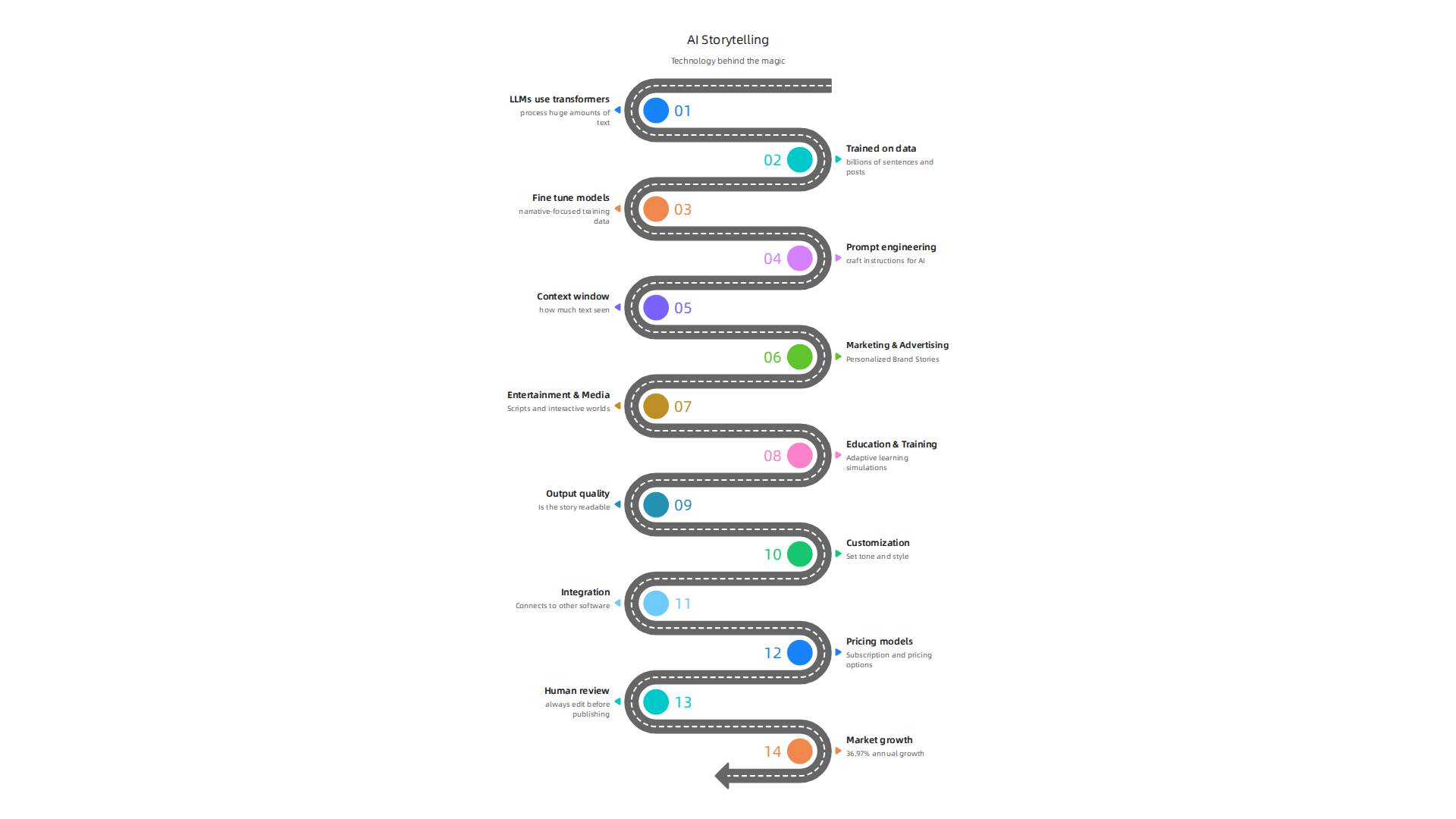
These models use transformers to process huge amounts of text. IBM puts it simply: "At the heart of many advanced AI models are transformer networks." The magic comes from training these models on billions of sentences, blog posts, books, and scripts. The model learns how stories usually flow. It picks up on pacing, dialogue patterns, and emotional beats. It learns that a hero’s journey often has a setback before the big win.
But training a general LLM is only step one. To make a great AI storytelling generator, developers fine tune the model on narrative heavy data. They also use prompt engineering, where they craft the instructions you give the AI. A good prompt might say "Write a 300 word story about a startup founder overcoming doubt." The smarter the prompt, the better the story.
Another key piece is the context window. That is how much text the model can look at while it writes. A small window means the AI might forget the character’s name halfway through. A large window, like 128,000 tokens or more, lets it keep track of complex plots and subplots. In 2026, researchers are still refining these techniques to produce more coherent long form content, as noted in generative AI trends.
What Makes a Storytelling Generator Different
A specialized AI storytelling generator is not the same as a general purpose AI writing generator. General models are great at answering questions or summarizing emails. But a storytelling tool understands narrative structure. It knows when to add tension, when to slow down, and how to keep a reader hooked. Some even work like an AI lyrics generator, weaving rhythm and repetition into the text.
If you want a tool that understands character arcs and emotional beats, you need one built for storytelling. That is why we compare the best AI text generators in our expert guide, so you can find the right fit for your work.
So next time you use an AI storytelling generator, remember: it is not magic. It is transformers, training data, and careful prompt design working together. And understanding that helps you get way better results.
Key Applications of AI Storytelling Across Industries
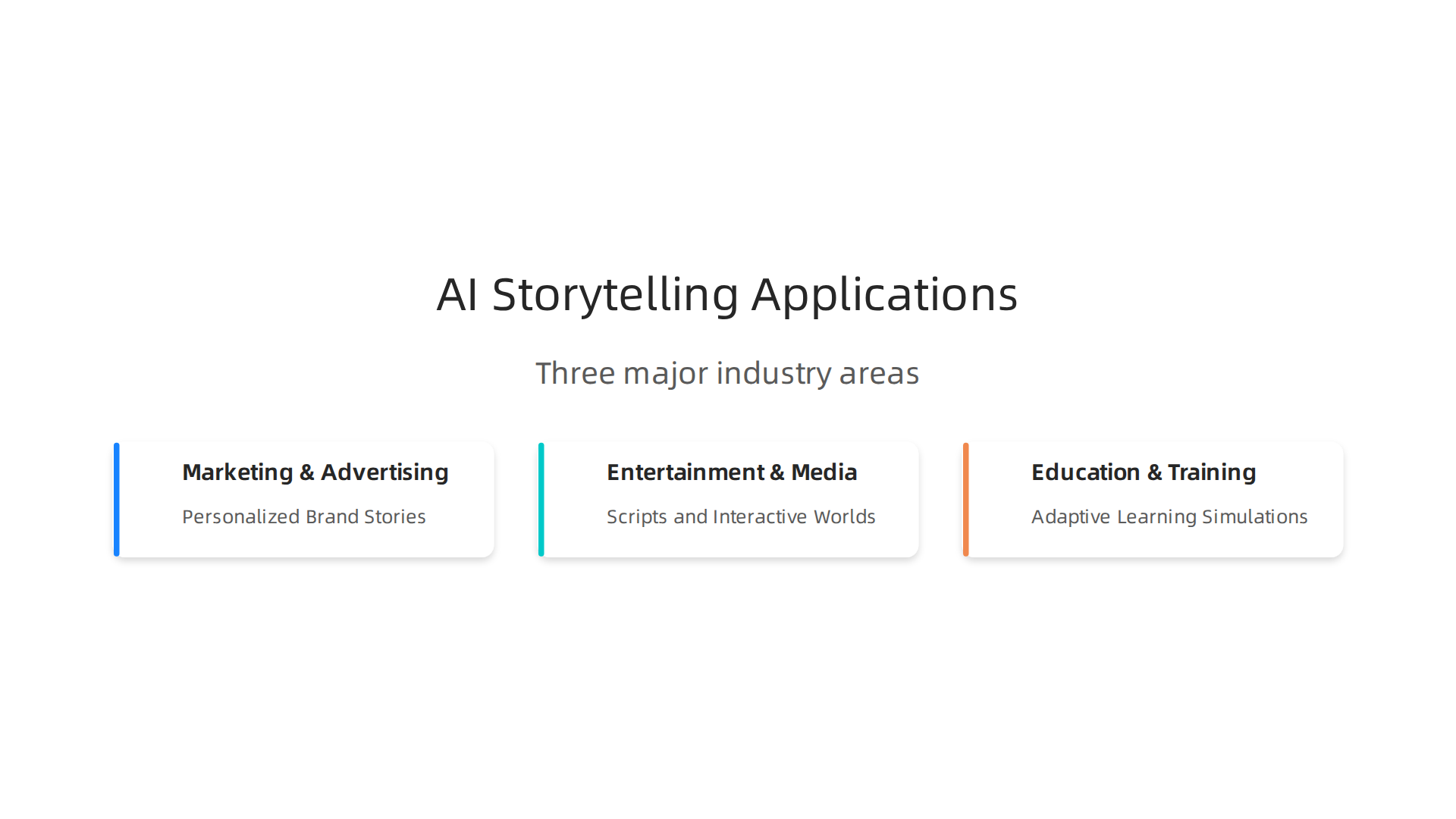
So you know how the tech works. But where do people actually use an AI storytelling generator in the real world? It is not just for writing fantasy novels or bedtime tales. In 2026, businesses, studios, and schools are using these tools in surprising ways. Let us look at three big areas where AI stories are making a real difference.
Marketing and Advertising: Personalized Brand Stories
Marketing teams love the AI storytelling generator because it helps them create a different story for each customer.

Instead of writing one generic email, they can generate personalized ad copy that speaks directly to what you care about. A study from Google Cloud shows that top companies are already using generative AI to craft targeted campaigns and dynamic content. An AI writing generator can churn out dozens of variations of a product description in seconds. That means a brand can tell a story that feels personal without hiring a hundred copywriters.
If you work in marketing, you might want to see which tools can handle this well. Our guide to the best AI text generators breaks down the options for ad copy, blog posts, and social media.
Entertainment and Media: Scripts and Interactive Worlds
Movie studios and game developers use the AI storytelling generator to brainstorm plot ideas, write dialogue, and even build interactive narratives. Imagine a video game where every character’s response changes based on what you did earlier. That is possible today. Platforms like those covered in a 2026 comparison of AI storytelling platforms help creators write branching storylines without pulling their hair out. Some tools even double as an AI lyrics generator for writing songs or chants in a game world.
The entertainment industry also uses AI to write short scripts for training actors or to test different endings for a film. It saves hours of manual drafting.
Education and Training: Adaptive Learning Simulations
Schools and corporate training programs are another big user. An AI storytelling generator can create custom learning scenarios that adapt to each student. For example, a medical student might practice diagnosing a patient through an AI generated story that changes based on their choices. The same tech can build leadership simulations for managers. According to a 2026 report on AI use cases, education is one of the top sectors benefiting from this kind of adaptive content.
These simulated stories let learners fail safely and try again. That is way more effective than reading a textbook.
Where Will You Use AI Storytelling?
These three areas are just the start. Whether you work in marketing, make games, or teach a class, an ai writer free tool can help you test ideas before you commit to a full project. The key is picking a generator that fits your specific job.
So think about what kind of story you need to tell. Then find the tool that tells it best.
Top AI Storytelling Generators in 2026: A Comparative Overview
By now you know what an AI storytelling generator can do for marketing, entertainment, or training. But picking the right tool is where things get tricky. Not every generator is built the same. Some are great for short ad copy, while others can write a full novel. Let us break down what to look for and compare the main types of tools available in 2026.
What To Compare Before You Pick
When shopping for an ai storytelling generator, focus on these four features.
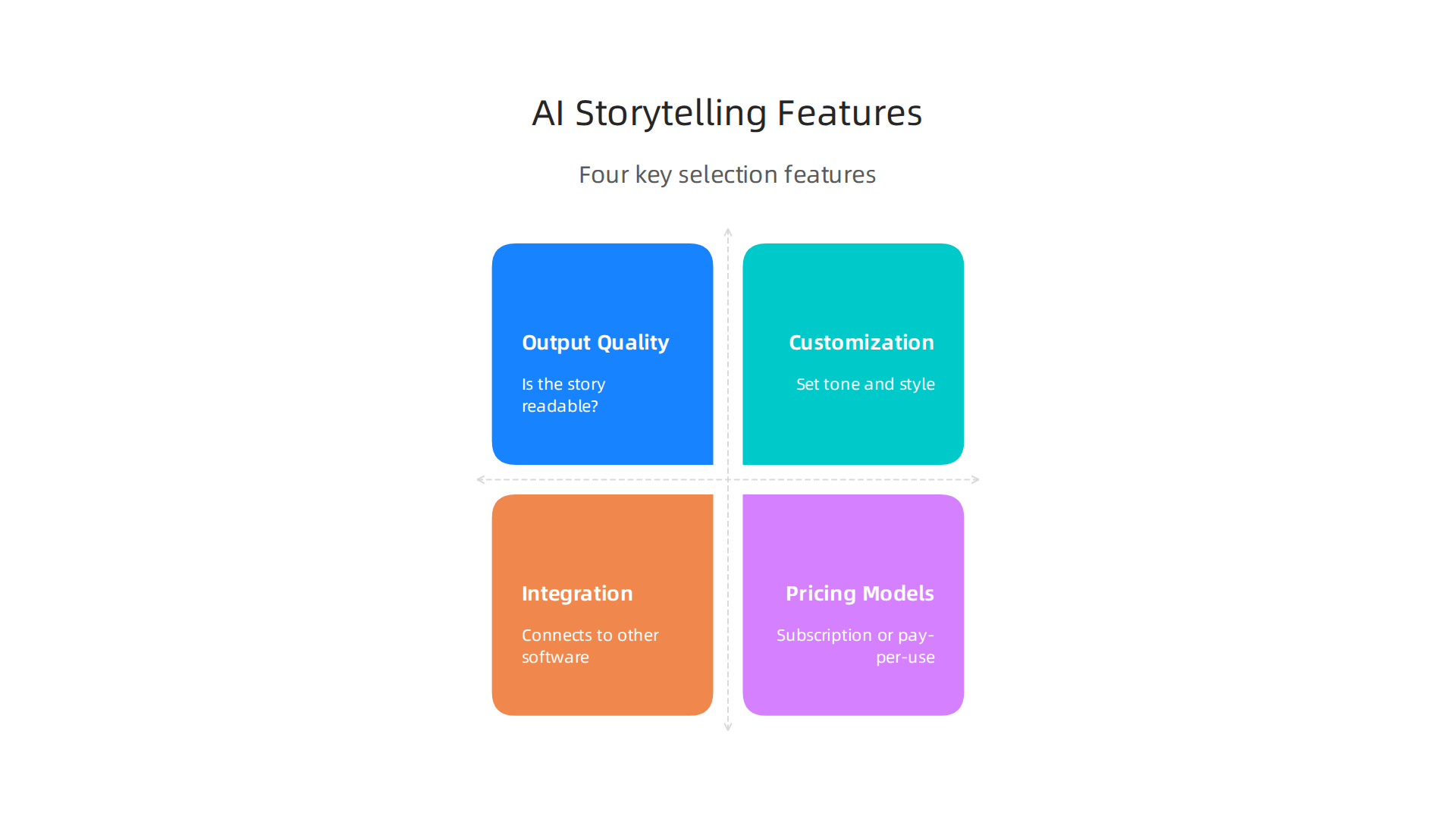
They make the biggest difference in real use:
| Feature | What It Means For You |
|---|---|
| Output quality | Is the story readable? Does it sound like a human wrote it? Some tools produce stiff text, others feel natural. |
| Customization | Can you set the tone, character names, plot style, or genre? More controls mean better stories. |
| Integration | Does the tool connect to your other software? Marketers need CRM links. Developers need API access. |
| Pricing models | Monthly subscription, pay per word, or free tier? Enterprise plans scale with your team size. |
Independent review sites like Capterra list thousands of real user reviews for generative AI software.
That is a good place to start comparing options side by side.
The Main Types of AI Storytelling Generators in 2026
The market has split into clear categories. Here is a quick breakdown:
General purpose text generators. These handle blog posts, emails, social media captions, and short stories. They are the most versatile. If you need an ai writing generator for everyday content, start here. Our review of the best AI text generators in 2026 walks through the top contenders for this category.
Long form and book generators. Some tools specialize in creating entire books or long narratives. An independently tested comparison of AI book generators shows that these tools excel at maintaining plot consistency and character development across chapters. They often cost more but save huge time for authors.
Interactive and game story generators. Game developers need tools that can create branching dialogue and multiple endings. These generators often include an ai lyrics generator for writing character songs or chants. They also have integration hooks for Unity or Unreal Engine.
Voice story generators. If you want to turn a story into audio, look for tools that pair with AI voice generators. As a 2026 comparison of AI voice generators explains, some platforms now merge text generation with voice cloning so your story can be narrated instantly.
Pricing at a Glance
Pricing varies widely. Here are the common models:
- Free tier: Limited words per day. Good for testing. An ai writer free tool can help you see if the style fits your needs before you pay.
- Monthly subscription: $10 to $50 for individuals. Unlimited words but often capped at a certain quality level.
- Enterprise plans: $100+ per month or custom pricing. These include API access, team accounts, and priority support. Scalable for large marketing teams or studios.
Review platforms like G2 and Capterra remain the most cited sources for pricing data in 2026. Always check current prices there before subscribing.
How To Choose The Right Generator For Your Job
Start with your use case. Are you writing one blog post a week? A general purpose tool works fine. Building a video game with 50 character endings? You need a specialized interactive generator. Running a school training program? Look for tools that allow adaptive scenarios.
The key is not to overbuy. A tool that costs $200 a month may have features you never use. On the other hand, a free tool might lack the customization you need. Test two or three options before committing.
If you want a broader view of how AI tools can boost your work, check out our guide to top AI tools for business in 2026. It covers more than just storytelling.
Your Next Step
Take a look at the comparisons on Capterra or G2. Read a few user reviews. Then try a free trial of the tool that seems best for your industry. The right ai storytelling generator can save you hours every week and help you tell stories that actually connect with your audience.
How to Choose the Right AI Storytelling Generator for Your Needs
You have seen the main types of AI storytelling tools in 2026. Now comes the harder part. How do you pick the right one for your specific work? The wrong choice costs you time and money. The right one saves you hours every week. Here is a simple framework to help you decide.
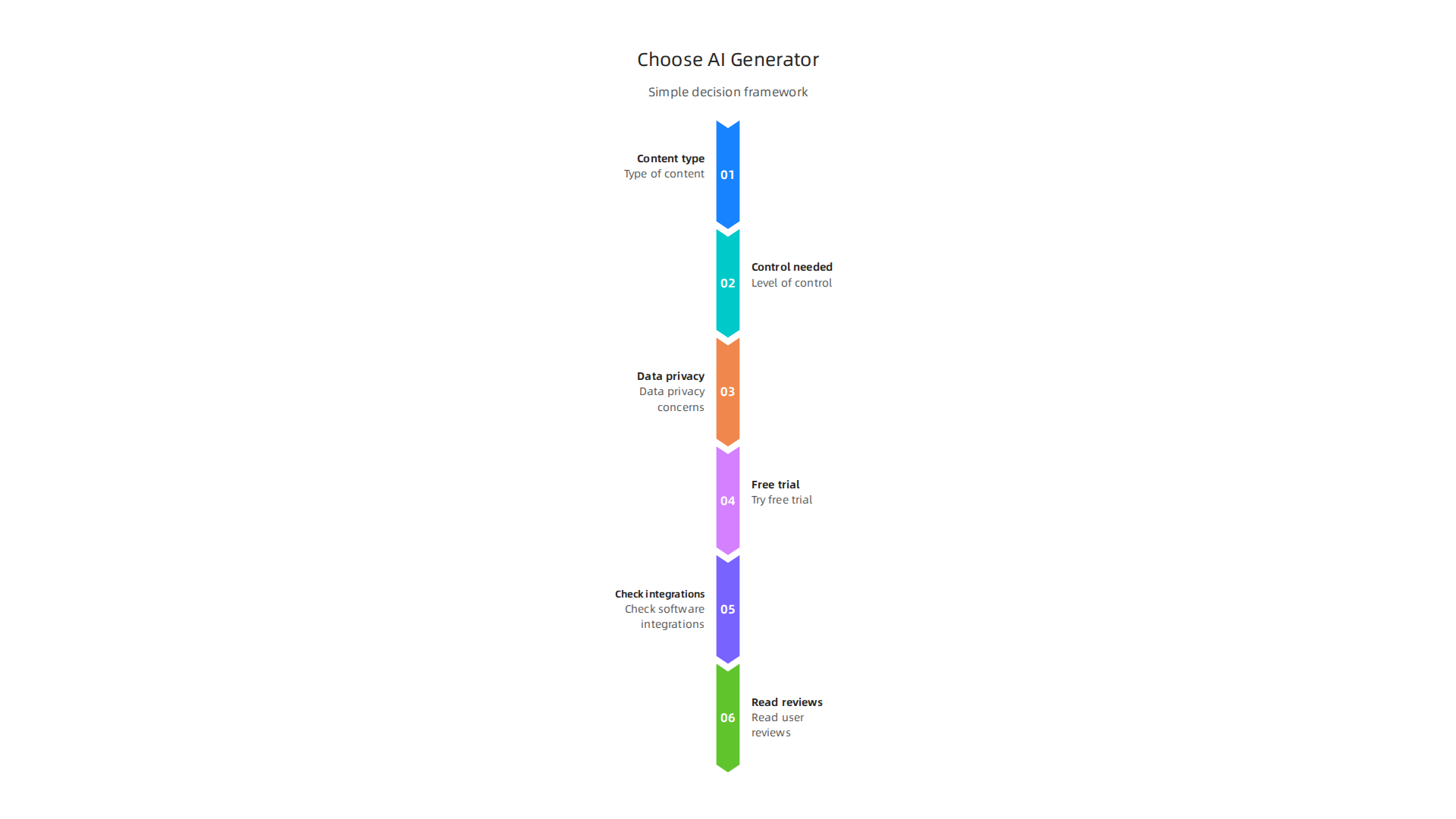
Start With Your Core Needs
Before you look at pricing or features, ask yourself these three questions.
What type of content are you creating?
Short ad copy needs a different tool than a full fantasy novel. If you need general content, an ai writing generator works fine. We cover the best ones in our review of top AI text generators for 2026. But if you are writing a 60,000 word book with consistent characters, you need a specialized long form tool. Independent reviews like this comparison of AI book generators show that specialized tools handle plot consistency much better than general ones.
How much control do you need?
Can you set the tone, genre, or character names? Some tools barely let you pick a topic. Others let you adjust everything. If you are building a video game, you might even need an ai lyrics generator for character songs or chants. More controls mean better stories that match your vision.
What about data privacy?
This is the silent dealbreaker. If you upload a business proposal or a novel idea, does the AI train on that data? Always check the privacy policy before you use a tool for sensitive work. Some platforms promise your data stays private. Others use it to improve their models. This matters more in 2026 than ever before.
Test Before You Commit
Never buy a subscription without testing first. Here is a smart evaluation plan.
Use a free trial first.
Most platforms offer an ai writer free tier. Use it to run a real test. Write a short story or a marketing script. See how the tool handles your specific needs. Do not just generate random sentences. Test with real work.
Check integrations.
Does the tool connect to your other software? Marketers need CRM links. Developers need API access. A tool that works on its own is fine for personal use. But for a team, integration is a must. Some platforms now connect directly to popular AI CRM tools in 2026, which saves you extra steps.
Read user reviews.
Review sites like Capterra and G2 are still the most trusted places for real user feedback in 2026. People share honest opinions about output quality, customer support, and hidden costs. Read a handful of reviews before you decide.
Avoid These Common Pitfalls
Even the best tool needs the right approach. Watch out for these mistakes.
Relying on AI without human editing.
AI can write fast. But it also makes weird mistakes. It might repeat itself, use the wrong tone, or invent facts. Never publish AI text without reading it first. A human editor catches the small errors that break trust. Our guide on how to humanize AI text explains this step in more detail.
Ignoring data privacy.
We said it before, but it is worth repeating. Some tools own the content you create. If you are writing something you plan to sell, make sure you keep the rights. Read the terms of service carefully.
Picking the wrong category.
A general purpose tool is great for blogs. But it struggles with game dialogue or book length stories. Match the tool type to your project type. This single step saves you the most frustration.
Your Next Step
Picking an ai storytelling generator does not have to be hard. Start with your use case. Test a few tools on a free tier. Check integrations and privacy policies. Then make your choice.
For a broader look at how these tools fit into your daily work, check out our guide to the top AI tools for business in 2026. It covers more than just storytelling and helps you build a complete AI toolkit.
The Future of AI Storytelling: Trends and Predictions for 2027 and Beyond
You have learned how to pick the right tool today. But the AI storytelling world is moving fast. By 2027 and beyond, the tools we use now will look almost basic. Here is what is coming next.
Multimodal Storytelling: Text, Images, and Audio Together
Right now most AI storytelling generators only produce text. That is changing quickly. The next wave of tools will create stories that blend words, pictures, sound, and even video. Imagine writing a fantasy novel where the AI also generates the map of the kingdom, a soundtrack for each chapter, and character portraits that match your descriptions. That future is almost here.
This multimodal shift means you will not need separate tools for each media type. One platform could handle everything from the script to the visuals to the voiceover. For example, an ai lyrics generator used in a game today might become part of a larger story engine that creates songs, dialogue, and background music together. The line between different content types is disappearing.
Why this matters for you: If you are a content creator, you will save hours by using one tool instead of five. But you will also need to learn how to guide these systems. Our guide on how to humanize AI text already covers the basics of editing AI output. In the future, you will need to edit across multiple media at once.
Personalization at Scale: Stories That Adapt to You
Here is a trend that will blow up in the next few years. AI will tell stories that change in real time based on who you are. Think about a children’s bedtime story that swaps the character names to match your kid’s friends. Or a marketing video that changes its plot depending on the viewer’s location and interests.
This is not just about swapping a name. These systems will use user data to adjust tone, pacing, and even the ending. Business use is huge. A single ai writing generator could produce thousands of personalized ad scripts that each feel unique to the reader.
But there is a catch. Personalization needs data. And data brings privacy risks. The same care we talked about earlier applies here. Always check how your tool handles user data before you build a personalized story campaign. The best tools in 2026 already let you set strict privacy rules.
Market Growth: Big Money Is Pouring In
The numbers behind this shift are staggering. According to Precedence Research, the generative AI market is expected to grow at a rate of 36.97% each year from 2026 to 2035. The whole AI market is now worth $4.71 trillion, as Gartner reported in early 2026. And McKinsey predicts that AI agents alone could add $2.6 to $4.4 trillion in value every year across different industries.
What does this mean for storytelling? Investors are funding AI narrative tools at record levels. In 2026, 88% of organizations now use AI in some form, up from 50% in 2022. Storytelling is a big part of that because every business needs content. Whether you are writing product descriptions, training materials, or entertainment, the tools will only get better and cheaper.
A quick reality check: These predictions assume continued innovation. But the core need stays the same. Humans will still guide the creative direction. AI just handles the heavy lifting faster.
What to Do Next
The future of AI storytelling is bright and full of choices.

To stay ahead, you need a framework to make sense of all these changes. That is exactly what we cover in our AI innovation guide to strategy, measurement, and frameworks. It helps you build a plan that works whether you are a solo creator or a large team.
The tools keep evolving. But if you understand these three trends now, you will be ready for whatever comes in 2027 and beyond.
Ethical Considerations and Best Practices for AI-Generated Content
AI storytelling is powerful, but it comes with real responsibilities. As more people use an ai storytelling generator to create content, we need to think about what could go wrong and how to do things the right way. Let’s look at three big areas you can’t ignore.
Copyright, Plagiarism, and Attribution
Here’s a tricky part. AI models learn from mountains of existing content. Sometimes that means the output looks a lot like something someone else already wrote. Who owns the words an AI writes? The law is still catching up.
You have to be careful. If you use an ai writing generator to produce a blog post and it accidentally copies a paragraph from a book, you could be in trouble. Always run AI content through a plagiarism checker. And be honest about how you made it. If you publish something written mostly by AI, say so. Readers and search engines both appreciate transparency.
IBM notes that understanding how AI models work helps you spot potential issues early. The key is to treat AI as a helper, not a replacement for your own original thinking.
Mitigating Bias in Training Data and Outputs
AI systems learn from data created by humans. And humans have biases. So the AI picks up those biases too. That can show up in stories as stereotypes, unfair assumptions, or missing perspectives.
Researchers in 2026 continue to work on fixing bias in generative AI models. But you can’t just rely on the tool makers. You need to check the output yourself. Read your story with a critical eye. Ask yourself: Does this treat all people fairly? Does it skip over certain groups?
If you are using an ai lyrics generator for a song, for example, make sure the lyrics don’t reinforce harmful ideas. Small fixes now prevent big problems later.
Human Oversight and Disclosure
AI can write fast, but it does not understand context, feelings, or ethics the way you do. That is why human oversight is non-negotiable.
Best practice is simple: always have a real person review and edit AI generated content before it goes live.

This catches errors, tone problems, and ethical slip-ups. It also ensures the content matches your brand voice.
Also, let your audience know when AI helped create something. A short note like "This post was drafted with AI and reviewed by a human" builds trust. It shows you are not trying to hide anything.
For a deeper look at how to blend AI speed with human quality, check out our guide on the best AI text generators for 2026. It covers tools that make it easier to keep control over your content.
The future of storytelling is exciting. But the best stories still come from people who use AI wisely and ethically.
Market Statistics and Adoption Landscape
Now that we have covered the ethical side, let’s look at how fast AI storytelling is actually growing. The numbers are big, and they keep getting bigger.
Current Market Size of AI Storytelling Tools
The global AI text generator market was worth about $534.8 million in 2024. By 2025 it reached $626.2 million, and experts expect it to hit $2.2 billion by 2033, according to a report by SkyQuest. That is a huge jump in less than ten years.
If we zoom out to the whole generative AI market, the picture is even bigger. The market was valued at $53.7 billion in 2025 and is expected to grow to $83.3 billion in 2026, then to $988.4 billion by 2035, as reported by GM Insights. A lot of that growth comes from tools like an ai storytelling generator, an ai lyrics generator, and other writing helpers.
Forecast Growth Rates and Key Players
Why is this happening? Companies of all sizes are jumping in. The AI market for sales and marketing alone is predicted to hit $240.6 billion by 2030, with a growth rate of 32.9% each year. Grand View Research says the entire AI industry will grow at 30.6% annually through 2033.
Major players include OpenAI (ChatGPT), Jasper, Copy.ai, and many others. But new tools pop up all the time. Some focus on specific tasks like an ai writing generator for blog posts or an ai writer free option for beginners.
Adoption by Company Size
Small and medium-sized businesses (SMEs) are adopting AI storytelling tools fastest. Why? Because these tools save time and money. A small team can produce content that used to take five people. For example, a one-person shop can use an ai storytelling generator to draft social media posts, product descriptions, and newsletters.
Enterprises are moving in too, but more slowly. Big companies have to deal with security, compliance, and brand voice rules. They often start with pilot projects before rolling out AI across the whole organization. The AI software market is estimated to reach $467 billion by 2030, and enterprise adoption is a big driver.
If you want to see which tools are leading the pack, check out our comparison of the best AI text generators for 2026. It breaks down features, pricing, and who each tool is best for.
The bottom line: AI storytelling is not a trend. It is becoming a standard tool for businesses that want to stay competitive. Whether you run a small shop or a large company, now is the time to figure out how an ai storytelling generator fits into your workflow.
Summary
This article explains why AI storytelling generators have become essential tools in 2026, describing the transformer-based technology that lets models maintain plot, character, and pacing. It covers practical applications across marketing, entertainment, and education, and shows how specialized storytelling engines differ from general AI writers. You’ll learn which features matter most—output quality, customization, integration, and pricing—and get a simple framework for testing tools before you buy. The piece also highlights ethical risks like copyright and bias, and explains best practices for human oversight and disclosure. Finally, it compares market categories, pricing models, and future trends such as multimodal output and large-scale personalization so you can choose the right tool and plan for what’s next.