

Introduction
We live in an age of information overload. Every day, thousands of new research papers, product launches, and funding announcements flood the AI space. Keeping up feels impossible.

That is the exact problem Perplexity AI set out to solve.
At the center of this mission is a man named Aravind Srinivas. He is the Perplexity AI founder and CEO. Before starting Perplexity in 2022, he worked as a research scientist at some of the most powerful AI companies in the world, including OpenAI, Google, and DeepMind. He holds a PhD in computer science from UC Berkeley. His background is a master class in deep learning and reinforcement learning.
Srinivas saw something missing. Even as he helped build cutting-edge models at places like OpenAI, he noticed that finding clear, verified answers online was still a struggle. Traditional search engines gave you links, not answers. And AI chatbots often made up facts. So he co-founded Perplexity to build an "answer engine." It gives you direct, sourced answers to any question, with citations built right in.
This approach has turned Perplexity into one of the most talked-about ai companies of the decade. As of 2026, it serves over 30 million active users and handles hundreds of millions of queries each month. Investors like Jeff Bezos and NVIDIA have backed it with hundreds of millions of dollars. The company is reshaping how we find and trust information online.
In this article, we will take a deep, evidence-based look at the Perplexity AI founder, his journey, and the innovations that make Perplexity different. You will learn how he built the company, what his research background means for the product, and what strategic lessons other AI professionals can borrow from his story. We will also explore how Perplexity fits into the broader landscape of elevenlabs ai and other generative AI tools that are changing the game.
If you want to stay ahead of the curve on ai trends in 2026, this is the place to start. And if you are tired of wading through noise to find real AI insights, you are not alone.
Let us begin.
The Deep View Newsletter delivers clear daily AI updates straight to your inbox, so you never miss what matters.
Who Is Aravind Srinivas? The Journey from AI Researcher to CEO
Aravind Srinivas, the perplexity ai founder, did not wake up one morning and decide to build an answer engine. His path started much earlier, in classrooms and research labs where he learned how to make machines think.
From IIT Madras to UC Berkeley
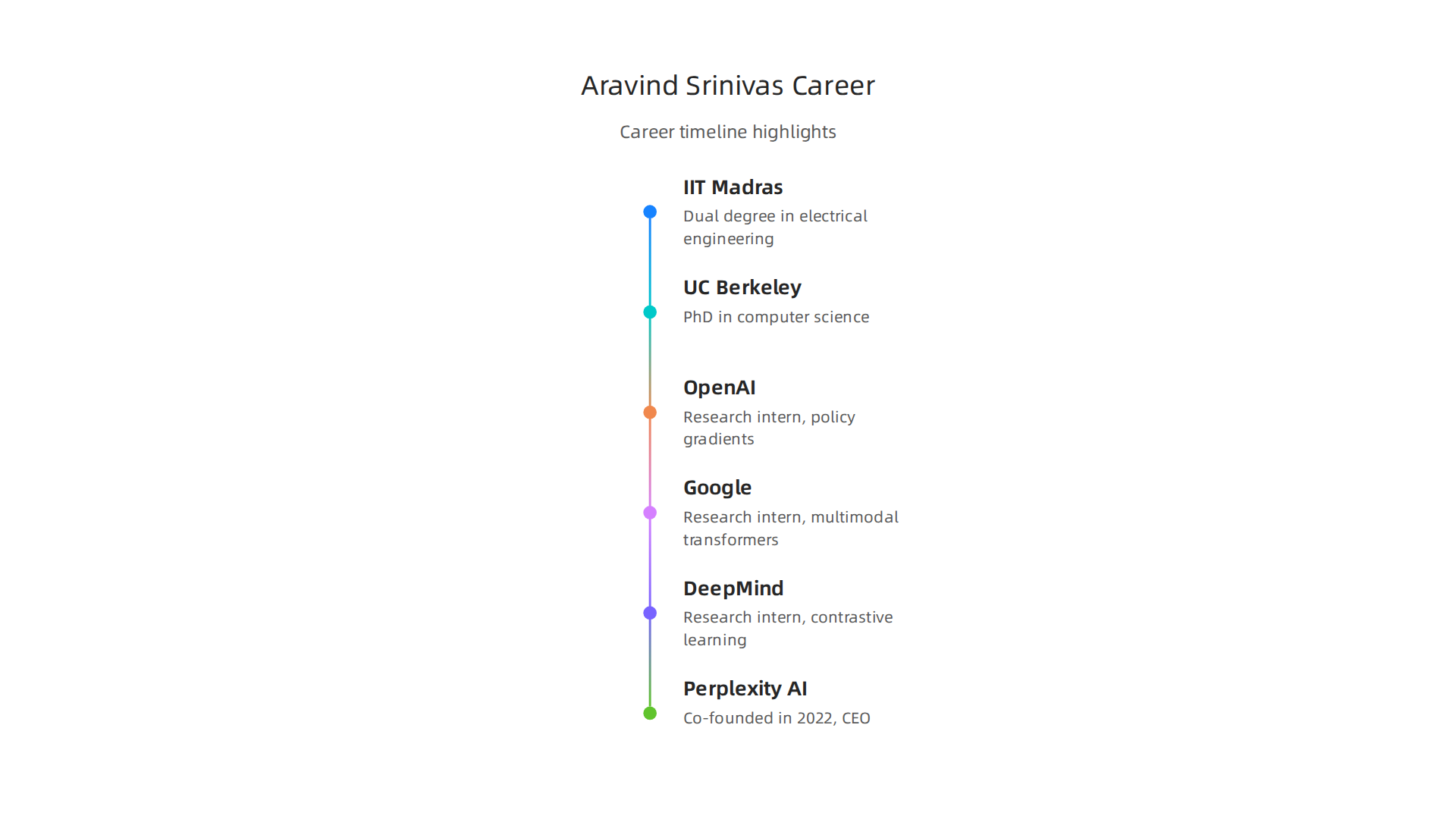
Srinivas earned a dual degree in electrical engineering from the Indian Institute of Technology, Madras. That foundation gave him a deep understanding of hardware and software. But his real passion was artificial intelligence. So he moved across the world to pursue a PhD in computer science at UC Berkeley. There, he studied under Professor Pieter Abbeel, a giant in the field of robotics and machine learning.
His doctoral research focused on how computers learn from raw data without human labels. He worked on projects like Contrastive Predictive Coding (CPCv2) and a reinforcement learning algorithm called CURL. These were not just academic exercises. They laid the groundwork for how modern AI systems understand images, video, and actions. You can see a full list of his published work on his Aravind Srinivas Google Scholar profile, which shows the breadth of his contributions.
Stints at the Most Powerful AI Companies
While still a PhD student, Srinivas landed research internships at three of the most powerful AI companies in the world: OpenAI, Google, and DeepMind. At OpenAI, he worked on improving policy gradient algorithms, the same family of techniques that power many modern language models. At Google, he focused on multimodal transformers, which help AI understand images and text together. At DeepMind, he researched large-scale contrastive learning, a method that lets AI learn from huge amounts of unlabeled data.
These experiences gave him a front-row seat to the cutting edge. He saw how ai companies like OpenAI were building foundation models. He also saw their limitations. According to a Perplexity CEO Aravind Srinivas event at Harvard SEAS, it was his own frustration with the lack of transparency in AI-powered search that pushed him to start something new.
The Leap to Entrepreneurship
Instead of staying at a big company, Srinivas chose to become an entrepreneur. He co-founded Perplexity in 2022 with a clear mission: build a tool that gives you direct, sourced answers, not just links. He has said in interviews that the only way to drive real change is to start a company yourself. That belief is what powered him to leave the stability of a research scientist role and take the risk.
Today, he also advises other promising ai companies, including elevenlabs ai, a voice synthesis startup that is changing how people interact with audio. His network shows how connected the AI ecosystem really is.
If you want to understand how Perplexity’s transparent, cited approach fits into a bigger movement, read our guide on building ethical and transparent AI for humans. It covers the same values that drive Srinivas every day.
The Origin Story: How Perplexity AI Was Born
Have you ever searched for a fact and ended up scrolling through a messy list of blue links? That exact frustration is what pushed the perplexity ai founder and his co-founders to build something different. They did not want another search engine. They wanted an answer engine. One that gives you a direct, cited answer without the clutter.
The Founding Team
Perplexity AI was officially founded in August 2022 in San Francisco. The team brought together four engineers with seriously impressive backgrounds. Aravind Srinivas became CEO. Denis Yarats, a former AI research scientist at Meta, became CTO.
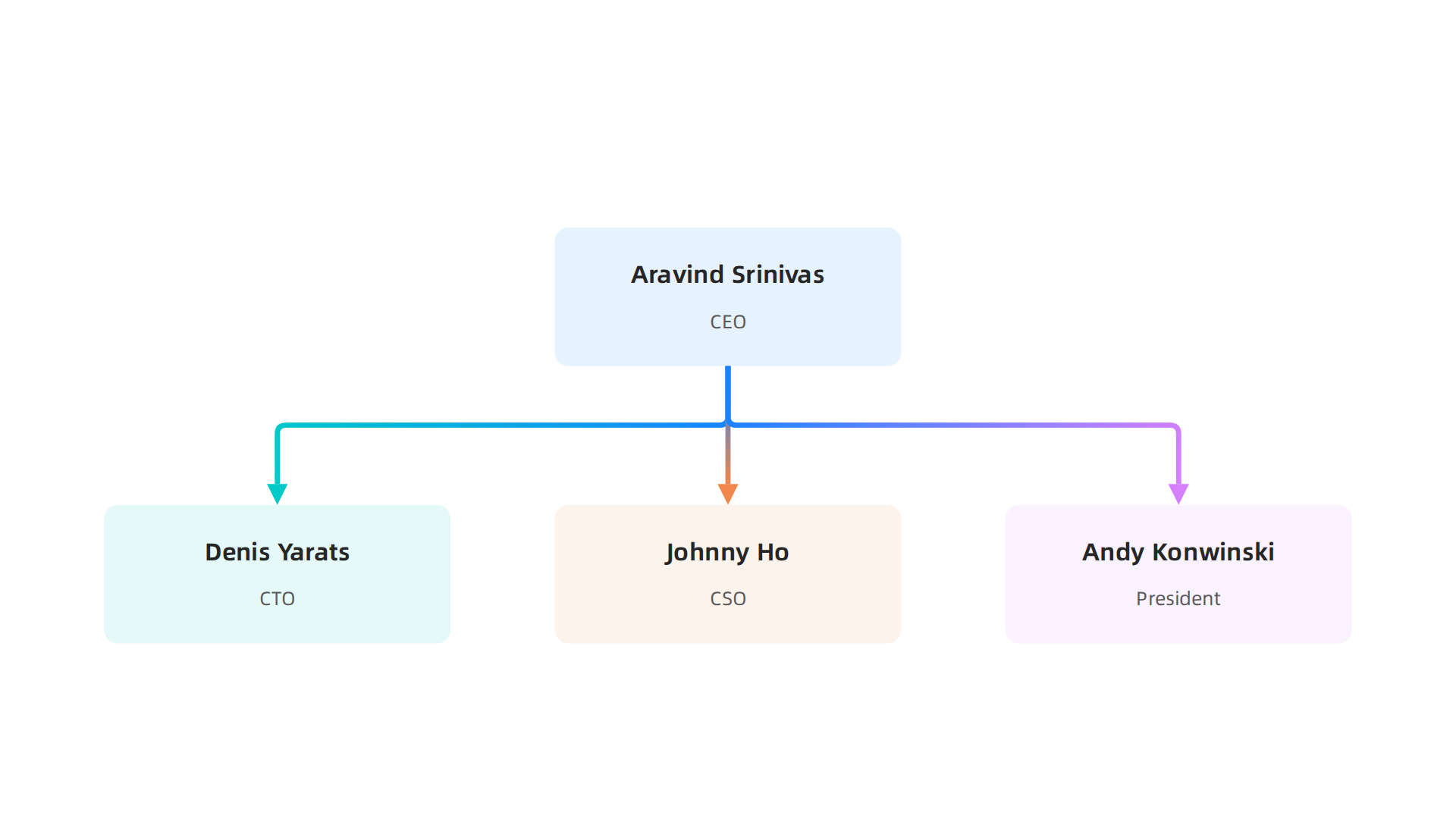
Johnny Ho, previously an engineer at Quora and a quantitative trader, became CSO. And Andy Konwinski, a co-founder of Databricks, became President. Each person filled a gap, from AI research to large-scale systems. According to a Britannica Money article on Perplexity AI, the combination of their experience made the company unique from day one.
The First Checks
The team did not waste time. Just one month after founding, they raised a $3.1 million seed round in September 2022. The money came from investors like Elad Gil and Nat Friedman. But the list of angel investors was even more impressive. It included leaders like Yann LeCun (Meta’s chief AI scientist), Andrej Karpathy (founding member of OpenAI), Ashish Vaswani (lead inventor of the transformer architecture), and many more. You can read the full list in the official Perplexity raises Series A funding round announcement, which also details the seed round participants.
Building the Product Fast
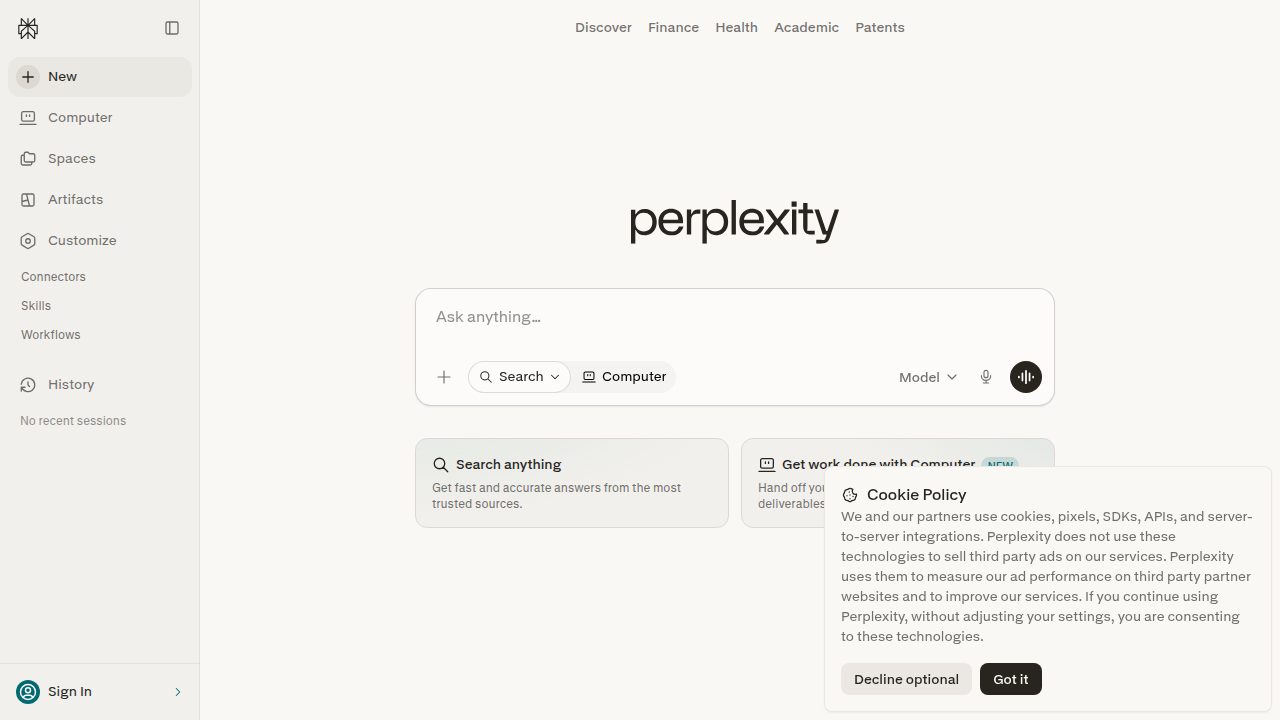
With funding in place, the team moved quickly. In December 2022, they launched Perplexity.ai as a free public beta. Unlike chatbots that gave you a paragraph with no sources, Perplexity summarized web results and included inline citations. Users noticed the difference fast. Within four months, the platform hit 2 million monthly active users. People loved getting answers they could trust and verify.
The early success showed that the world was ready for a new way to search. If you want to understand how Perplexity’s approach fits into the bigger picture of modern technology, check out our guide on how AI is transforming information technology. It explores the same shift from raw data to intelligent answers.
Stay Ahead in the AI Race
Stories like Perplexity’s remind us how fast the AI landscape is moving. To keep up with the latest breakthroughs and company news, you need a reliable source. That is why we recommend The AI Newsletter Worth Reading. It delivers clear, daily updates straight to your inbox, so you never miss what matters in the world of machine intelligence.
Innovation in AI Search: What Makes Perplexity Different?
After the launch of Perplexity.ai in late 2022, users quickly realized this was not just another chatbot. The vision of the perplexity ai founder was to create a tool that gives you answers, not links. But how does it actually pull that off? It comes down to three big innovations that set Perplexity apart from traditional search engines and other AI chatbots.
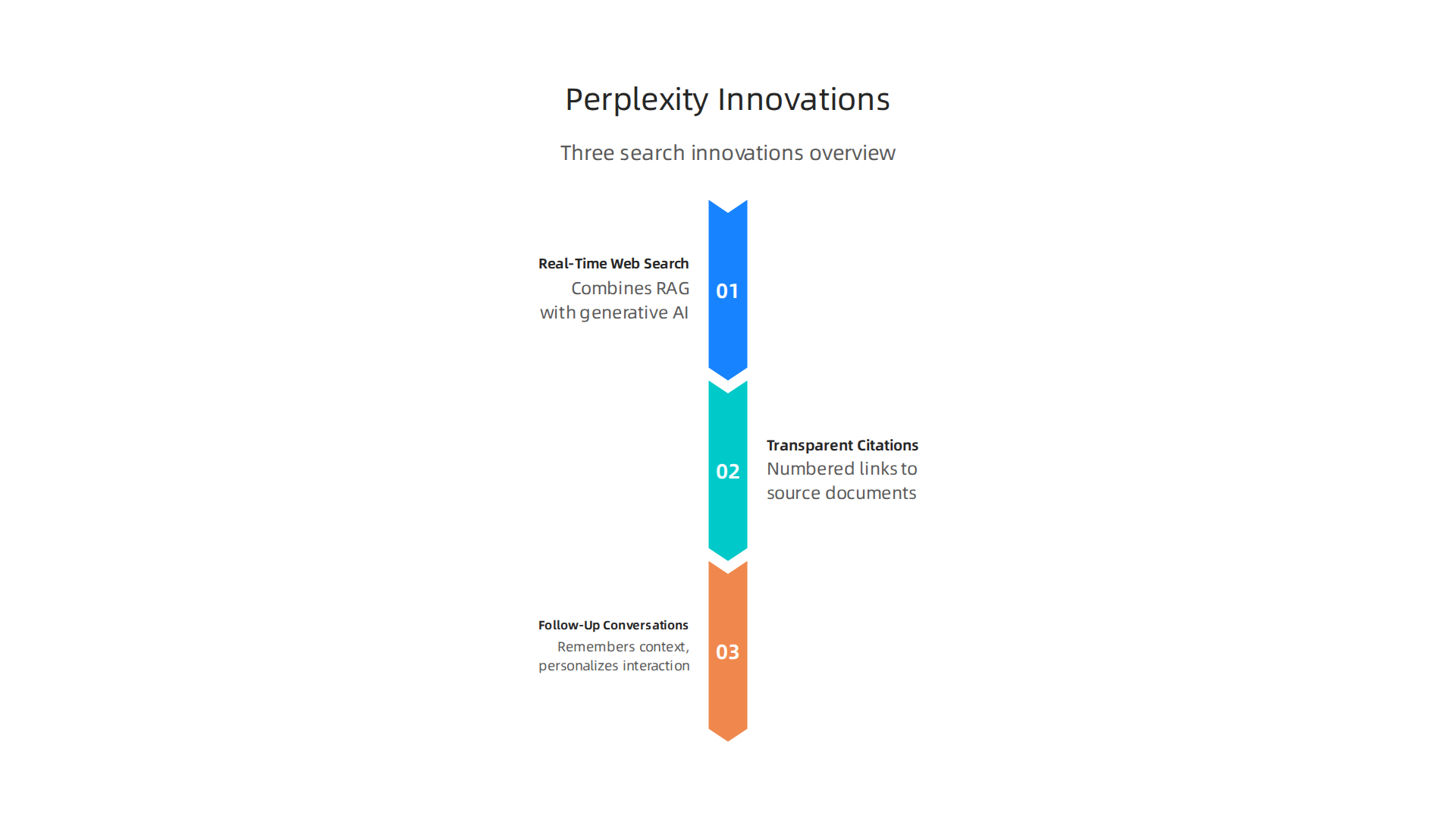
Real-Time Web Search Meets Generative AI
Most chatbots rely only on what they learned during training. Their knowledge gets stale the day they finish training. Perplexity does something different. It uses a technology called Retrieval-Augmented Generation (RAG). This means every time you ask a question, the system goes out to the live web, finds the most relevant and current information, and then feeds that information into a large language model to generate an answer.
The process happens in seconds. First, the system understands what you really meant with natural language processing. Then it searches the web using a smart combination of keyword matching and semantic understanding. It grabs the most relevant passages, not whole pages. An LLM then reads those passages and writes a clear, conversational answer. According to the ultimate guide to Perplexity AI, this multi-step sequence is what allows the model to "stick to the facts" and avoid the hallucinations that plague other tools.
This real-time search means you always get the latest information. Ask about today’s stock market or yesterday’s scientific breakthrough, and Perplexity will pull the freshest data available. Many ai companies focus on building the most powerful ai models in isolation. Perplexity took a different path. It built an engine that connects those powerful models to the living internet.
Transparent Citations That Build Real Trust
Here is where Perplexity truly shines. Have you ever used a chatbot that gave you a confident answer but you could not verify where it came from? That is frustrating. Perplexity solves this by attaching numbered citations to every claim it makes. Each citation links directly to the source document.
The system does not just grab any source. It evaluates each potential source for topical authority, freshness, and structural clarity. It ranks them before including them in the answer. This process is explained in detail in a piece on how Perplexity AI picks content to cite. The result is an answer you can trust and verify with a single click. For researchers, students, and professionals, this transparency is a game changer. You can quickly fact-check every piece of information.

Follow-Up Conversations That Actually Remember Things
Traditional search engines treat each query like it is the first time you ever asked a question. Chatbots sometimes remember the current conversation, but they often lose track after a few exchanges. Perplexity combines the best of both worlds. It keeps a conversation history and uses it to understand follow-up questions.
You can start with a broad question like "What is happening with electric vehicle sales in 2026?" Then ask "How does that compare to the US?" without repeating yourself. Perplexity knows you are still talking about EV sales. It stores the context and uses it to personalize the interaction. This multi-step reasoning ability makes research feel natural and fluid, much like talking to a knowledgeable friend.
Building this kind of trust into an AI system is not easy. If you want to learn more about creating ethical and transparent AI systems, our guide on how to build ethical and transparent AI for humans explores the principles that make tools like Perplexity trustworthy.
These three innovations real-time search, transparent citations, and conversational memory are what make Perplexity a true answer engine rather than another search box. The impact is clear. People can find the information they need faster, trust what they read, and dig deeper without starting over every time.
The CEO’s Vision: Aravind Srinivas on the Future of Knowledge Discovery
Aravind Srinivas, the perplexity ai founder, has a clear goal. He does not want to build just another search engine. He wants to change how people discover knowledge.

In his own words, the mission is to make information accessible, accurate, and free for everyone. Since launching the platform in 2022, he has pushed the company toward a future where AI acts as a personal research assistant that learns what you need before you ask.
A More Personalized and Proactive Assistant
Srinivas sees Perplexity evolving from a tool you query to a tool that anticipates your needs. The roadmap includes deeper personalization based on your interests, work habits, and past searches. Imagine asking about electric vehicle sales once, then getting automatic updates when new data comes in. That is the vision. The platform already handles over 435 million monthly search queries, according to Perplexity AI statistics and facts 2026, and Srinivas wants to turn those queries into ongoing conversations that get smarter over time.
Enterprise Features, Data Privacy, and Multimodal Capabilities
Businesses are paying attention. Companies like Bank of America and Oracle already use Perplexity for research. The founder has outlined plans for enterprise-grade features: better data privacy controls, secure team workspaces, and compliance tools for regulated industries. He also emphasizes multimodal search. Soon you will be able to search using images, voice, and even video clips, not just text. Perplexity’s recent changelog shows they are actively shipping these features, including the Comet browser with in-page AI assistance.
Srinivas believes AI should serve everyone, not just big corporations. He has spoken publicly about keeping the core experience free and open. His stance on open access to information is central to the company’s identity. He wants Perplexity to be the tool that levels the playing field, giving students, researchers, and small business owners the same quality of answers that Fortune 500 executives get. If you want to keep up with how these ai companies are reshaping knowledge work, our guide on AI trends 2026 separating signal from noise breaks down what matters most this year.
The Bigger Picture: AI as a Tool for Understanding
For Srinivas, the ultimate goal is not just faster search. It is deeper understanding. He often says that the most powerful ai is the one that helps people make better decisions. That is why he pushes for transparent citations and real-time data. That is also why he insists on keeping the platform useful for serious research, not just casual browsing. His vision is a world where every person has an intelligent companion that helps them learn, verify, and think critically.
The future of knowledge discovery is unfolding fast. To stay ahead of breakthroughs like these, The AI Newsletter Worth Reading delivers clear daily updates on AI and technology. It is a simple way to keep your finger on the pulse without drowning in noise.
Impact on the AI Industry: Disrupting Search and Challenging Giants
Remember when looking up something meant sifting through ten blue links and hoping for the best? That old way of searching is getting a serious makeover. The perplexity ai founder built a tool that skips the link list and hands you a straight answer with sources attached. This single change is shaking up the entire search industry.
How It Stacks Up Against Google, Bing, and ChatGPT
The big difference is how you get your answer. Google still mostly shows you a list of links. Microsoft Bing has Copilot, but it can feel slow or disconnected from the live web. ChatGPT gives smart answers, but it often relies on older training data unless you manually turn on browsing.
Perplexity sits in a sweet spot between all of them. It searches the live web in real time, reads the results, and writes a clear answer with footnotes. You can click any source to check the facts yourself. That kind of transparency matters a lot for students, researchers, and professionals who need to be sure their information is correct.
A recent comparison between Perplexity and ChatGPT in 2026 showed that Perplexity leads in citation density, meaning it provides more verified sources per answer than any other major AI search platform. Users get answers they can actually trust.
The Numbers Show People Are Switching
The growth numbers tell a clear story. Perplexity now processes over 100 million queries per day. Latest growth figures for Perplexity in 2026 show it reached over 230 million monthly active users globally. That is a massive jump in just a couple of years.
Professionals are driving much of this growth. Around 64 percent of Perplexity users say they use it mainly for work related research. It saves time. Instead of reading five different articles to find one statistic, you just ask and get a cited answer in seconds. Big companies like Bank of America and Oracle have also started using Perplexity internally for research and analysis. That is real adoption that traditional search engines are noticing.
How the Giants Are Responding
Google and Microsoft are not ignoring this shift. You have probably seen Google’s AI Overviews pop up at the top of search results. That feature is a direct response to tools like Perplexity. Microsoft is pushing Copilot deeper into Bing and making it more central to the search experience.
The whole industry is moving toward answer first search because users clearly prefer it. For a closer look at how this competition is reshaping the way we use technology day to day, this piece on how AI is transforming information technology covers the bigger picture.
The old search model is breaking apart. The winners will be the tools that give people accurate, sourced answers fast. Perplexity has proven that model works, and the giants are now scrambling to catch up.

Lessons for AI Founders and Investors from Aravind Srinivas’s Playbook
So what can other founders and investors learn from the way the perplexity ai founder built this company? Aravind Srinivas didn’t just get lucky. He followed a clear playbook based on solving a real problem, building a smart business model, and raising money the right way. Here are three big takeaways that apply to any AI founder or investor today.
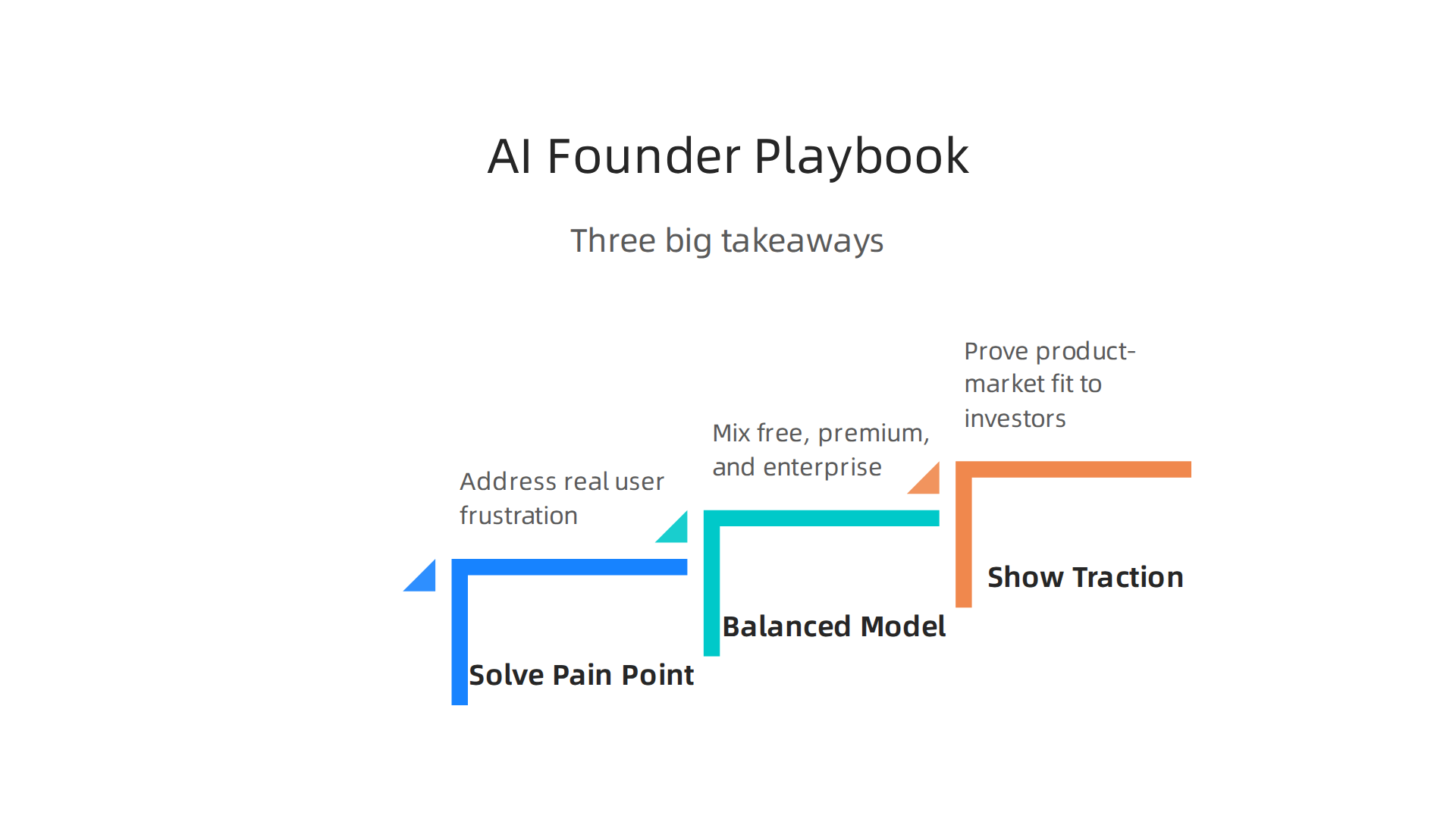
Solve a Pain Point, Not a Hype Point
A lot of AI startups chase the latest trend. They build a chatbot because chatbots are hot. But Srinivas focused on a specific, annoying problem: information overload. People were drowning in search results and wanted direct, sourced answers. Perplexity gave them exactly that. The company’s origin story shows how the founders combined a chatbot interface with live web search and citations, solving a real daily frustration. If you are building an AI company, ask yourself: what pain does this tool actually remove? If the answer is vague, you probably need to rethink.
A Business Model That Balances Free and Premium
Perplexity did not lock everything behind a paywall. They kept a free tier with ads so anyone could try it. Then they added a Pro subscription at $20 per month for extra features like unlimited Copilot queries and file uploads. They also built an API for enterprise customers. This three tier approach works well. It gets people hooked on the free version, then converts power users to paid, and captures big revenue from companies. Anyone looking to build a sustainable AI business should study the Perplexity business model closely.
Raise Money by Showing Real Traction
Srinivas did not go out with just a fancy pitch deck. He showed VCs that people actually wanted the product. The company hit 2 million monthly active users in just four months after launch. That kind of traction convinced top investors like Elad Gil, Nat Friedman, and later Jeff Bezos and Nvidia to back the company. Perplexity’s funding journey shows that product-market fit speaks louder than any slide. If you are an investor, look for startups that can prove people are using and sticking with their tool. If you are a founder, focus on growth first and fundraising second.
The AI landscape is moving fast. Founders and investors who learn from the perplexity ai founder will have a much better shot at building or funding the next big thing. To stay ahead of these trends, get clear daily AI updates from The AI Newsletter Worth Reading.
Summary
This article profiles Aravind Srinivas, the founder and CEO of Perplexity AI, tracing his path from IIT Madras and a UC Berkeley PhD through research roles at OpenAI, Google and DeepMind to launching Perplexity in 2022. It explains why he built an