
Introduction: The Case for a Curated AI Tool Directory
In 2026, the world of artificial intelligence is growing faster than ever. New AI tools and platforms pop up all the time. This is great, but it also creates a big challenge: there’s so much information out there that it’s hard to find what you really need. Business leaders, investors, and even everyday users can feel lost trying to sort through countless options.

It’s like trying to find one specific book in a giant library without any help.
This is where a good, organized directory comes in handy. Think of a service like toolify ai as your expert guide. A central place that gathers and sorts all the important AI tools helps you save a lot of time and makes sure you’re looking at quality options. Instead of spending hours searching everywhere, you get clear, reliable information right away. This kind of curated directory helps you cut through the noise and find the best AI toolkit for your needs.
Having a clear way to look at different AI options also helps decision-makers. It’s like having a special map that shows you where the best opportunities are. These maps, often called discovery frameworks, let you compare tools based on what they do, how much they cost, and what kind of businesses they help. This makes it easier to spot new areas for investment or find the right partners for your own AI development efforts. Without such a system, finding these chances can be very difficult, leading to missed opportunities, as some founders have shared about the pain points in finding information for strategic decisions Discovery Pain Points: Founders Share Challenges and ….
For example, a good AI toolkit directory might let you filter tools by what they do (like "AI writing" or "AI image generation"), by their price, or even by how they work. This is called "faceted search," and it allows you to refine your search across many different points at once, turning broad searches into clear answers Faceted Search: Multi-dimensional filtering for precise sema. It’s designed to match how you naturally think about finding tools, making the whole process much smoother UX Filter Best Practices: Design, Implementation, and Analytics for ….
Expert Tip: A well-designed AI tool directory uses smart filtering to help you get very specific with your search. This means you won’t waste time looking at things that don’t fit your needs. To understand more about different AI tools and how they impact society, check out our guide on technology in society: decoding AIs impact on our world 2026.
Are you an AI for business leader looking for daily, clear insights? Make sure you’re staying ahead with the latest in machine intelligence. Get clear daily AI updates from The AI Newsletter Worth Reading.
1) What a Best-in-Class AI Tool Directory Looks Like
After understanding why a good AI tool directory is so important, let’s look at what makes one truly stand out in 2026. A top-notch directory, like what toolify ai aims to be, isn’t just a simple list. It’s a carefully built system that helps everyone from investors to everyday users find exactly what they need.

Core Components of a Great AI Toolkit Directory
A powerful AI tool directory relies on a few key parts:
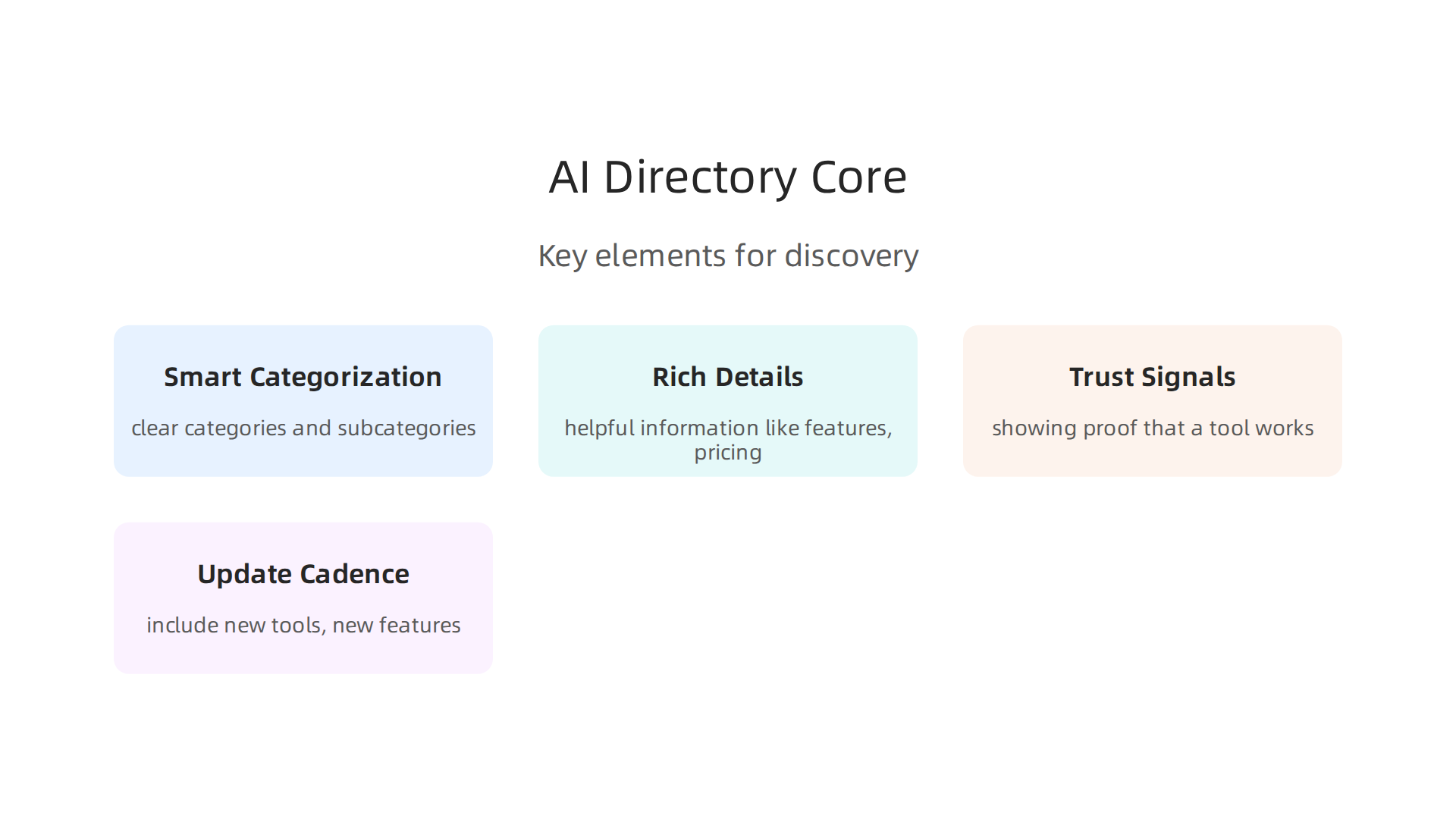
- Smart Categorization (Taxonomy): This is how tools are sorted. A good directory uses clear categories and sub-categories, like "AI writing tools" or "AI for customer service." This way, you can easily drill down to what you’re looking for. Think of it as a super-organized library system for AI tools. Good taxonomy helps people find things more easily Taxonomy 101: Definition, Best Practices, and How It Complements …. To learn more about how AI tools are categorized, check out our guide on AI platform taxonomy smart choices for limitless Turing and open source AI in 2026.
- Rich Details (Metadata): Each tool needs lots of helpful information. This includes things like its main features, who it’s best for, pricing, customer reviews, and even which other tools it works with. These details act like a detailed description on a product label, helping you compare options quickly.
- Trust Signals (Validation): How do you know if a tool is good? A best-in-class directory uses validation. This means showing proof that a tool works well, like user ratings, expert reviews, or case studies. It helps you trust the information you see.
- Always Up-to-Date (Update Cadence): The world of AI moves fast. A great directory must be updated often to include new tools, new features, and changes to existing ones. If information is old, it’s not helpful.
Different Ways People Use an AI Tool Directory
A strong AI tool directory serves many different people with different goals:
- For Investors (Investor Discovery): People looking to invest money in AI companies can use the directory to find promising startups. They can filter by growth, market trends, or specific AI niches to spot the next big thing. Investors face challenges finding market information, but a good directory helps cut through the noise, as shown in insights about AI Investing Trends Report: What Founders Need to Know. For more on finding good investments, read about evaluating AI companies in 2026 key metrics and market insights.
- For Businesses (Competitor Monitoring): Businesses need to keep an eye on what their rivals are doing. A directory lets them see which AI tools competitors might be using or which new technologies are gaining traction. This helps them stay competitive as an AI for business leader. You can discover some of the cutting-edge tools in areas like security operations with resources like Top 16 AI SOC Tools for 2026: SOC Automation Compared.
- For Technical Teams (Technical Evaluation): If you’re building AI products or trying to add AI to your existing systems, you need to know how tools actually work. A good directory gives technical details, like how easy a tool is to use with other systems or what kind of data it handles best. This is key for smart AI development. To dive deeper into how to pick the right tools, explore how to evaluate AI tools in 2026 using the Covers AI benchmark.
Expert Tip: A directory that offers these detailed insights acts as a smart assistant, making sure you don’t just find an AI toolkit, but the right one for your specific goals in 2026.
A top-notch AI tool directory doesn’t just list tools; it helps you discover exactly what you need with smart search and filter options. Think of how a powerful search engine works. This is what toolify ai aims to provide in 2026, making it easy for everyone from new users to ai for business leaders to find the perfect ai toolkit.
Key Search Features for Finding Your AI Toolkit
Finding the right AI tool starts with how you search. A great directory goes beyond simple keyword matching:
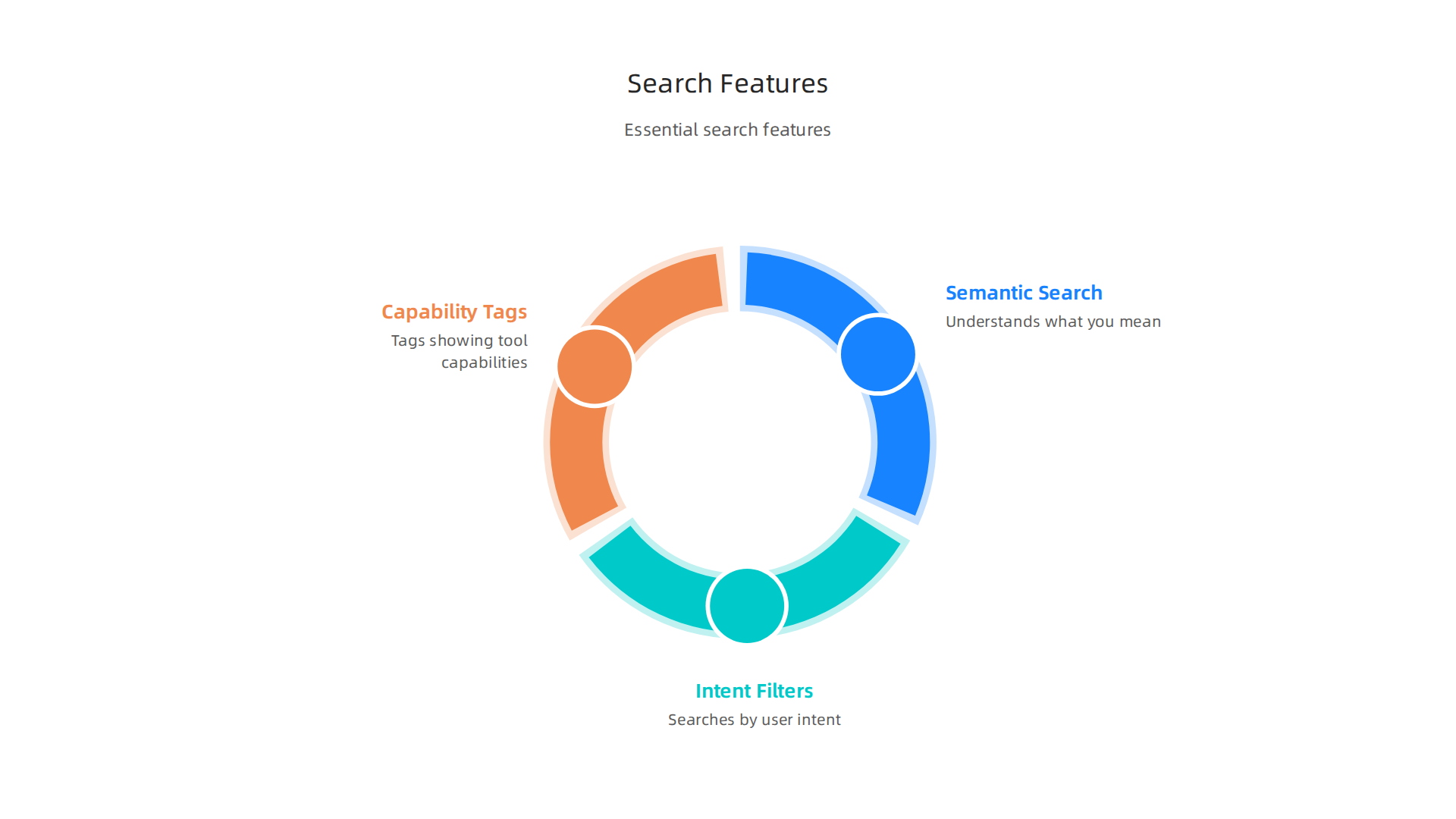
- Semantic Search: This is like a super-smart search. Instead of just looking for words, it understands what you mean. So, if you type "AI that writes marketing copy," it knows you’re looking for an AI writing tool, even if those exact words aren’t in the tool’s description. This kind of search lets you quickly narrow down results across many different types of information at once Faceted Search: Multi-dimensional filtering for precise sema.
- Intent Filters: These help you search based on what you want to do. Do you need an AI for customer service, writing, or image creation? These filters guide you directly to tools that match your goal.
- Capability Tags: These are like special labels that show what a tool can do. For example, a tool might have tags like "summarization," "translation," or "sentiment analysis." They help you find tools with very specific skills.
Smart Filtering Options with Clear Taxonomy
Once you search, good filters help you refine your choices. A well-designed system lets you pick and choose based on many factors. Good filters are crucial, as they make sure you only see what’s relevant Search, Taxonomy, Filters and Drop-downs | Digital Experience Studio.
- Filter by Model Architecture: This lets you choose tools based on the type of AI they use. For instance, you might want a tool based on a large language model (LLM) or one that uses computer vision. Understanding these different types can help you pick the best tool for your
ai developmentneeds. You can learn more about these different types in our guide on Types of Artificial Intelligence. - Filter by Use Case: This is about filtering tools by what they are commonly used for. Whether you need AI for marketing, finance, or product design, you can quickly find tools that fit your specific tasks. This helps
ai for business leadersselect the best options. To further assist with making these choices, explore how to choose the right AI platforms for business growth in 2026. - Filter by Business Model: You can choose tools based on how they charge money, like free tools, tools with a monthly subscription, or ones where you pay as you go. This helps you find an
ai toolkitthat fits your budget. - Filter by Maturity: This tells you if a tool is new and still growing, or if it’s an established, proven option. This can be important when you’re looking for stable solutions or exciting new innovations.
Expert Tip: A well-organized system of filters and search options, often called "faceted search," makes finding the perfect AI tool simple and quick. It’s like having many ways to sort your tools at once, helping you avoid bad choices The Complete Guide to Designing Faceted Search.
Finding an AI tool is one thing, but knowing if it’s truly good for your needs is another.

A great AI directory, like toolify ai, helps you look beyond just features. It gives you ways to evaluate tools so you can separate the truly helpful ones from those that are just hype. This is super important for ai for business leaders who need reliable solutions.
Objective Signals: What You Can Easily Measure
These are facts and figures that help you judge an AI tool. They are clear and easy to check:
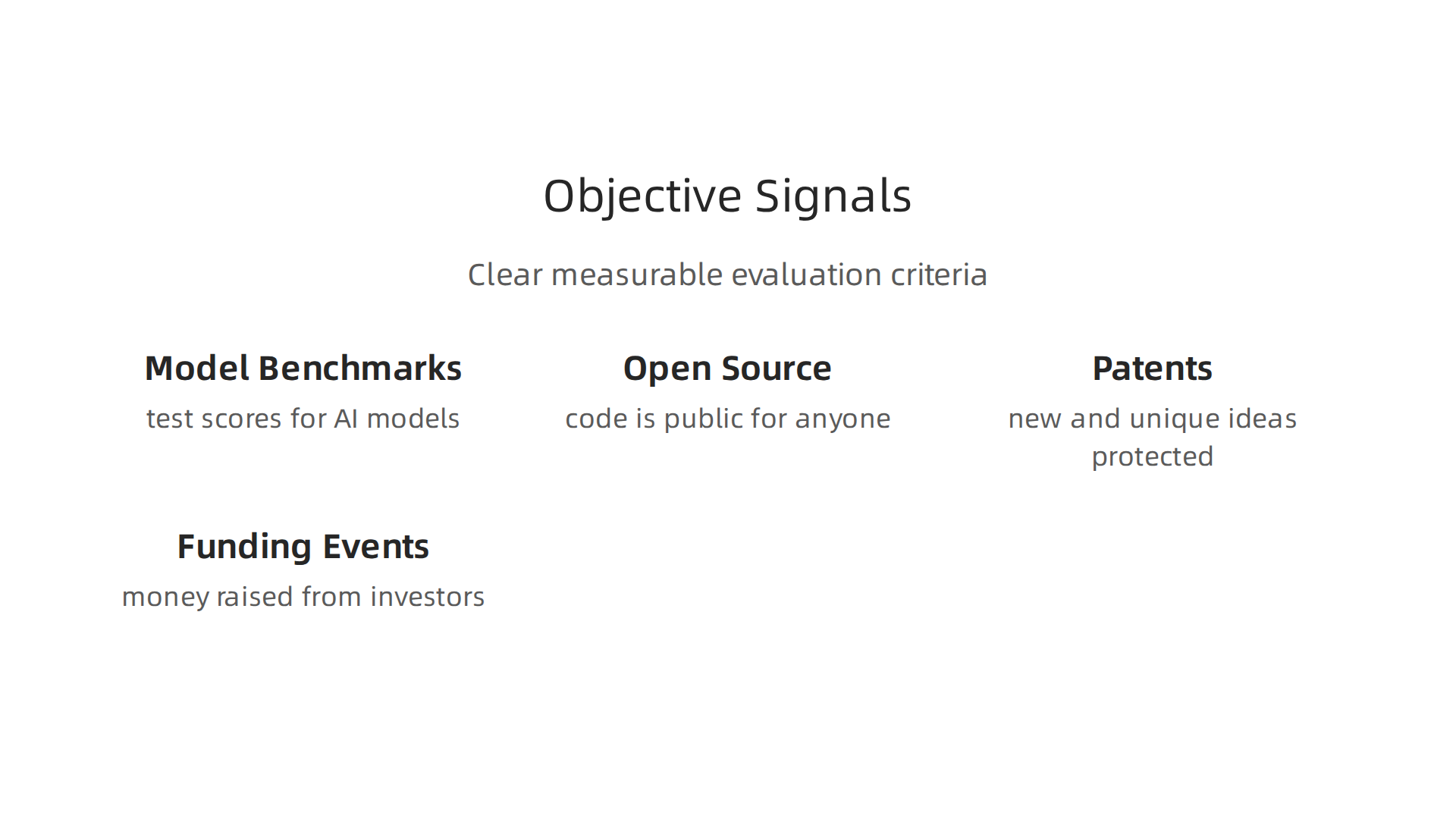
- Model Benchmarks: These are like test scores for AI models. They show how well an AI performs on specific tasks. A high benchmark score means the AI is good at what it does. Keeping AI models updated for peak performance is key, as their effectiveness can change over time How Often Should You Update AI Models for Peak Performance.
- Open-Sourcing: When an AI tool is open-source, it means its code is public for anyone to see and use. This can show transparency and allow for community improvements.
- Patents: If a company holds patents for its AI technology, it means they have new and unique ideas that are protected by law. This can show strong innovation.
- Funding Events: How much money an AI company has raised from investors can show how much trust people have in its future. Big funding rounds often mean a company is growing fast.
These objective signals are a quick way to get a general idea of a tool’s strength and stability, especially when building an ai toolkit for serious ai development.
Qualitative Signals: Deeper Insights
While objective signals are good, you also need to look at things that aren’t so easily measured. These are called qualitative signals and they tell you more about the potential of an AI tool:
- Team Background: Who built the AI tool? Do they have a strong history in AI, specific industry knowledge, or a track record of success? A great team often leads to great products.
- Product-Market Fit Indicators: This means how well the AI tool solves a real problem for its users. Are people excited about it? Do they keep using it? Signs of good product-market fit include happy customers and growing usage.
- Traction Patterns: This looks at how quickly the tool is being adopted and by whom. Is it gaining users in important industries? Is it getting good reviews? Strong traction shows that the tool is making a real impact.
By looking at both objective and qualitative signals, you get a much clearer picture of an AI tool’s value. This helps you make smarter choices and find the best fit for your needs. To dive deeper into evaluating the potential of various AI offerings, consider learning more about Evaluating AI Companies in 2026: Key Metrics and Market Insights.
When you’re looking to build your ai toolkit and make smart choices for ai development, it’s not enough to just see a list of tools. A truly helpful directory, like toolify ai, must get its information from good places and keep it fresh. For ai for business leaders, knowing the data is reliable is key to making trusted decisions.
How a Trustworthy Directory Gets Its Information
A good AI tool directory uses different kinds of sources to make sure you get the full picture.
Primary Sources: The First Look
Primary sources are like getting information straight from the horse’s mouth. These are the most direct and original places where facts come from. For an AI directory, this means looking at things like:
- Official Company Information: This includes things like press releases, white papers, and the company’s own website. These documents tell you directly about the AI tool’s features and how it works.
- Academic Papers: Researchers often publish papers about new AI models or technologies. These papers can show the science behind a tool.
- Public Filings: For bigger companies, public records can show details about their technology or how they operate.
- Direct Datasets: Sometimes, a directory might even look at the data used to train an AI, if it’s publicly available, to understand its foundation.
These sources give a strong base of facts that are usually very accurate.
Secondary Sources: Broader Understanding
Secondary sources help you get a wider view and see how others are talking about an AI tool. These are places where information is collected, reviewed, or commented on. Examples include:
- News Articles and Blogs: Tech news sites and expert blogs can offer opinions and reviews on new AI tools.
- Social Media Signals: What people are saying on platforms like X (formerly Twitter) or LinkedIn can sometimes show how popular or useful a tool is in the real world.
- Industry Reports: Reports from groups that study the AI market can give a general idea of how different tools fit in.
While helpful, information from secondary sources needs careful checking because it might not always be perfectly correct or might have an opinion mixed in.
Keeping the Information Fresh and Correct
A directory is only useful if its information is up to date. The world of AI changes super fast, so a toolify ai directory needs a good plan for updating its content.
Verifying Information
Before putting new information on the site, a good directory checks it carefully. This means looking at multiple sources to make sure the facts are true. They might use automated tools to spot any strange data or changes, making sure the data quality stays high Automating Data Quality Validation for Dynamic Data Ingestion. For instance, they might have systems that check if information is complete and accurate when it’s first brought in Ensure Data Integrity with Ingestion Validation.
Update Cadence: How Often Things Change
How often a directory updates its listings is called its "update cadence" Update Cadence Explained: Definition, Examples & Use Cases (2026). For AI tools, which are always evolving, updates need to happen often. Some parts of a directory might get updated every few days, while others might be checked quarterly or annually, depending on how quickly that information usually changes. It’s like how often you might update your own knowledge base: fast-changing information might need daily checks, while more stable facts can wait a bit longer How often do AI systems update which sources they use for answers. A good rule is to prioritize getting correct and timely updates over many rushed ones How Often Should You Update An Online Directory Each Year? 5 ….
Timestamping and Flagging Stale Entries
A great toolify ai directory will also show you when information was last updated. This "timestamping" helps you see how fresh the data is. If an entry hasn’t been updated in a long time, it might be flagged as "stale" or "outdated." This lets you know that you might need to look for newer information elsewhere. Having clear policies for how and when data gets updated helps keep everything reliable Data Freshness Policy. For leaders needing to keep up with the latest in ai development, this transparency is really important.
Staying on top of the rapidly changing AI landscape requires constant learning. For daily insights and to understand more about the companies behind these tools, consider subscribing to The AI Newsletter Worth Reading.
Advanced Discovery Workflows: From Alerts to Diligence
Knowing about new AI tools and updates is great, but what do you do with that information? For ai for business leaders, a good toolify ai directory doesn’t just list tools; it helps you put that knowledge into action. This means having smart ways to find, check, and keep track of new AI ideas, much like a well-organized ai toolkit.
How Workflows Help You Find and Check AI Tools
Imagine you could set up a system that helps you keep tabs on all the exciting ai development happening. That’s what advanced discovery workflows are for.
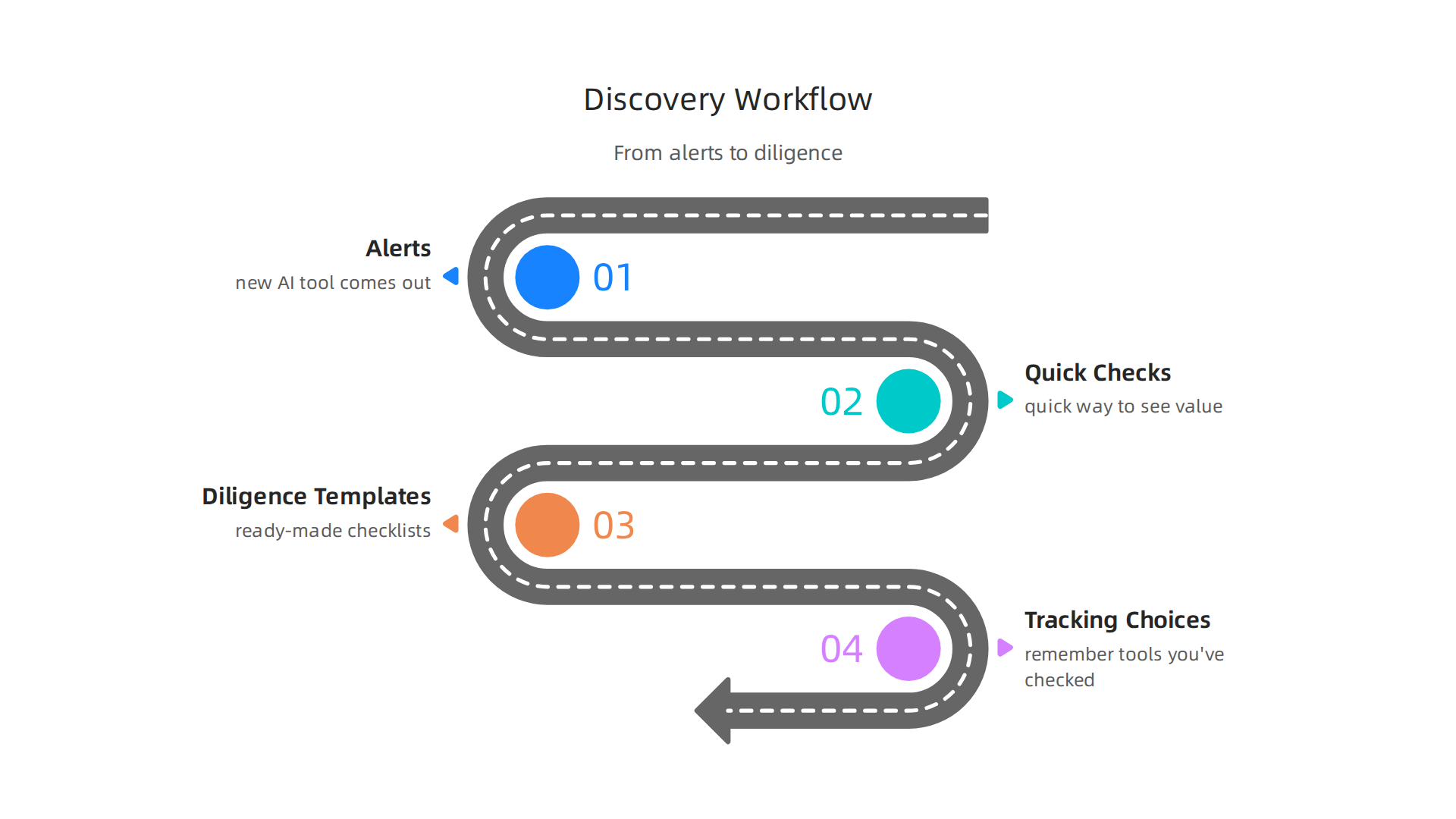
- Getting Alerts: First, a smart directory can send you alerts. These are like little messages that tell you when a new AI tool comes out, or when an existing one gets a big update. This way, you’re always one of the first to know, without having to check every day.
- Quick Checks (Triage): When you get an alert, you need a quick way to see if the tool is worth looking into more. This is called "triage." A good workflow lets you do a fast check, maybe by looking at a short summary or key features. This helps you decide if it’s a good fit for your
ai toolkitor if you should skip it. - Simple Diligence Templates: If a tool looks promising, you’ll want to dig a little deeper. This is where "quick diligence templates" come in. These are like ready-made checklists that guide you through important questions, such as: What does the tool really do? How much does it cost? Is it safe to use? Using automation in such checks can greatly speed up the process, with some companies seeing 60% lower costs and 70% faster timelines in their workflows E-Discovery Automation Case Study: 60% Cost Reduction 2026.
- Tracking Your Choices: As you look at many tools, it’s easy to lose track. Simple tracking spreadsheets or dashboards built into the directory can help you remember which tools you’ve checked, what you thought about them, and what your next steps are. This is key for keeping your
ai developmentplans organized.
Connecting Your AI Directory to Other Systems
A truly advanced AI tool directory can talk to other systems you already use. This makes your work even easier and faster.
- OSINT Integration: OSINT stands for Open-Source Intelligence, which means gathering information from public sources. A directory can link up with OSINT tools to automatically pull in public records or news about AI companies and their products. This can help you get more information without extra searching, and some systems can even run automated scans instantly to populate public record summaries OSINT Investigations: Emerging Trends and Modern Tools.
- CRM or Research Platforms: Imagine if your AI tool directory could send details about a promising new tool straight to your customer management system (CRM) or your research platform. This helps teams share information better and work together more smoothly, making it easier to integrate new AI solutions into your business plans. Learning how to identify and apply new AI technologies is crucial for business growth, and you can explore more on how to choose the right AI platforms for business growth in 2026.
By using these advanced workflows and integrations, ai for business leaders can move beyond just finding tools. They can make smart, fast decisions that help their companies grow and innovate with the best ai development.
Governance, Bias, and Trust: Ensuring Directory Integrity
Even with advanced ways to find and check AI tools, ai for business leaders also need to trust the information they get. This means an excellent toolify ai directory must be set up with strong rules and checks to make sure everything is fair and correct. This focus on trust and integrity helps you build a reliable ai toolkit.
How Directories Keep Things Fair and Honest
A truly helpful AI tool directory uses different ways to keep its information reliable:
- Editorial Review: This is when real people, or experts, carefully look at each AI tool listed. They check that the descriptions are right, the features work, and the tool is what it says it is. This human touch is key to making sure the information is accurate.
- Community Signals: Think of this as getting help from many users. People who use the AI tools can leave ratings and reviews. If many users say a tool is great, it gets a higher signal. If many report problems, the directory can investigate. This helps show which tools are truly useful in the real world.
- Automated Scoring Safeguards: Some directories use smart computer programs to help check tools. These programs can look for certain signs of quality or potential issues automatically, acting like an early warning system. This helps quickly flag new tools that might need a closer look.
Dealing with Bias in AI Tool Directories
One big challenge in ai development is bias. Bias means that a system might unfairly favor some things over others. In an AI tool directory, bias could creep into how tools are tagged, rated, or ranked in search results. For example, if a tool is always tagged with words that make it seem better than it is, or if search results always show certain tools first without good reason, that’s a problem.
To fix this, directories need clear steps:
- Regular Audits: Experts can "audit" the directory. This means they check how tools are tagged and ranked to make sure it’s fair. They look for any hidden biases in the system. Audits are a core part of ensuring the fairness of algorithmic systems, evaluating not just the AI models themselves but also how information about them is presented and discussed Auditing the AI Auditors: A Framework for Evaluating. These checks help ensure that a directory gives you an honest view of all available
ai developmentoptions. - Fairness in Design: The best directories are built from the ground up to prevent bias. This means thinking about fairness when they create the rules for how tools are listed, rated, and searched. Tools exist to help audit algorithms for discrimination and bias, aiming to identify problems and suggest improvements Auditing Employment Algorithms for Discrimination. You can learn more about finding and fixing such issues by reading about uncovering AI bias origins, detection, and fairness solutions. Governance platforms are also emerging in 2026 that help track and mitigate bias Bias Mitigation in 2026: From Audits to Governance.
By putting these rules and checks in place, a toolify ai directory can ensure its integrity. This means ai for business leaders can trust the information they find, helping them pick the right tools for their ai toolkit and make smart choices for their company’s future. When you know a directory is fair and reliable, it makes your job of evaluating new tools much easier. It’s also helpful to understand how to evaluate an AI development company in 2026 to make sure you’re always working with trustworthy partners.
7) Operationalizing Discovery for Investment and Strategic Decisions
After making sure an AI tool directory is fair and trustworthy, the next step for ai for business leaders is to put that information to good use. This means taking what you learn from the toolify ai directory and using it to make smart choices about money, partnerships, and staying ahead of rivals. It’s about turning discovery into action.

Using Directory Outputs for Big Decisions
A well-organized AI tool directory can guide your most important business choices:
- Investment Decisions: When your company is looking to put money into new AI tools or even into other AI companies, the directory acts like a guide. It helps you find tools that fit your needs, have good reviews, and show strong potential. This is key for smart investing, as you need to know how to effectively evaluating AI companies in 2026 to make sure your money is well spent.
- Partner Scouting: Finding the right partners for
ai developmentis very important. Maybe you need a company that specializes in a certain type of AI, or one with a proven track record. The directory helps you scout for these partners, giving you a clear view of their offerings and strengths. This helps you with selecting top AI software development companies in 2026 that truly fit your goals. - Competitive Intelligence: What are your competitors using? What new tools are gaining popularity? By regularly checking the directory, you can keep an eye on what other businesses in your field are doing. This gives you valuable insights to shape your own
ai toolkitand strategies.
Setting Up Clear Reports for Leaders
To make sure leaders can use this information quickly, you need good ways to show them what’s important. This means creating Key Performance Indicators (KPIs) and simple reports:
- Key Performance Indicators (KPIs): These are like scores that tell you how well something is doing. For an AI tool directory, KPIs might include:
- How many new tools are added each month.
- The average rating of tools in a specific category.
- How many times a top-rated tool is looked at by your team.
- These numbers help show the value of using the directory.
- Reporting Templates: Leaders are busy. They need information presented clearly and quickly. Simple templates can show the top 5 tools for a project, a summary of market trends, or a list of potential partners. These reports help leaders act fast and make good decisions. Keeping track of how AI systems are overseen and checked is part of ensuring good accountability, which supports these kinds of strategic decisions Auditing Algorithms – Stanford HCI Group.
Expert Tip: Regularly review your chosen KPIs and reporting templates. As the world of AI changes in 2026, what’s important to measure might change too. Stay flexible to make sure your reports always give the most useful information.
By setting up your toolify ai discovery process this way, you make sure that the information collected doesn’t just sit there. Instead, it becomes a strong tool for ai for business leaders to make powerful, informed choices that drive the company forward.
To stay on top of daily AI updates and ensure you’re always making informed decisions, consider subscribing to The AI Newsletter Worth Reading.
Summary
This article explains why a curated AI tool directory is essential in 2026 and what makes one best-in-class. It walks through core components—smart taxonomy, rich metadata, trust signals, and frequent updates—then details advanced search (semantic search, intent filters, capability tags) and multi-dimensional filtering to find the right tools fast. The guide shows how to evaluate tools using objective metrics (benchmarks, funding, open-source) and qualitative signals (team, product-market fit), describes reliable sourcing and verification processes, and outlines discovery workflows, integrations, and governance practices to reduce bias. After reading, leaders and technical teams will know how to choose, track, and operationalize AI tools for investment, development, and strategic decisions.