Why a Tech Radar Matters Now — and How this Guide Helps
In 2026, the world of artificial intelligence (AI) changes faster than ever. New tools, ideas, and ways to use AI pop up every single day. This means there’s a huge amount of information to sift through, making it really hard for leaders to know what truly matters. It’s like trying to find a specific small fish in a very big ocean. This flood of news, often called "information overload," makes it tough to tell what’s important from what’s just noise.

How can you make smart choices for your business when everything feels so new and confusing?
Many leaders in machine intelligence feel this problem keenly. They need to understand new developments, different types of AI models, and where the industry is going. But with so much to track, it is easy to miss important signals or waste time on things that won’t help. This is where a tech radar comes in handy. It’s a special tool that helps you sort through all the new technologies. It lets you see what’s worth looking at, what to try, what to use, and what to keep an eye on.
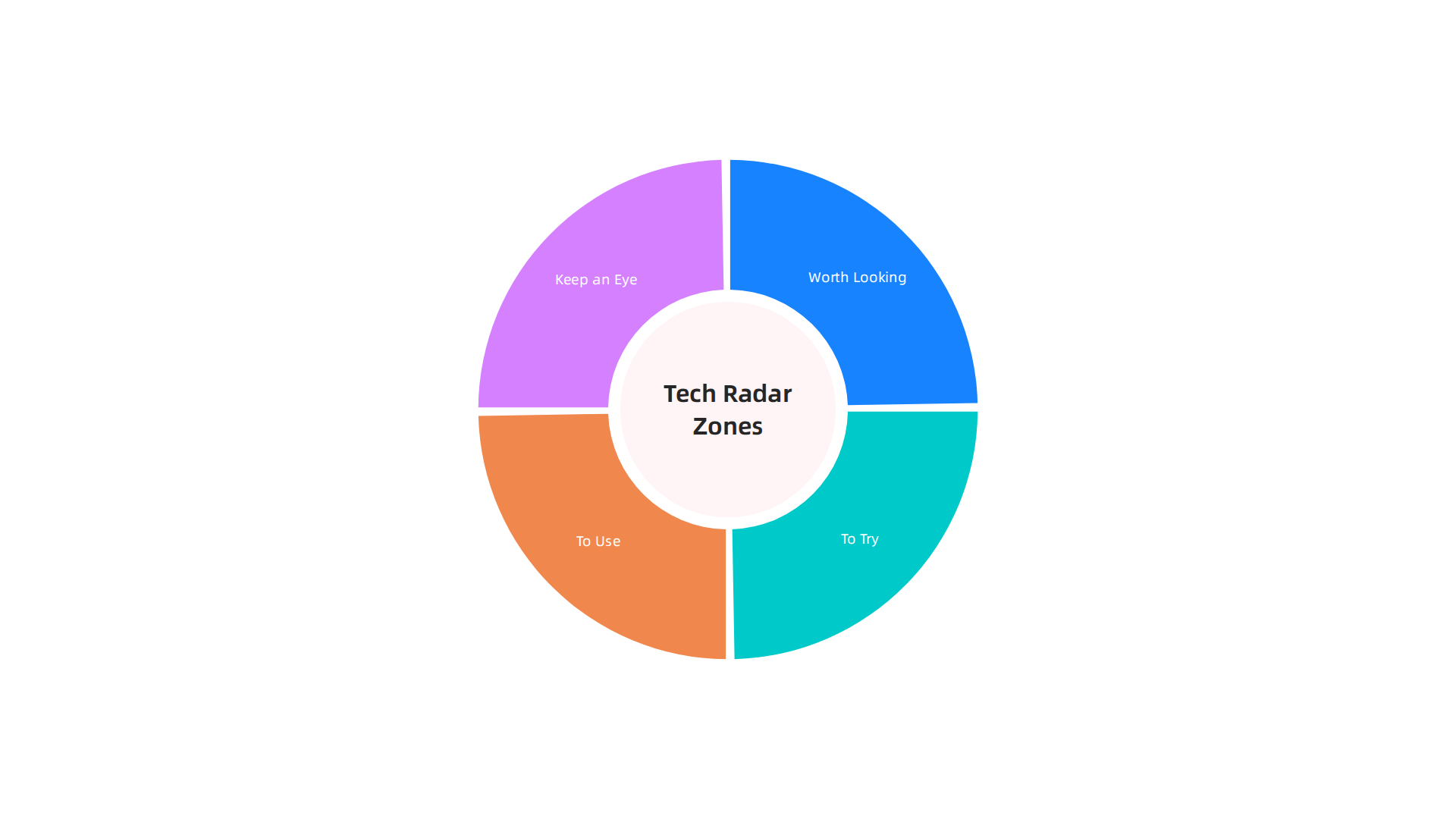
It gives you a clear picture of what’s happening in the AI world, helping you make better decisions.
This guide is here to help you cut through the confusion. We will show you how to build, keep up, and use a tech radar that is perfect for anyone making big choices about machine intelligence. Think of it as your personal map for navigating the AI landscape. We will give you simple, easy-to-follow steps to create your own tech radar. This way, you can easily spot new trends, like those discussed in AI Trends 2026: The Crucial Insights for Leaders and Investors, and pick the best AI tools for your needs.
A good tech radar helps you move from being overwhelmed to being in control. It’s a strategic framework for managing technology that helps organizations stay smart and nimble in a fast-moving world, especially in areas like AI, according to experts. It makes sure you’re always ready for what’s next, whether it’s new ways of AI mastering or fresh ideas about using AI in your business. By the end of this guide, you will have a clear method to keep track of important AI advancements and decide what to adopt. You will be able to make smart choices that move your company forward.
Want to stay updated on the latest AI advancements without the information overload? Get clear daily AI updates from The AI Newsletter Worth Reading.
1) Reading the Signals: Summarizing Macro AI & Tech Radar Trends
To truly make smart choices, you first need to understand the big picture.
That means knowing how to spot important patterns in the huge amount of AI news we see every day in 2026. Think of it like being a weather person for technology. You need to tell the difference between a little sprinkle and a major storm coming. This is about "reading the signals" in AI. It helps you find high-confidence macro trends and not get sidetracked by noisy signals.
A "macro trend" is a big, long-lasting change that shapes the whole AI world. It’s not just a single new tool that came out yesterday. It’s about where money is going, what new ideas researchers are working on, and how companies are bringing out new AI products.
How to Spot Big AI Trends
When you’re building your tech radar, pay close attention to three main areas:
- AI Releases: Look at what new AI models and tools companies are making public. Are they offering them as easy-to-use services through APIs? Reports show that more and more AI models are released this way, making them easier for many businesses to use, according to research from Research and Development | Stanford HAI.
- AI Funding: Where is the money flowing? When big investors put billions into certain types of AI, it’s a strong sign that those areas are expected to grow a lot. For example, global AI spending jumped a huge 47% in 2026, showing a massive commitment to this technology, as shared in AI Global Funding Statistics 2026: The Complete Data ….
- AI Research: What are smart people in labs and universities discovering? New breakthroughs in how AI learns or solves problems can point to future big trends. This helps you get ahead of the curve.
It’s super important to separate the real, strong signals from the "noise." Noise is all the hype and small updates that don’t really change the big picture. To do this, you might look at how widely something is adopted, how much money is backing it, or how long it’s been talked about. If you want to dive deeper into this, check out our guide on AI Trends 2026: Separating Signal From Noise.
To identify fast-growing AI startups that are part of these macro trends, not just hype, you need a sharp eye. You can find more details on Identifying The Fastest Growing AI Startups In 2026 Beyond The Hype.
Making Sense of Trends for Leaders
Once you spot these trends for your tech radar, you need to explain them clearly to other leaders and investors. They need to know what to do next. Here are simple ways to break down trends:
- Time Horizons: How soon will this trend really matter for our business? Is it something we need to act on now (0-1 year), something to prepare for (1-3 years), or a far-off idea to watch (3+ years)?
- Impact: How big of a change will this trend bring? Will it just make small improvements, or will it completely change how we do things? To figure this out, you can look at different parts of the trend, like how it fits with company goals or how safe and trustworthy it is. The AI Readiness Assessment: 6-Pillar Scoring Guide (2026) suggests gathering solid proof before scoring any AI idea.
- Likelihood: How sure are we that this trend will actually happen? Is it almost certain, or is it still a risky guess? You can use checklists, like those for evaluating AI coding tools, to measure key things such as how well it works and if it can be easily checked for errors, as suggested in the CTO AI Coding Tool Evaluation Checklist (2026).
By using these clear ways to summarize trends, you can help everyone understand what’s truly important. This helps leaders and investors make good choices. If you’re an investor or executive, staying up-to-date with tailored information is key. You might find our Dedicated AI Information Newsletter Fuels Smart Decisions For Investors And Executives very helpful. This makes your tech radar a powerful tool for guiding your company’s future in the world of machine intelligence.
Now that you know how to spot the big AI trends, your tech radar becomes a key tool for another important choice: should your company build a new AI solution itself, or buy one that already exists?

This is called the "build vs. buy" decision. It means deciding if you should create your own AI abilities in-house or if it’s better to work with another company or buy their products.
How Your Tech Radar Helps with Build vs. Buy
Your tech radar makes this choice much clearer. When you see an AI trend or a new AI tool, your radar helps you look at it from different angles. Instead of just guessing, you use facts to decide. You ask yourself: Does this AI solution fit what we do best, or is it something we can get easily from someone else?
For example, if your company’s main strength is being super creative, you might want to build custom AI models for creative tasks. But if you just need an AI tool to help with simple tasks like answering customer questions, buying a ready-made solution often makes more sense. Experts say that if AI is core to your business advantage, building it can be better. But if it’s just a support tool, buying is usually faster and easier, as noted in a 2026 guide on Build vs Buy AI Agents: Enterprise Decision Framework 2026. Many companies face challenges hiring AI talent, which also pushes them towards buying solutions.
Here are some things to add to your tech radar to help with these choices:
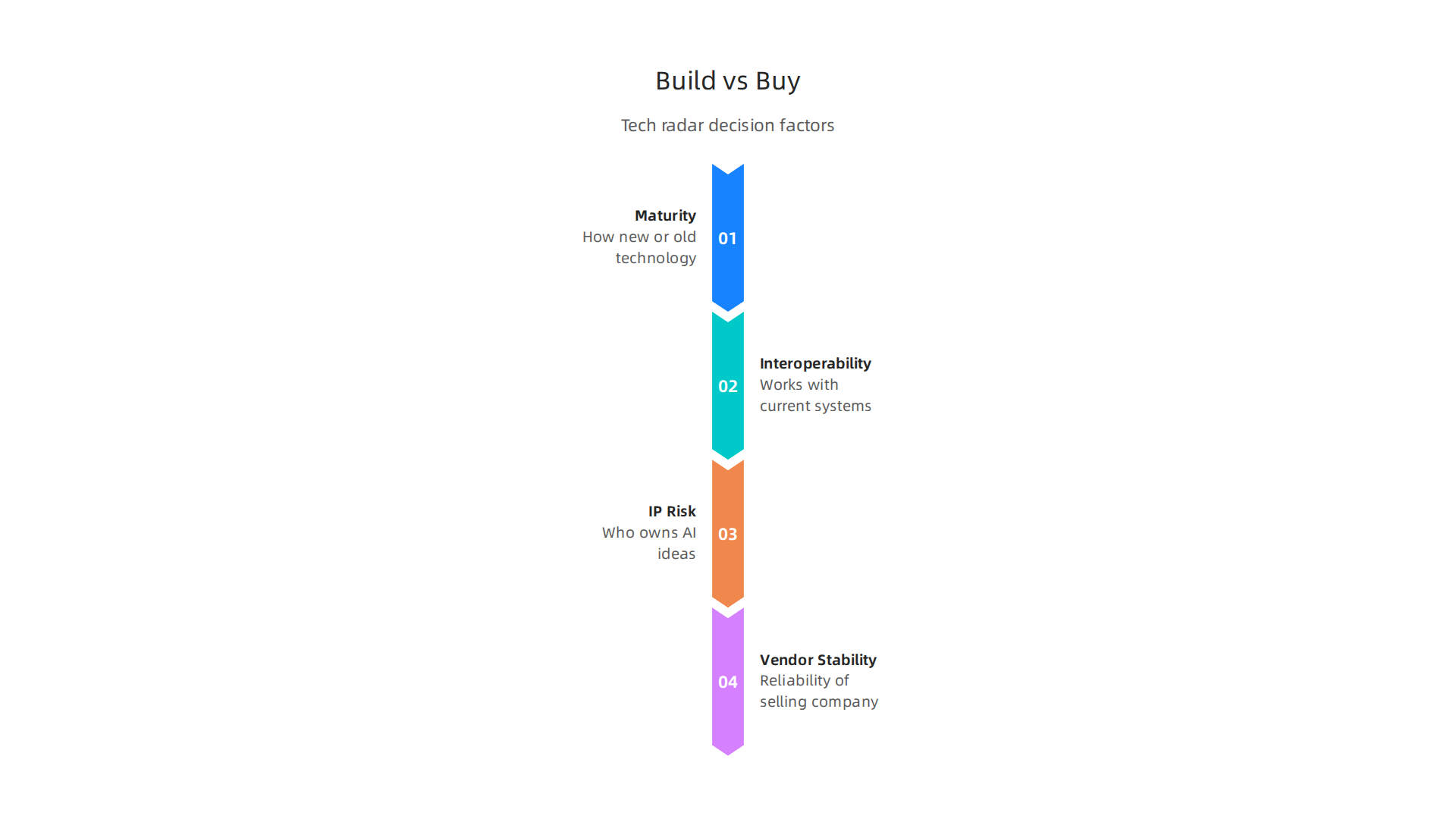
- Maturity: How new or old is this AI technology? Is it a brand-new idea that’s still being tested, or is it something many companies already use and trust? Newer tech might be exciting, but it can also be risky. More mature AI solutions are often safer to buy. When figuring this out, you might think about different types of AI models and how developed each one is.
- Interoperability: Can this AI solution work well with your current systems? You don’t want to buy something that can’t "talk" to your other software. It’s like buying a new part for your car that doesn’t fit. A good tech radar helps you see if an AI tool will connect smoothly or cause headaches.
- IP Risk (Intellectual Property Risk): Who owns the ideas behind the AI? If you build it yourself, your company owns it. If you buy or partner, you need to understand what you can and can’t do with the AI. You don’t want to accidentally use someone else’s idea the wrong way. The question of data sensitivity is also key; if you have very private data, building might give you more control, according to the Build vs Buy AI — The Decision Framework for 2026.
- Vendor Stability: If you decide to buy an AI product, how strong and reliable is the company selling it? Will they be around next year to keep supporting their product? Your tech radar can help you check if the vendor is trustworthy and has a good track record.
By looking at these points, your tech radar becomes a powerful guide. It helps leaders decide when to invest in building new AI skills within the company and when it’s smarter to choose an outside solution. This careful approach helps you make the best strategic sourcing choices for all your AI needs.
For investors and executives staying informed about AI, the right information can make all the difference. Get clear daily AI updates to fuel your smart decisions.
The AI Newsletter Worth Reading
Making smart choices for your company’s AI means you need to feed your tech radar with good, fresh information all the time. Think of your tech radar like a living map. It needs constant updates to show you the newest paths and hidden dangers in the world of AI. This section will talk about where to find that information and how to use tools to keep your radar sharp.
Where to Find AI Information for Your Tech Radar
To truly master AI trends, you need to look at many different places for information.
Not all sources are equal, though. Here’s a list of important places to check:
- Research Papers and Preprints: These are early writings from scientists and researchers about new AI ideas. They show what’s coming next. You can often find them on sites like arXiv. These are important for spotting truly new technologies before they become mainstream.
- Funding Trackers: Websites that show which AI startups are getting money from investors. This tells you where big money thinks the future of AI is heading.
- Product Release Logs and Vendor Roadmaps: These are official updates from companies that make AI products. They tell you about new features, changes, and what’s planned for the future. For example, keeping an eye on these updates from big AI providers like OpenAI or Google is key for tracking AI model releases. This helps you stay informed about changes to existing models and new ones coming out, as noted in guides on AI Model Release Monitoring: Track Updates from OpenAI, Google …. Another useful source is checking official provider pages for pricing and model updates, which is a safer workflow for AI Model Release Tracking in 2026.
- Patent Databases: These show new inventions in AI. They can give you a peek into what companies are protecting and planning for the long run.
- Industry News and Analyst Reports: These sources offer broader views on AI trends and market changes. They often summarize what’s happening across many companies.
When you look at these sources, think about how much weight to give them. A product release log directly from a company might be a strong signal for current changes. A research paper might be a weaker signal but points to a bigger, future shift. By staying informed, you’re better able to make smart choices for your business. For more on developing a clear strategy, you might find useful insights in our guide on how to Develop Your AI News Strategy for Clearer Insights and Faster Decisions.
Using Tools to Automate Your Information Flow
Gathering all this information by hand can take a lot of time. Luckily, there are tools to help you keep your tech radar updated automatically.
- RSS Feeds: Many websites, like blogs and news sites, offer RSS feeds. You can use an RSS reader to collect all the new articles and updates in one place.
- APIs (Application Programming Interfaces): Some AI news sources and research databases offer APIs. These let computers talk to each other, so your systems can automatically pull in new data. For instance, an AI News API can help you track new model releases and research papers across different labs.
- Alerting Platforms: These tools watch for specific keywords or changes on websites and then send you a notification. This could be an email, a message in Slack, or another alert. Modern alerting platforms let you set rules for when and where alerts should go, which is helpful for keeping important stakeholders informed, according to one expert on Turn Each Alert Into A Task. You can even set up special alerts for AI agent monitoring to respond quickly when things go wrong, using tools that integrate with systems like Slack or PagerDuty, as highlighted in AI Agent Monitoring: Best Practices, Tools & Metrics for 2026. There are many powerful AI observability tools available in 2026 that help monitor the health and performance of your AI systems.
- Human Curation Workflows: Even with all these tools, you still need people to review and make sense of the information. Humans are great at seeing the bigger picture, noticing subtle trends, and deciding what’s truly important for your company’s unique needs. This mix of smart tools and human insight is how you keep your tech radar truly effective for all your AI mastering efforts.
After you use tools to gather all the important information, the next step is to make sense of it. This means carefully looking at each new piece of information for your tech radar and deciding how important it is. You also need good rules to keep your radar useful and correct over time.
Scoring Your Tech Radar Entries
Think of your tech radar as a map for your business. Each new AI trend or tool you find needs a score to show if it’s right for your company.

This score helps you understand what to focus on.
Here are some things to score:
- Maturity: How new or old is this technology? Is it still just an idea, or is it already being used a lot? Technologies that are just starting might be exciting but also risky.
- Strategic Fit: Does this AI technology help your company reach its goals? Does it fit with your long-term plans for
ai mastering? This is very important. For example, a checklist from 2026 suggests gathering evidence before scoring to ensure a good fit, such as looking at data quality reports and model documentation when evaluating AI tools for your business goals CTO AI Coding Tool Evaluation Checklist (2026). - Downstream Risk: What are the possible problems if you use this technology? Think about security worries, how it might affect privacy, or if it follows all the rules (compliance). For businesses using AI, being responsible means thinking about data security and transparent rules at every step, as noted in a 2026 report on Responsible innovation: what 2026 should look like for businesses harnessing AI. This is especially true for different
types of ai models. - Cost and Effort: How much money and work will it take to try out or use this technology?
You’ll want to create a simple scoring system, or "rubric," for these points. This makes sure everyone on your team scores things the same way. Experts recommend using a rubric to judge new AI ideas, even suggesting tools that can help check for problems like redundancy before you spend a lot of time on big evaluations Rubric-Aware Dependency and Redundancy Analysis for LLM-as …. Having clear rules about who scores what and when scores are looked at again is called "governance." A good tech radar needs strong governance to stay useful, with regular monitoring and measuring to improve what you observe Tech Radar Governance.
Building Trust with Provenance and History
To truly trust your tech radar, you need to know where the information comes from and how it has changed.
- Provenance: This means knowing the full story of where each piece of information came from. Who reported it? Which source did it originate from? Knowing this helps you decide how much you can believe the information. Keeping track of data sources and changes helps create clear audit trails and makes your AI systems more explainable AI Safety Best Practices for Regulated Industries.
- Version History: Technologies and ideas change all the time. Your tech radar should keep a record of these changes. When did you first hear about a new AI tool? How has its score changed over the months? This history helps you see trends and learn from past choices.
- Confidence Levels: For each entry, you should also note how sure you are about the information. Is it a solid fact from a trusted source, or is it more of a guess or an early rumor?
By keeping clear records of provenance, version history, and confidence levels, you build trust with everyone who uses your tech radar. This includes leaders, developers, and even people you might interview ai for your team. It shows that your decisions are based on solid, traceable information. Knowing how to evaluate AI tools is key to building this confidence, and you can learn more about it in our guide on how to evaluate AI tools in 2026.
Keeping your tech radar accurate is an ongoing job. It mixes smart tools with human judgment, making sure you always have the best insights for your company.
To stay on top of daily AI changes and broader tech trends, a reliable source of information is vital.
The Deep View Newsletter is your essential subscription for daily, in-depth insights into AI and broader technology trends. The AI Newsletter Worth Reading
To truly get the most out of your tech radar, you need clear plans for how to use the information daily. This means setting up systems for alerts, reports, and quick summaries for company leaders. It’s how your tech radar moves from just a list of ideas to a tool that helps your business make smart moves right now.
Designing Alert Thresholds and Cadence
Imagine your tech radar is like a watchful eye. When it spots something important, it needs to tell the right people quickly. This is where alerts come in. But not everyone needs to know everything at the same time.
- Different Audiences, Different Needs:
- Executives: They need to know about big changes that might affect the whole company’s future, especially for areas like
ai mastering. They don’t need daily updates, but rather important summaries. - Product Teams: They might need alerts about new features or changes in
types of ai modelsthat could affect their products. - Research Teams: They could benefit from real-time updates on new research papers or breakthroughs.
- Investors: They’ll want to know about shifts that might impact market value or new opportunities.
- Executives: They need to know about big changes that might affect the whole company’s future, especially for areas like
A good system means you set different "alert thresholds." This is like a tripwire. A small change might just be logged, but a big change needs immediate action. Some sources suggest having both informational thresholds for minor movements and operational thresholds for changes that need a team to act quickly Turn Each Alert Into A Task.
- Cadence, or How Often to Alert:
- Daily: For quick checks on basic health or very fast-moving AI news. Many tools can help track AI model releases and changes in real-time, sending alerts to platforms like Slack Understand the Trigger Cadence for Slack Alerts.
- Weekly: For team check-ins on trends or smaller shifts.
- Monthly/Quarterly: For deeper dives and strategic reviews, especially for executives. It is helpful to align these communication rhythms with what different groups need to make decisions Stakeholder Alignment and Communication Cadence.
There are many tools available in 2026 that help monitor various aspects of AI, from performance to cost, and can send automated notifications. Learning about different types of artificial intelligence can also help you set up more specific monitoring for each type of technology on your radar.
Templates for Concise Executive Briefs and Actionable Alerts
Beyond quick alerts, you need ways to share bigger summaries. These are usually reports and executive briefings.
- Actionable Alerts: These should be short and to the point. They state the issue, why it matters, and what needs to be done. Think of them as a "call to action" for the right team.
- Executive Briefings: These are longer summaries, usually for top leaders or investors. They take all the detailed information from your tech radar and condense it. The goal is to give leaders a clear picture without too much jargon. They need to understand what’s happening, what it means for the company, and what choices they need to make.
A good executive brief often includes:
- A summary of the most important points.
- Key observations and what they mean for the business.
- Possible risks and opportunities.
- Next steps or recommended actions.
You can find templates to help create these kinds of summaries, making sure you hit all the important points in a way that busy leaders can quickly grasp Technology Executive Briefing Template. Having a clear way to report and communicate with different groups is key to making sure your tech radar leads to real actions and good decisions D4. Reporting and Stakeholder Communication. This also helps when you need to interview ai experts or explain your strategy to potential team members.
These operational workflows ensure that your tech radar is not just a document, but a living system that guides your company through the fast-changing world of technology. To keep leaders and investors informed, a dedicated AI information newsletter fuels smart decisions by providing regular, curated insights drawn from these very workflows.
Your tech radar, working as a living system, needs more than just real-time updates. It also needs to help you look ahead and prepare for what’s coming. This means thinking about different futures and having rules in place to make smart choices as things change fast.
6) Future-Proofing: Scenario Planning & Governance for Rapid Change
The world of technology, especially AI, changes very quickly. What’s new and exciting today might be old news tomorrow. To keep your company strong, your tech radar needs to do more than just show you what’s happening now. It must also help you guess what might happen next, so you’re never caught off guard. This is where "scenario planning" and "governance checkpoints" come in.

Thinking About Tomorrow: Scenario Planning
Scenario planning is like imagining a few different futures for your business. You think about what could happen if certain technologies grow really fast, or if new rules come out. Your tech radar is perfect for this because it already tracks all the important trends. For example, if you see new types of ai models being released, you might think about:
- Best-case scenario: What if this new AI model makes our products much better and faster? How do we get ready to use it right away?
- Worst-case scenario: What if this new AI model makes our main product old-fashioned? How do we change our plans to stay competitive?
- Surprise scenario: What if a new law about AI privacy suddenly appears? How does that change what we can and can’t do?
You can see how much money is flowing into AI. In 2026, private investment in AI grew a lot, with generative AI leading the way Economy | The 2026 AI Index Report | Stanford HAI. This shows just how quickly things can change. By thinking about these different futures, you can get ready for them before they actually happen. It helps you keep your business ready for anything, especially with new AI trends emerging all the time. For deeper insights into how AI affects the wider world, reading up on the Global Economic and Financial Implications of Artificial Intelligence can be very useful.
Keeping Track: Governance Checkpoints
After you make big plans or "strategic bets" based on your tech radar, you need to check them regularly. These are called governance checkpoints. They are planned moments to stop, look at your tech radar again, and see if your plans still make sense.
For example, a lot of new AI models are being made available through easy-to-use services (APIs) Research and Development | Stanford HAI. If your company made a big bet on building its own AI from scratch, and now many good AI options are available to buy, you might need to rethink that plan.
Governance checkpoints help you:
- Review your big choices: Are the tools and technologies you picked still the best ones? Is the market still going in the direction you thought?
- Spot new risks or chances: Has anything changed that creates new dangers or exciting new opportunities?
- Adjust your course: If things have changed, what new steps do you need to take? Maybe you need to learn new skills for
ai masteringin a different area.
These checks are important because the tech world won’t slow down. Having a clear plan to review and change your strategy means your tech radar helps you lead your company into the future, no matter how fast things move. It also helps leaders know what questions to ask when they [interview ai] experts about new projects or directions. If you want to make sure you’re always on top of the latest, consider subscribing to The AI Newsletter Worth Reading to get clear daily AI updates from The Deep View Newsletter. This type of information helps you stay smart and make the right moves.
Summary
This article explains why every AI-focused leader needs a tech radar in 2026 and gives a practical roadmap for building one. It shows how to read macro trends—looking at model releases, funding flows, and research—and how to separate real signals from hype. You’ll learn what sources to watch (research papers, funding trackers, vendor roadmaps), which tools can automate monitoring (RSS, APIs, alerting platforms), and how to score entries for maturity, strategic fit, downstream risk, and cost. The guide also covers communication workflows, alert cadence, provenance and version history, governance checkpoints, and scenario planning so you can make faster, evidence-based build vs. buy decisions.