
The world of technology in 2026 is moving faster than ever. Everywhere you look, artificial intelligence, or AI, is changing how we live and work. In this fast-paced world, a special job is becoming super important: the AI scientist.
An AI scientist is like a detective and a builder all in one. They dig deep into how AI works, help create new AI tools, and figure out how to use AI to solve big problems for businesses. They are not just coders; they understand the bigger picture of how AI can help companies grow and make smart choices. This role is really important for investors, people who start companies (founders), and tech leaders who want to stay ahead.
Think about it: many jobs will AI replace, but the role of an AI scientist is about leading the charge, not being replaced. They are vital for things like AI powered software development, making sure new programs are smart and useful.
Right now, many professionals face big problems. There’s just too much information about AI out there. It’s like trying to drink from a firehose! The changes happen so quickly that it’s hard to keep up. Also, it’s tough to tell what news is truly important and what’s just noise. This huge tech impact means people need clear guidance. This is where the AI scientist steps in, helping to make sense of all the data and point businesses in the right direction.

To truly understand the important trends and separate signal from noise, it’s helpful to learn how to cut through AI noise and make strategic decisions.
If you want to keep up with the latest in AI and avoid information overload, you need a trusted source.
The AI Newsletter Worth Reading will give you clear daily AI updates from The Deep View Newsletter.
1) Job Market Overview: Demand, Employer Types, and Where Roles Are Growing
The demand for an AI scientist is very high right now, in 2026. This is because artificial intelligence is changing everything around us. The number of jobs related to AI has almost doubled in recent years, with these roles often paying much more than non-AI jobs. For instance, the typical AI job pays about $177,000 per year, which is more than twice the $80,000 for non-AI positions, according to a 2026 report called The AI Talent Divide 2026. This big pay difference really highlights the huge tech impact AI is having on the job market.
So, where do these AI scientists usually work? There are a few main places where you’ll find them:
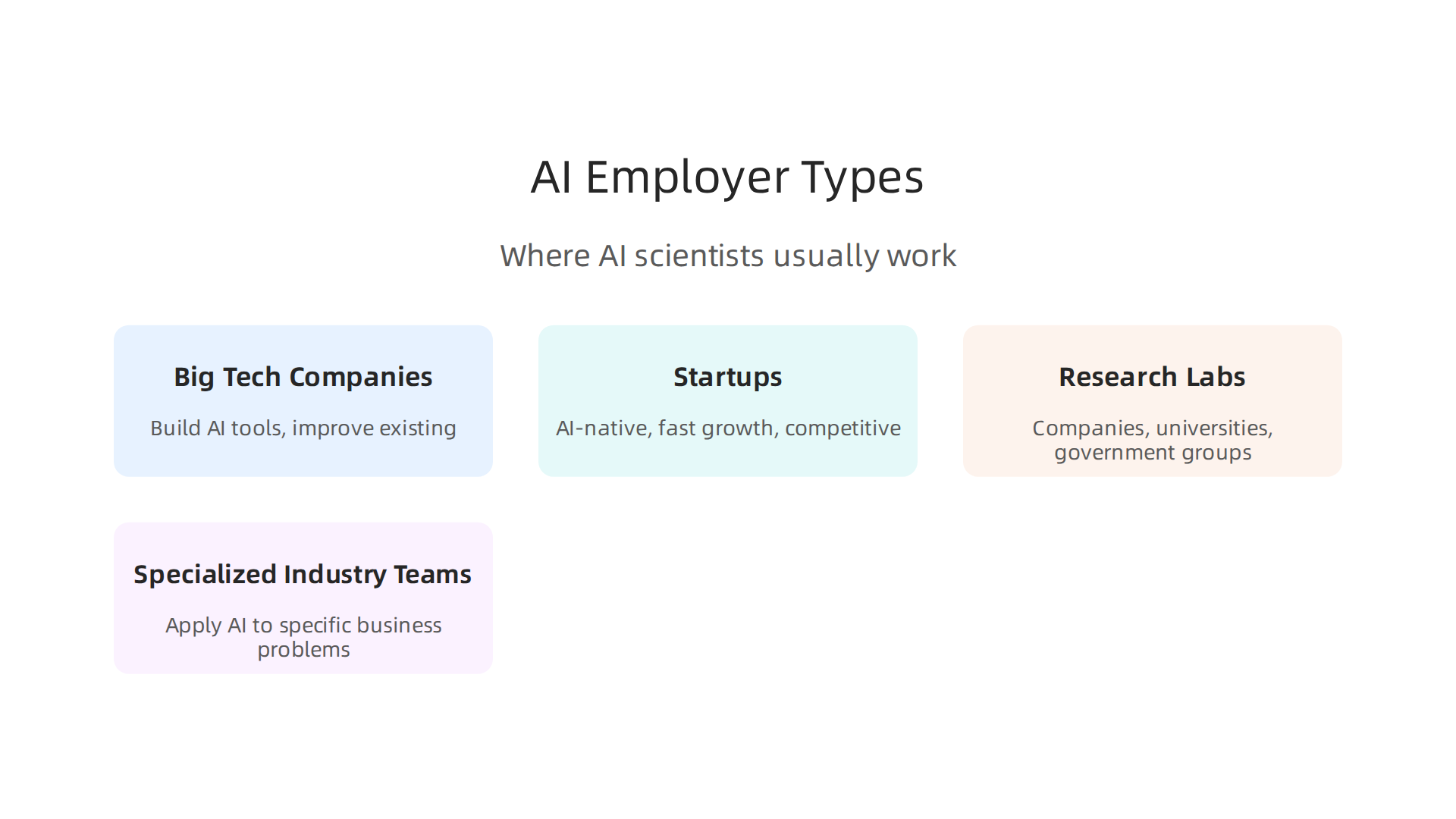
- Big Tech Companies: Large companies are always looking for AI scientists. Think about big names like Databricks, OpenAI, and Cloudflare. These companies need smart people to build new AI tools and make existing ones better. They often work on big projects, like creating the next generation of AI powered software development tools. In fact, some of the top companies were actively looking for AI talent in March 2026, with hundreds of job openings. You can learn more about AI Hiring Trends 2026 to see which companies are hiring the most.
- Startups: Smaller, newer companies focused only on AI are also a big employer. These "AI-native" startups are growing very fast and are often looking for experienced AI talent. The job market for AI roles in these newer companies is quite competitive this year. Actually, hiring for AI in 2026 is one of the toughest markets ever for new companies backed by investors. Over half of these startups are already using AI in their hiring process, showing how central AI has become to their work. If you want to know more, you can check out The State of Startup Hiring.
- Research Labs: Many AI scientists work in special labs. These labs can be part of big companies, universities, or even government groups. They focus on finding new ways AI can work. Some research roles are changing, with more focus on "applied research" that helps solve real-world problems. For example, some labs are hiring people to help put large language models into use for different businesses. This shows a shift in The 2026 AI/ML Job Market.
- Specialized Industry Teams: AI is not just for tech companies anymore. Many other industries now have their own AI teams. Think about companies in cars, healthcare, or money services. These teams need AI scientists to apply AI to their specific business problems. This means creating smart systems for their industry, showing how AI is transforming information technology across all sectors.
The job market for AI scientists is truly global. While many roles are in big tech areas, more companies are open to remote work. This means an AI scientist might work for a company in a different city or even another country from their home. This flexibility helps people find the best jobs, no matter where they live. The growth in AI-related job openings has been strong, with a notable increase in US AI vacancies in early 2026, as discussed in AI Recruitment Trends & Salaries 2026.
This wide demand shows that the AI scientist is a key player in today’s tech world, helping to shape the future of many industries.

It’s clear that AI roles are not among what jobs will AI replace. Instead, they are leading the charge.
Finding a job as an AI scientist means knowing what companies truly want. It’s not just about having a degree. Employers look for a mix of skills, the right background, and how well you fit into their team’s way of working.
What Skills are Most Important for an AI Scientist?
For anyone wanting to be an AI scientist, certain skills are key in 2026. You need to be good at:
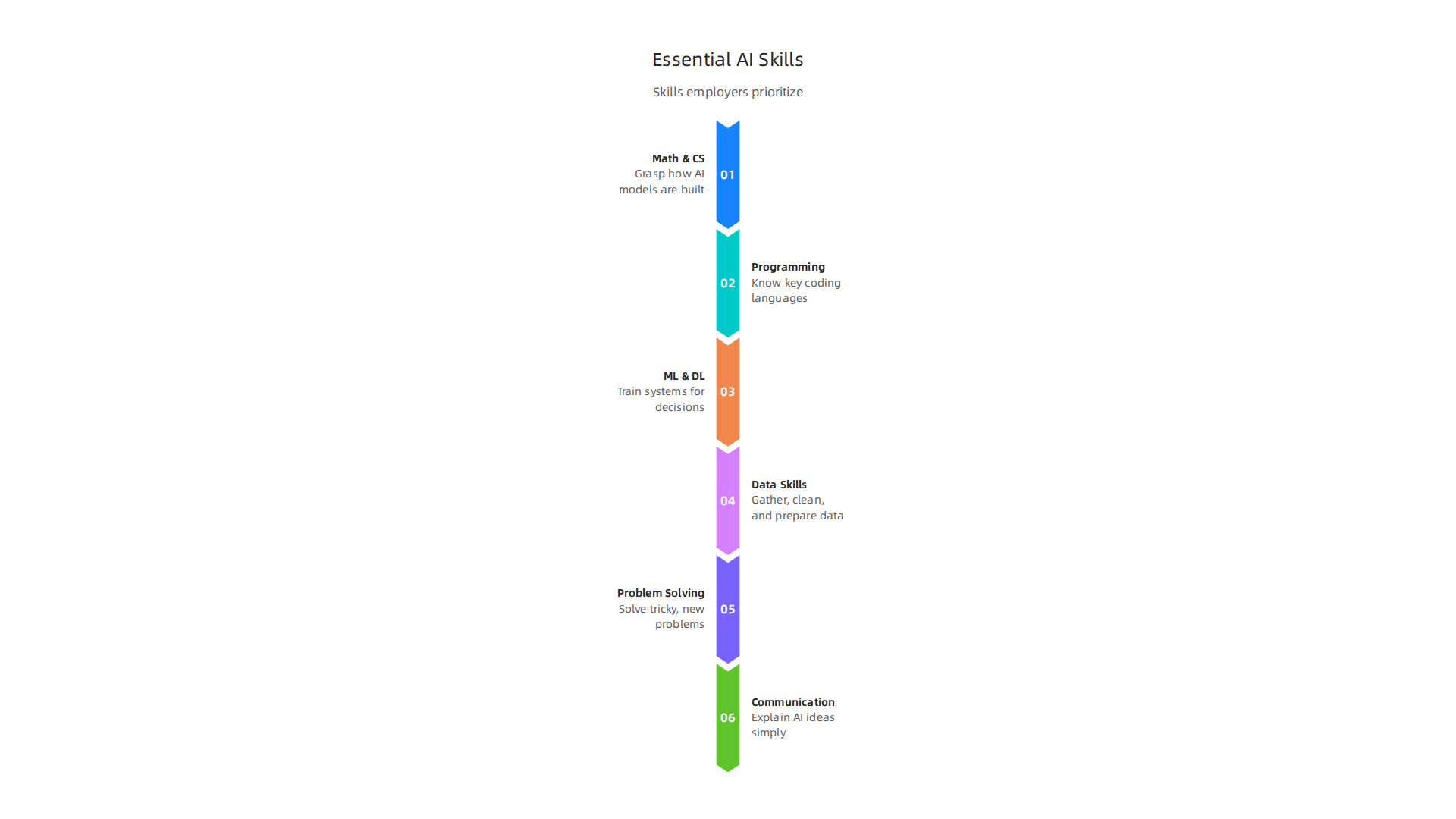
- Understanding Math and Computer Science: This is the base of all AI work. It helps you grasp how AI models are built and how they learn.
- Programming: Knowing how to code in languages like Python is a must. This is how you tell the AI what to do.
- Machine Learning and Deep Learning: These are big parts of AI. You need to know how to train systems to make smart decisions or find patterns in data.
- Data Skills: Working with lots of information is common. An AI scientist should be able to gather, clean, and prepare data for AI models.
- Problem-Solving: AI jobs often mean solving tricky, new problems. You need to think clearly and find good solutions.
- Communication: Being able to explain complex AI ideas simply is very helpful, especially when working with people who are not AI experts.

Beyond these core skills, what employers look for can change a lot depending on the type of AI team.
Research-Focused vs. Product-Focused AI Teams
Companies hire AI scientists for different kinds of work:
- Research Teams: These teams want people who love to discover new things. They focus on making AI better, pushing the boundaries of what AI can do. For these roles, companies often look for a strong background in theory and the ability to come up with new ideas. They might also want people who are good at evaluating AI models, making sure they work as expected. According to one report, foundation model organizations often look for "engineering-heavy research" and strong evaluation skills for AI research roles in 2026 2026 AI Research & Foundation Model Talent Report.
- Product Teams: These teams are more about building real AI products that customers use every day. Think about AI powered software development that helps people or businesses. Here, companies want AI scientists who can take a research idea and make it work in a real product. This means you need to be good at "applied AI" and know how to put AI models into use, especially large language models (LLMs). Engineers who can "ship AI features customers use" are highly sought after by AI companies this year What AI Companies Are Actually Hiring For in 2026. They also look for people who understand AI safety and how to make AI systems reliable.
Signals Beyond a Degree
While a good degree is helpful, many employers also look at other things that show you’re a skilled AI scientist:
- Publications: If you’ve written papers about AI research, it shows you can contribute new knowledge.
- Open-Source Projects (Repos): Sharing your code on platforms like GitHub shows you can build real AI tools and work with others. This also lets employers see your coding style and problem-solving approach.
- MLOps Experience: MLOps means managing the whole life cycle of machine learning models. It covers everything from making the model to deploying it and keeping it running. Having experience in MLOps shows you can handle the practical side of AI development. Many companies are looking for these types of hands-on skills in 2026 AI Talent Wars: Who’s Hiring and What They Wa… | TechBriefed.
- Practical Experience: Showing you’ve worked on real-world AI problems is very valuable. This could be through internships, side projects, or previous jobs.
In short, whether you’re aiming for a research role or a product development position, showing off your practical skills and hands-on experience can really make you stand out. To stay ahead in this fast-changing field, many professionals rely on curated insights.
The AI Newsletter Worth Reading can help you get clear daily AI updates.
3) Education & Upskilling Pathways: Degrees, Bootcamps, and Self-Directed Learning
To become an AI scientist, you can choose from different learning paths. What’s best for you often depends on what kind of AI work you want to do. Let’s look at the main ways people learn to be an AI scientist in 2026.
University Degrees: PhDs and Master’s Programs
Going to university is a common way to gain deep knowledge.
- PhDs (Doctor of Philosophy): If you dream of creating new AI technologies or doing advanced research, a PhD is often the best choice. These programs teach you how to do independent research and solve big, new problems. They prepare you to lead the way in making new discoveries, like those covered in a PhD Curriculum Report. A PhD can set you up for jobs that focus on the future of AI, helping to make sure AI doesn’t replace complex, creative roles.
- Master’s Degrees: A Master’s program in AI or a related field gives you advanced knowledge without the long research focus of a PhD. These programs often cover the main parts of AI, like machine learning, computer vision, and how computers understand language. For example, some programs teach you to "demonstrate advanced knowledge of Artificial Intelligence foundations and subfields," preparing you for many kinds of AI jobs Assessment Plan – Master of Science in Artificial Intelligence (MSAI). Other Master’s programs focus on helping students build important skills in core AI areas, including deep learning and large language models, so they can create complete machine learning systems Artificial Intelligence, MAI. This makes a Master’s degree great for both research and building real-world AI products. If you want to understand AI vs machine learning vs deep learning differences, these programs can give you a strong base.
Bootcamps and Applied Programs
For those who want to get into AI work faster, specialized bootcamps and applied programs are a good option. These programs usually focus on practical skills and tools that companies use right now. They’re often shorter than university degrees and aim to get you job-ready quickly for roles like AI scientist in product teams.
Self-Directed Learning
Many successful AI scientists also learn a lot on their own. This can include:
- Taking online courses and tutorials.
- Reading books and research papers.
- Working on personal AI projects or contributing to open-source code.
This path requires a lot of self-discipline but can be very rewarding. It’s a great way to explore how to learn AI for success at your own pace.
A Modular Skill Roadmap
No matter your learning path, you’ll want to build skills in key areas. Think of it like a roadmap:
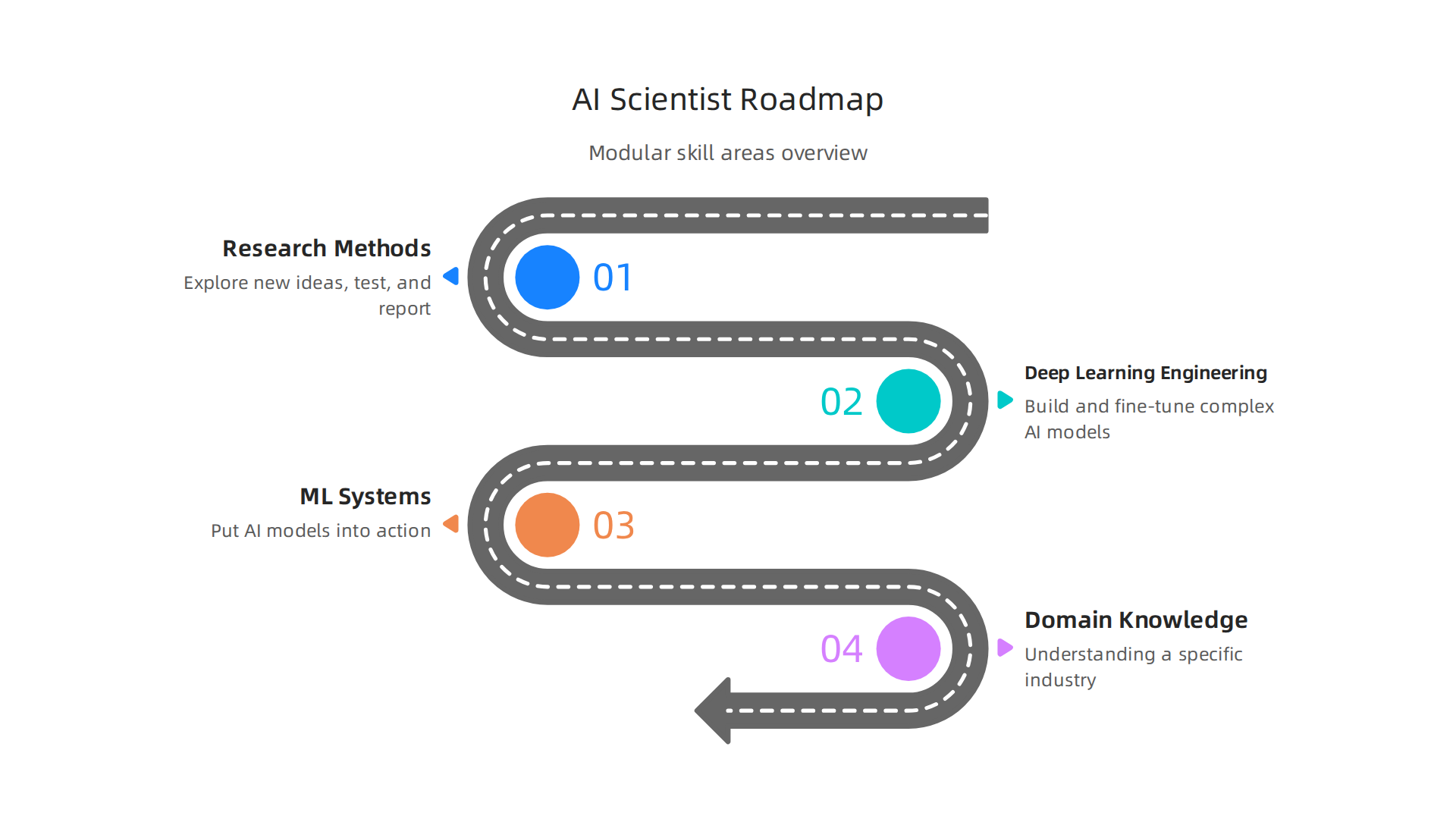
- Research Methods: This is about knowing how to explore new ideas, test them, and report what you find. It’s vital for those who want to push the boundaries of AI.
- Deep Learning Engineering: This skill helps you build and fine-tune complex AI models. It covers everything from picking the right model to making it work well with lots of data.
- ML Systems (MLOps): This is about putting AI models into action and keeping them running smoothly. It ensures that the AI products you build can actually be used by people.
- Domain Knowledge: This means understanding a specific industry, like healthcare, finance, or even how AI impacts the wider world. Knowing about the area you’re applying AI to is very powerful. For example, staying updated with computer science news 2026 can give you insights into specific applications and challenges.
Choosing the right education and upskilling pathway is a big step. Your choice should match your career goals and how you like to learn.
After you learn the ropes of AI, the next big step is showing what you can do. This is where your portfolio comes in. Think of it as a collection of your best AI work. For an AI scientist, a strong portfolio in 2026 is super important. It helps you stand out and shows hiring managers that you can solve real problems.
High-Impact Portfolio Items
To make your portfolio shine, you need to include projects that really show your skills.
-
Reproducible Research: If you want to be an AI scientist who creates new ideas, showing your research is key. This means you need to present your work in a way that others can easily understand and even try out themselves. It’s like writing down a recipe clearly so anyone can bake your cake. Good research projects show how you explore new ideas, test them, and report your findings clearly. This is important for jobs that ask you to invent the future of AI and prevent what jobs will AI replace.
-
Open-Source Contributions: Giving your time to open-source projects is a great way to build your portfolio. Open-source means that the code is free for anyone to use, change, and share. When you help with these projects, you show that you can work with others, write good code, and understand how real AI powered software development works. Many companies look for this kind of experience because it proves you’re ready to jump into teamwork and solve practical problems, as many experts note for career transitions in 2026 A Research on The "Real AI Hiring Shift" of 2026.
-
Deployed Prototypes: This is about building AI tools that actually work and can be used by people. It means you take an idea from start to finish. For example, you might build a smart chatbot or a tool that helps with images. These are called "end-to-end" projects because they cover every step, from getting the data to making the final product work. Experts say a strong portfolio should have 3-5 main projects that show this kind of complete work AI Career Roadmap 2026: Skills and Projects. Being able to deploy your projects, even on free online services, shows you can make your AI ideas a reality for users How to Get Your First AI Engineering Job in 2026.
Documenting and Presenting Your Work
It’s not enough to just do the projects; you also need to show them off well.
-
Clear Project Stories: For each project, you should explain:
- The Problem: What problem were you trying to solve with AI?
- Your Approach: How did you use AI to try and fix it? What tools did you use?
- The Results: What did you achieve? Were your results good?
- Business Impact: How could this project help a company or real people?
-
Use Tools Like GitHub: Put your project code and explanations on sites like GitHub. Make sure your "README" file for each project is clear and easy to read. It should tell the story of your project for everyone, not just other tech people AI Career Transition 2026. Think about making a short video or demo to show your project in action. You can also write about your projects on platforms like LinkedIn or Medium The AI Engineer Interview Playbook for 2026. This helps recruiters and managers quickly see your skills and how you apply them to real-world tasks. Learning to present your work effectively is part of mastering AI interview tools for 2026.
Building a great portfolio takes time and effort. But it’s how you prove you have the skills to become a successful AI scientist in 2026. Stay informed on the latest trends to keep your projects relevant.
The AI Newsletter Worth Reading
Building a strong portfolio is a great start. But what happens next? The journey to becoming an AI scientist in 2026 often involves several interview steps. The AI hiring market is quite competitive this year, with roles for experienced AI and machine learning engineers offering high salaries and taking weeks to fill, as noted in the 2026 AI Hiring Report | Comp, Time-to-Fill & Demand – Recruits Lab. Knowing what to expect in interviews can help you be ready.
Common Interview Stages for AI Scientists
Most companies use a few main steps to find the right AI scientist. These often include:
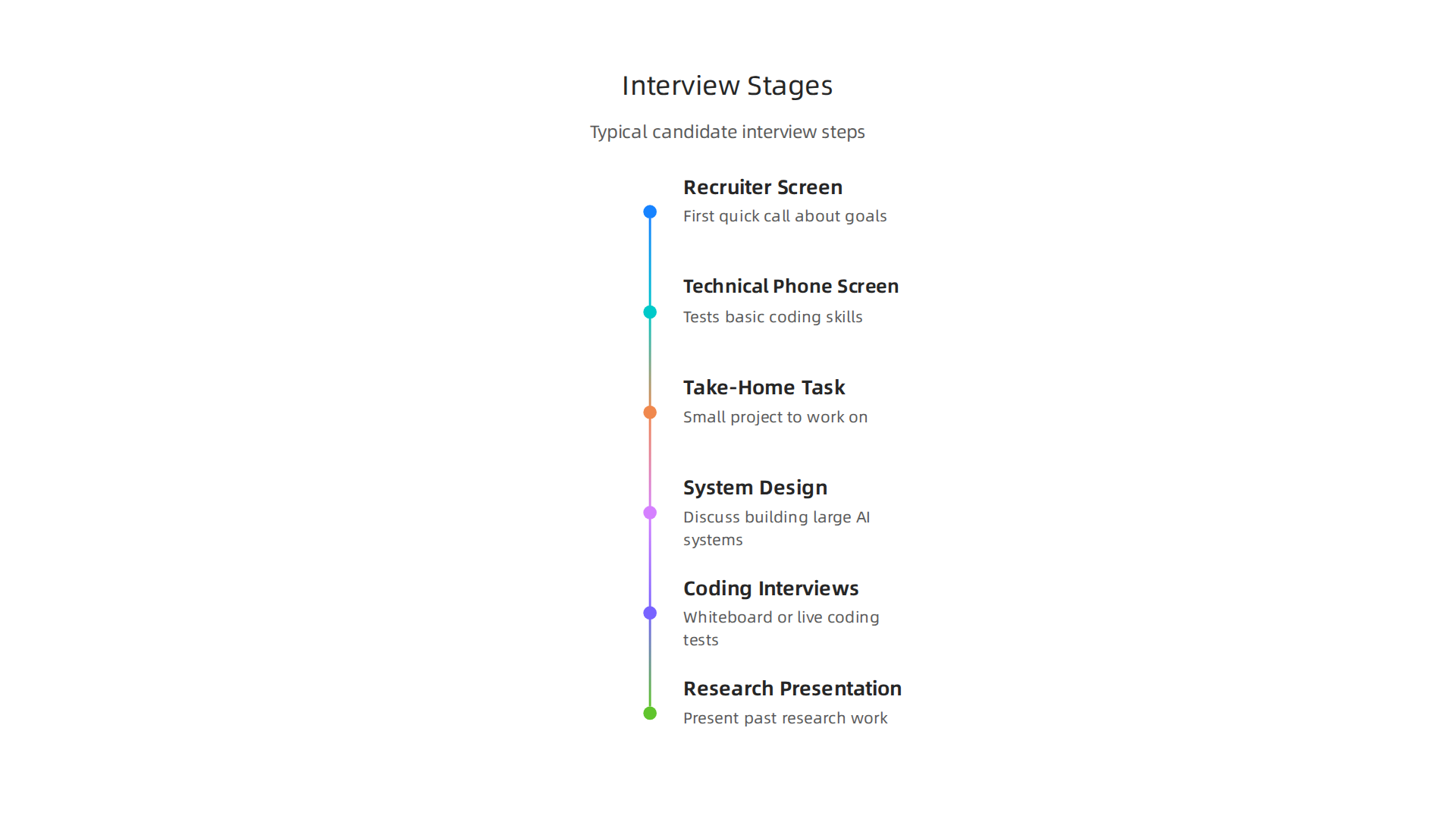
- Recruiter Screen: This is usually the first quick call. It’s a chance for the company to learn about your goals, and for you to ask basic questions about the job and team.
- Technical Phone Screen: Next, you might have a call that tests your basic coding skills and how you solve simple problems. They want to see if you have the core skills needed for AI powered software development.
- Take-Home Task: Many AI companies, especially those focusing on new AI tools, give candidates a small project to work on at home. This can last from a couple of days to a week. You might be asked to build a small AI system or solve a problem similar to what the team actually faces, showing your practical skills, according to the AI Talent Acquisition for Startups: 2026 Hiring Guide. This task helps them see how you work on a real problem.
- System Design: For more senior roles, you might discuss how to build large AI systems. This isn’t about coding, but about thinking through how different parts of an AI product would work together, how to handle data, and how to make it reliable.
- Coding Interviews: You’ll often have whiteboard coding sessions or live coding tests. These focus on how well you can write code, your problem-solving methods, and your knowledge of common algorithms.
- Research Presentations and Trials: For an AI scientist role, especially at top AI labs, you will likely need to present your past research work. You’ll explain your projects, your findings, and why they matter. Sometimes, a company might even offer a short "research trial" where you work with the team for a few weeks on a real problem. This is a chance for both sides to see if it’s a good fit. When preparing for these, identify the open problems you would work on at each target lab, as suggested in the AI Research Scientist Interview Guide: Anthropic, OpenAI, ….
Tactical Preparation Steps
To do well in these stages, you should:
- Practice Coding: Regularly solve coding problems, especially those related to data structures and algorithms.
- Review AI Basics: Make sure you understand the key types of artificial intelligence and how they work. Knowing the types of artificial intelligence a clear framework for understanding AI categories and capabilities in 2026 can be very helpful.
- Prepare Your Portfolio Stories: Be ready to talk about your projects in detail. Explain the problem, your solution, and the impact, just like you would in your portfolio.
- Understand System Design: Read up on how big AI systems are built and designed. Think about how you would scale an AI tool to millions of users.
- For Research Roles: Deeply understand your own published papers or research projects. Be ready to discuss the challenges you faced and what you learned. Also, think about current research challenges in the field and what new ideas you might bring.
- Negotiate Research Trials: If a company offers a research trial, make sure the goals are clear, and you understand what is expected. Don’t be afraid to ask questions about how your work will be used and how you will be evaluated.
Being ready for these different interview types will help you show your best self and land your dream job as an AI scientist in 2026.
6) Compensation, Career Ladders, and Long-Term Progression for AI Scientists
After doing well in interviews and getting a job offer, it’s natural to think about your future.

This means looking at how you can grow in your career and what you can earn. For an AI scientist in 2026, the path ahead looks very promising.
Moving Up: Career Paths for an AI Scientist
A career as an AI scientist isn’t just one job; it’s a ladder with many steps. You might start as a Junior AI Scientist, learning the ropes and working on smaller parts of projects. As you gain more experience, you can move to a Mid-Level, then Senior AI Scientist. These roles involve leading projects, guiding junior team members, and taking on more complex challenges.
Beyond Senior, you might become a Staff or Principal AI Scientist. These roles are often for experts who have deep knowledge and can lead major research efforts or technical strategies for an entire company. Some AI scientists choose to focus purely on research, becoming Research Scientists, and pushing the boundaries of what AI can do. Others might move into leadership roles, managing teams of AI engineers and scientists. The field is growing fast, offering many chances to specialize or lead, especially in companies that are identifying the fastest growing AI startups in 2026.
What You Can Earn: Compensation for AI Scientists
Let’s talk money. Being an AI scientist can be very rewarding, especially in 2026. Your pay usually has three main parts:
- Base Salary: This is your regular pay before any extras.
- Bonus: An extra amount paid yearly, often based on how well you and the company do.
- Equity: These are shares in the company, which can be very valuable, especially if the company grows a lot.
The pay for an AI scientist is generally much higher than for many other jobs. In 2026, the typical AI job posting lists a base salary of $177,000, which is more than double the $80,000 for non-AI jobs, according to the AI Talent Divide 2026 report. The median midpoint for an AI role is even higher at $185,500, showing a significant "AI pay premium" of about 28.5% compared to similar non-AI roles, as noted in The State of AI Hiring 2026.
Here’s a look at typical total compensation (which includes base, bonus, and equity) for AI Research Scientists in the US for 2026:
- Entry-Level (0-2 years): You might see total pay from $110,000 to $195,000.
- Mid-Level (2-5 years): This can jump to $230,000 to $380,000.
- Senior (5-8 years): Expect a range of $340,000 to over $550,000.
- Staff/Principal (8+ years): For top experts, total compensation can be $500,000 to over $800,000.
At big, leading AI labs like OpenAI or Anthropic, senior research roles can realistically clear $550,000 to $870,000 or more in total compensation, with a large part coming from equity, as detailed in What AI Engineers & Researchers Actually Earn in 2026. For example, a Senior Researcher at OpenAI might see total compensation of $900,000+, including a base salary of $300,000-$400,000, according to the AI Talent Benefits & Compensation Guide 2026.
When you get a job offer, it’s wise to understand all these parts and negotiate. Often, the equity part can make a big difference in how much you earn over time. The demand for AI skills is very high, so companies are willing to pay well to get the best talent.
Staying informed about these trends can give you an edge in your career.
Get clear daily AI updates from The AI Newsletter Worth Reading.
Summary
This article explains who an AI scientist is and why the role is central to technology and business in 2026. It covers the booming job market—where openings exist, which employers hire (big tech, startups, research labs, and industry teams), and how remote options broaden opportunities. The piece details the core skills employers want (math, coding, ML/DL, data, MLOps, and communication), contrasts research-focused and product-focused roles, and outlines signal-proof education paths from PhDs and master’s degrees to bootcamps and self-directed learning. It shows how to build a standout portfolio with reproducible research, open-source contributions, and deployed prototypes, and walks through common interview stages and prep tactics. Finally, it reviews compensation ranges, equity, and long-term career ladders so readers can plan progression and negotiation. Throughout, the article stresses staying informed and cutting through AI noise to make strategic career choices.