
It’s 2026, and the world of Artificial Intelligence (AI) is growing at a mind-boggling speed. Every day, new companies pop up, each promising to change how we live and work. This can feel like a lot of information, like trying to drink from a firehose. For people who invest in companies, start new businesses, or study technology, it is hard to tell which of these new AI companies are truly the fastest growing AI startups and which ones might not last.
Keeping track of this fast-moving world is really important. If you are an investor, you want to put your money into companies that will succeed. If you are a founder, you need to know what others are doing to make your own company stand out. And if you are an analyst, you need clear facts to help others understand this complex market. With thousands of AI startups out there in 2026, finding the real winners is a big challenge according to data from Thunderbit. Many of these companies get big funding, for example, 305 AI startups raised money between February 2025 and February 2026 alone, with foundation models getting the most cash as noted by Voronoiapp.
Because there is so much to learn, many people feel lost in all the news and data. That is why having a clear, smart way to look at these companies is key.

This article will help you cut through the noise. We will show you a simple way to find and understand the fastest growing AI startups. We will look at what makes them special, from how much money they are making to how fast they are growing. We will help you spot companies using exciting new ideas, whether they are building huge systems or working with smaller, more focused local AI models that serve special needs. Our goal is to give you a clear map for this exciting AI landscape.
Want to keep up with all the vital AI changes and news without the overload?
Get The AI Newsletter Worth Reading every day to make sense of the AI world.
Market snapshot: Where AI startup growth is concentrated in 2026
To understand the world of fastest growing AI startups, it helps to look at the big picture. In 2026, we see a few main forces pushing these companies forward. One huge driver is how many businesses are now using AI in their daily work.
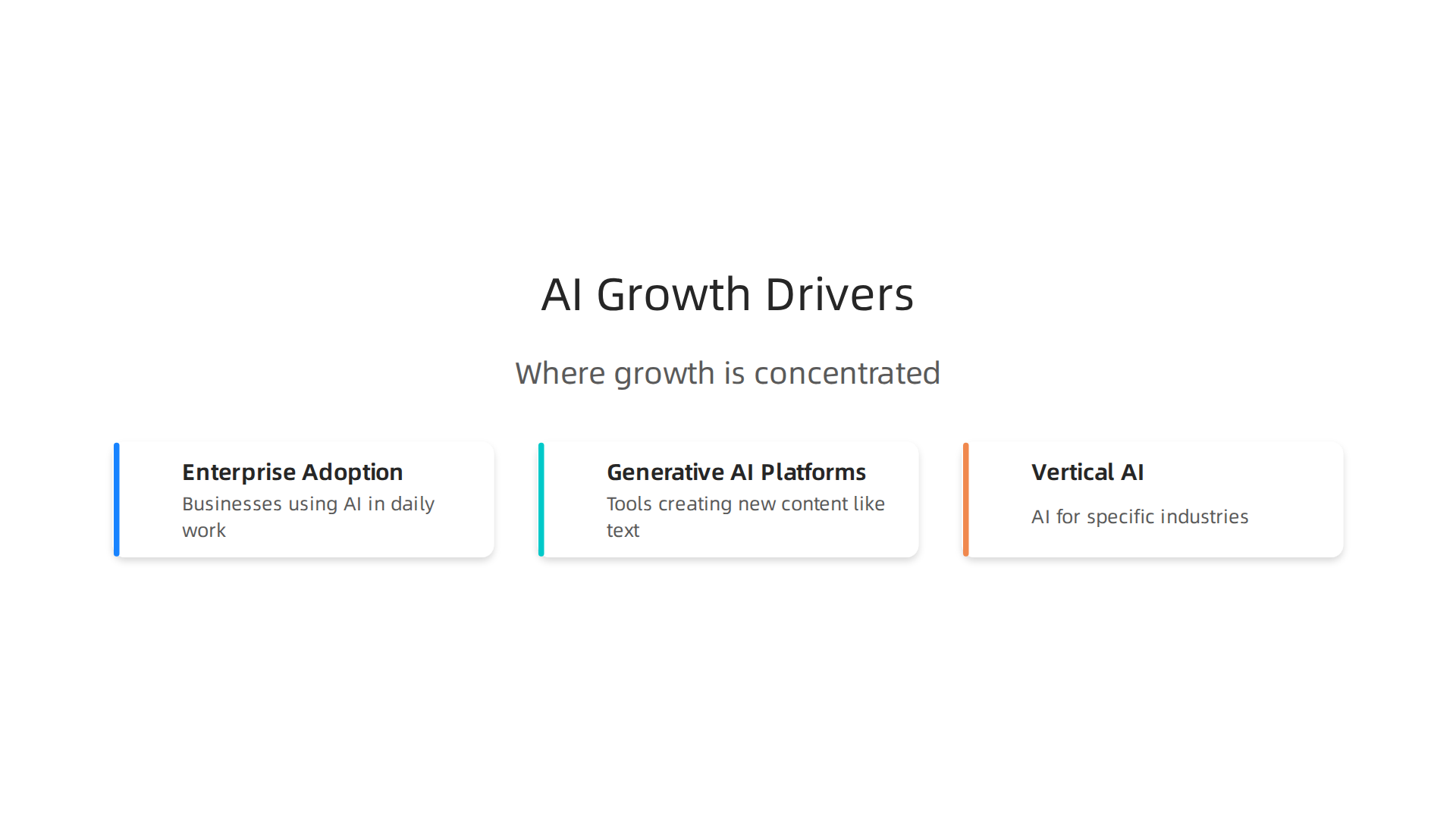
Companies are no longer just thinking about AI; they are putting it into action to make things better and faster. This move is called enterprise adoption, and it means there’s a big demand for AI tools that solve real business problems.
Another big trend is the rise of generative AI platforms. These are tools that can create new content, like text, images, or even code, based on simple commands. Think of AI that can write a report for you or design a basic logo. These powerful platforms are changing many industries, making them a hot spot for new startups. Companies are looking for ways to use these tools to boost their own products and services. If you want to dive deeper into how companies can use AI, you might find our guide on how strategic AI adoption drives business growth in 2026 very helpful.
But here is the most important shift we are seeing: AI is becoming very specialized. Instead of general AI tools that try to do everything, the biggest growth is in what we call "vertical AI." This means AI that is built for a very specific industry or problem, like AI for healthcare, finance, or even for certain parts of manufacturing. Investment in this kind of specialized AI tripled to $3.5 billion in 2025 alone, showing a clear trend that continues into 2026 according to Specialised AI Statistics 2026. These focused AI solutions solve particular needs for certain types of businesses, offering big value.
When we look at where these fastest growing AI startups are located, some places stand out. While AI is a global trend, activity is still strongest in known tech hubs. California, especially places like Silicon Valley, leads the way with many vertical AI deals, making up almost a third of all such deals as highlighted in The Vertical Report 2026. New York comes in second, followed by Massachusetts, Texas, and Florida. This tells us that while AI is spreading everywhere, these major hubs are still the places where a lot of the money and new ideas come together. Understanding how to design a global AI strategy for enterprise growth in 2026 often means paying attention to these key areas.
Across industries, we see AI making big waves in areas like education with tools such as Century Tech helping students learn better, and various platforms that help businesses manage their vast amounts of data. The key is finding AI solutions that truly fit a specific need.
Funding and Velocity: How Capital Signals Fastest Growth
When looking for the fastest growing AI startups, it is not just about who gets the most money, but how quickly and smartly they get it. Think of it like a race: it’s not just the biggest car, but the one that speeds up the fastest and uses its fuel well. This is where "funding velocity" and "capital efficiency" come into play.
Funding velocity means how quickly a startup moves from one funding round to the next. If a company raises money fast, it often shows that investors are very excited about its progress. For example, in the first three months of 2026, AI companies saw record-breaking investments, with $242 billion flowing into the sector. This was about 80% of all venture funding globally in Q1 2026, a huge jump from previous years as highlighted in Q1 2026 Shatters Venture Funding Records As AI Boom. This quick flow of cash often goes to a small group of companies that show strong potential.
Mega-rounds, which are funding deals of $100 million or more, have become very common. These big deals made up most of the money raised in Q1 2026 according to the State of AI Q1’26 Report. This means that much of the funding is focused on a few key players, making them stand out as truly fast-growing AI startups. Companies like OpenAI and Anthropic, for instance, have taken a huge share of the funding, proving their dominance in the AI space as reported by Forbes AI 50 2026: OpenAI and Anthropic dominate funding.
But simply getting a lot of money does not always mean a startup is truly successful. This is where "capital efficiency" becomes important. It means how well a company uses the money it gets to grow its business and make sales. A startup that raises less money but grows its revenue very quickly is often more impressive than one that raises huge sums but struggles to make a profit.
To really spot the fastest growing AI startups, you need to look at more than just the money. You should also check "operational metrics." These are numbers that show how well the company is actually doing, like:
- Revenue Growth: How fast are their sales going up?
- User Growth: Are more and more people using their product or service?
- Customer Satisfaction: Are their customers happy and staying with them?
For instance, some companies like Anysphere (which makes a coding AI called Cursor) are known for reaching high revenue very quickly. Others, like ElevenLabs, have grown from zero to over $2 billion in yearly sales in a short time, showing incredible growth speed as shown in Top AI Startups to Watch in 2026. These kinds of stories highlight that it is not just about the size of the funding rounds, but the speed and efficiency with which a company builds its actual business. To learn more about how to evaluate these companies, you can check our guide on how to evaluate AI companies in 2026.
Looking at both funding data and how well a company performs day-to-day helps us avoid "false positives." A startup might get a lot of buzz and money, but without real customer adoption and strong sales, that growth might not last. It’s important for founders to be realistic about fundraising and focus on showing real business results, not just big headlines as noted in AI Startup Funding Trends: What Founders Need to Know.
Understanding these different parts of growth is key for anyone watching the AI market. For more in-depth daily updates on AI and broader technology trends, make sure to get clear daily AI updates from The Deep View Newsletter.
While money and how it’s used are important, the real engine behind the fastest growing AI startups is their technology. It’s about clever new ideas in AI models and products that truly stand out. This means looking beyond buzzwords to see what makes an AI company special and valuable in the long run.
New Ways AI Models Are Built
Imagine an AI as a very smart computer program. A "novel model architecture" means someone found a brand new way to build that program. These new ways can make AI much smarter, faster, or better at specific jobs. For example, some startups are creating advanced vast AI systems that can handle many different tasks at once. Others are focusing on specialized "genie AI" that acts like a smart helper for complex problems, or developing "local AI models" that run on your own devices for better privacy and speed. These groundbreaking ideas are what give a startup a real edge.
Unique Data Makes AI Stronger
Another big signal of strong growth is when a company has "proprietary datasets." Think of data as the food for AI. The more unique and high-quality food an AI gets, the smarter and more specialized it becomes. If a startup has its own special collection of data that no one else has, its AI models will be trained on something truly unique. This helps them create products that are better than anything else out there, setting them apart from the competition.
Tools That Work in the Real World
Having great ideas and data is a good start, but AI needs to work well in real life. This is where "production-grade tooling" comes in. It means the AI systems are built to be strong, reliable, and useful for actual businesses and users. They aren’t just cool experiments; they are tools that can be used every day without breaking down.
To check how well AI models work, experts use "benchmarks." These are like standardized tests for AI. In 2026, many new benchmarks are being used to see how models perform on harder tasks, like fixing code or solving tough math problems. These tests help show which AI models are truly powerful and not just popular. However, passing a test in a lab is one thing; making AI work perfectly in the real world is another. Sometimes, AI models that do well on benchmarks still have trouble when used in a business setting as noted in Your AI passed benchmarks. Why is it failing in production?. This means it is very important to look at how an AI performs when it is actually being used by customers.
When looking at the fastest growing AI startups, it is important to tell the difference between hype and true technical skill. A company might get a lot of attention, but if its technology isn’t truly innovative or if its products don’t work reliably for users, that growth might not last. Companies like "Century Tech," which develop AI for learning, show real technical advantage by focusing on how their AI actually helps students and teachers.
To really pick out the winners, you need to understand how to evaluate AI tools in 2026. This means looking at:
- Innovation: Are they using truly new ideas in their AI models?
- Performance: Does their AI do what it says it will, better than others?
- Reliability: Can their AI be used day in and day out without problems?
- Real-world Use: Are actual customers finding their product helpful and valuable?
By focusing on these points, you can spot the companies with a deep technical advantage that will drive lasting growth, rather than just quick PR wins. It helps you see which startups are building a strong future with their technology according to AI Benchmarks 2026: Top Evaluations and Their Limits. For a more in-depth look, learning how to evaluate AI tools in 2026 can give you clearer insights.
Now that we understand how to spot truly strong AI technology, let’s look at where these innovations are making the biggest impact. The fastest growing AI startups aren’t just popping up anywhere; they are often focused on specific industry areas, which we call "verticals." Think of a vertical as a special lane in a big race. These lanes could be for healthcare, finance, or even education.
Looking at AI startups this way helps us see which ones are really growing fast because they solve real problems for certain groups of customers. In 2026, we see strong growth in areas like enterprise AI, generative agents, and robotics.
Enterprise AI
Enterprise AI refers to artificial intelligence tools built specifically for businesses. These tools help companies run smoother, save money, or make better decisions. They aren’t for general use; they are made for things like managing customer calls, analyzing sales data, or helping with tricky financial tasks. Investment in specialized AI for businesses tripled in 2025, showing how much companies value these tailored solutions according to Specialised AI Statistics 2026.
When we look at these startups, we watch for:
- Key Performance Indicators (KPIs): How much money do they help businesses save? How much faster do they make daily tasks? How many businesses use their tools every day?
- Customer Types: Are they helping big companies or smaller businesses? Are they focused on a certain field, like healthcare or law, where AI in vertical software is making big strides as noted in AI in Vertical Software | Q1 2026?
- Time-to-Adoption: How quickly can businesses start using their AI tools and see good results?
Companies like Century Tech, which makes AI for learning, show how important it is to focus on specific user needs in a vertical. Their AI actually helps students and teachers, proving its real-world value. If you’re looking to help your own business grow, understanding how to design a global AI strategy for enterprise growth in 2026 is very useful.
Generative Agents
Generative agents are a type of AI that can create new things, like writing stories, making pictures, or even helping with computer code. These genie ai systems act like smart helpers for tasks that need a lot of creativity or problem-solving. They are known for making custom content or suggestions.
What to watch for in these growing startups:
- Quality of Output: How good are the things the AI creates? Is it useful and original?
- Task Versatility: How many different kinds of creative or problem-solving tasks can the AI handle?
- User Time Saved: How much time do users save by letting the AI do these creative jobs?
AI in Robotics
This vertical is all about using AI to make robots smarter and more capable. Instead of just doing the same task over and over, AI helps robots understand their surroundings, learn new movements, and even make small decisions on their own. This is where vast AI systems can really shine, managing complex tasks for advanced robots. Some startups are also building local AI models that let robots think and act faster without always needing to connect to the internet, improving speed and privacy.
Important things to look at here:
- Robot Accuracy and Safety: How well does the AI help robots move and work safely?
- Adaptability: Can the robots work well in different places or handle unexpected problems?
- Deployment Speed: How quickly can businesses get these smart robots up and running? For more details on these specialized areas, reports like The Periodic Table of AI Startups – 14 categories … offer deeper insights into where money is flowing.
By looking at these specific areas, you can better understand which fastest growing AI startups have a solid plan and are truly making a difference.
Are you looking for more insights into the fast-changing world of AI? The AI Newsletter Worth Reading gives you clear daily AI updates from The Deep View Newsletter, helping you stay informed.
You’ve learned that truly promising AI startups focus on specific areas, solving real problems within those "verticals." But how do you really know if a fast-growing AI startup is a good bet for investment or a strong partner? It’s easy to get caught up in exciting growth claims. Actually, looking closely at these companies needs a clear plan, like a checklist.
For investors and partners, doing proper AI due diligence means carefully checking several key areas. This helps you understand a company’s true value and its potential for long-term success, especially in a fast-moving field like AI.

Checklist for Evaluating AI Startups
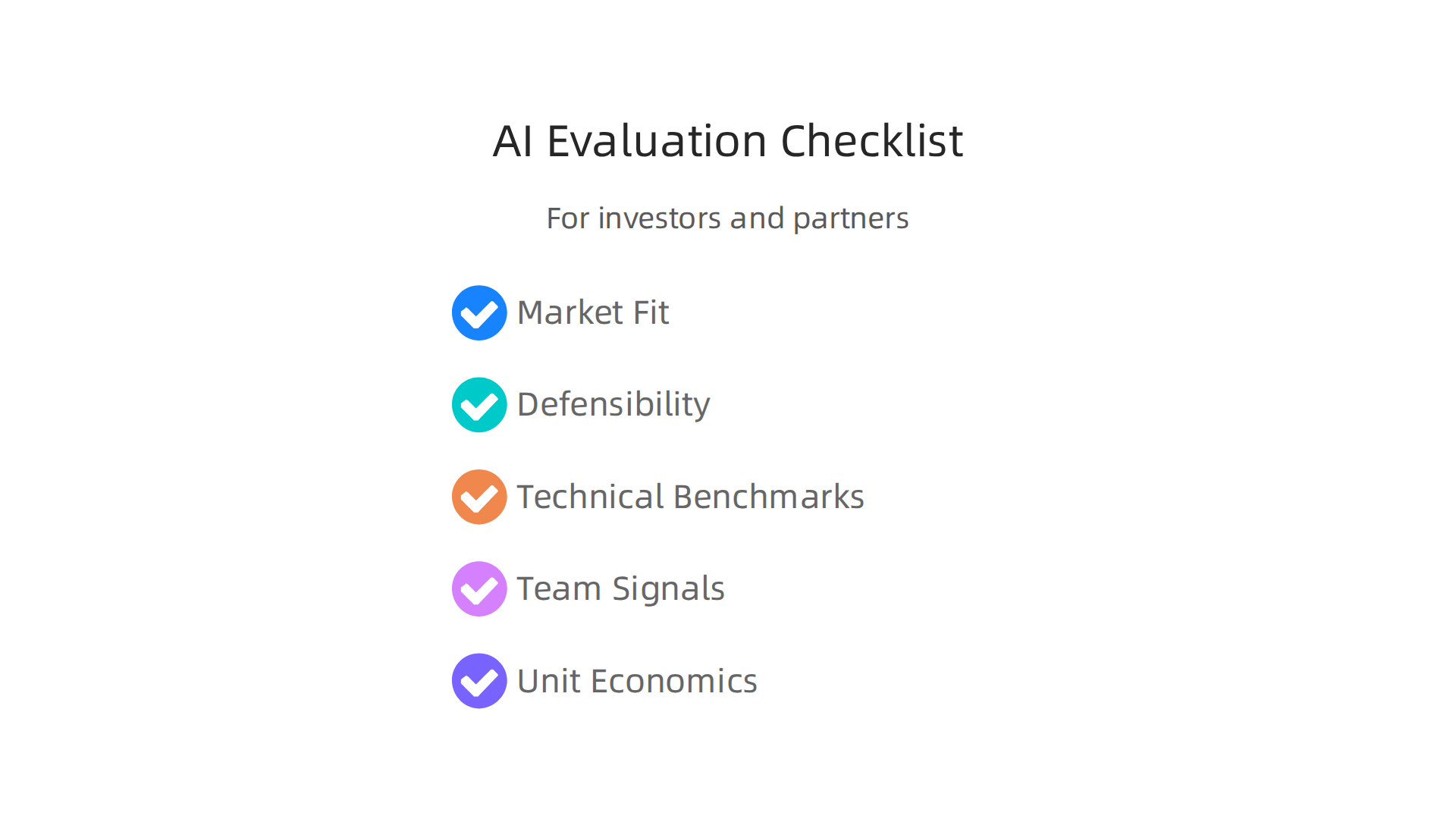
Here’s a simple checklist to help you see past the hype and find the real gems among the fastest growing AI startups:
-
Market Fit: Do they solve a real problem?
- Is there a clear need for their AI solution?
- Are customers actually using their product and getting good results?
- Can they show how their AI helps
Century Techstyle education platforms, or makesgenie aisystems truly useful for creative tasks? A strong startup shows clear evidence of happy customers and proven impact on a problem, not just potential.
-
Defensibility: What makes them special?
- Does the startup have unique technology, special data, or patents that others can’t easily copy?
- Are they building strong
local ai modelsthat work faster and better for specific tasks? - Do they have a special way of collecting or using data that gives them an edge? This is often called a "moat" around their business.
-
Technical Benchmarks: How good is their AI, really?
- Ask for proof of how well their AI performs. Don’t just rely on simple scores. Many older benchmarks might not show how well an AI works in the real world anymore according to AI Benchmarks in 2026.
- Can they show their
vast aimodels or other systems doing well in tough, real-world situations, not just easy tests? It’s important to understand the limits of standard benchmarks as noted in AI Benchmarks 2026: Top Evaluations and Their Limits. - Look for details on what benchmarks they used, who tested them, and what the results actually mean for their specific problem from the AI Startup Due Diligence Checklist for Investors. You can also learn how to evaluate AI tools in 2026 using the Covers AI Benchmark for deeper insights.
-
Team Signals: Who is running the show?
- Does the team have strong experience in AI and the industry they’re trying to help?
- Are the founders and key people known for building successful companies or cutting-edge technology?
- A great team can often overcome challenges, even with a less-than-perfect product at first.
-
Unit Economics: Do they make money on each sale?
- How much does it cost the startup to deliver its AI product or service to one customer?
- How much money do they make from that one customer?
- Understanding these numbers is crucial for knowing if a company can grow without running out of money. This involves looking at things like the cost of their infrastructure, model risks, and how easily their AI can be evaluated as highlighted in Modern Due Diligence for AI-Native Startups.
Red Flags and Common Pitfalls
Be careful of these signs when looking at any fastest growing AI startups:
- Vague Claims: If a startup can’t clearly explain what their AI does or how it helps, that’s a red flag.
- Benchmark Hopping: Only showing results from easy benchmarks or changing benchmarks often without good reason can be misleading.
- No Customer Proof: Lots of talk about potential but no real customers or case studies.
- Unrealistic Projections: Growth numbers that seem too good to be true often are.
By using this checklist, you can better cut through AI noise understand the elements of AI for strategic decisions and make smarter choices about which AI companies to trust and support in 2026.
Once you’ve looked closely at an AI startup using our checklist, the next step is to decide how to work with them. This means thinking about how and when to invest or partner. For those looking to support the fastest growing AI startups, having a clear plan is key.
Tactical Entry Points
There are different ways to get involved with these fast-moving companies.
- Pre-seed Scouting: This is like finding a tiny seed that has just started to grow. You look for very new AI companies even before they have a fully working product. It takes a good eye to spot the next big thing early on.
- Follow-on Strategies: Once you’ve invested early, a "follow-on strategy" means you might invest more money later as the company grows. This helps the startup reach its goals and shows you believe in its future. In Q1 2026, AI companies saw huge funding, with about $242 billion going to them, which was roughly 80% of all venture funding globally according to AI Funding News 2026: Records and Key Trends. But it’s good for founders to know that most of this money is concentrated in a few big companies, so having realistic goals is smart as noted in AI Startup Funding Trends: What Founders Need to Know.
Strategic Partnership Frameworks
Joining forces with other companies can make an AI startup much stronger. A "strategic partnership framework" is simply a clear plan for how two companies will work together. For example, a vast ai model developer might partner with a company that handles a lot of customer data. This helps both sides. Thinking about how to Design a Global AI Strategy for Enterprise Growth in 2026 can help guide these choices.
Exit Considerations
For investors, it’s also important to think about how they will eventually sell their shares and make their money back. This is called "exit considerations." It means having a plan for when the startup might be bought by a bigger company or go public. This helps ensure a good return on the investment. AI startup funding is still growing in 2026, especially in areas like AI agents and the infrastructure needed to run AI systems as shown by AI Startup Funding in 2026: Where the Money is Flowing.
Risk Management Approaches Specific to AI
AI companies have special risks that need careful thought:
- Model Generalizability: Will the AI system work well in new situations it hasn’t seen before? For example, if a
genie aisystem is trained on one type of data, will it work just as well with very different data? - Regulatory Risk: Governments around the world are making new rules for AI. These rules can change how AI companies operate. Understanding these changes is important. Learning about Humane Technology Principles for Ethical AI Governance can help companies prepare.
- Talent Retention: The best AI experts are in high demand. Keeping these smart people happy and working for your company is very important for an AI startup’s success.
By thinking about these strategies and risks, investors and partners can make smarter decisions when dealing with the fastest growing AI startups in 2026.
To stay ahead of these trends and get smart daily insights on AI, consider subscribing to The AI Newsletter Worth Reading.
Summary
This article explains how to spot the fastest-growing AI startups in 2026 by cutting through hype and focusing on practical signals. It gives a market snapshot of where growth is concentrated, describes how funding velocity and capital efficiency matter, and shows why proprietary data, production-ready tooling, and rigorous benchmarks separate real winners from short-lived buzz. The piece breaks down the verticals—enterprise AI, generative agents, robotics and specialized industry solutions—where growth is strongest, then offers a clear due-diligence checklist for investors and partners. You’ll learn which operational metrics to watch, how to evaluate technical defensibility, and what red flags typically indicate overhyped companies. Finally, it outlines tactical entry points, partnership models, exit considerations, and AI-specific risks to manage before committing capital or strategic cooperation.